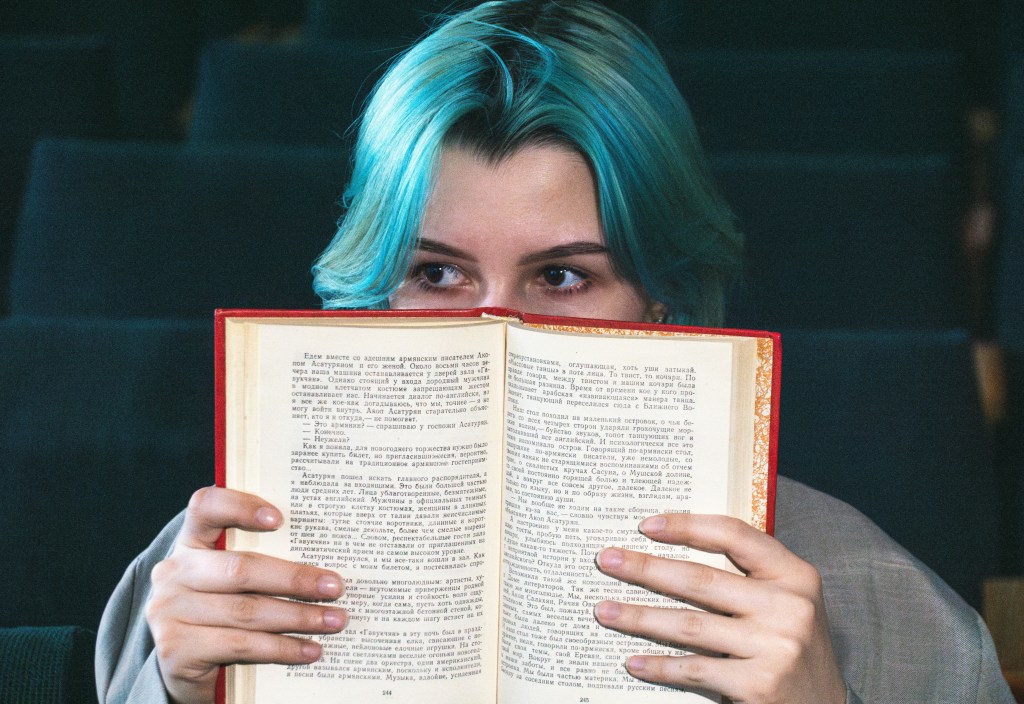
Did you know that doctors can prescribe books? It’s called bibliotherapy. Apparently, if you’re suffering from a problem like a breakup, work stress, family issues, or the heartbreak of psoriasis, you can come away with a note you can take to your local library, bookstore, or secondhand store to fill.
The theory is that “Reading novels with characters in predicaments similar to yours helps you find new perspective, develop empathy, and just feel less alone.” Or instead of novels, you could end up with prescriptions for Overcoming Depression, Mind Over Mood, or The Feeling Good Handbook. (Personally, I would never even pick up a book called The Feeling Good Handbook. In my mind, I see the cover looking like a middle school student’s notebook, replete with fireworks, rainbows, and maybe even candy canes. But I digress.)
I like the theory of bibliotherapy, but I have a few qualms.
(Full disclosure: I’ve ghostwritten a lot of self-help books. It’s kind of my niche. I’m not necessarily proud of it, but it helps pay the bills. If that makes me a writing whore, so be it. But I digress some more.)
The kind of self-help books usually suggested reminds me uncomfortably of books written for children to help them respond to difficulties such as loneliness, feeling different, bedtime, toilet training, and the heartbreak of psoriasis. (The Berenstain Bears seem to have a multitude of problems, including but not limited to bullies, dentists, strangers, and TV addiction. But I digress again.) These books have little to no plot, characterization, imagination, or literary merit.
So, “How to” books, either adult or juvenile, are off the menu, but there are many kinds of novels “with characters in predicaments similar to yours” to be avoided.
Dystopian Novels
While novels like The Stand, The Hunger Games, and The Handmaid’s Tale may be engrossing, they are not likely to perk up your mood or offer solutions to the problems you face daily. (Unless, of course, you live in a world scarred by an atomic war, ravaged by mutant animals, or controlled by a malignant hierarchy. If you are, the books most likely to help are ones on homemade weaponry and gardening skills. I guess you could discover “My life doesn’t suck that much.” But I digress yet again.)
Horror Novels
Stay strictly away from H.P. Lovecraft. Trust me on this. The Elder Gods will not tell you how to recover from divorce. Stephen King is iffy as well. Read one of his books, and you could wind up in either horror or dystopian fiction, depending on whether you pick up Carrie or The Stand. Either way, you’re bound for plenty of misery (sorry, not sorry).
Romance Novels
While romance novels almost always have a happy ending, the advice on how to accomplish it is suspect, charming antique shops in quaint seaside towns being almost impossible to find. (And don’t get me started on “romantasy” (a portmanteau of “romance” and “fantasy”) which is a hot (in both senses) trend in fiction right now. Unless your dilemma is that you are in love with a blood-sucking fiend, you won’t find help here. But I digress even more.)
So what do I recommend?
Children’s Books
Okay, not the Berenstain Bears or How to Avoid Satanists (there really are books like that). But children’s and teenagers’ books that do have plot, characterization, imagination, or literary merit can be helpful.
Take the Harry Potter books, for example. Whatever you may think of the author or the quality of the books, they do include important themes of friendship, loyalty, bravery, and overcoming dragons, trolls, and malevolent wizards, which are assets in anyone’s life.
I’ve even known a psychiatrist who recommends The Little Prince to her patients. Now that’s bibliotherapy!
Discover more from But I Digress . . .
Subscribe to get the latest posts sent to your email.
 But I Digress . . .
Hi Janet, I’ve been out of contact for a while due to revising a novel. I sent it to the developmental editor last Friday and can now breathe and attend to my other emails.
It’s ironic that I read this article today, as I just completed a blog this morning about the benefits of bibliotherapy for incest survivors. I’m familiar with the concept, though, from writing a paper on bibliotherapy for a graduate class in 1994. I was a school psychologist for 34 years and there were many situations for which I suggested reading books for children who struggled with some of the problems you mentioned in your article.
Anyway, I got some good laughs from your list of issues people might not want to use bibliotherapy for, or, at least, which kinds of books might be unhelpful!
Hope you’re continuing to recover from your surgery. Lee
LikeLike
Thanks for the kind words. My ankle surgery has been officially declared a success and my knee replacement probably will be when I go back in three months for a follow-up.
Best of luck with your book! Glad to hear it’s progressing nicely.
LikeLike