Category Archives: writing

What’s So Funny?

Recently, I fell in with a comedy site that has weekly online meetings where members are encouraged to submit their humor for feedback. My interactions with them have proved perplexing. I submitted for analysis a piece I was working on. The response was tepid at best, so I revised and submitted it again. Here’s the first draft:

I Use Satellites to Hunt for Tupperware in the Woods

That’s what a contestant on Jeopardy told Alex Trebek when asked about his hobbies and interests between rounds. Alex was taken aback and, for once, clueless.

I have done the same. (The satellite/Tupperware thing, not flummoxing Alex Trebek. I wish. But I digress.)

What both I and the Jeopardy contestant had in common is “geocaching.”

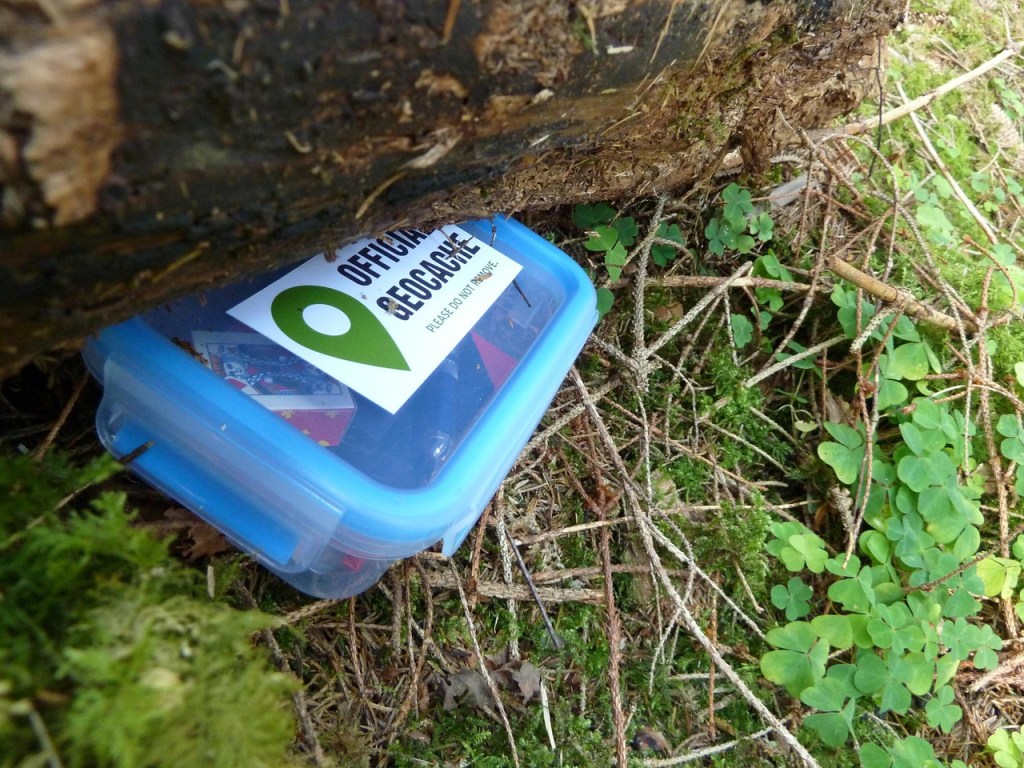
It goes like this. One person hides a piece of Tupperware or other waterproof container (an ammo case is also popular), usually in a natural environment but sometimes within a city or suburb. The container holds a piece of paper, a small pencil, and assorted trinkets, such as a postcard or a small toy. This is called the geocache.

***

Here’s a revision of the first section, rewritten according to what they suggested, or so I supposed.

I Use Satellites to Hunt for Tupperware in the Woods

That’s what a contestant on Jeopardy told Alex Trebek when asked about his hobbies and interests between rounds. Alex should have replied, “So you’re some kind of kitchenware spy,” but missed the opportunity.

I have aspired to kitchenware spying myself.

It’s called “geocaching” to those in on the process. A piece of Tupperware or other waterproof container (an ammo case is popular) is hidden, usually in a natural setting. The secrets within are a piece of paper, a small pencil, and assorted objects of unknown value. This is known in the trade as the geocache or “drop site.”

***

That second version was close to the one that you saw when I posted it. I think it was improved somewhat, but at the next meeting, they suggested even more changes.

I had trouble implementing their suggestions. The first one was “Lose the digressions,” which I was reluctant to do because of the name of my blog and a reasonably consistent shtick when I’m writing what I intend to be humorous pieces. They act like footnotes or record the meanderings of my mind while I write. But I ditched them for the second version, just to see. I also bumped up the spy references, using words like “agent,” “secret identity,” “tradecraft,” “the drop,” and “Ilya Kuryakin.”

On seeing the second version, they suggested that instead of describing how geocaching works, I should use “I” more: “I bait the drop,” “I decipher the clues,” etc. I agree that, in general, unless you’re writing an academic paper, “I” is preferable to “you.” So that was probably good advice.

They also told me I needed more hyperbole and more jokes. I already had some jokes in there: one clue being “Look under the big W” (a reference to It’s A Mad, Mad, Mad, Mad World) and my secret identity as “DjangOH” (in honor of my cat Django, who was named after Django Reinhardt, the jazz musician). They thought that one was pretty good, but assumed I was referring to the movie Django Unchained, which has nothing to do with cats or jazz musicians. They were apparently too young to get the other references as well. I’m beginning to doubt they got the one about Ilya Kuryakin.

Anyway, based on their comments and critiques of other people’s work, I gathered that what they were looking for was zingers, punchlines, and an over-the-top tone, like a stand-up comedian’s.

But that’s not the kind of writing I prefer. I grew up on observational, story-telling humorists like Erma Bombeck, James Thurber, and Jean Kerr. And if I could write one-tenth as well as David Sedaris or The Bloggess, I would count myself a happy writer. Hyperbole, yes, but no punchlines.

So I ask you these questions:

• Should I keep doing what I’ve been doing, with digressions?

• Should I lose the digressions and rename my blog?

• Do you prefer a stand-up comedy-style writing or an observational one (but not like Steven Wright)?

• Do you want to see listicles? Shorter pieces of writing?

• Would you prefer no serious posts like the one last week about my father? Should I have a separate blog for them? (It would be occasional, as I don’t think I could write three blog posts a week.)

I sincerely want your opinions. Please feel free to sound off in the comments.

Apparently obligatory joke:

Ist old lady: My, it’s windy today.

2nd old lady: No, it’s Thursday.

3rd old lady: So am I. Let’s all go get a cup of tea.

Down the Rabbit Hole

Almost five years ago, I wrote a post about how memories from my (and likely your) childhood were being repurposed for political statements and propaganda.

This time I’m writing about a classic piece of literature being rewritten for other purposes. (Largely unobjectionable ones, it’s true, but it’s the principle of the thing. But I digress.)

The work in question is Alice’s Adventures in Wonderland (more often known as Alice in Wonderland). It’s one of my favorite pieces of literature and I have returned to it many times since I first read it (murfle) decades ago.

(I have a friend who despises Alice. He finds it to be nonsense (which it obviously is) and incomprehensible. This despite the fact that he has returned to it frequently to see if it makes any more sense. (He ought to like at least part of it because he’s a mathematician, like the author, Lewis Carroll. I recommended The Annotated Alice (edited by Martin Gardner), which explains the jokes, Briticisms, and outdated expressions. (It also includes “Jabberwocky” in French, German, and IIRC, Latin.) But I digress, pedantically and at length.)

The “quotations” in question are not political but psychological or philosophical. I’m not saying they’re invalid—merely that they are misquoted, misattributed, or completely made up.

One of the most common misquotes is attributed to the Cheshire Cat:

“You’re mad, bonkers, off your head. But I’ll tell you a secret. All the best people are.”

What the Cheshire Cat actually really said is much more complex. Here’s the context:

“But I don’t want to go among mad people’” Alice remarked.

“Oh, you can’t help that,” said the Cat: “we’re all mad here. I’m mad. You’re mad.” 

“How do you know I’m mad?” said Alice.

“You must be,” said the Cat, “or you wouldn’t have come here.” 

One quotation supposedly from the Mad Hatter is:

The secret, Alice, is to surround yourself with people who make your heart smile. It’s then, only then, that you’ll find Wonderland.

Unobjectionable if sappy, but not from the book. The same with this one:

But, said Alice, if the world has absolutely no sense, who’s stopping us from inventing one?

The most annoying fake dialogue is this one, between Alice and the White Rabbit.

“Do you love me?” Alice asked.

“No, I don’t love you!” replied the White Rabbit.

Alice frowned and clasped her hands together as she did whenever she felt hurt.

“See?” replied the White Rabbit. “Now you’re going to start asking yourself what makes you so imperfect and what did you do wrong so that I can’t love you at least a little. You know, that’s why I can’t love you. You will not always be loved Alice, there will be days when others will be tired and bored with life, will have their heads in the clouds, and will hurt you. Because people are like that, they somehow always end up hurting each other’s feelings, whether through carelessness, misunderstanding, or conflicts with themselves. If you don’t love yourself, at least a little, if you don’t create an armor of self-love and happiness around your heart, the feeble annoyances caused by others will become lethal and will destroy you. The first time I saw you I made a pact with myself: ‘I will avoid loving you until you learn to love yourself.’”

The White Rabbit was late to play croquet with the Queen of Hearts. He wouldn’t have had time to discourse on self-love.

Alice has been in the public domain since 1907, so one can misquote or invent all they want. (The Disney movie version only came out in 1951, The book was in the public domain, but the movie isn’t. I think we can expect a live-action film. I hope they lose the repellent pink-and-purple Cheshire Cat, though I doubt they will. But I digress again.)

Surely no one would do this kind of thing to The Wizard of Oz…or would they? [squints suspiciously]

Go. Be Funny.

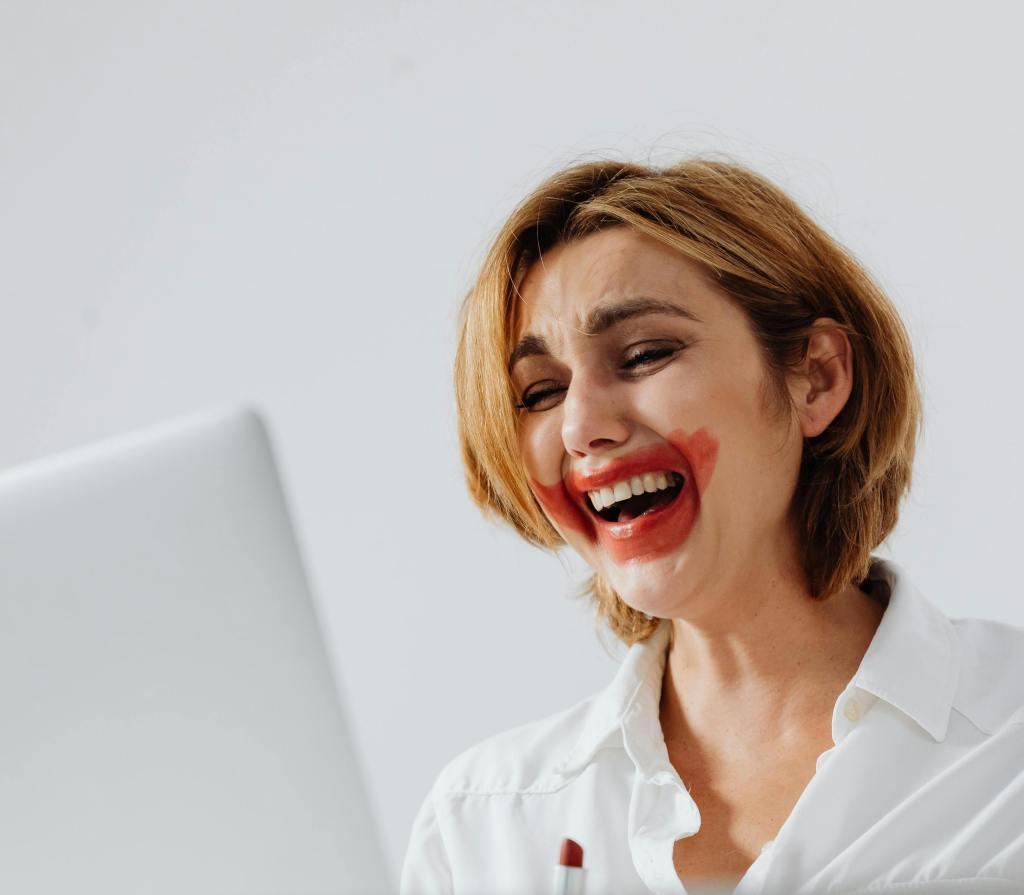
Once the boss editor gave me an assignment. “Go,” he said. “Be funny,” he said. “Come back in an hour.” We were preparing a calendar with amusing sayings and odd observances on various dates.

Now, most writers would be daunted by this sort of thing. I know I was. But in an hour, there I came, quips in hand. “Is this job too easy for you?” he asked.

Actually, writing funny stuff is not easy. I was just feeling quirky that day. (“Dying is easy. Comedy is hard” is a quotation that’s been attributed to any number of those shuffling off the mortal coil, from actors Edmund Gwenn to Jack Lemmon to Peter O’Toole to Meryl Streep (who, not having died yet, almost certainly didn’t say it on her deathbed). But I digress.)

The geniuses of Monty Python certainly seem as though they created comedy easily. And I know a man who can write a funny song, a la Weird Al, in 15 minutes or less. But for most of the writing world, humor is the hardest form of writing. (Except possibly the sestina. Or the humorous sestina, come to think of it. But I digress again.)

How do you build up your humorous writing muscles to the point where you can flex? I recommend hanging out with silly people, like the aforementioned songwriter. (If you’re tempted to use AI, forget it. I asked ChatGPT to write a joke about a cat. It replied, “Why did the cat sit on the computer? Because it wanted to keep an eye on the mouse!” Asked for a joke about a dog, it said, “Why did the dog sit in the shade? Because he didn’t want to be a hot dog!” Apparently, ChatGPT writes at the level of a five-year-old. And when I asked for a humorous sestina, it created one about a knight named Sir Guffaw and his tap-dancing horse. But I digress yet again.)

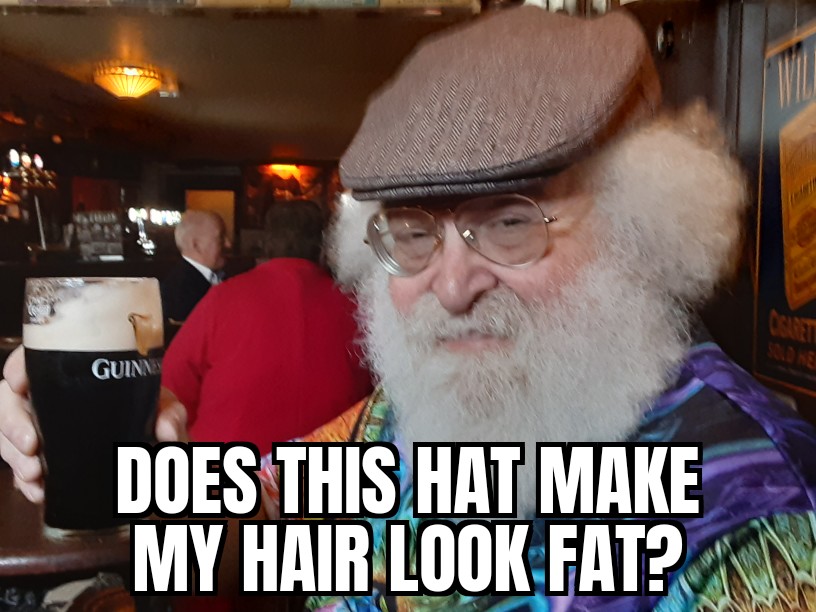
My next piece of advice is to have a cat or a spouse. Cats are not dignified, contrary to their reputations. One of our cats tried to escape from the vet and bonked her head on the glass door to freedom. And my spouse does and says funny things, or prompts them from me. For example, I once took a picture of him in a tweed cap and turned it into a meme (seen here, as you can no doubt tell.)

You can also turn trauma into humor. I once found myself having to get rid of a dead possum, which certainly traumatized me. Another time I almost offed a friend with a bay leaf. Those alarming events worked their way into killer posts, so to speak.

Reading humor can help, too. Think David Sedaris and The Bloggess. For irreverence, there’s Lamb: The Gospel According to Biff, Christ’s Childhood Pal, by Christopher Moore. For vintage humor, there are James Thurber and Erma Bombeck. (Given the example of Thurber and Bombeck, being from Ohio helps too. But I digress some more.)

Then there are humorous movies. Personally, Airplane can still make me LOL. (So can Zero Hour, the film from whence Airplane‘s plot and many lines of dialogue came, only deadly serious. It’s impossible to watch without flashing back (or forward, since Zero Hour is the older movie). But I digress yet again.)

But for myself, I like a good catchphrase that didn’t come from a TV show or movie. It came into being because I wanted to write little asides and put them in as footnotes. But I couldn’t figure out how to make WordPress do that, so I turned to my grammatical friend, the paren. (Not really my favorite mark of punctuation, which is the semicolon. But I digress for the last time this post. I swear it.)

Thoughts on Editing

When it comes to language, I used to be a prescriptivist, telling others how language ought to be used. Now I am a descriptivist, recording how language is used in practice.

Oh, I haven’t entirely given up my mission to get people to use proper grammar, spelling, and punctuation. I still feel that writing “correctly” can be important to the meaning of whatever it is you’re writing about. And I still cringe when someone (usually my husband) says “foilage” instead of “foliage” or “nucular” instead of “nuclear.” But that’s speech, which is very different than writing.

Of course, an editor can’t really edit spoken English aside from pronunciation. Well, there are malapropisms and misplaced modifiers.

Malapropisms occur when a speaker substitutes an incorrect word for a correct one. One headline that makes the rounds on Facebook is about an “amphibious” pitcher, when “ambidextrous” is meant.

Misplaced modifiers are descriptive phrases in the wrong place in a sentence. The classic misplaced modifier is Groucho Marx’s “Last night I shot an elephant in my pajamas. What it was doing in my pajamas I’ll never know.” (A misplaced modifier is often confused with a dangling modifier, which happens when an introductory phrase modifies the wrong subject in a sentence: “Painting for three hours, the portrait was finally finished.” Who is painting for three hours? We don’t know, but it certainly wasn’t the portrait. I once worked with a man who described any kind of grammatical mistake, even a subject-verb agreement error, as a dangling modifier. But I digress.)

One of the places I often encounter “faulty” grammar, spelling, and punctuation is on social media. I have to think twice before I share memes with errors in them because I’m afraid someone will think that I don’t know the difference. (I know Lizzie Borden’s name isn’t spelled “Bordon,” but I couldn’t resist the joke: “If you get any messages from my parents, don’t answer them. They’ve been hacked.” But I digress again.)

Speaking of memes, I once saw one that said one shouldn’t look down on someone who mispronounces less-familiar words. It means they learned them from seeing them in print rather than hearing them. One of my dear friends treated the word “sarcophagus” that way and came to me to learn the proper pronunciation. I was happy to oblige. (I’ve also heard of the phenomenon going the other way. Another guy I knew had only ever heard the name Sigmund Freud spoken. He wrote it down as “Froid,” a fair guess based on the sound, but outrageously inaccurate nonetheless. But I digress yet again.)

When it comes to language I do like, however, I love new additions to English. “Portmanteau” words are particularly fun. They’re made up of two words or parts of words smashed together to mean something new. One that everyone knows (but don’t realize is a portmanteau) is “smog,” which comes from “smoke” and “fog.” (I say I like them, but not the ugly portmanteau words that crop up, especially during the holidays. Nothing is simply a sale. It’s always an “aganza,” “palooza,” “bration,” or “thon.” The first million times someone did that, it may have been clever, but the shine has long worn off. But I digress some more.)

Anyway, back to editing. I hereby apologize to everyone whose infinitives I unsplit and whose prepositions I moved away from the end of sentences. I’m really sorry. My bad. Think of me as a recovering prescriptivist. Maybe not fully recovered yet, but I try.

Adventures in Writing: AI

I must admit I’ve had some experience with generative AI writing. I know I should be ashamed of this, but I’m not. Here’s what I learned about this tool or terror.

When ChatGPT was new, I was intrigued. I just had to try it out. I spent a couple of days feeding it some of my favorite topics and styles to see what it could do with them. What it produced was largely crummy.

For example, I asked it to write a haiku on the subject of sex. What it produced was: “Whispers in moonlight/Bodies weave an intimate/Haiku of passion.” Not exactly T.S. Eliot.

I asked it to write other kinds of poems. In almost every one, ChatGPT included the word “poetry” or the name of the style: “The poetry of passsion’s sweet romance” or “O sonnet of the flesh,” “Each line a brushstroke in the poet’s light,” “In every sonnet, life finds sweet peace.”

It also relied heavily on metaphors, many different ones in the same piece. For example, in a poem on writing, it offered “With verses woven like a tapestry. The writer’s heart, an open book” and “how the words, like melodies, entwine, In stanzas, whispers of a silent song.” Now that’s just bad.

It mixed metaphors atrociously: “The enigmatic tapestry…kaleidoscopic hues… orchestrated by unseen forces, paint the canvas of existence… a symphony of discordant notes, each mood a chapter in a cosmic novel.” All those in one paragraph. Another particularly egregious one was “etched into the fabric of one’s existence.”

It also got facts wrong. Recently, hoping that it had improved, I asked it to write a country song about horses in the style of Willie Nelson. “He’s a big ol’ bay with a coat dark as night” was one of the lyrics. (Bay horses are reddish brown.)

Later on, I had a chance to give a workout to a different AI program tasked with writing ten chapters of a novel. Then I was tasked with cleaning it up into human language. It was a lot of work.

AI couldn’t keep track of the characters, for one. It called a little boy Nicky, Billy, and Jamie and another character Henderson and Nelson in different chapters. It chose weird words (“thrummed”) and repeated phrases (“weight of the world”) in nearly every chapter. It forgot that a pivotal scene was supposed to take place in an abandoned warehouse, setting it instead in the woods. Once I had to have it produce a whole new chapter because the first one was so far off. Plot, characters, dialogue, narrative, backstory, continuity—all would be rejected by any competent editor.

AI nonfiction can be just as bad. There’s a tendency to be simply wrong about names, dates, and locations, for example. Flaws like that will seriously mislead readers. AI nonfiction has also been known to get things like herbal remedies drastically and dangerously wrong.

Once I toyed with an AI image generator, which did reasonably well with a human girl (though it couldn’t produce medium-length auburn hair), but couldn’t make a satisfactory alien to meet my criteria. It looked like one of those sad-eyed children in the old paintings.

I understand why special effects professionals hold AI in horror. Entire departments are being canned and replaced by larger, more sophisticated sorts of AI than the Tinkertoy ones I played with. But movies have been using CGI for years, so AI is the next logical extension. I’m not saying that the SpFX companies are right to abandon the people who have done so well for them over the years. Human imagination controlling the tools of creation will—or should—always have a place in the equation.

But generative AI has a long way to go before it can produce prose or poetry that can substitute for human works. I understand that publishers are being assailed with AI-produced novels, but I can’t imagine they can’t tell the difference. Readers of self-published novels, though, should watch out for AI books and avoid them.

Or, if you prefer, avoid all AI writing. I understand why you would.

(Note: Aside from the brief quotes, no AI was used to write this post.)

The Tyranny of SEO

There’s a phenomenon called “search engine optimization,” or SEO for short. And I’ve grown to hate it.

The idea of SEO is to increase the chances of your post, article, book, or whatever being at the top of the responses to a Google search. Writers and publishers in particular are invested in making sure that their wares gain the attention of Google and then potential readers.

SEO works by focusing on keywords. There are certain words and phrases that people search for more than others. If your work contains these words, it will appear further up the Google results and, presumably, increase sales. It’s all about “search visibility” and marketing strategies. There are plenty of books and websites that teach you how to improve your SEO game.

What are some of the best, top keywords that people search for? Well, best and top show up high on the lists. Everyone wants to know the best places to eat or the top-rated appliances, so those words show up a lot. “How to” is another search term that gets top results.

There are lists of keywords for any number of fields. If you have a book or article on health and fitness, your SEO keywords include “weight loss,” “lifetime fitness,” and “health tips.” Business keywords include “money” (of course), “opportunity,” “income,” and “profitability.” There are lists of keywords for coffee, dog training, and poker, among many, many others. For one of my areas of interest, mental health, keywords include “symptoms,” “medication,” and “side effects.” There are companies that specialize in giving you a list of keywords for your project—for a price.

What really ticks me off is what this has done to book subtitles. (Yes, I know that there are much more important things to be ticked off about, especially these days. However, I work in the publishing field, so I get to see a lot of subtitles. But I digress.)

Let’s start with one that isn’t all that annoying: How to Sustain Personal and Organizational Excellence Every Day. Eight words only. But look at the SEO keywords. We have Personal and Organizational Excellence. Sustain may be a keyword too, and so might Every Day. What could the author have done instead? Organizational Excellence ought to do it. Combined with a title like Habits for Success, that ought to do it. Still plenty of SEO words. Or just have a title: Success and Organizational Excellence. No subtitle. But that goes against every publishing rule, evidently.

Here’s another subtitle that’s been reined in just a bit: Reflections on Death, Rebirth, and Hunger for a Faith. Nine words. It says what you’ll find in the book without going on and on. Just enough to pique the potential readers’ interest. (While we’re on the subject of things that tick me off (and I think we were), I cringe whenever I see “peak” someone’s interest, or, God help me, “peek.” But I digress again.)

Now here’s a subtitle that goes a little further overboard: Dynamic Techniques for Turning Fear, Indecision, and Anger into Power, Action, and Love. Thirteen words. Dynamic Techniques, Power, Action, and Love are obvious self-help SEOs. I can imagine the title that would go with it: Transform Your Life.

Let’s keep going. Next on my list of terrible subtitles is Stop People Pleasing, Staying Silent, & Feeling Guilty… And Start Speaking Up, Saying No, Asking Boldly, And Unapologetically Being Yourself. Twenty words, one of them a mouthful by itself: unapologetically. Honestly, I think you could read the first chapter in the time it takes to read the subtitle.

Finally, here’s a subtitle that really grates: Transform Your Body in 28 Days with Illustrated Exercises. Lose Belly Fat, Sculpt Glutes, and Feel More Energized in Just 10 Minutes a Day! Twenty-four words, four verbs, and a plethora of nouns and adjectives. And a promise with an exclamation point. What is there left to say in the book? Whoever wrote that subtitle ought to have their thyroid checked.

On the other hand, maybe I’m just jealous. I wrote two books before SEO took off. (I still get royalties. I’m saving up for a pizza. But I digress some more.) Maybe I should have called them Bipolar Me: The True Story of One Woman’s Journey Through Mental Illness, Depression, and Hypomania, Based on Her Weekly Journal of the Same Name and Bipolar Us: A Deep Dive into Bipolar Disorder and Its Devastating Effects on Sufferers and Society, the Highs and Lows That Come With It, and How to Find Peace and Stability.

Of course, if I did that, the subtitles would have had to be printed in little tiny type, another aspect of publishing that really ticks me off. With my bad eyesight, I wouldn’t even be able to read my own subtitles. I can’t win.

It’s a Bird! It’s a Hat! It’s a …

What it is, is a fascinator. Better known as that silly thing the women in the British Royal Family wear on the side of their heads.

They’re almost the only ones who wear fascinators anymore, and theirs are so large that they’re often mistaken for hats. And like hats, they often include elements such as netting, veiling, organdy, beads, flowers, and even feathers (hence the bird reference).

They’re different from hats, although. In general, they’re worn on the side of the head, though again the British Royal Family’s fascinators are so large that they perch on the side and spill over to the top of the head, or vice versa. They look like they want to grow up to be the hats that women wear to the Kentucky Derby but still have a ways to go.

You sometimes see fascinators on brides who don’t want to do the whole veil routine. Or you see them on the kinds of ladies who go to high tea and try to impress each other. (You don’t see them on me, largely because there’s this stupid rule that you don’t wear a fascinator with glasses (unless you’re the Queen of England (or Queen Consort, I suppose, if she wears glasses, which I don’t know, not being a Royal follower, though I’ve never seen a picture of her wearing glasses)), and I’m not willing to sacrifice sight for fashion. Or comfort for fashion, for that matter. I’m pretty sure there’s also a rule about not wearing a fascinator with pajamas. There’s also a rule that the escort of a woman wearing a fascinator should stand to her left, as the fascinator is worn on the right side of the head and this would impede conversation. That’s a lot of rules for a piece of headgear or an accessory or whatever. But I digress. At length.)

Fascinators impinged themselves on my consciousness recently because there’s a writer’s conference here in town this week. People have been posting on Facebook about rides to and from the airport and what to pack due to the weather in Dayton (layers was the best suggestion).

The writer’s conference is held in honor of Dayton native Erma Bombeck, and focuses on humorous and human-interest writing. There are sessions and seminars featuring noted writers and comedians, speed-pitch sessions with agents, a stand-up comedy contest, and a writing contest, as well as decadent chocolate cake and killer brownies. (There is a lot of chocolate around here. Some of the presenters even pass out M&Ms. It’s thought to spark creativity, and, as we learned in the Harry Potter books, chocolate really does help. I don’t think there are any studies on the effects of chocolate on creativity. All the evidence is bound to be anecdotal. But I digress again.)

Where was I? Oh, yes, fascinators. Well, people who attend this conference—the women at least (I think)—sometimes wear tiaras. And feather boas. And bunny slippers. Sometimes all at once, I suppose, at least for the overachievers.

Several first-timers noted the suggestion of such accouterments and wondered if they were seriously proposed. One anxious newbie asked if they were required, as she had been viewing “How to Wear a Tiara” videos on YouTube (which I didn’t know is a thing) and decided she couldn’t make the requisite bobby pins (are they still called that?) work with her short hair. I suggested she try a fascinator. She wasn’t sure whether that was a fashion tip or not. But, she said, she is fascinating, so it probably would be appropriate.

(Where she’d find one is a different matter. I don’t know where the Ladies Who Lunch (or Take High Tea) shop. And I suppose a bridal salon would be too pricey as well. I think I’d start in secondhand shops or antiques stores. I think I’ve seen one at such a shop and even tried it on, though it of course looked stupid with my glasses. But I digress for the last time this week. I promise.)

At any rate, I find the subject (cue Mr. Spock)…fascinating.

(And I hope you’re impressed by the number of parens I opened and closed in this discussion.)

What I’ve Learned About My Writing From Writing

I’ve been writing since I was in second grade. Back then, and through college, I wrote poetry, most of it pretty terrible. (Pretty depressing, actually. I was bipolar but undiagnosed. Thus begin my day’s digressions.) Gradually, my poetry turned into prose and I went where my muse took me. Maybe it was all those papers I had to write for college English that reinforced my love of prose. (I still write some poetry, but mostly to experiment with different forms like haiku, sonnets, and villanelles. I’m on my second digression already.)

But on to lessons learned.

• My ability to handle distractions has increased. It used to be that I had to write in complete silence, which helped me concentrate. But, as writing became more routine and natural, I experimented with music for writing. Instrumental music was okay with me, but anything with lyrics took me out of the zone. Now I prefer to write with the TV on in the background. I’m not really listening to it. It’s just ambient noise and I tune it out. (My mother used to put on baseball games, which she was not really interested in, just to have some noise in the house. But I digress again.)

• I can keep a schedule. The ghostwriting company I work for bases its deadlines on writers producing 1,500 words a day. I’ve fallen into a routine. I write 750 words for about two hours in the morning and another 750 for around two hours in the afternoon. If I don’t make my 1,500 because of an appointment or something, I write 1,000 words, morning and afternoon, until I’m caught up. (If only I had had this kind of discipline when I was writing my failed mystery novel! Of course, for ghostwriting, I work from an outline, which I didn’t have for my fiction. But I digress some more.) I have to work my two weekly blog posts in there somewhere, but I’ve given myself a deadline for them as well. I post them every Sunday at 10:00 a.m.

• I seem to be specializing in self-help books. I gave up on reading self-help decades ago, but now it’s about all I write. (I did ghostwrite one short piece of fiction, but it was pure smut. So I guess I learned that I can write smut as well as self-help. But I digress yet again.)

• Ghostwriting suits me. Yes, it’s playing in someone else’s sandbox. And no, I don’t get a byline or royalties. But it’s steady work and keeps me from stealing hubcaps. Also, it supplements my Social Security nicely—not bountifully, but nicely. I don’t know what I’d do all day if I didn’t write. Become even more sedentary than I already am, no doubt. Or steal hubcaps.

• I can pivot. I write humor. I write about social issues. I write about mental illness. I write about language. I write about writing (you may have noticed). I’ve written about flesh-eating diseases, pandemics, and baseball heroes. I’ve written prayer services and stories about nuns. I’ve written about poverty in Jamaica. I’ve written about playgrounds and childcare. I’ve written lesson plans for textbooks. (My nickname is 1,000-words-on-anything. I suppose I’ll have to change that to 1,500-words-on-anything. But I digress even more.)

• I can call on my husband to help me brainstorm topics. He also keeps an eye (and ear) for news stories he thinks might interest or inspire me. And he has plenty of quirks that are fun to write about.

• And I’ve learned that cats are no help at all when it comes to writing (especially one named Ow-Toby), except as subjects. Which I’m sure will come as no surprise to you, but I put it out there anyway.

Reading With Abandon

I’m an unrepentant bibliophile. I started reading at the age of four and never stopped. I prided myself on the number of books I read, even after I grew too old for the library’s summer reading program. However, increasingly, there are books that I just can’t read. (And not because my eyesight is bad. My e-reader makes up for that with its bump-up-the-type-size feature.)

No, the books I can’t – or won’t – read anymore are ones that manage to annoy me. I start reading them and can’t go on anymore. I don’t actually throw them across the room, but I am tempted to. (Except that, as noted, I read on a Nook or an iPad and don’t want to throw those across the room.)

So, what kinds of books annoy me enough to be figuratively tossed across the room?

I buy a lot of bargain e-books. I get multiple emails daily offering books that are not in their first flush of youth or frequently are self-published. Sometimes I even buy them, if the title is interesting or I recognize the author. I do try to check them out a bit before I hit “submit order,” but occasionally a clunker gets by me.

There was one, for instance, that was supposed to be about how stupid decisions affected history. It sounded interesting and only cost two bucks. However, when I started reading, I discovered that every example the author gave involved a stupid decision regarding a military campaign. I was disappointed. I was hoping for stupid decisions in politics, science, medicine, and other fields as well as war. I’m not a big fan of military history – with a few notable exceptions – and I lost interest so rapidly that I abandoned the book after a few chapters, when it became clear there would be nothing else.

I also abandon books with wretched writing. I recently bought a book by a well-known writer that was a sequel to a book I remember from a couple of dozen years ago. I made it about halfway through. I like foreshadowing and setting up a later revelation if it’s done skillfully, but this novel used the “had I but known” gambit that gives away the “surprise” twist. It also used the narrator to give backstories for every character and describe their inner motivations instead of letting the reader discover them through the characters’ words and actions. And these nuggets broke up what should have been a dramatic and suspenseful story.

Another book got on my wrong side because of its descriptions. It was a mystery with a literary setting, which I ordinarily like. But the author engaged in serious fat-shaming, describing an overweight character in not just unflattering but demeaning terms. It was gratuitous, too – had nothing to do with the plot or the character’s character (as it were). It was clearly meant to make the reader dislike the character for her appearance only.

Speaking of mysteries, I have been annoyed by ones that are too easy to figure out. One, for example, gave away the killer in the introduction. I noticed that the author avoided using personal pronouns (which makes the writing very stilted and artificial), and I knew that the brutal killer must be a woman because why else would they leave out “he” or “she”? Then when a female character gave another person a false alibi – thus alibi-ing herself as well – I knew whodunnit and spent the rest of the book trying to interest myself in another character. I actually finished that one, just to see myself proved right.

And I avoid altogether buying books that are the beginnings of series. Oh, I’ve enjoyed – even adored – series in the past, but anymore I want to read a stand-alone book. Maybe it’s because I can’t commit, but I no longer want to be sucked into thousands of pages of text or endless cliffhangers. If a book wants commitment from me, I want resolution. Fortunately, most series now announce themselves proudly as “Book 1 of the XYZ Series,” so I don’t fall into them by accident. At least I don’t have this problem when it comes to nonfiction.

Despite my newfound ability to discard books and refrain from ordering ones that violate my “rules,” I feel a sense of not just disappointment but a bit of self-criticism when I’m not able to stick with a book. I know this is ridiculous – I still have a TBR list that’s long enough to keep me engaged for the next hundred-plus years. Some of them may prove less than captivating, it’s true. But though I may have given up on certain books, I will never abandon my quest for better ones – or my love of reading.

Tip Jar

Choose an amount

¤2.50
¤5.00
¤10.00

Or enter a custom amount

¤

Your contribution is appreciated.

Donate

The Care and Feeding of a Writer

So you’ve got a writer in the family – and, like many or even most writers, they act peculiar. They can bite your head off one day and be clingy the next, go for days without eating or sleeping, or zoom back and forth between elation and depression. What’s a family member to do? Is there anything you can do that won’t get your head bitten off?

I’m here to tell you that, although you’ll likely never change a writer’s behavior unless they give up writing, there are ways you can live successfully together. It won’t be happily all the time – I can’t guarantee that. Just think of your writer as you would a tropical fish. They need a certain amount of care and attention, food, and a filter, but they can be a focal point for a room. (If you keep the door closed, that is. Writers are notoriously cranky, and guests and young children maybe shouldn’t be exposed to that. And not having a filter is a problem (not just for writers, but for people in general). So perhaps they’re not like tropical fish at all, except for maybe a triggerfish or a lionfish. But I digress.)

Care and Attention

There are times when a writer doesn’t need attention – or even interaction. There is a stage of writing called “prewriting.” It looks an awful lot like lying on the couch, doing nothing. The creative brain is churning nonetheless and doesn’t take kindly to being interrupted. This is especially true if the writer doesn’t have a room of their own, which many don’t. The corner of a room is more likely to be the writer’s habitat. But a door that will open and close is a definite asset if you expect your writer to actually produce anything.

In fact, a writer will need a fair amount of alone time. When they’re actively writing (as opposed to prewriting), they won’t want to be interrupted – short of fire or death. Death (other than the death of the writer) may even be ignored and so will any fire not directly threatening the writer’s computer.

Feeding

When the writer is on a roll, they won’t want to stop to eat. At the most, they will pause for long enough to down a yogurt. If you realize they haven’t eaten in quite a while, you can offer a sandwich, but it’s best to poke it through the door with a stick, the way you would offer food to a large bear. (Personally, I’m lucky. I have a small refrigerator in my writing room, stocked with easy edibles like cheddar and American cheese, yogurt, applesauce, and things that are spreadable on crackers (cream cheese, apple butter, peanut butter). But I digress again.)

Rejection

This is a fact of life for writers, at least if they write for publication and not for the desk drawer or computer desktop folder. If they’re new at putting their work out there into the wild, this can cause distress, desolation, or just generally hopelessness. There is not much you can really do about this, except a generous application of “there, there,” which doesn’t actually help but sounds sympathetic. You can try reminding them of famous writers like J.K. Rowling whose works were rejected multiple times before they were published. This will either rev your writer up with dreams of becoming a multimillionaire (which are, let’s face it, bound to be dashed) or make them feel worse because of the likelihood of having to endure the many, many rejections.

Unless you yourself are a professional editor (which you probably aren’t, or shouldn’t have married a writer if you are), don’t offer suggestions unless asked for them. Even then, you should probably bow out more or less gracefully – “I don’t know. You’re the writer. I could never presume to give you advice.” Most writers won’t even listen to suggestions from their writers’ group or editor, should they be so lucky as to find one.

You and Your Writer

Maybe you married or live with a writer knowing what you were getting into. Maybe it came as a surprise later, when they announced a desire to express themselves in writing. Whatever your situation, rest assured that living with a writer is possible. You just have to have unfailing patience and supportiveness – and a job to bring in income if they’re a “full-time writer.”

Does it seem like you have to sacrifice a lot (and then listen to the writer in your life complain about the sacrifices they make for their art)? I won’t deny it. Just ask my husband. He lives with a writer. And I appreciate it – every time he pokes a sandwich through the door and then I close it, or when I zone out while we’re watching TV and can’t catch him up on the plot if he leaves the room for a moment. I live a writer’s life – and I couldn’t do it without my husband. I try to remember that. He puts up with a lot in the process of caring for and feeding me.

Tip Jar

Choose an amount

¤2.50
¤5.00
¤10.00

Or enter a custom amount

¤

Your contribution is appreciated.

Donate