Everyone has their favorite candy, from Ronald Reagan’s Jelly Belly jelly beans to the butterscotch cotton candy that Trump wears on his head. At Halloween, these preferences really come out. We know that children prefer full-size candy bars and hate boxes of raisins, and that everyone hates candy corn. (I don’t know why. As far as I can tell, it’s pure sugar, which should make it popular. But I digress.)
But candy doesn’t just make its appearance on Halloween. There are Valentine’s boxes of candies and Easter candies like Cadbury’s Creme Eggs (though I’ve noticed that these days, Easter baskets come with more toys than treats. It just seems to me inappropriate to celebrate Easter with Spiderman action figures. But I digress again.)
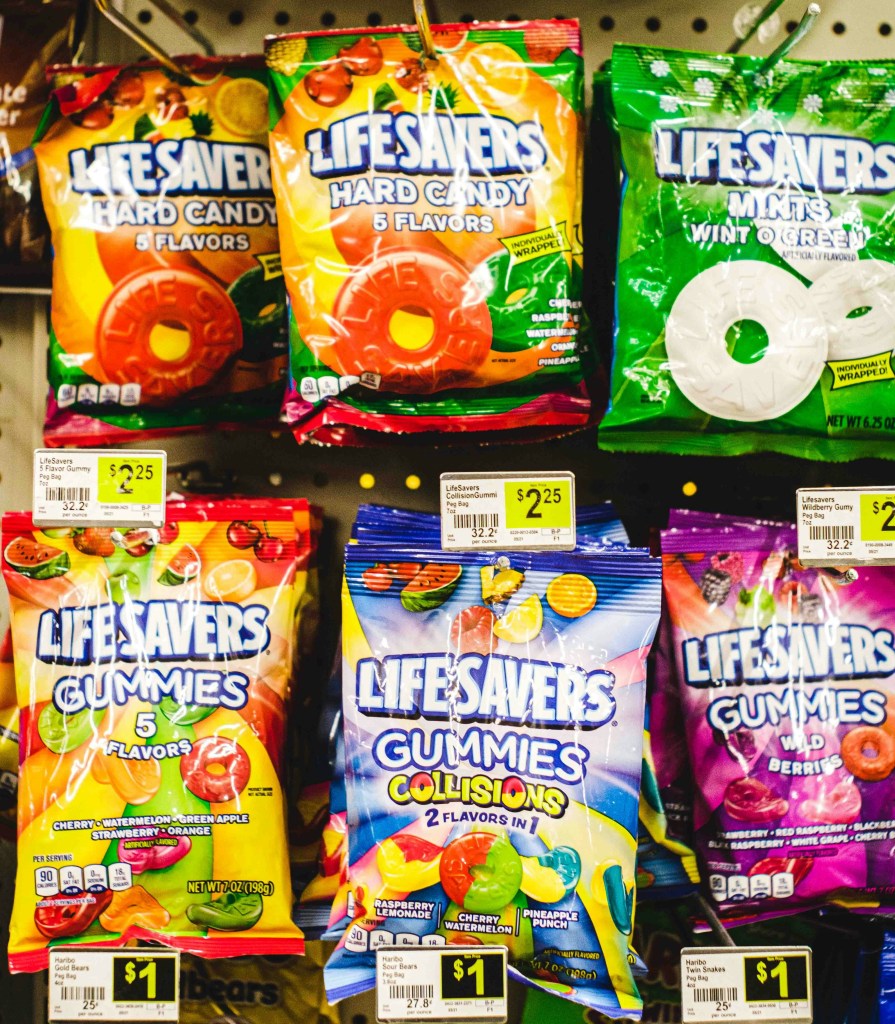
I have fond memories of Christmas candies. Every year, my sister and I could count on finding in our stockings an assortment of Life Savers packaged to resemble a book. We never tired of them. (We also got an orange that filled the toe of the stocking. This was no surprise, as every year our Grandma in Florida sent us a crate of them. But I digress some more.)
Through the years, my taste in candies changed. I fondly remember Reed’s Cinnamon red-hot candies that looked like Life Savers, but with a dip in the middle rather than a hole. I went through a Tic-Tac phase (never mind that they were marketed as breath mints). Now I’m very fond of Sanders’ dark chocolate bourbon-flavored sea salt caramels.
Salt and sweet make a great combination. After all, the four food groups are salty, sticky, sweet, and crunchy, which makes nature’s perfect food the chocolate-covered pretzel stick (sprinkles optional). If you look hard enough, you can even find chocolate-covered potato chips. There’s a local potato chip manufacturer and a local chocolate purveyor who team up every year to make them.
My Aunt Thelma and Uncle Earl had a general store in Campton, Kentucky, which offered a vast supply of penny candies, which actually cost a penny in those days. Sugar Babies were my favorite, along with their larger cousin, Sugar Daddy (no rude remarks, please). I also had least favorites, such as jawbreakers, Butterfingers, and Good’N’Plenty.
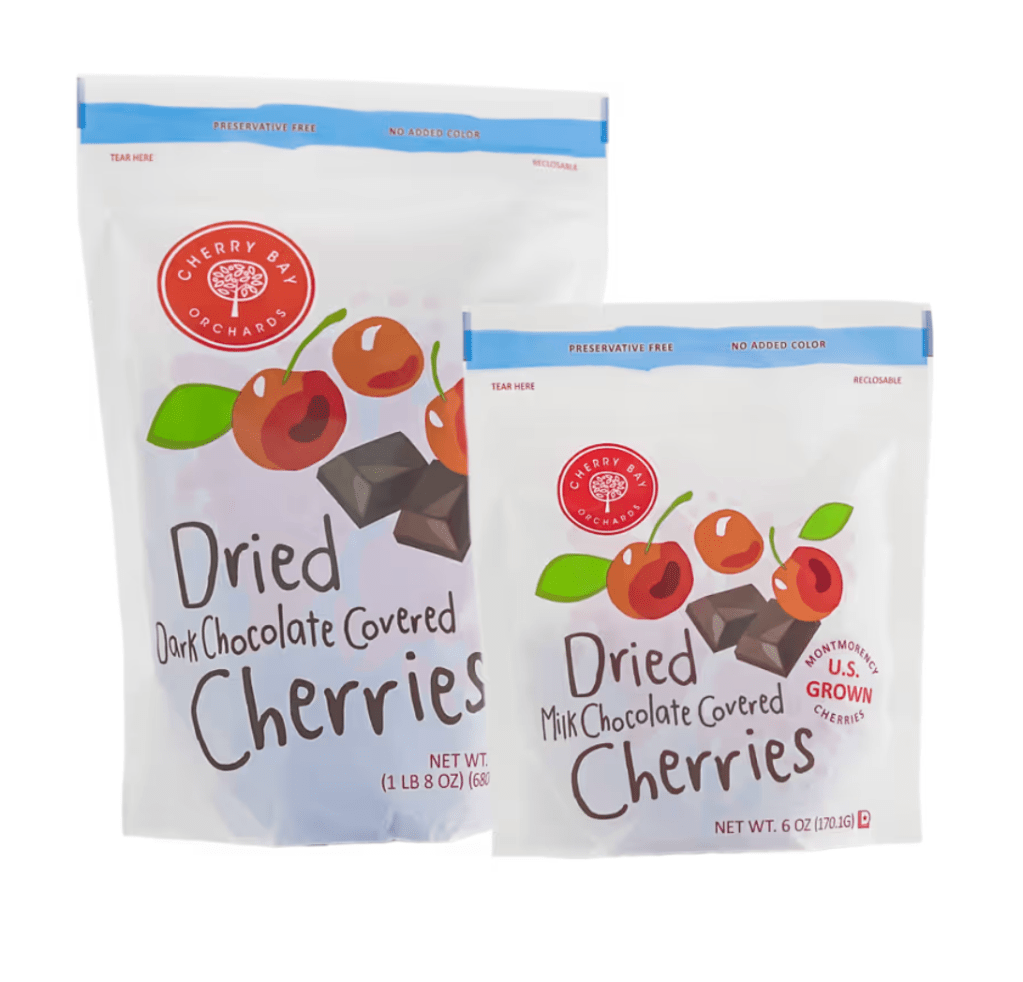
Recently, however, I’ve developed a new sweet obsession. I saw that there were dark-chocolate-covered dried Montmorency cherries available locally, but made in Michigan. I absolutely despise regular chocolate-covered cherries. I hate the sickly sweet goo between the cherry and the chocolate. But I had hopes that goo would not be a component of the dried kind of chocolate cherries. So I bought a couple of small bags.
It turned out they were amazing! The dried cherries were chewy and tart, with a texture like raisins. The dark chocolate coating was a perfect complement. Before long, I had devoured both bags.
Then I noticed a whole box of the candies for sale. I had to have it. I thought it would contain a number of the small bags of cherries. But no. It contained one large plastic bag filled with three pounds of yum. It’s all I can do to keep myself from diving in headfirst and binging into a potentially dangerous chocolate-and-dried-cherry sugar rush. (The small bags say that eight candies equal 130 calories. I’d have a Willy Wonka blueberry (only cherry) moment if I ate my fill. But I digress even more.)
I hope they sell well. Well enough, anyway, that they aren’t discontinued, but not so well that stores run out of them. While I wait to see, at least I have pounds of them to see me through.
 Quick quiz: What do Jesus and the poop emoji have in common? They both are associated with Easter, silly!
 But I Digress . . .