Monthly Archives: February 2025

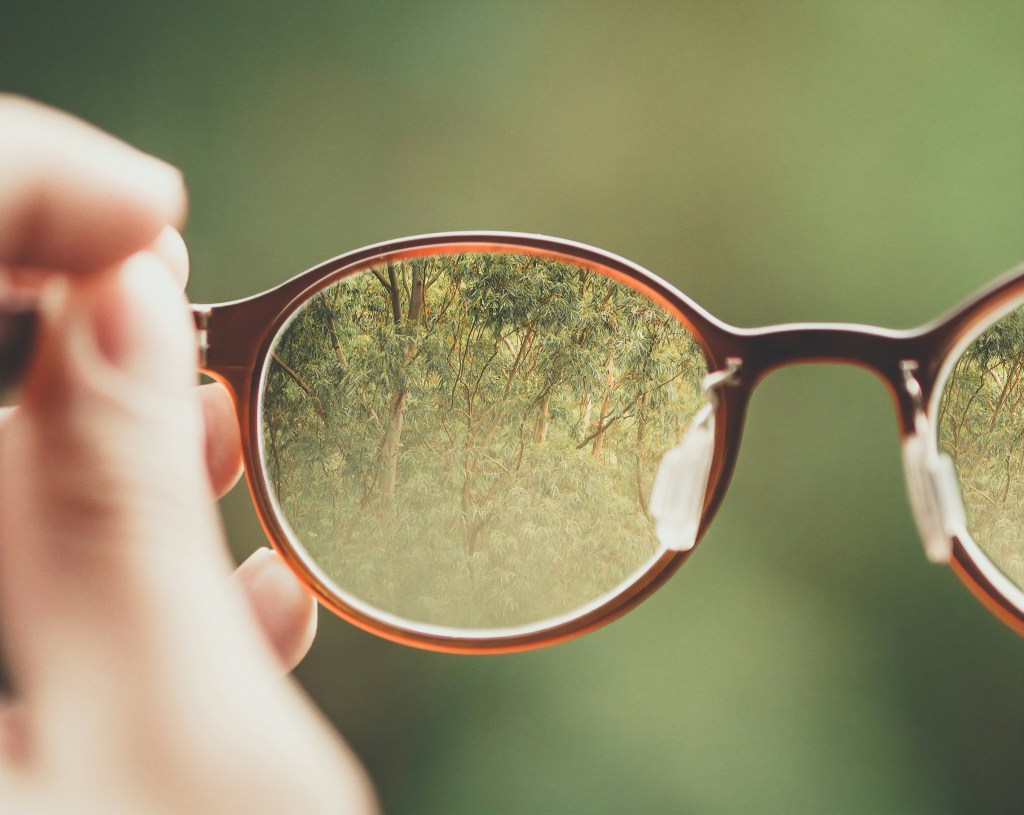
It’s All a Blur!

My history with eyeglasses goes way back—over 60 years, in fact. That being the fashion at the time and me being even then the opposite of a fashionista, I wore many pairs of cat-eye glasses.

My husband, Dan, was only a little older than I was when he got his first pair of glasses. Unlike me, he’s near-sighted. (I’m cross-eyed and far-sighted.) He always tells the story of how, once he had glasses, he said to his mother, “Look, Mommy. Those people on television have faces!” (Although we have different diagnoses, we both require Coke-bottle prescriptions. But I digress.)

By the time I was in high school (when I had at last graduated from cat-eye to aviator frames), all my classmates were wearing contacts, and losing them regularly. I was unable to follow suit because of being cross-eyed and, more importantly, because I can’t bear to even think about anything, including me, touching my eye. I recoil whenever there’s a commercial for a drug that requires an eye injection. (That’s true to this day—both the wireframes and the horror of anything touching my eye. But I digress again.)

When I was a child, I had an ophthalmologist, Dr. Saunders, who was the epitome of gentleness and kindness. When it was time for me to select my own eye doctor, I wanted someone with the same vibe. So of course, I went to Dr. Gary, whom I knew from being in the same martial arts class. (I figured that if he needed to touch my eye for any reason, he could at least subdue me first. But I digress yet again.) When I first visited his office, his partner glanced at me and exclaimed, “You’re a hyperope!” which is the technical term for far-sighted, I learned.

Over the years, both my husband and I have been through increasing thicknesses of eyewear and various styles of frames. After all these years, I still prefer wireframes and Dan has come around to my way of thinking. Bifocals were an eventual necessity and I opted for computer glasses as well, since I spend so much time online.

We’ve had a few eye-related emergencies over the years. Mine occurred when I set off a flea bomb in the house and accidentally bombed my face. Fortunately, my glasses offered some protection and there was a bottle of distilled water nearby. Suddenly, I wasn’t so worried about something touching my eyes as Dan held them open and poured.

Dan’s extreme eye occurrence happened when he was driving. All of a sudden, he saw a flash in his right eye, and the vision in that eye became blurry. The next day, he had small, dark pinpoints in his right eye’s field of vision.

A quick trip to Dr. Gary seemed necessary. Dan learned that he had experienced an age-related phenomenon that affects the vitreous fluid in his eye. This information gave me the willies, of course, but Dan took it all in stride. The flash didn’t return and Dan named the largest of the floating points in his eye. He called it “Freddie the Free-Floater.” (Any Red Skelton fans out there? But I digress even more.)

I’m preparing myself for the day when I also see that flash and the dark points in my vitreous fluid. I don’t think I can come up with a better name for them, though. Dan surely wins on that count.

Practical Beauty Tips

If you want to look like a million bucks, get real! And by that, I don’t mean using all-natural charcoal slug placenta serum on your extremities. No, I’m talking about budget reality. You don’t have expendable income that would cover a single day of Angelina Jolie’s beauty regimen. What you need are practical tips like these.

How to exfoliate. Before you bathe, rub your face vigorously with a dry, rough towel. Take a hot shower. After you do, rub your face vigorously with a dry, rough towel. Your epidermis will disappear in a trice. You’ll have a luminescent pink glow just like someone who has lived through ionizing radiation, without the expense of costly fissionable materials.

How to use bath bombs. If you have a bathtub, the directions on the package will work pretty well, as long as you don’t mix up your bath bomb with the similar kind of bombs that you drop into pots of soup for seasoning. The curry and chili varieties may prove painful or leave your skin an interesting new color. But a bath with your bouillon bomb will leave you with an appealing fragrance that attracts hungry men and dogs.

If you have a shower rather than a bath, wrap the bomb in a piece of cheesecloth like a bouquet garni and hang it from the shower head. (Be careful. The bouquet garni technique may confuse you and make it more likely that you will douse yourself with a miso or onion soup bomb. But I digress.)

How to select a fragrance. Go to the perfume counter these days and you’ll think you’re in the produce section of the grocery store. Natural, vegetal scents are the current trend. Think of lemon wedges, herbs, and any vegetable that can be carved into the shape of a rose. Throw them in your blender and garnish your pulse points with them. If you want, take the leftovers from your lunch salad and whiz them up. Don’t forget to put a sprig of parsley behind one ear. Think of it as a leafy, green fascinator.

How to accessorize. Coco Chanel famously advised that when you’re ready to leave the house, remove one accessory before you go. Lose the brooch. (No one ever pronounces it properly anyway. It rhymes with “roach,” not “cooch.” But I digress again.) Or ditch the parsley fascinator. If you’re wearing earrings, the greenery will be un peu de trop.

How to get an eye-catching tattoo. Text tattoos are always popular. You can convey an important message like “No Regrets,” “Slippery When Wet,” or “FTW.” The important thing to remember is to consult a proofreader before the tattoo machine revs up. Otherwise, you might end up with a permanent message that says, “No Regerts.” (Actually, “FTW” might end up as “WTF,” which could be what you say when you see it. But I digress some more.)

(If you want a Chinese symbol, which is a perennial classic, as a tattoo, it’s even more important to hire a knowledgeable proofreader. Most tattoo artists aren’t bilingual and will happily decorate you with characters that mean “oyster sauce” or “I’m ready for the first man I meet.” Assuming that’s not what you asked for. But I continue to digress.)

Next Week! Follow me for more Practical Beauty How-Tos: Tame Your Unibrow With a Birthday Candle; Get Your Weight-Loss Game on With Turnips; and Use Spackle to Freshen Your Look!

The Good, the Bad, and the Others

The Wicked Witch used to be a villain. She tried to kill Dorothy and her companions. She enslaved flying monkeys. She wanted revenge for her sister’s accidental death.

Now she has her own musical and movie.

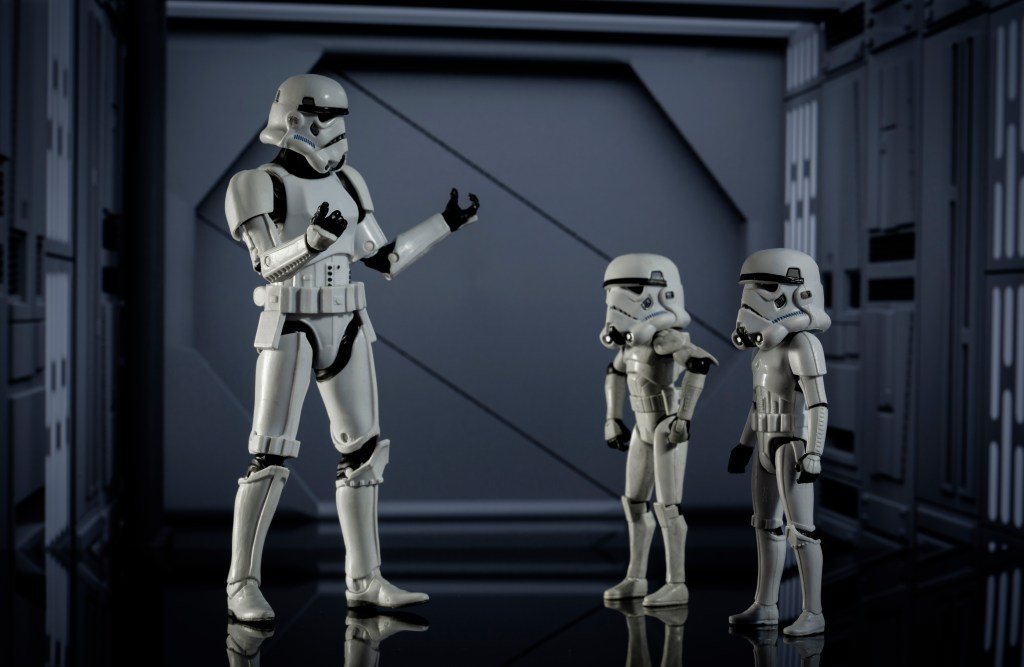
The elevation of villains is a thing now. Personally, I blame Star Wars. I was once visiting some friends who had a young son. He held up his Darth Vader action figure and said, “This is my friend.” (This was in the days before the proliferation of Star Wars movies culminated in Vader’s redemption at the last possible second. But I digress.)

My theory is that villains have power but few limits. It’s no wonder youngsters view them as positive influences. When Darth Vader is your friend and protector, you share in his power. You fear nothing.

Maybe this rise of the villain started with the rise of the anti-hero. Let me explain. And let me use Buffy the Vampire Slayer (one of my favorite TV classics) as my vehicle. (Actually, I’m going to do it whether you let me or not. So there. But I digress some more.)

Here’s the backstory, for those not familiar with the Buffyverse. Buffy’s first love was the vampire-with-a-soul Angel, and he was a Byronic hero, a type that became popular when Byron (duh) was writing poetry. Byronic heroes are tortured souls who waft around in black clothes and clouds of pain. They’re never cheerful. They don’t crack jokes. They suffer from existential angst. They have troubled pasts and isolate themselves from society. (Other Byronic heroes include Batman holed up in his Batcave, grieving over his dead parents. The Brontes knew their Byronic heroes, too. Mr. Rochester and Heathcliff are classics. But I digress yet again.)

In opposition to the Byronic hero, we have the anti-hero. They don’t behave according to the heroic model. They’re “bad boys” who manage to dominate the plot and achieve their goals despite being misunderstood or refusing to follow convention. Think Han Solo, Captain Jack Sparrow, or in the case of Buffy, Spike. He’s never going to be Buffy’s Great Love, but he has his uses in her world. (Deadpool and Robin Hood are two other examples who would never have a beer together but occupy similar literary spaces. I suppose Dexter would be the ultimate anti-hero. Still more digression.)

No, wait. Satan is the ultimate anti-hero. Take a look at Milton’s Paradise Lost. Lucifer has agency and is the more interesting character. At some level, the reader roots for him. They know God’s going to win. That’s a given. But Satan’s quest, while reprehensible, is also on some level noble. (I’m talking literary characters here, not theology. But I digress again. And as Jean Kerr said, in reference to the story of Adam and Eve, the snake has all the lines. But I continue digressing.)

So, what makes the bad guys more interesting guys? For one thing, they’re deeply misunderstood. They’ve often been victims of bullies or of an uncaring, unfair society. They touch the darkness, the “shadow self” that lives within each of us. We recognize ourselves in them, identify with them in ways we simply don’t with standard heroes. We’d like to identify with heroes, but we know they’re better than we are.

Standard heroes require supervillains to make them at all interesting. Without Lex Luthor, Superman just flies around foiling ordinary bank robbers. Without Moriarty, Sherlock Holmes is simply Columbo. (I could say that without elusive diagnoses and the looming specter of death, House is basically Doogie Howser, but I won’t. That would be ridiculous. There’s also misanthropy. But I digress some more.)

Personally, I respond more to anti-heroes than Byronic heroes. Pure villains don’t interest me, but neither do sanctimonious heroes like Galahad (“My strength is as the strength of ten because my heart is pure.”). But when it comes to the villains and heroes in the wrestling ring, I don’t give a fig for any of them. Besides, they change places so often that you need a scorecard to tell which is which. (Don’t assume that this means I watch “pro” wrestling. I learned about their ethical switches from the New York Times. Go figure. But I have finished digressing. For this week.)

Mixed Emotions

I know we cuss our computers with astounding regularity. I know the sound card stops working when you have a Zoom meeting or a file disappears in a cloud of mist or they suddenly, stubbornly stop working altogether. They haven’t ushered in a paperless society. They rat out your driving habits. They haven’t automated mundane tasks so that we all have the time to be creative. They blast blue light into our retinas, addict us to sites and games that actively lower our IQs, and listen to our conversations in hopes of hearing their names.

Rather than them working for us, we work for the obstreperous, silicon-infused creeps.

(I was introduced to computers in the eighth grade, when we shared time on a teletype-style computer that ate punched tape and could be made to respond to whistling. They weren’t much better then, but at least they didn’t screw up prescriptions at the pharmacy or go down when they should go up. But I digress.)

By now, you’ve decided that the headline of this post was deeply ironic. But no, I do love computers. Really. I couldn’t do without my desktop, my laptop, my tablet, and my e-reader. I plan to take them all with me to Florida when I go. (Well, obviously not my desktop. It would take up my entire luggage allowance. But I digress again.)

Mostly what I love about computers is their memory. My own memory is almost shot (and getting shotter every day) and my electronic friends pick up the miles of slack. They keep track of my appointments, bank balance, and correspondence. They allow me to send those all-important messages and memes to friends. I can like something without even nodding my head.

But what I love most about computers are Mr. Google and Mr. Wikipedia. Google provides intel (sorry, not sorry) on words that I can never remember how to spell. (Back in the day, I worked for a magazine and created a line of cover copy for a talking computer (which back then was a novelty). It was to say, “Unaccustomed as I am to public speaking.” I must have checked 20 times on the number of C’s and another 30 on the number of M’s. I still have to check that word or trust Grammarly (which isn’t all that trustworthy). But I digress some more.)

I also have to use my Google-fu to look up songs for my husband. It’s like a game. He gives me a single line from an obscure song and notes how long it takes me to discover what the song is, who sang it, who wrote it, who has covered it, what album it’s from, and the name of the drummer. Then I find a video of the song and play it for him.

Another game we play is “What else has she been in?” He points out a performer and I get to find out what her name is, who she’s married to, and whether she’s had any other roles in shows Dan might have seen. I also find pictures of her, what she’s done lately, and who she’s co-starred with that Dan might know. This requires not just Google and Wikipedia, but also IMDB, which I highly recommend. (I also like The Urban Dictionary for when I come across an unfamiliar word or phrase like “rizz” or “no cap.” But I digress even more.)

But there’s one thing I wish my computer would do for me. I wish that pressing Control-Z would correct my errors in meatspace as well as in cyberspace. Add too much paprika to the stew? Control-Z! Forget to add soap to the laundry? Control-Z! Take a wrong turn trying to get to my newest doctor’s appointment? That’s right—Control-Z!

But stubbornly, it won’t. Maybe on next year’s model…

P.S. Don’t even get me started on printers!