
When you think about therapists and elephants, you probably think of family therapy and the “elephant in the room.” As you may know, it refers to a not-so-secret secret—something everyone in the family knows but won’t talk about, like a family member’s alcoholism. But what if the room the elephant’s in is the kitchen? And what if the necessary thing to do isn’t to talk about the elephant but to cook it up and eat it?
There’s another saying among therapists, “Eat the elephant one bite at a time.” (Yes, I’m in therapy—have been for decades. (I can hear you saying, “Well, that explains a lot.” Don’t deny it.) But I digress.)
What it means, essentially, is “You’re going to be in therapy a long time. Maybe decades. Like Janet.” Thanks to insurance companies (or no thanks to them), therapy that takes six weeks or fewer is preferred. But there you are, some of us take just a tad longer. “Eating the elephant one bite at a time” is like “baby steps” (only much more vivid).
(I don’t know what sauces or side dishes would go with roasted elephant—or, more likely, pressure-cooked elephant. Maybe a peanut sauce. (Sorry not sorry.) But I digress again.)
My father also had an animal metaphor he used on me more often than I’d like to say: “You don’t have to go at it like killin’ snakes.” It’s related to the one about the elephant. It was advice that I didn’t have to do whatever it was I was doing (like filling out college applications) in a desperate hurry. I could take my time.
(I think if they were actual snakes, though, like the tomb full of ones in Raiders of the Lost Ark, I would want to kill as many of them as I could as soon as possible. The saying only applies to metaphoric snakes, I guess. But I also guess that the elephant is metaphoric, too. But I digress some more.)
Once when I was editing educational magazines for a living, I had a writer I liked very much. He had good ideas, wrote them to the right length, and turned them in on time—he was very reliable, and I used him a lot. But one day he sent me an article about not letting paperwork pile up. It was full of animal metaphors, though not, as I recall, elephants or snakes. But when he got to the point of describing a huge stack of overdue papers on one’s desk, he compared it to a rotting water buffalo. It was certainly vivid. And memorable. And, much as I hate to admit it, apropos. But I gently let him know that it was a little too vivid. I told him he could keep the other animals but the water buffalo had to go. (He was not in the least upset. That’s another thing I liked about him. He never kicked about being edited. But I digress yet again. (I just typed “digest” instead of “digress.” I need to wrap up this post.))
The end. Or, rather: You may think that this is the end. Well, it is, but there is another ending. This is it. (Just to get a duck in here with all the other animals.)

 First, let me say that I read The Bloggess’s (Jenny Lawson’s) blog all the time. I have her books and I read them all the time too. But secretly I hate her, and here’s why.
 Forget about all the robot assembly and manufacturing machines that are out to steal our jobs. As far as I can see, the only

 I think it all started with the naked Julia Child impressions. We were newly married and everything was fun. We weren’t entirely naked while cooking, of course – aprons were a requirement and oven mitts (worn strategically) were allowed. There were other rules, too – no deep-frying, for example, for obvious reasons. Using plummy, authoritative voices we would do a fictitious play-by-play of dinner preparation: “Place the turkey in the oven for 350 minutes at 120 degrees. Oopsie! [take slug of wine].”
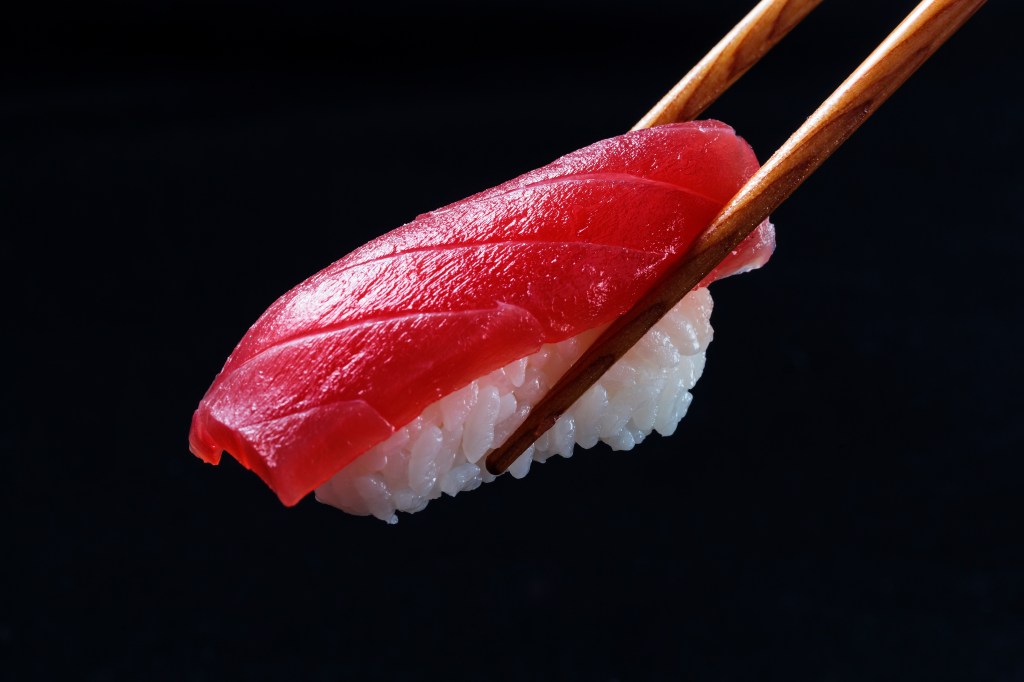
 The first time I tried sushi was in one of those social situations where it is simply impossible to refuse. (Not unlike the time I first ate egg salad, which I loathe, at my sister’s mother-in-law’s. Since then, I’ve come to tolerate my husband’s version of egg salad. But I digress.)



 Romance novels have changed since I used to read them. (Yes, I am here publically admitting that I did once read what I called “tempestuous” novels because the cover blurbs always started, “The tempestuous saga of an innocent young woman and the pirate she couldn’t live without.” Hey, I was 16. But I digress.)

