Monthly Archives: September 2023

Science Madness

The problem these days is not so much “mad scientists” as people who are mad at science.

Where did the Mad Scientist trope come from anyway? Arguably it was Mary Shelley’s horror novel Frankenstein, published in 1818. Science fiction classics like Jules Verne’s The Island of Dr. Moreau (1896) kept up the theme and the “Golden Age” of science fiction provided many more examples.

In these novels, scientists either tampered with things better left alone or succumbed to a lust for power. Death rays and the precursors of gene splicing abounded. The outcome was mostly dreadful, except for those few gallant hero scientists who managed to save Earth from a deadly plague/alien/monster/giant something.

While the ’30s, ’40s, and ’50s were the heyday of mad scientists in fiction, those years also constituted a time when real scientists were heroes. The atomic bomb ended WWII in the Pacific. Polio was conquered. The “Space Race” that led to many scientific breakthroughs began, thanks to the Soviets and their Sputnik (1957).

Back then, scientists were revered.

Later on, not so much.

The conflict between science and religion heated up. Of course, there was conflict going way back – before Mary Shelley warned us about “playing God.” Galileo and Kepler removed us from our “God-given place” in the center of the universe, and Darwin implied that we were just another animal. The Earth suddenly became billions of years old,  circling a mediocre star.

Then there was fallout, both literal and figurative, from the atomic bomb. Medical science gave us thalidomide. NASA used up billions of dollars, with no obvious monetary payoff down the line, and some people decried the space program for spending money that could be used for problems on Earth.

And all that led to changes in the general public’s attitude toward science.

By the ’60s. medicine was under fire from those who found Eastern philosophy and natural healing just as good or better. Physicists were condemned for the same atomic bomb for which they had been lauded. Science didn’t seem like such a good deal after all.

And there’s some truth to the complaints. Many scientists believed that math, physics, and chemistry were all. If it didn’t have numbers attached to it, forget it. Psychology, sociology, anthropology, and most other -ologies were “soft sciences,” barely sciences at all. Hard sciences ruled.

Slowly, the ground under science shifted. Now science has become to many people the enemy, the domain of elitists and narcissists and people who feel they are entitled by their intellect to run the world.

Of course, the stereotypes from early science fiction had something to do with that.

But the Average Man (and Woman) had a bone, or at least a fossil, to pick with science and scientists. Again, science was denying what the general public believed.

Increasingly, people believed in the efficacy of non-Western medicine, or at least the non-efficacy of Western medicine. Science believed in genetics and stem cells and cloning.

People believed in the spiritual realm. Scientists believed in the measurable.

People believed in religion. Science believed in science.

You can see where this is heading – right back to the days when people thought science meant the reanimation of corpses, invasions of bug-eyed monsters, and the creation of death rays. Because what, after all, is the distance between growing human organs and creating Frankenstein, between cloning a sheep and making a half-man-half-fly, between a laser-guided missile and a death ray?

And many scientists are arrogant, dismissive of popular opinion, and unwilling to engage in dialogue with opposing viewpoints. “Because I said so,” seems to be enough for them. “Real” scientists look down their noses at “popularizers” who look to educate the public about science.

Unfortunately, everyone is shouting and no one is listening.

Personally, I am a sometimes science geek as well as a word nerd, thanks to high school chemistry and physics, college astronomy, and lots of nonfiction reading. I don’t think science knows it all, and it’s a long way from figuring it all out. I also think that psychology and spirituality and art have a lot to teach us about the human condition and our place in the universe, STEM classes and careers notwithstanding.

But the pushback against science scares me. NASA is wasting its time chasing UFOs. Streaming channels that used to be devoted to science now feature ghost chasers and treasure hunters. I’m not saying that science never stumbles, but it provides the best answers we have to some of the problems that plague us, including plagues.

I don’t advocate returning to a time when science was the be-all and end-all of thought and education, or to the time when fictional science made scientists suspect. I just think science deserves more respect than it’s getting now.
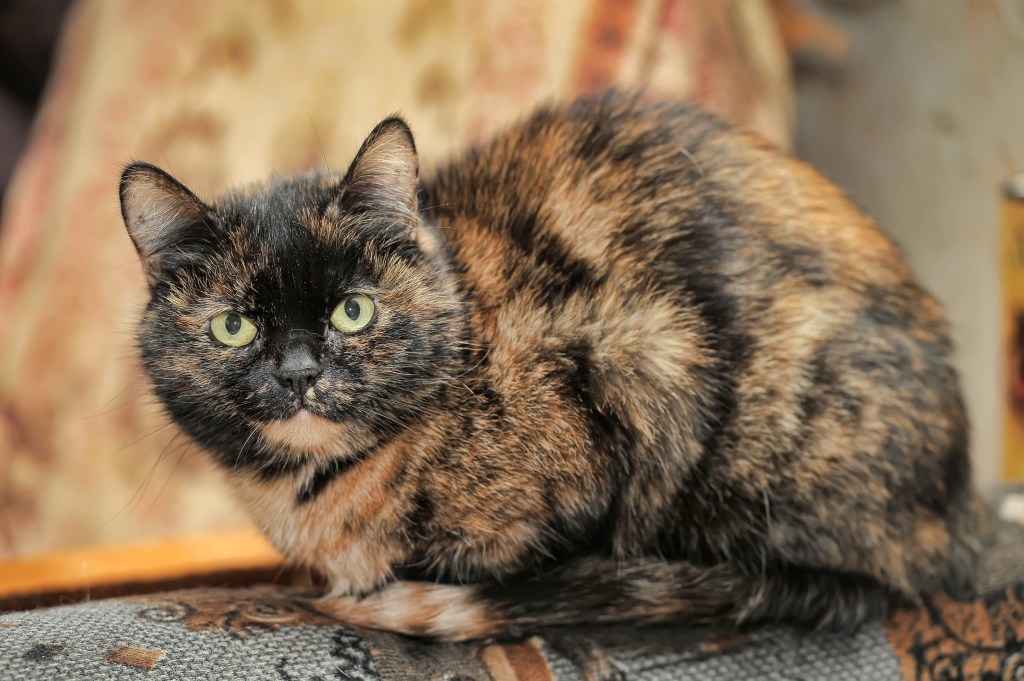
Tortitude

Tortoiseshell cats have the reputation of being “divas,” “feisty,” “strong-willed,” “independent,” “aloof,” and with a temper, given to hissing and scratching – in other words, a general pain in the owner’s ass. There’s even been a study that supposedly validates this. But yet cat lovers, including me, have given their hearts to and shared their homes with beautiful tortoiseshell kittens and cats.

(There is also some disagreement on whether they are beautiful or not. Some find their mottled fur patterns ugly. I don’t. I once saw a carpet that had a pattern that looked like a tortie. It was an ugly carpet. The cats themselves are gorgeous. But I digress.)

There’s even a name for the supposedly difficult personality of torties – tortitude. It’s meant to encapsulate the sometimes-unpleasant attitudes they might display. (The Urban Dictionary says “torbies” (tortie/tabby combos) share these traits.) I, however, have never found torties’ attitudes unpleasant.

Oh, mine have had their moments. Louise was a toe-biter as a kitten. I vividly remember her needle-like teeth piercing my tender toe flesh. But she grew out of it and turned into a loving, totally agreeable cat with an amazing purr. I could cradle her in my arms and she would sigh with satisfaction. I would melt.

Not that torties can’t be mischievous or quirky. Anjou once got into my purse and stole a chocolate bar. (I know chocolate is supposed to be bad for cats, but she suffered no ill effects.) She was also fond of eating a few slices of bread from a loaf and making croutons from the rest of it. The first night I got her, Bijou slept across my throat. Later, she was known to scratch the heater in the bathroom that was next to her litter box. (“Listen,” we said. “Kitty’s playing the harp.” Though I suppose it really sounded more like a steel drum. But I digress again.) Bijou also once crashed a party I had thrown, sauntering into the living room with a tampon applicator held in her mouth, looking like a little kitty Groucho Marx, but more embarrassing.

One time at the NYC Cat Show, I got to spend a little time with a breeder who told me about torties. He said they were “the candy bar of cats – a little bit sweet and a little bit nuts.” (He also told me how to tell the difference between a Norwegian Forest Cat and a Maine Coon. It has to do with the shape of the cats’ muzzles. But I digress yet again.) (I was in New York on business and stayed a couple of extra days. In addition to checking out the cat show, I also took in the Broadway musical Cats. It was my Kitty Weekend. But I digress more.)

I started adopting torties when I went looking for calicos and the shelter didn’t have any. Torties are a kind of calico or calicos are a kind of tortie. I can never remember which. I came home from the shelter with my first cat, who was also my first tortie. I’ve actually had more torties than I have calicos over the course of my cat-owning life.

So. Tortitude. Is it a real thing? If you ask me, tortitude isn’t a drawback. To me, tortitude equals sweet, loving cats that look much better than a walking carpet. (Sorry, Chewbacca. It had to be said.)

Gift Giving: The Good, the Bad, and the Weird

Giving gifts is an act fraught with significance and anxiety. (At least it is for me. Once I walked into a store to buy a baby shower gift and instantly got a Charlie horse near my collarbone. It felt like a ping-pong ball under my skin. Only excruciatingly painful. But I digress. Already.) How much should I spend? Will the person re-gift this? How the hell do I wrap and ship a live goat? (No, I’ve never actually tried to do this. I use Kiva.com for all my goat-gifting needs. More digression already.)

Never fear. Here are some tips on what to do, what to avoid, and how to make sure your gift is really special.

The Good. My husband, Dan, is the best gift-giver I know. His strategy is to follow me discreetly around a mall or exhibit hall, note what I ooh and ahh over, and sneak back to buy it. Sometimes he even pretends the store was out of whatever to make the surprise even more of a roller-coaster of disappointment and delight.

Another good strategy is the one he and my mother cooked up one year. They went through old boxes and closets and found things I had forgotten about that were a bit the worse for wear – a tambourine, a doll, a ceramic Christmas tree I had made – then cleaned, repaired, and refurbished them.

I have a hard time getting gifts for my husband. He belongs to the “Here’s what I want; just get me that” school of thinking. That is no fun. But I probably should just go with his requests, because I often end up getting him things he doesn’t want or use, like a yogurt maker or a GPS for his car. (Truthfully, I am the GPS for his car. I suppose I should be glad that he prefers me to electronics, but somehow I’m not. But I digress.)

Once, though, I thought of Exactly the Right Thing. He had an old, orange-striped cat, and I had a friend who was a painter. She told me how to take a good natural-light photo of the cat and then turned it into a painting.

The Bad. Rex, a former boyfriend, never knew what to get me for any occasion. He therefore unilaterally decided that I would henceforth collect heart-shaped boxes. I received boxes decorated with ribbons, fashioned from colorful stones, and so forth – none of which I particularly wanted. (Teapots. Eggcups. Stuffed armadillos. Almost anything would have been more to my taste. I sometimes wonder how many other women he knew suddenly found themselves collecting heart-shaped boxes. Something to store in those boxes – say, jewelry – would have been much more welcome. I’m digressing a lot today.)

The Weird. If you know as many weird people as I do, you enter the realm of weird gifts. The world’s ugliest Goodwill tie fitted with a microchip that plays “You Light Up My Life.” A 12 Days of Christmas-themed “Three French Hens” – three eggs decked in tiny black lace garter belts. A toy chicken that walks and lays malted milk balls. The Black Widow model slingshot (my father gave me that one).

If there’s a White Elephant or pick-or-take gift exchange it can get weird quickly, too. A mug that says “I Don’t Have Herpes.” Sea monkeys. An inexplicable purple and orange glass thing. Twenty dollars worth of toilet paper. (It makes an impressive-sized package, if you get the really cheap kind. People love that. Just like they love digressions.) It’s even more strange when the weird gift is the one that people fight over.

There are also other considerations besides the appropriate gift. For instance, there’s:

Wrapping. My efforts at wrapping resemble those of a ten-year-old child. But at least I try to be creative. I once wrapped an umbrella to look like a candy cane, if a wrinkled, uneven one. And if I give boring socks (in addition to a more interesting gift), I like to wrap each pair in a different-sized and -shaped package.

Gift cards. Some feel that receiving them is boring and giving them is a cop-out. Not my friend Michael. He has an entire philosophy of gift cards. He explains, “To me, respecting the gift means using it on something outside the ordinary, or at least something I would have trouble allowing myself to get with family funds. Something that will stay associated with the giver in my mind, at least for a while.” Think of that the next time someone gives you a gift card.

Poverty Christmas. One of the best holidays I remember was when all of my friends and I were broke the same year. Separately, we each had the idea of hand-making or hand-selecting gifts. I cross-stitched potpourri sachets. Meg baked cookies. Phil went to a used bookstore and found exactly the right book for everyone. Rhonda decorated small baskets of inexpensive treats. That was really an “It’s the thought that counts” kind of year. Since we all did it, it wasn’t even embarrassing.

There you have it: my advice on gift-giving. Go good. Go weird. Go small. But don’t try to make someone collect heart-shaped boxes.

Seven Reasons I Hate The Bloggess

jennymeFirst, let me say that I read The Bloggess’s (Jenny Lawson’s) blog all the time. I have her books and I read them all the time too. But secretly I hate her, and here’s why.

1. She had a weirder childhood than I did. She lived in a small Texas town full of farm critters and wild animals, and weird characters, including her father the taxidermist, and has interesting poverty stories, like the one about the bread-sack shoes. I lived in a nondescript middle-class suburb with a stay-at-home mom and a dad that went to work every day smelling of Vitalis and Aqua Velva, rather than deer blood.

(This was also the problem I had trying to write country songs. You can’t get very far with “I was born an industrial engineering technician’s daughter/in the Central Baptist Hospital of Lexington, KY.” But I digress.)

2. She had more interesting pets, with more interesting names than I did. She had a raccoon named Rambo that wore Jams and a delinquent turkey named Jenkins. Later she had a dog named Barnaby Jones Pickles and now has one named Dorothy Barker. Her cats are named Ferris Mewler and Hunter S. Thomcat. We had dogs named Blackie and Bootsie and rabbits named Christina and Mittens. Our recent dogs have been Karma and Bridget, and the only eccentric cat names we’ve bestowed have been Django and Dushenka.

(Ordinarily, I don’t like cat names like Baryshnikat and F. Cat Fitzgerald. I think cat names should be something you wouldn’t be embarrassed to yell out the door if one of them wanders off, like Louise or Garcia. I suppose the Bloggess’s neighbors are by now used to anything. But I digress again.)

3. She has more interesting disorders than I do. I have bad knees and bipolar disorder type 2 (and a blog about it, www.bipolarme.blog). The Bloggess has generalized anxiety disorder, anti-phospholipid syndrome, rheumatoid arthritis, depression, and, apparently, an obsession with chupacabras and vaginas. This gives her much more to write about. Although I do have two blogs. Two! In your face, Bloggess!

4. She’s less inhibited than I am. The Bloggess would have ended that last paragraph, “In your face, motherfucker!” I didn’t learn to cuss till I was in my 20s and no one I meet ever believes I swear until I do. Then they’re shocked. Also, I swear all the time, except in my blogs, where I’m afraid I’ll offend readers, all of whom I assume have tender sensibilities. The Bloggess knows her readers better than that.

5. She has way more readers than I do. And she’s published books and has another coming out. I have some followers, but I think most of them want to sell me books on how to publicize my blog. I should probably study a book like that, but I’d rather read ones about emerging viruses, cloud cities on Venus, and mostly true memoirs. On the other hand, I have the distinction of being the only writer ever to have articles in both Catechist and Black Belt magazines. So take that, moth . . . Bloggess!

6. She and her husband have more interesting arguments than my husband and I do. We never even talk quietly about whether Jesus was a zombie.

7. She has a stronger voice than I do. I mean her writing voice. I had no idea what her speaking voice was like until I saw a video clip of her on the web, talking about vaginas. But when I’m going to write in my blogs, I have to lay off reading her for a day or two, because her voice takes over my weak, tiny mind and it wants to sound like her. I wish I could write like that. Or at least as well as that.

But, like the Bloggess, I am a strangeling. And that’s a start.