
All posts by Janet Coburn

We All Know What Labor Day’s About. Or Do We?

Labor Day is the day when we don’t have to work. Instead, we have picnics and barbecues and sit on our lawn chairs drinking beer. There might be a parade with classic cars for the grown-ups and clowns for the kids. Some businesses close their doors for the holiday. Others run special Labor Day sales and back-to-school specials, and deck their stores and commercials with red, white, and blue. It’s a national holiday, so someone must have once thought it was a good idea to give everyone a day off to mark the end of summer. In fact, it was such a great idea that someone made a whole weekend of it.

All of that may be true now, but it wasn’t how Labor Day started. It began as a holiday to celebrate the labor movement, trade unions, and the ways workers have contributed to building the United States. Take a closer look at that. It means the little guys – workers – who dared to pit themselves against Big Business – the bosses – and march, protest, and yes, sometimes riot in pursuit of ideals such as a living wage, weekends off, the eight-hour day, pensions, the ability to strike, and other changes.

(May 1st was also a candidate for “International Workers’ Day,” but conservative president Grover Cleveland felt that May 1st would celebrate a bloody confrontation in Chicago called the Haymarket Affair; socialism; and anarchy. In the fashion industry, Labor Day is considered the date past which one should not wear white or seersucker. But I digress.)

The labor movement and trade unions have fallen on hard times, what with politicians trying to gut their effectiveness, minimal concessions from bosses regarding rights, and the prevailing sentiment that “unions were useful once, but now have gone too far or been taken over by the mob.”

One of the heroes of the labor movement in the 1960s and 70s was César Chavez, a leader of the United Farm Workers’ trade union, which used nonviolent tactics such as strikes, pickets, and boycotts to advocate for better conditions for agricultural workers. He was posthumously given the Presidential Medal of Freedom.

Other people have been associated with the labor movement and conditions of workers, nearly all of them leftists in their politics. In 1974, U.S. author “Studs” Terkel wrote Working, subtitled People Talk About What They Do All Day and How They Feel About What They Do. And Barbara Ehrenreich’s gritty 2001 book Nickeled and Dimed: On (Not) Getting By in America chronicled her three-month journalistic experiment of working at minimum-wage jobs like waitress, hotel maid, house cleaner, nursing-home aide, and Walmart clerk.

This year’s COVID crisis has caused us to focus on who really are the essential workers in our society. To many people’s surprise, it turned out to be manufacturing workers, truck drivers, shelf stockers, and nursing home workers. Whole industries suffered from the lack of waitstaff, bartenders, cleaners, and cooks. Mom-and-pop shops took a bad hit. And of course, police, doctors, nurses, EMTs, and other hospital workers were deemed the most essential of all. Some workers were offered “hazard pay” if they continued to stay at their posts during the first months of the pandemic. Many, if not most, workers, unless they were working from home, wore masks and were abused by those who did not. Masks and other personal protective equipment were in short supply in many hospitals, clinics, and nursing homes.

This year’s Labor Day celebrations should be a celebration of these essential workers, not just an end-of-summer opportunity for beer, parades, and speeches about how workers are the backbone of the country and, oh, yeah, what a great country it is, with the stock market (i.e., the bosses) doing so well.

At the very least, we should thank the people who keep society rolling in good times and bad, who manufacture and provide us with the necessities of daily living, and who remain largely unsung until a crisis forces us to pay attention to them – the workers. The laborers for whom this holiday is named.


The New Satanic Panic

Back in the 1980s, there was quite a scandal. It seems that child care providers were supposedly abusing children horribly as part of Satanic abuse rings. The supposed acts the children were said to have performed included naked pictures and games with the care center operators, satanic rituals, orgies, and other horrendous acts. (They were also said to have seen witches fly, to have taken part in orgies in carwashes, to have been flushed down toilets into secret rooms, and to have been forced to lick peanut butter off a teacher’s genitals.)
Similar accusations happened around the country, but the most infamous was the case of the McMartin Preschool in California. The scandal kicked off when one child reported to his mother (who was diagnosed as a paranoid schizophrenic) that he had been abused. The school sent a form letter to all the parents, telling them to observe their children for signs of abuse. The floodgates opened.

The children were interviewed by a psychologist, who was later found to have been using leading questions and suggestive and coercive techniques to overcome the children’s denials of abuse. Nonetheless, the preschool owners were arrested, leading to a series of trials with no convictions and several hung juries. Outside the courtroom, angry parents congregated with signs that read “Believe the Children.”

In some states, merely being associated with such a case, even as a law officer or a judge was enough to get you accused. The seeds of conspiracy had been planted. Many believed that there were elaborate underground rings of Satanists who abducted and even bred children for abuse, pornography, and cannibalistic rituals. No trace of these Satanic child-traffickers was ever found. Gradually, the country calmed down and realized that they had overreacted. 

In her book The Devil in The Nursery, Margaret Talbot said: “When you once believed something that now strikes you as absurd, even unhinged, it can be almost impossible to summon that feeling of credulity again. Maybe that is why it is easier for most of us to forget, rather than to try and explain, the Satanic-abuse scare . . . the myth that Devil-worshipers had set up shop . . . raping and sodomizing children, shedding their clothes, drinking blood and eating feces, all unnoticed by parents, neighbors, and the authorities.”

That credulity has returned, however, in the form of QAnon, which Kevin Roose, writing for the New York Times, describes:

QAnon is the umbrella term for a sprawling set of internet conspiracy theories that allege, falsely, that the world is run by a cabal of Satan-worshiping pedophiles who are plotting against Mr. Trump while operating a global child sex-trafficking ring. QAnon followers believe that this clique includes top Democrats including Hillary Clinton, Barack Obama and George Soros, as well as a number of entertainers and Hollywood celebrities like Oprah Winfrey, Tom Hanks, Ellen DeGeneres and religious figures including Pope Francis and the Dalai Lama.

Many of them also believe that, in addition to molesting children, members of this group kill and eat their victims in order to extract a life-extending chemical from their blood.

QAnon has been described as a “big-budget sequel” to Pizzagate, because it takes the original Pizzagate conspiracy theory — which alleged, falsely, that Mrs. Clinton and her cronies were operating a child sex-trafficking ring out of the basement of a Washington, D.C., pizza restaurant — and adds many more layers of narrative on top of it. But many people believe in both theories, and for many QAnon believers, Pizzagate represented a kind of conspiracy theory on-ramp.

Adding to the clamor is the very real problem of child sex-trafficking, an international criminal conspiracy in which teens and young women are promised jobs such as dancing or (ironically) nannies. When they arrive at their destination, however, they are beaten, broken, and “employed” as prostitutes. Unfortunately, QAnon has muddied the waters by using “Save the Children,” the slogan of a real anti-trafficking organization. Now QAnon materials are more likely to be headlined or hashtagged with “Save Our Children.”

It is perhaps relevant to point out that both of these Satanic panics are aimed at people who are supposedly destroying society. In the 80s, it was working mothers, single parents, and the people who cared for their children that were supposedly at fault. There was a lot of talk going around positing that working  and single mothers were damaging their children by “allowing them to be raised by someone else.” The nuclear family, that foundation of society, was being threatened.

Now the Satanic panic targets liberals – politicians and Hollywood “elites” – who have come to be feared by both right-wing politicians and their right-wing followers. This time it’s not just the nuclear family that’s at stake. It’s the whole future of American democracy.

And it’s not likely that the lack of evidence will convince anyone that the accusations are untrue. There are still McMartin conspiracy theorists that swear there are remnants of hidden tunnels under the now-vacant lot that the school once occupied. The fact the pizza shop of Pizzagate fame had no basement did not stop the rumors that the sex-trafficking was conducted out of the basement.

Given how badly the country is divided now and how people are willing to view their neighbors, leaders, and others as enemies, it is not very likely that this Satanic panic will go away soon. But someday, people will hasten to deny that they ever believed that Tom Hanks was involved in child sex trafficking or that Hillary Clinton drank the blood of babies. Not until lives are ruined, careers are derailed, and friends and families torn apart by being on different sides of the “issue.” 

The Tale of Trauma Bunny

I never much cared for dolls as a child. I never even had a Barbie. What I had were stuffed animals. That’s what we called them back then, before taxidermy became so trendy. Now, I understand, they’re called “plushies.” My favorite plushies were always rabbits – there was one in my Easter basket every year.

One of the most famous plushies in literature is the Velveteen Rabbit. Its story is the one about a beloved childhood toy that becomes worn and shabby, but wishes for someone to love him enough to make him real. There’s even a song about it by Kathy Mar, which is a real tearjerker. My story is about a stuffed rabbit too, that once was shabby.

My life has been full of beloved plushies. Before my house and most of my belongings were destroyed in a tornado, I had a pirate Winnie the Pooh. I had a Raggedy John Denver doll that a friend made for me (the heart on his chest says, “Far Out”). I had a cat that looks just like a cat I once had. I had an official Vorkosigan Butter Bug hand puppet. A couple of armadillos. Assorted teddy bears and Beanie Babies. And a plush Puss in Boots that makes a sound like a cat coughing up a hairball and says, “I thought we were done doing things the stupid way.” In the voice of Antonio Banderas, no less. Once my husband and I went to a thrift store and pawed through an absolute vat of stuffed toys and found such lesser-known varieties as a camel, a snake, and Thing One. (We never did find Thing Two.)

My husband often buys me plush toys to replenish my supply, so often that I now have quite a start on a new collection, including dogs, cats, a turtle, a walrus, bears, assorted armadillos, a sloth, and an ambiguous creature that I call a pandacoon. But Trauma Bunny is special. 

She was a rescue rabbit. Dan found her at the store where he works, but not in the toy aisle. Rather, the innocent creature was in the pet food aisle, crammed and crushed behind a giant bag of dog food. Naturally, Dan bought her and brought her home to me. After all she had been through, I named her Trauma Bunny and gave her useful work to do – sitting on my printer and guarding my cellphone and headphones. She likes being needed and having a responsible job, in addition to just being cute.

Trauma Bunny is a comfort object, the psychologists would say. Far from being prized possessions of children alone, comfort objects – plush toys, blankets, and other soft, soothing items – have their place among many a grown-up’s life. Wikipedia defines a comfort object as “an item used to provide psychological comfort, especially in unusual or unique situations.” It says nothing about them being for children only.

I also have friends that have collections, some of them quite extensive, of plushies and other comfort objects. One friend, a large, burly ex-cop had a plush bunny named “Sweetie Rabbit.” Another even has a “My First Bacon” plushie that talks, or at least says “I’m bacon” when you squeeze it. (Most of my comfort objects have genders as well as names, but, frankly, I don’t see how to assign gender to bacon.)

Trauma Bunny does give me comfort. I am comforted to know that, even though she had a difficult past and troubling experiences, she found someone who noticed her plight and brought her to me. In a way, we help heal each other.

I don’t know how much healing my friend gets from his plushie bacon, but everyone needs a little comfort object now and then, even if it’s only a breakfast food.

On Symbols: Kneeling and Flags

Americans (and most likely other people) are having trouble with symbols lately – establishing what they mean, recognizing them as symbols, and, especially agreeing on what they mean. There is a whole field of study that covers this, called “semiotics.”

(One sign or symbol that almost everyone who went to college recognizes is that a towel or washcloth hung on a doorknob means “People in this room are having sex. Do not disturb.” But I digress.)

Trouble – sometimes serious trouble – ensues when people don’t agree on what symbols mean. To take two examples, not entirely at random, the symbol of the American flag and the gesture of kneeling.

Let’s take the flag first. First, and most obviously, it is a symbol for the United States of America and can be used to differentiate us from all other nations, as during the Olympic parade.

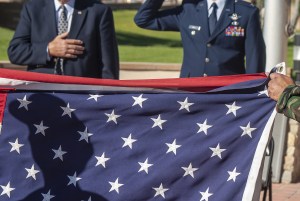
What’s happened, however, is that people have attached other meanings to the American flag. That’s perfectly natural. A symbol means what you put into it. The flag can represent the 50 states – that’s what the stars are there for – but these days it usually doesn’t. It represents bigger ideas or ideals.

Start with the premise that the American flag represents the idea of America itself – not the physical territory, but the ideas behind it (which also have other symbols, such as putting one’s hand over one’s heart or saluting, national pride, possession of territory, and so much more).

Fortunately or unfortunately, there is no one ideal of what America is, and therefore what the flag represents. Some people see America as the land of opportunity, the American dream. Others see it as a certain type of political system. Still others equate the US flag with the US military or sacrifice. Some see the flag as symbolizing the greatest nation on earth, while others see it as a symbol of a country that is great in some ways and flawed in others.

Now let’s take the symbol of kneeling. Ordinarily, it is a symbol of respect or reverence. One kneels before God, or a king or queen, or some other person or symbol of authority or power. Pride is taken in not kneeling before what one does not believe is a symbol of such authority. Most Americans will not kneel before a foreign king; some will not kneel when proposing marriage; people differ on whether to kneel before the Pope.

Lately, however, kneeling has come to be seen as a symbol of disrespect, when applied to the flag, the symbol of America. People who do kneel before the flag (or during the National Anthem, another sign or symbol) are certainly flouting the social convention (or symbol) of putting one’s hand over one’s heart or saluting. But who or what are they disrespecting? The social convention or something else?

A lot of this has to do with the variety of things the flag can symbolize. A number of people see the flag as a symbol of the US military and therefore, kneeling before the flag is a symbol of disrespecting service members or US veterans. People often see the flag as a symbol of what America is or means. The problem is that people don’t agree on what that is (or means). Are they disrespecting the flag (the symbol) itself, or America itself, or what America (or some Americans) have done? Are they respecting what America could be, or is?

Finally, it’s noticeable that this clash of symbols takes place largely at sporting events (which can also be symbols of physical superiority, city or state of college pride, or “just a game.”) Sporting events are one of the few places that most people go where the hand-over-heart symbol is used in conjunction with the flag – schools, scout gatherings, and military events being others.

Perhaps it is appropriate that at an event where two sides clash in symbolic conflict, that the players and spectators also clash in what the symbols and signs mean, and what one’s actions in response to them represent or mean.

And everyone forgets that, just as the map is not the territory, the symbol itself is not the thing it stands for. A symbol is in the eye of the beholder.


Magical Magnetic Noses

My cat has a magnet in her nose. My husband does not.

Dushenka is a wanderer. She wandered into our lives one day and decided to stay. Occasionally, the wanderlust still seizes her and she gives the phrase “Door Dash” new meaning. We’ve tried chasing her, with no success. She always comes back after she finishes with whatever she’s doing and strolls right into the house, where we call her “Naughty Grrl” and she remains completely unrepentant.

Then we moved, to a little apartment in a medium-sized complex. For six weeks, Dushenka showed no interest in the outdoors. Then one day, when our groceries were delivered and our attention diverted, out she raced. Naughty Grrl.

This time was even more panic-inducing. We had been in the apartment for only six weeks and we were quite sure Dushenka didn’t know her way around the neighborhood. Besides, it was 90 degrees outside and I pictured her lost and melted into a pitiful calico puddle somewhere, panting and expiring from heat exhaustion.

Imagine our surprise when 20 minutes or so later, she showed up on the doorstep (where I had put a bowl of water). I opened the door and Naughty Grrl strolled right in, as usual.

Admittedly, this story is not as dramatic as the ones about dogs whose families move away and track them down across the country. But it did get me to wondering. How did Dushenka find her way back?

Apparently, it has to do with the magnet in her nose.

Note that we didn’t put a magnet in her nose. It seems it was there all along. Scientists have discovered that various animals such as trout and migrating birds have in their nasal cells a mineral called magnetite, which, you might have guessed, is magnetic. Evidently, it allows them to sense magnetic fields such as those surrounding the Earth. How do salmon find their way every year to where the bears wait for them? Magnetic noses. (“Magnoreceptors,” if you want to get technical.)

Dushenka’s nose is tiny and pink (I have only ever seen one tinier and pinker, on a cat named Julia). You’d think there wouldn’t be room for a magnet up there. But apparently, it’s standard equipment.

Human beings ought to have the same sort of device lurking up their nasal passages, but we seem to have evolved away from that. There are tiny magnetic particles in the ethmoid bone in a person’s nose, but not enough to make a difference. Or at least not for some people.

Despite the fact that men are supposed to have a better sense of direction than women, my husband can’t find our car in a parking lot, or do that thing where you make three right turns to get back to where you started, or read directions in reverse in order to get home from an outing. He used to be embarrassed by this, but I think it’s comforting for him to know that he’s merely magnet-deficient and therefore (probably) more highly evolved. Or I as I think of it, topographically challenged.

Why don’t I get him a GPS, you ask? I did, but he never even installed it, much less used it. No, he prefers a human GPS (i.e., me) to go along with him whenever he has to trek to somewhere new. The magnets in my nose seem to work just fine, even though they can’t give directions in the voice of Han Solo.

Soon we’ll be moving back into the house where we lived when Dushenka came to us. I feel confident that when she inevitably makes a break for the great outdoors, her marvelous magnetic nose will bring her right back to us. Where we’ll tell her yet again that she’s a Naughty Grrl and she’ll flop down to rest up until her next expedition. I just hope Dan doesn’t get lost trying to chase her down.

Beware the Deadly Cow Farts

You may not have noticed, but that bastion of social liberalism and cutting-edge science, Burger King, has taken on the issue of global warming, by directing its attention to the proliferation, not of carbon emissions, but cattle emissions.

Cow farts. (And cow burps, lest we forget.)

How does that work, exactly? It all goes back to methane, a notoriously stinky gas. Human farts are largely nitrogen, with at most a 10% content of methane. Cow farts, on the other hand, according to a Danish study, produce “enough methane per year to do the same greenhouse damage as four tons of carbon dioxide.” That’s one hell of a lot of farts. And they’re 21 times more effective at trapping heat than carbon dioxide is. (Carbon dioxide is also a component of human farts, but not enough to make a difference. See how educational this blog is?)

Actually, as an article in the well-respected journal Gizmodo tells us, the methane produced in the intestinal tract of cows may contribute even more to greenhouse gases than the transport industry.

How do cows produce the methane that escapes from either end? It all starts in the cows’ first stomach (they have up to four, depending on how you count). Cows chew their cud (wadded up grain or grass) and send it on down the line to stomachs two, three, and four, and then out into our atmosphere.

“In actuality it’s not as much the farting that’s the problem,” the Gizmodo article continues. “Cows’ burping and manure contribute more methane gas than flatulence.” But cow farts make better headlines. Even the Burger King ad mentions farts first. And it’s the first time I’ve ever seen farts called out in a commercial. Oh, they’re implied in gas relief product ads, but Burger King has taken a giant step by actually naming the problem. After all, isn’t that supposed to be the first step in solving one?

BK proposes a possible fix – changing the cows’ feed. Some suggested solutions have been attempted in other places, such as jacking up the cows’ feed with garlic (to be honest, I don’t know if this is what Burger King intends to do), which seems like it would at least alter the aroma and maybe make their burgers taste … well, different; and housing cows in giant plastic bubbles, which was dismissed as inhumane. (I’m not making this up.)

This is not a new problem. Back in the 70s, when I took Carl Sagan’s class at Cornell, he told us that greenhouse gases were produced in large quantities by “the rumen of ungulates,” which is delicate science-speak for cow burps and farts. As freshmen, we thought this was hilarious. (Why was Carl Sagan, who was teaching astronomy, talking about greenhouse gases? Because he was Carl Sagan. But I digress.)

It’s sobering to think that that noxious barnyard odor is not just repulsive, but also harmful to the environment. It’s also sobering to think that Burger King has been seriously contemplating the problem of cow greenhouse emissions. And I’m not sure how long the ad agency that produced that commercial will last with them. Though I, for one, would be curious to see a follow-up commercial on how their strategy is working out.

I would also be fascinated to be driving through farmland and see a herd of cows roaming the fields encased in giant plastic bubbles. How would they eat? What would happen to the methane when the cattle were released from their containers, as surely they must be at some time, if only to shovel their solid emissions.

I guess we should all just be grateful that the average cow diet doesn’t contain a lot of beans. Good for your heart, maybe, but not for the atmosphere.


If you want more details on the subject (though I imagine you don’t, really), go to https://gizmodo.com/do-cow-farts-actually-contribute-to-global-warming-1562144730

Gravity Is Not My Friend

Unfortunately, as the saying goes, “Gravity is not just a good idea; it’s the law.” That may be true, but I am seriously considering a career as a lawbreaker, an avocation as a scofflaw. I might even argue the point as a lawyer.

Gravity, while one of the most powerful forces in the universe, is not nice to those of us living on Earth. Oh, I know that gravity keeps the moon in place and creates tides and other really neat things. But for the creatures living here, it has its disadvantages. And by creatures, I mean people. You and me. Particularly me.

First, let’s take weight. It’s that darn gravity that causes us to weigh what we do. The moon’s gravity is only 1/6 of Earth’s. Therefore, on the moon, we would weigh 1/6 of what we do now. That’s why astronauts get to jump and bounce on the moon and give the illusion of floating. The moon still has gravity, but it’s not nearly as annoying.

It is possible to achieve zero gravity on Earth, but you have to ride the “Vomit Comet” to do it, which I, for one, am not willing to do, even if they would let me. (It’s an airplane that makes steep inclines and steep drops that leave the humans inside suspended in midair for a few moments, just long enough to see their breakfast also suspended in midair.)

(Incidentally, there’s been a lot of speculation about what zero-g sex would be like. From my extensive research in science fiction novels, I gather it would be awkward, difficult, and counterintuitive. If I ever have the chance to find out for certain, I’ll be sure to let you know right away. It’ll be the first thing I do, after.  But I digress.)

No, the problems with gravity are for we, the Earth-bound. Aside from the weight issue, there are the aging issues. Gravity pulls on our no-longer-so-firm tissues and causes them to elongate. This is noticeable in the skin (particularly on the upper arms and neck) and, need I say, in the boobs. You wonder why your chest is starting to migrate to near your belly-button when you take off your bra? It’s gravity’s fault you’re not perky anymore.

In my case, it’s also gravity’s fault that I’m as beat up as I am. My childhood nickname was “SuperKlutz” (this was in the days before self-esteem had been invented) because of my ability to accomplish such feats as falling out of the car with both feet still in the car. I also managed to fall off the monkey bars, landing on my head on what was then considered to be reasonable playground surfacing, i.e., asphalt. Some people say this explains lots, but never mind that now.

At my age, gravity takes my least little misstep and turns it into a trauma. Just the other week, I wiped out on a short flight of concrete steps, despite using a cane at the time, and bruised my leg, skinned my scalp (which bled like an SOB), and produced a massive goose egg on my forearm. The goose egg has ebbed some, but it left a hideous bruise that has still not resolved to a proper skin tone. I glance down and think, “Wait! I don’t have a huge birthmark there!” And even if I did, it likely would not be turning entertaining but appalling shades of dried ketchup, soot, teen hair-color, and pea soup as I wait for it to dissipate. It resembles either a tornado sky or a very overripe, much-abused eggplant.

To add to the indignity, when I do fall, that mean ol’ gravity keeps me stuck there on the ground. I need to strengthen my leg muscles, I guess, so I can regain a standing position if my husband isn’t there to swoop in and hoist me back to vertical. (Actually, sometimes I can do it and sometimes I can’t, and I’ve never been able to figure out what makes the difference.)

A cane I have gotten used to. Riding scooters in large home improvement stores with concrete floors is also acceptable. But, so far, I’m resisting using a walker, though I suspect it will eventually come to that, sometime in the distant future when I’m truly old.

Unless some clever scientist figures out how to dial back gravity just a wee bit or my next house is on the moon, of course.

Acting My Age

I read all those posts about what women over a certain age shouldn’t do – wear message t-shirts or leopard prints, for example – and promptly ignore them. I have a great collection of t-shirts (including a Deadpool one) and leopard-print flats and a leopard-print bathing suit. If I stay away from a style of clothing, it’s because I don’t like it (the “cold shoulder” look comes to mind).

What I’m trying to say here is that I’m really bad at acting my age. My main problem is that I don’t know what age I am.  I mean, I can remember what year I was born and do the math. But fortunately, everyone else seems confused about my age too.

For a long time, I was often mistaken for younger than I am, which is a good problem to have. The first time someone called me “ma’am,” I had to look around and see who was standing behind me. It turns out the greeter was just a southerner who had been brought up to use “ma’am” as a polite form of address for any woman with any kind of authority. I was a cashier, so I had the power of exact change to wield. 

I’ve also been disconcerted when trying to buy a drink. Once I was in a bar and asked for a beer. The server asked for my ID, but the goggle-eyed look I gave her earned me a hasty, “Never mind.” I did have my hair in braids that day, but I was well into my 20s at the time.

And I know that cashiers in supermarkets are required to ask for ID even if the beer-buyer looks to be 90. But I still find it puzzling. “I have underwear that’s old enough to drink,” I tell them, mentally adding, “and if you don’t believe me, I’ll show it to you.”

Now, however, that doesn’t happen. To the younger generation, I am evidently a crone. Once I was in a tiny accident – it barely knocked the “I” off my Saturn Ion. But the other motorist seemed in quite a tizzy that I didn’t want to go to the hospital. I assured the young man again and again that I was fine. I may have seemed a bit disoriented because I couldn’t find a pen and paper to take down his insurance info. But he kept insisting that I go to the emergency room to be checked out because, as he put it, “you’re elderly.”

At the time, I was 52.

I admit that I have not aged well. My apparent age is not helped by the fact that, after two back operations, I now sometimes walk with a cane. And I haven’t bothered to get my hair “done” since long before the pandemic. 

But in my head, I am 35, tops. I’ve been told that everyone’s mind stops picturing them getting older at some point and forever after thinks they’ll look that way. I expect to see myself in the mirror looking 35, and am always disappointed when I don’t.

This is different from having an inner child, which for a long time I didn’t believe I had. Turns out that was because my inner child is an inner teen. She’s an outlet for all the things I never did as a repressed adolescent – painting my nails, flirting, spending money on ridiculous trinkets. Sometimes I let her out to have her fun for a while, but then I have to put her in a mental box and sit on the lid.

One needs only so many Deadpool t-shirts, after all.

Primitive Blogging

I know it’s going to be the modern equivalent of “I walked 30 miles to school in the snow. Uphill. Both ways.” But a lot of us are going to be saying, “I had to use floppy disks to add software to my computer. The printer was dot matrix. The monitor was one color – either amber or green,” and watching kids gawp in disbelief. (There’s a song with the line, “We programmed in ones and in zeroes. And sometimes we ran out of ones.” But I digress.)

At the moment, however, I am experiencing another sort of primitive computing – my environment.

I used to have a nice study. Large desk with drawers and cubbyholes. Printer stand/file cabinet. Floor-to-ceiling bookshelves. Many pieces of artwork on the walls. The lighting wasn’t quite what I might have wanted, but, hey, you can’t have everything. I had a window for natural sunlight and an overhead room light.

That was in the days when we had a house, and the house had three bedrooms. One of them was my study and the other was my husband’s. He kept his computers, TV, DVDs, fossils, and who-knows-what-else in there. (The third, naturally, we used as an actual bedroom.) It was perfect, or as nearly as one is likely to get.

Now, and for the next couple of months, circumstances have forced us to live in a one-bedroom apartment. The bedroom, again naturally, is used for sleeping, which leaves me for a study – practically nothing. I can’t set up my computer in a corner of the bedroom because A) the room is too small, and B) my husband sleeps days, when I most need to compute.

What does that leave for a study? The utility room, where the water heater lives and the washer and dryer are supposed to go. There’s no room for an actual desk, so my husband constructed me a rustic platform from four totes containers with three planks balanced across the top. It’s just wide enough for my computer and keyboard (though the Mac does get to jostling a bit when I really get going typing). The planks are long enough to hold the printer, too. I have a proper desk chair, but not much else. Except boxes of belongings that we have nowhere else to store. It’s a claustrophobic existence.

(My husband’s “study” is the breakfast bar and a kitchen stool. No fossils except a couple of desiccated potatoes that need to be escorted outside.)

Unfortunately, with my makeshift desk taking up so much room, a laundry setup is out of the question. We’re back to scrounging for quarters so we can do laundry in the complex’s communal facility. And I make my husband do that. I’ve read too many true crime books about women who were killed in their building’s laundry room.

There’s also the noise. The water heater makes strange gurgles at irregular intervals, which breaks my concentration, and my husband watches TV during my prime working time (our schedules are just a wee bit peculiar). Which wouldn’t be so bad, if he didn’t watch the Screaming and Explosions Channel. (I think we get it on Roku.)

And then there’s the smell. Gentle floral scents wafting through my room with a quiet hiss every now and then – to cover up the scent of the litter box, which I also share with my utility room, our two cats, a scooper, and a whisk broom.  I’m not sure whether the air freshener is beneficial to the cats – or to me – but I try to pretend I’m walking past the beauty counter at a posh department store and trying to avoid the perfume snipers.

This is the environment in which I must do not only my blogging, but my transcription work till the end of August. I suppose one can get used to anything for a couple of months, especially if it means money still comes in, but one thing I know for sure – the litter box is NOT going to be in my new study once I get one.


Food, Felons, Films, and Fire

When couples drive somewhere, usually the man drives. When families watch TV (assuming that they have only one TV), the father or the kids control the remote.

My husband and I subscribe to the first paradigm unless we are driving a long way, when we switch off on the driving chore.

But when it comes to the TV remote, the battle is on. I try to get him to get the snacks so I can get first crack at the remote. Sometimes I think my husband hides the remote in his side of the sofa just so he can get to it first. Our TV actually requires the use of two remotes. That’s when things can get ugly.

The problem is our different taste in viewing. We do have things in common – neither of us likes sports, or news, or celebrities behaving badly. But Dan likes classic films of all sorts – Jimmy Stewart and Judy Holliday and The Thin Man and John Wayne and Topper – as well as action and science fiction films full of mindless, high-tech violence.

I, on the other hand, am addicted to cooking shows and crime shows. I never make any of the recipes (or commit any of the crimes), but I find them soothing. Cooking is an everyday activity that involves creativity and pays off with a lovely meal. Crime, alas, is also an everyday activity that only occasionally involves creativity and pays off with just desserts. The closest thing we’ve figured out to a film that will satisfy both of us is Arsenic and Old Lace (the best movie about serial killers that I know).

So there Dan is, reaching for the remote to turn on Turner Classic Movies  or SyFy, while I am grasping, trying to get first dibs for The Food Channel or OWN. What to do?

Of course, we could take turns, which is no doubt what a mythical mom would suggest. Or we could just watch whatever the faster person finds, which is what we usually do. Or we can change the channel when the other person goes to the bathroom. (Innocently: Oh, were you watching that?)

I do admit that it can be tedious to watch 11 or 12 cooking shows in a row, or four or five gruesome murders. But I get twitchy when I have to devote two uninterrupted hours on a movie with screaming and explosions or (possibly) women with irritable, high-pitched voices arguing with big lugs. And when there’s a festival with an actor that he particularly likes and I never heard of, well, then I go to my computer and blog, which he considers antisocial (although it is probably the most social activity I engage in).

Part of what saves our marriage is that we have vastly differing schedules. Dan works third shift and watches The Fifth Element when he gets home and I’m still asleep. I watch Forensic Files while he’s fast asleep in the afternoons. It works fine, as long as he doesn’t turn on the Screaming and Explosions Channel when I’m trying to have a nap.

But (I hear you ask) aren’t there any programs that you both enjoy, that you can watch together? Or is your entire life a tale of remotes that pass in the night (or, well, the afternoon)?

Sometimes we can agree on a movie or turn to our collection of DVDs for something like Chicken Run that we both enjoy. (Yes, we’re serious intellectuals. Can’t you tell?) And there’s always House or Star Trek. But we have found one show that we get together for every Wednesday evening.

Forged in Fire.

For those not in the know, Forged in Fire is a competition show in which smiths make knives and swords, often with unexpected challenges thrown in (no power tools or rusty tools as source materials). Eventually, the final two contestants are sent home to make some elaborate blade, which is then tested in some fairly gruesome manners, until one of them wins $10,000 and bragging rights.

I’m sure you can see how this resembles Chopped, say, or Snapped. Forged in Fire satisfies my need for competition and creation, with a little gore thrown in for good measure. It gives Dan the old-timey pursuits that he loves, with men he can identify with whacking things with hard objects or sharp edges.

It may not be what marriage counselors recommend at couples bonding sessions, but it works for us.