Category Archives: blogs

What’s So Funny?

Recently, I fell in with a comedy site that has weekly online meetings where members are encouraged to submit their humor for feedback. My interactions with them have proved perplexing. I submitted for analysis a piece I was working on. The response was tepid at best, so I revised and submitted it again. Here’s the first draft:

I Use Satellites to Hunt for Tupperware in the Woods
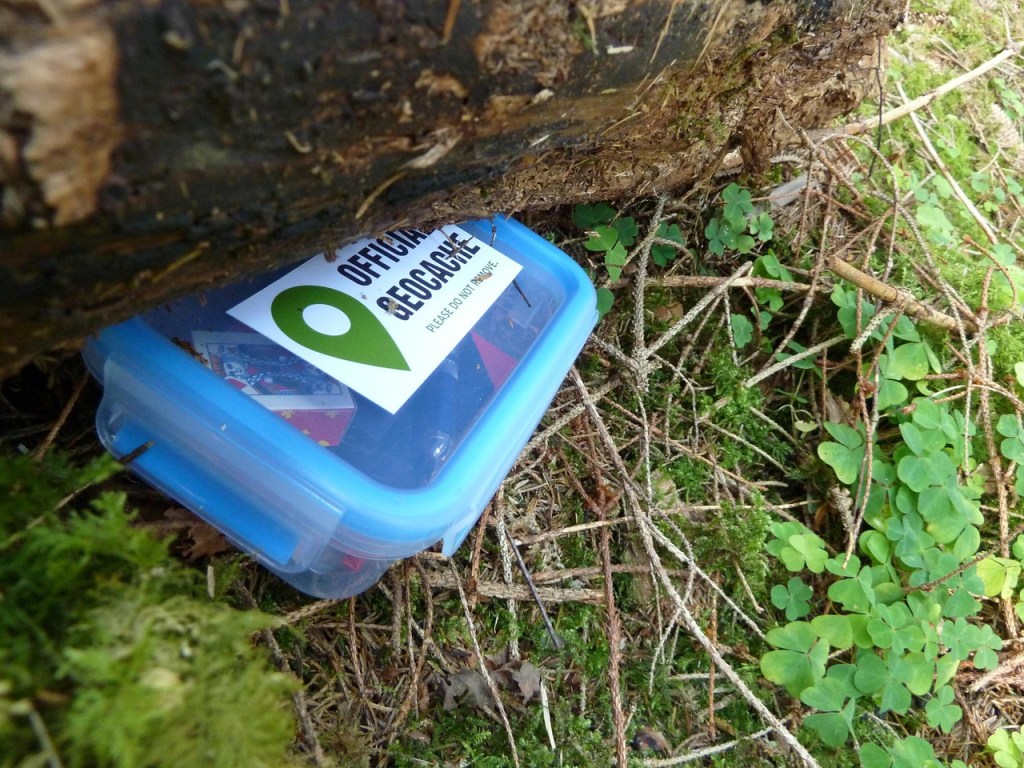
That’s what a contestant on Jeopardy told Alex Trebek when asked about his hobbies and interests between rounds. Alex was taken aback and, for once, clueless.

I have done the same. (The satellite/Tupperware thing, not flummoxing Alex Trebek. I wish. But I digress.)

What both I and the Jeopardy contestant had in common is “geocaching.”

It goes like this. One person hides a piece of Tupperware or other waterproof container (an ammo case is also popular), usually in a natural environment but sometimes within a city or suburb. The container holds a piece of paper, a small pencil, and assorted trinkets, such as a postcard or a small toy. This is called the geocache.

***

Here’s a revision of the first section, rewritten according to what they suggested, or so I supposed.

I Use Satellites to Hunt for Tupperware in the Woods

That’s what a contestant on Jeopardy told Alex Trebek when asked about his hobbies and interests between rounds. Alex should have replied, “So you’re some kind of kitchenware spy,” but missed the opportunity.

I have aspired to kitchenware spying myself.

It’s called “geocaching” to those in on the process. A piece of Tupperware or other waterproof container (an ammo case is popular) is hidden, usually in a natural setting. The secrets within are a piece of paper, a small pencil, and assorted objects of unknown value. This is known in the trade as the geocache or “drop site.”

***

That second version was close to the one that you saw when I posted it. I think it was improved somewhat, but at the next meeting, they suggested even more changes.

I had trouble implementing their suggestions. The first one was “Lose the digressions,” which I was reluctant to do because of the name of my blog and a reasonably consistent shtick when I’m writing what I intend to be humorous pieces. They act like footnotes or record the meanderings of my mind while I write. But I ditched them for the second version, just to see. I also bumped up the spy references, using words like “agent,” “secret identity,” “tradecraft,” “the drop,” and “Ilya Kuryakin.”

On seeing the second version, they suggested that instead of describing how geocaching works, I should use “I” more: “I bait the drop,” “I decipher the clues,” etc. I agree that, in general, unless you’re writing an academic paper, “I” is preferable to “you.” So that was probably good advice.

They also told me I needed more hyperbole and more jokes. I already had some jokes in there: one clue being “Look under the big W” (a reference to It’s A Mad, Mad, Mad, Mad World) and my secret identity as “DjangOH” (in honor of my cat Django, who was named after Django Reinhardt, the jazz musician). They thought that one was pretty good, but assumed I was referring to the movie Django Unchained, which has nothing to do with cats or jazz musicians. They were apparently too young to get the other references as well. I’m beginning to doubt they got the one about Ilya Kuryakin.

Anyway, based on their comments and critiques of other people’s work, I gathered that what they were looking for was zingers, punchlines, and an over-the-top tone, like a stand-up comedian’s.

But that’s not the kind of writing I prefer. I grew up on observational, story-telling humorists like Erma Bombeck, James Thurber, and Jean Kerr. And if I could write one-tenth as well as David Sedaris or The Bloggess, I would count myself a happy writer. Hyperbole, yes, but no punchlines.

So I ask you these questions:

• Should I keep doing what I’ve been doing, with digressions?

• Should I lose the digressions and rename my blog?

• Do you prefer a stand-up comedy-style writing or an observational one (but not like Steven Wright)?

• Do you want to see listicles? Shorter pieces of writing?

• Would you prefer no serious posts like the one last week about my father? Should I have a separate blog for them? (It would be occasional, as I don’t think I could write three blog posts a week.)

I sincerely want your opinions. Please feel free to sound off in the comments.

Apparently obligatory joke:

Ist old lady: My, it’s windy today.

2nd old lady: No, it’s Thursday.

3rd old lady: So am I. Let’s all go get a cup of tea.

What I’ve Learned About My Writing From Writing

I’ve been writing since I was in second grade. Back then, and through college, I wrote poetry, most of it pretty terrible. (Pretty depressing, actually. I was bipolar but undiagnosed. Thus begin my day’s digressions.) Gradually, my poetry turned into prose and I went where my muse took me. Maybe it was all those papers I had to write for college English that reinforced my love of prose. (I still write some poetry, but mostly to experiment with different forms like haiku, sonnets, and villanelles. I’m on my second digression already.)

But on to lessons learned.

• My ability to handle distractions has increased. It used to be that I had to write in complete silence, which helped me concentrate. But, as writing became more routine and natural, I experimented with music for writing. Instrumental music was okay with me, but anything with lyrics took me out of the zone. Now I prefer to write with the TV on in the background. I’m not really listening to it. It’s just ambient noise and I tune it out. (My mother used to put on baseball games, which she was not really interested in, just to have some noise in the house. But I digress again.)

• I can keep a schedule. The ghostwriting company I work for bases its deadlines on writers producing 1,500 words a day. I’ve fallen into a routine. I write 750 words for about two hours in the morning and another 750 for around two hours in the afternoon. If I don’t make my 1,500 because of an appointment or something, I write 1,000 words, morning and afternoon, until I’m caught up. (If only I had had this kind of discipline when I was writing my failed mystery novel! Of course, for ghostwriting, I work from an outline, which I didn’t have for my fiction. But I digress some more.) I have to work my two weekly blog posts in there somewhere, but I’ve given myself a deadline for them as well. I post them every Sunday at 10:00 a.m.

• I seem to be specializing in self-help books. I gave up on reading self-help decades ago, but now it’s about all I write. (I did ghostwrite one short piece of fiction, but it was pure smut. So I guess I learned that I can write smut as well as self-help. But I digress yet again.)

• Ghostwriting suits me. Yes, it’s playing in someone else’s sandbox. And no, I don’t get a byline or royalties. But it’s steady work and keeps me from stealing hubcaps. Also, it supplements my Social Security nicely—not bountifully, but nicely. I don’t know what I’d do all day if I didn’t write. Become even more sedentary than I already am, no doubt. Or steal hubcaps.

• I can pivot. I write humor. I write about social issues. I write about mental illness. I write about language. I write about writing (you may have noticed). I’ve written about flesh-eating diseases, pandemics, and baseball heroes. I’ve written prayer services and stories about nuns. I’ve written about poverty in Jamaica. I’ve written about playgrounds and childcare. I’ve written lesson plans for textbooks. (My nickname is 1,000-words-on-anything. I suppose I’ll have to change that to 1,500-words-on-anything. But I digress even more.)

• I can call on my husband to help me brainstorm topics. He also keeps an eye (and ear) for news stories he thinks might interest or inspire me. And he has plenty of quirks that are fun to write about.

• And I’ve learned that cats are no help at all when it comes to writing (especially one named Ow-Toby), except as subjects. Which I’m sure will come as no surprise to you, but I put it out there anyway.

Me and the PoemBot

The other day I started fooling around with ChatGPT, the AI program that people are using to write things for them. As a writer myself, I wondered if I would be out of a job any time soon. Realistically, I know I won’t, since the ghostwriting firm I write for does not allow us to use AI-created content.

Still, I was curious about what ChatGPT could do with various writing tasks, so I dove in. Here’s what I found.

The program did well on factual queries (Write a paragraph on bipolar disorder) and even had an answer for a philosophical query (What is the meaning of life?). The more criteria I gave it, the worse it did. (Write a practical but amusing paragraph about bipolar disorder.) It showed a definite tendency to throw in every simile and metaphor it could, which definitely ended up mixed.

For blog posts with not-too-specific topics, it did better. I asked it to write a paragraph for a blog post on a self-help topic, and it almost instantly came up with one about positive affirmations. Asked to write a blog-post paragraph on toxic positivity, it did quite a competent job.

But I really wanted to test its talent when it came to poetry, a much more difficult skill. I stuck mostly to sonnets and haikus (I did have it write one villanelle) on assorted topics. All the sonnets it produced were Shakespearean unless I specified a Petrarchan, Miltonic, or Spenserian one. The sonnets were awfully self-reverential. No matter the topic, they tended to include the words sonnet, stanza, or verse. Here’s a sonnet it wrote on the subject of writing, which I suppose gave it an excuse to refer to sonnets within it. But it also referred to a dance, a symphony, brushstrokes, a tapestry, melodies and song, a journey, and dreams.

Now, I haven’t done Lit Crit in many a year, but the result seemed muddled and mediocre to me.

Upon the page, my quill begins its dance/ In ink, the thoughts from depths of mind take flight./A symphony of words, a sweet romance/Each line a brushstroke in the poet’s light.

In solitude, I craft a world unseen/With verses woven like a tapestry./The writer’s heart, an open book, pristine/Unraveling tales of eternity.

Oh, how the words, like melodies, entwine/In stanzas, whispers of a silent song./The poet’s soul, an endless, vast design,/In every verse, a journey to prolong.

Through pen and paper, dreams find their release/In every sonnet, life finds sweet peace.

Then, I tried it on a different topic—sex. I was curious to see how it addressed this most human of activities. Here’s what it wrote:

In whispered shadows where desire’s flame,/Ignites the senses in a sacred dance./Two souls entwined, no need for words to claim,/The poetry of passion’s sweet romance.

Bodies as verses, intimate and bare,/In tangled sheets, a sonnet takes its form./Each touch and kiss, a stanza to declare,/A love that weaves through passion’s vibrant storm.

Ephemeral, the moments that we share,/As pleasure paints the canvas of the night./In silent echoes, echoes of a dare,/Two hearts entangled in this sweet delight.

Oh, sonnet of the flesh, in whispers spun,/In ecstasy, a tale of love is done.

Again with the references to sonnets, dance, poetry, verses, stanzas, and painting a canvas.

The chatbot, in my opinion, did better with haiku. Here’s a haiku on the subject of haiku:

Three lines, concise art,

nature’s essence captured close,

haiku whispers truth.

Here’s what it did with a haiku on bipolar disorder:

Storm in a fragile mind,

sunshine and shadows collide,

bipolar tides shift.

And on the subject of writing in general:

Ink-stained whispers flow,

Words on paper, tales unfold,

Silent stories grow.

But when it came to sex, the haiku was again (in my opinion, needlessly) self-referential:

Whispers in moonlight,

Bodies weave an intimate

Haiku of passion.

So, what did I learn from my experiments? ChatGPT does a decent job with factual topics, though it has a tendency to rely rather heavily on figures of speech. Here’s a paragraph it wrote when I gave it the subject of bipolar disorder in the style of my other blog, Bipolar Me. It wrote a (flattering) description of the blog instead.

Navigating the rollercoaster of emotions that is bipolar disorder is a journey unique to each individual, a theme explored with raw honesty on the pages of the Bipolar Me blog. In the midst of the highs, where creativity flows like a torrential river, and the lows, where the world appears desaturated and heavy, the author skillfully captures the kaleidoscope of emotions that define life with bipolar disorder. With a poignant blend of vulnerability and resilience, the blog illuminates the challenges faced by those grappling with the disorder, dispelling myths and stigma along the way. Through personal narratives and reflections, the Bipolar Me blog serves as a beacon of understanding and connection, reminding its readers that they are not alone in their journey through the intricate landscapes of mood swings and self-discovery.

And here’s what it said about this very blog:

The “But I Digress” blog, much like a meandering conversation with a wise and witty friend, invites readers into a realm where thoughts flow freely, detouring into unexpected intellectual landscapes. With each post, the blog embarks on a delightful exploration of diverse topics, from profound philosophical musings to lighthearted anecdotes, weaving a narrative that reflects the author’s curious mind. It’s a virtual salon where ideas intermingle, and the unexpected tangents become the heart of the discourse. Whether dissecting the nuances of contemporary culture, diving into the intricacies of literature, or reflecting on the quirks of everyday life, “But I Digress” captivates its audience with a blend of insightful commentary, humor, and a touch of intellectual whimsy, creating a space where readers can both ponder the profound and enjoy the pleasures of intellectual meandering.

I’ll take it. Thanks, ChatGPT.

Things I Want to See in My Lifetime

World peace? An honest politician? A flying car? A second season of Firefly? Being able to retire? A printer that works?

Those are all worthy – though extremely unlikely – goals. But I want something else.

The first “thing I want to see in my lifetime” was to have a published book. Now I’ve done that. Twice. Check, check.

Another “bucket list” item was to see the Amber Room in St. Petersburg. The Amber Room is a recreation of a room in the Catherine Palace lined and decorated entirely with amber, weighing over six tons. The original Amber Room was constructed in the 18th century; later, it was disassembled and disappeared during World War II. It’s now considered lost forever, though there are always theories about how the pieces are on a sunken ship somewhere or in boxes stacked in an abandoned Nazi bunker.

Now that’s pretty much out of the question, what with U.S. relations with Russia, combined with my lack of funds for taking such an elaborate vacation. I’ll just have to be satisfied with my collection of amber jewelry and trinkets.

(Amber is prehistoric, fossilized tree resin. There are sometimes flies, mosquitos, or other bugs trapped in it, which makes the amber worth considerably more. The best-known varieties are clear golden in color, with shades from pale honey to nearly brown. There are also green amber and cherry amber, but I don’t care much for them. But I digress.)

No, what I really want to see in my own lifetime is a quotation from me on a t-shirt or a coffee mug. I know that I can order them one-off printed with anything I like (and I’ve had my book covers made into t-shirts and earrings), but what I want is to have someone else produce and wear them. I want to be in an airport and see someone wearing that shirt. I want to walk into an office and see someone drinking out of that mug.

Unfortunately, I don’t really have any sayings worth saying. Perhaps my most well-known one is “If my aunt had wheels, she’d be a tea cart.” That could, I suppose, appear on a t-shirt with a nice weird graphic of an aunt with a tea cart. My other signature saying is, “Sad, but true. True, but sad.” That’s short enough to fit on a mug, but a little nonspecific for anyone to take as their preferred slogan.

Of course, there’s also “DBF&P,” which stands for “Drop Back Five and Punt.” This is a phrase my husband and I use often because we’ve had to do it so often in our lives. Maybe the t-shirt would read “DPF&P*” with the translation as a footnote. I have plenty of obscure t-shirts and mugs (and shot glasses). Maybe someone else collects them too.

Most of the quotes from my blogs are too long for a mug, or even for a t-shirt. For example, “Teachers are the artists and architects of the future. We owe them a little more slack and a lot more support.” Readability would be a problem. It seems out of the question for me to be both meaningful and pithy.

Another thing I would like to see is one of my Facebook posts going viral. So far, I’ve had no luck there, either. I pass along plenty of other people’s posts, but almost no one passes along mine. Of course, that’s likely because most of the things I post are personal – interesting (at least to me) things that are happening in my life and funny things my husband or cats do. Apparently, our little family is insufficiently amusing.

The other day, I did download a meme generator (called, cleverly, Meme Generator) in hopes of putting a novel caption on an existing photo. The thing is, I didn’t want to use the too-familiar ones like “Disloyal Boyfriend” or “Change My Mind,” and again I have the problem of thinking up a clever caption short enough to fit. So here’s what I came up with as a trial run. This is my husband in a bar in Ireland. I haven’t gotten up the nerve to post it yet.

You can help make one of my dreams come true. Vote on whether I should post this meme (keeping in mind my husband doesn’t have Facebook) or not.

Go back

Your message has been sent

Choose one option(required)

Warning

The Dry Well

So, it’s come to this. I have nothing left to write about. Last year I attempted a post on Halloween and how it has been taken over by adults. I then realized that I had written the same post in 2019. Not word-for-word, but almost paragraph-for-paragraph.

This has happened to me with many posts I have written lately, including my invention of a personal style, also done in 2019; plus-size peoples’ problems, now and in 2017; learning styles, and probably more. Thanksgiving came around last year, and also my birthday. I’ve already mined those subjects for posts and don’t want to revisit them, even if I could think of something new to say about them, which I can’t.

This proposes a problem or at least a difficulty. Have I already written everything I know about? Why am I just repeating myself? Or have I reached the end of my creativity?

It is ironic for me to confess this, because I have written about this same dilemma a number of times: in “Your Writing Brain” (2021), “As a Muse, Depression Sucks” (2019), “How to Write When the Muse Takes a Hike” (2018), “Muse Blues” (2016), and possibly a few others I’ve totally forgotten. Obviously, running out of inspiration is a subject near and dear to my heart, or at least close to the surface of my brain, as I think it must be to most writers.

In those previous posts, I have suggested ways to revitalize the writing juices. Read an author you like and try to incorporate their style or some aspect of their writing as an exercise. (I tried writing à la Mary Roach, but that resulted in too many footnotes.) Take off in a direction you’ve never gone before (politics, sex, children, history, economics, theater, or whatever).

Instead, I’ve delved into my memories. Visiting my country relatives as a child. Meeting Captain Kangaroo. Adventures in Girl Scouting. But my memory is notoriously spotty, so I don’t know how long I can keep this up.

I suppose I could plumb the depths of my other blog, bipolarme.blog, but those posts seem a little dark for what is meant to be a lighter-hearted blog. If only the cats would do something adorable! But no, they won’t cooperate. Neither will my husband. He hasn’t even done anything annoying lately, like the time he “volunteered” me to cater his parents’ 50th wedding anniversary celebration. In another state. As a surprise (to me and to them). (I refer to this as one of his near-death experiences. But I digress.) In fact, he’s been so sweet that he just got me a kalanchoe for my office (which spellcheck didn’t like, though I certainly do).

I read a lot, so I suppose I could do book reviews. But the books I read aren’t the latest bestsellers. Often they are children’s fantasy books or science fiction that’s decades old. Other books I like are on distressing subjects like autopsies, the Spanish Flu, lobotomies, and accidents while mountain-climbing. I suppose I could write about why these subjects fascinate me, but that doesn’t seem likely to fascinate you.

In posting this, I’m taking after my husband, who once wrote a paper for school explaining all the different reasons he couldn’t write a paper for that class. It got an A. I should be so lucky.

Tip Jar

Choose an amount

¤2.50
¤5.00
¤10.00

Or enter a custom amount

¤

Your contribution is appreciated.

Donate

Why Write?

I write something every week – this blog and my other one are proof of that. Altogether, I have posted over 800 times in my blogs. But why do I write? What motivates me to keep up this weekly grind? Why do I write?

First of all, it isn’t really a grind. Usually, I enjoy it. Then there’s the fact that I’ve written since I was a kid. I started writing poetry in grade school and continued through my early college years. That was when my poetry started sounding more like nonfiction, so I let my muse lead me in that direction. There I have stayed (mostly) ever since, with only occasional forays into fiction or back into poetry.

I’ve examined my motives and come up with a couple of theories about why I write, or at least why I write what I write. Here’s what I’ve learned so far – along with a few examples of each.

I write to inform.

Most of this kind of writing takes place in my Bipolar Me blog (bipolarme.blog). I have bipolar disorder. Sharing my experiences and perceptions of it are one of the main reasons I write. I hope that my blog readers learn something about bipolar and how it affects them and their friends or family. In fact, I write about bipolar to inform myself about bipolar disorder and about myself. Sometimes I have to do research on topics such as mental illness and homeless or substance use disorders. I’ve done interviews and reviewed books on mental illness topics. Other times I rely on my own feelings, my own accounts of medication and therapy, my own relationships.

I write to amuse.

I used to feel that comedy was dead because people just retold the same jokes they heard on Saturday Night Live. I still feel a little that way when I see people on Facebook passing along the same memes (though I am guilty of it too). But I have so many friends that add their own content – jokes and puns, humorous songs – that I no longer have that fear. I tell my husband the jokes I read online (mostly awful puns) and he tells them to people at work, so at least they are being released into the world IRL, as they say.

The world is funny. I like to write essays about the goofy things my husband or my cats do. They amuse me, so I like to pass on the amusement. This is why I end up sharing some of my writing on the Erma Bombeck Writers’ Workshop Attendees Facebook group.

I write to release my inner demons.

This is why I still write poetry and fiction from time to time. I wrote a novel full of inner demons, but they were never released into the world because the novel was never published. The demons are now circling around, just waiting to be resurrected into another novel.

(The poetry I write is no longer free verse (aka “playing tennis without a net”). I’ve been experimenting with more structured forms such as haiku, sonnets, and villanelles. They haven’t been terribly successful yet. At least I’m trying (sometimes very trying, my husband notes). But I digress.)

I write to vent.

Sometimes I just can’t help it. There are so many things going on in the world that are high-blood-pressure events that I am forced to let off some of those arterial constrictions with rants. Among the topics that get me going are politics (of course), education (which I love, but not how it’s practiced in the US right now), and inequities of all stripes (including mental health treatment). I try to avoid the most contentious of topics, but sometimes just can’t help myself. I sound like a cranky old fart telling kids to get off my lawn or yelling at clouds.

I write to explore.

I love reading books about exploration – climbing Mt. Everest (which I now know is also called Chomolungma, thanks to reading about it), shipwrecks, and Antarctic expeditions, for example. I know I will never experience any of these things personally, but I can’t help but be curious about them anyway.

I also love to explore the world of books themselves – writing them, improving them, reading them, dipping into young adult or children’s books, or following trends in publishing. It’s my passion and I have to share that.

Anyway, here are some of the things I’ve written in the various categories.

To inform

Regarding language: https://butidigress.blog/2016/12/02/lets-talk-policing-womens-voices/

About early childhood : https://butidigress.blog/2018/09/16/early-childhood-education-then-and-now/

About bipolar disorder: https://butidigress.blog/2015/12/13/the-other-bipolar-disorder/

To amuse

Here’s a true holiday story: https://butidigress.blog/2016/11/20/the-great-thanksgiving-ratatouille/

Of cats and men: https://butidigress.blog/2020/08/02/magical-magnetic-noses/

Universal laws: https://butidigress.blog/2020/07/19/gravity-is-not-my-friend/

To release inner demons

Poetry: https://butidigress.blog/2015/12/11/poetry-keeps-knocking/

Poetry about bipolar disorder: https://bipolarme.blog/2015/05/24/haiku-cycle/

To vent

Children and politics: https://butidigress.blog/2016/08/28/hungry-children-a-one-act-play/ (also https://butidigress.blog/2018/06/10/satanic-panic-and-politics-in-america/)

Education: https://butidigress.blog/2018/05/27/why-a-national-curriculum-makes-sense/

Societal change: https://butidigress.blog/2018/02/25/school-shootings-and-the-tipping-point/

To explore

Romance novels: https://butidigress.blog/2017/03/26/romancing-the-body/

Food: https://butidigress.blog/2021/05/23/bacon-eggs-and-salt/

Language: https://butidigress.blog/2015/02/18/language-police-and-the-grammar-nazis-2/

Keep me in printer paper! Make a one-time donation.

Choose an amount

¤2.50
¤5.00
¤10.00

Or enter a custom amount

¤

Your contribution is appreciated.

Donate

Primitive Blogging

I know it’s going to be the modern equivalent of “I walked 30 miles to school in the snow. Uphill. Both ways.” But a lot of us are going to be saying, “I had to use floppy disks to add software to my computer. The printer was dot matrix. The monitor was one color – either amber or green,” and watching kids gawp in disbelief. (There’s a song with the line, “We programmed in ones and in zeroes. And sometimes we ran out of ones.” But I digress.)

At the moment, however, I am experiencing another sort of primitive computing – my environment.

I used to have a nice study. Large desk with drawers and cubbyholes. Printer stand/file cabinet. Floor-to-ceiling bookshelves. Many pieces of artwork on the walls. The lighting wasn’t quite what I might have wanted, but, hey, you can’t have everything. I had a window for natural sunlight and an overhead room light.

That was in the days when we had a house, and the house had three bedrooms. One of them was my study and the other was my husband’s. He kept his computers, TV, DVDs, fossils, and who-knows-what-else in there. (The third, naturally, we used as an actual bedroom.) It was perfect, or as nearly as one is likely to get.

Now, and for the next couple of months, circumstances have forced us to live in a one-bedroom apartment. The bedroom, again naturally, is used for sleeping, which leaves me for a study – practically nothing. I can’t set up my computer in a corner of the bedroom because A) the room is too small, and B) my husband sleeps days, when I most need to compute.

What does that leave for a study? The utility room, where the water heater lives and the washer and dryer are supposed to go. There’s no room for an actual desk, so my husband constructed me a rustic platform from four totes containers with three planks balanced across the top. It’s just wide enough for my computer and keyboard (though the Mac does get to jostling a bit when I really get going typing). The planks are long enough to hold the printer, too. I have a proper desk chair, but not much else. Except boxes of belongings that we have nowhere else to store. It’s a claustrophobic existence.

(My husband’s “study” is the breakfast bar and a kitchen stool. No fossils except a couple of desiccated potatoes that need to be escorted outside.)

Unfortunately, with my makeshift desk taking up so much room, a laundry setup is out of the question. We’re back to scrounging for quarters so we can do laundry in the complex’s communal facility. And I make my husband do that. I’ve read too many true crime books about women who were killed in their building’s laundry room.

There’s also the noise. The water heater makes strange gurgles at irregular intervals, which breaks my concentration, and my husband watches TV during my prime working time (our schedules are just a wee bit peculiar). Which wouldn’t be so bad, if he didn’t watch the Screaming and Explosions Channel. (I think we get it on Roku.)

And then there’s the smell. Gentle floral scents wafting through my room with a quiet hiss every now and then – to cover up the scent of the litter box, which I also share with my utility room, our two cats, a scooper, and a whisk broom.  I’m not sure whether the air freshener is beneficial to the cats – or to me – but I try to pretend I’m walking past the beauty counter at a posh department store and trying to avoid the perfume snipers.

This is the environment in which I must do not only my blogging, but my transcription work till the end of August. I suppose one can get used to anything for a couple of months, especially if it means money still comes in, but one thing I know for sure – the litter box is NOT going to be in my new study once I get one.


A Different Kind of Freelance Gig

marketing woman office working
Photo by Negative Space on Pexels.com

Most people think of freelance work as writing, or sometimes editing or proofreading. Those were the kind of gigs I myself had – editing magazines and video scripts, writing nonfiction articles and children’s stories, proofreading master’s or doctoral theses. And that was the kind of assignment I had been applying for when I suddenly fell into a different kind of freelance gig: transcription.

I was sucked into this new kind of work by applying for one of my old standards: proofreading. I did a telephone interview and the interviewer assured me that I was way overqualified, which I knew. At this point in my life, I’m overqualified for everything, except for those things for which I’m underqualified or not qualified at all.

The work was repetitive and boring, she said, sporadic and unpredictable. Some weeks there would be lots to do and others very little. I assured her that at this point in my life, that was exactly the kind of work I was looking for – not high stress, with irregular hours so I could work in some other assignments, go to appointments, or even nap. Also, I have bipolar disorder, which usually prevents me from working a standard 9-to-5 job out in the workplace. (I didn’t mention that in the interview.)

I also asked the interviewer that if any of the other successful candidates washed out, to please consider me as a replacement. It sounded like the sort of job that someone might start and then hate.

Whether it was my willingness to work beneath my skill set at odd hours or my willingness to fill in, I was accepted. To work for the transcription service I would need to purchase a certain type of foot pedal for controlling the recordings and a certain piece of software. I didn’t object, as I figured I could take them off my taxes, but I could see how reluctance to do that might indeed weed out candidates, thereby making more room for me.

What I learned is that proofing transcripts is indeed boring but relatively quick and very low-paying. So quick and low-paying, in fact, that it was hardly worth my time.

Then they got into a bind and ask me if I wanted to move up to transcriptionist.

I had to give this some serious thought. You see, the problem is that I can’t type. Oh, I type well enough to type articles, stories, and other freelance writing assignments, but I have never actually in my life taken a typing course and learned to type (excuse me, keyboard) with all ten fingers. When I was in high school a hundred years ago, typing was offered only in the secretarial track and I was solidly in the academic track. Never mind that when I got into college as an English major, I discovered exactly how many papers I would have to write and to type. And of course, I couldn’t afford to have someone else do it for me.

So all these years I’ve been faking it. But could I fake typing well enough to be a transcriptionist? I said I’d try, on the condition that I could drop back to proofreader if I wanted to.

Transcription, it turns out, is boring. A lot of business meetings that I would never want to attend. Lawyers’ consultations in which most of the lawyers mumble and most of the clients cry. Recordings that skip. Voices that are indiscernible. Financial jargon that I don’t recognize.

But making the transcripts paid much better than proofing the transcripts and since it was remote work nobody could see how unconventionally I typed. As long as I hit my deadlines, they didn’t care. I moved up from part-time transcriptionist to full time. It’s not a career, but a few hundred bucks a month sure is welcome and I still have time to work on these blogs and my mystery novel.

It’s not the part-time gig I would have imagined myself in, but it beats driving for Uber.


The Great Meal Kit Experiment

We have had trouble with our meals.  Well, that’s not quite true. We’ve had trouble with our grocery budget. Actually, both those things are true.

The first part of the problem is shopping. My husband works in a store that sells, among other things, groceries. And he just can’t resist meats which, while on special, are still so expensive I’m tempted to take out a meat loan to get them. Plus, he’s unable to resist the Manager’s Special, Close-Out, and Day Old tables.

That might seem like frugal shopping, but it results in a variety of bizarre foods that we would never otherwise have purchased. Vanilla butter. Bourbon-apple salsa. Snacks that taste like sesame-flavored cardboard. And the “reduced” prices don’t mean they’re cheap. You should have seen the price tags the week the store cleared out the “Imported from Italy” section. Imported pesto isn’t cheap, let me tell you.

Our next problem is waste. We waste a lot of food. Our refrigerator is so unreliable that it regularly freezes any produce we buy and turns it into unidentifiable slimy green goo. This is good neither for our budget nor for our appetites. We are reduced to buying prepared deli salads – which are hideously expensive but can be eaten the same day – or getting bags of cole slaw mix that are hideously expensive but can be eaten with my special slaw dressing (mayonnaise and pickle juice) which my husband loves. That we devour in a day or two. Frozen peas and corn and canned tomatoes are the most vegetable-like things we can keep on hand. And sometime V-8 juice.

Anyway, our food expenditures are outrageous. I’ve tried setting a budget, but my husband does the shopping and is unable to understand the concept. I’ve tried splitting the shopping with him, but every night when he gets off work he picks up a few more (or even more) items that he seems psychologically unable to resist.

So, in the hope of reducing both the amount we spend and the amount we waste, I have decided to try an experiment. Those meal kits we hear so much about on TV and online promise solutions to budget, preparation, shopping, and variety of meals. They are said to provide good nutrition, reduce waste, and be ever so yummy.

So each week for the next six weeks, I am ordering one of those yuppie, home-delivered meal kits. I am taking advantage of special promotional deals, as there is no way that paying the full price would produce any actual savings. I am not receiving any freebies or reduced prices by promising to blog about any of them.

The services I have chosen for this experiment are:

Home Chef

Blue Apron

Hello Fresh

EveryPlate

SunBasket

and Dinnerly.

Each week will receive three recipes and sets of appropriate ingredients for the making thereof. My husband is dubious of this experiment, as he claims (rightly) that the portion sizes they will deliver will not match the portion sizes of meals that he prepares. I try to point out that this is not necessarily a bad thing and that we can always supplement with appetizers, yogurt, pretzels, or popcorn should we feel unsatisfied.

I am trying to select a range of meals that will be filling yet different from our usual fare, involving ingredients we don’t usually have on hand and international cuisines we don’t make at home.

For the rest of the meals for the week, hubby can shop for whatever he chooses, though I fervently hope he will stick to staples like chicken, ground beef, fish, rice, beans, canned tomatoes, mushrooms, frozen vegetables, potatoes, pasta, eggs, bread, and the like. He makes an awesome frittata, an amazing shepherd’s pie, and a killer deconstructed mac-n-cheeseburger.

At the end of this experiment, I will report back on the results. My goals are variety in cuisine, reduced waste, lower grocery bills, and fewer odd ingredients that go with nothing else.

Our first delivery is arriving on our doorstep Tuesday.

Wish us luck.

Beating the Rejection Slip

focus photo of yellow paper near trash can
Photo by Steve Johnson on Pexels.com

Writers fear them, yet they are inevitable: rejection slips. I’ve seen many a one in my life as a writer. (That’s what good about blogs. You never have to send yourself a rejection slip.) They can be cruel. They can be perfunctory, mass-produced and not even signed by a human being. An actual rejection slip may never arrive at all, leaving a writer to wait in anxious hope forever.

Rejection slips can be devastating. They can be empowering, too, in a strange sort of way. I’ve known writers who’ve defiantly papered their walls with rejection slips until they got a book contract. Once in a while a rejection slip comes that makes it clear the editor or agent has actually read the proposal or sample chapters. He or she may even provide helpful comments that can lead to improving your writing. Or the editor may say that your writing is good, although the book is just not for them. Those desperate for validation (most writers) treasure the first half of the evaluation.

Short story and nonfiction article writers and certainly poets get rejection slips, too. But the book rejection slip can be the most devastating because you may have spent literally years preparing your manuscript.

But here is a tale that may give you hope: I just beat the rejection slip. I have been offered an author contract.

How did I do it? I followed the rules. I gave up. Then I got lucky.

Since my book was a memoir (non-fiction), I knew that I had to prepare a proposal with sample chapters. (Fiction requires a completed manuscript, not just a proposal.)

Then I combed the Internet for agents that were accepting new clients and publishers that would accept proposals directly from authors. I sent out my query letters or proposals. I was very careful to send each recipient what they preferred and to make it meet their specs: query only, proposal only, proposal with three sample chapters, or ten pages, or whatever. I attached my proposal or pasted it into the email, whichever they wanted.

I tried to be at least a little sensible. I looked for people who wanted the kind of writing I was doing – nonfiction or memoir or mental health. I looked over their websites to see if there was one particular agent/editor who was more interested in my genre and addressed my query to that person. I never sent a “Dear Agent” or “Dear Editor” query.

I did this dozens of times. I kept a list of where I sent each and crossed them off when the rejections came.

And after a number of years and rejections, I gave up. I decided to abandon my book (by that time it was completely written) and move on to another book-length project in another genre.

While I was struggling with that manuscript, however (I still am), I noticed a new independent publisher who was looking for nonfiction books on mental health issues. So I said, what the hell? I was pretty much inured to rejection by then. I sent a query letter.

And I got a reply, within days. Did I have a proposal or a completed manuscript? Encouraged, I said that I had both. They asked to see the manuscript. And within a week, I had an offer. Given the length of my rejection list, I jumped at the chance.

I was a little wary of throwing in my lot with an indie publisher, and a start-up at that. But the founder was someone I had heard of, someone who was a noted expert and activist in the field of mental health. It was not a vanity press.

And now I have signed my author contract and been assigned an editor (I look forward to many fruitful conversations with him). They also introduced me to the intern who had picked my manuscript out of the slush pile, to whom I am eternally grateful.

I’m not a novice at writing. In addition to these blog posts, I have written and published nonfiction articles and children’s stories. But being a BOOK author is the best! The day I get my 25 printed copies I will indeed squee, long and hard.

Say hello to the next author from Eliezer Tristan Publishing – me!