Category Archives: etc.

Learning From Mistakes (Or Not)

When I was young, I was supposed to learn from mistakes. Other people’s mistakes, not my own. My parents were devotés of the “No one is so worthless that they can’t serve as a bad example” school of thought. (This, combined with the Girl Scout Law, produced fodder for my innumerable therapy sessions. I thought that only bad people (like my cousin Callie Jo) had to learn from their many mistakes or serve as bad examples. I wasn’t supposed to make mistakes to learn from. Did this make me a Goody Two-Shoes? Yes. Yes, it did. But I digress.)

Since then, I’ve learned through years of psychological treatment that this school of thought is BS. The only way that anyone, good or bad, learns is by making mistakes. Now that I’ve learned that, though, I’ve made some whoppers. I’ve taken up with the wrong boyfriends. (Including one who my parents said proved their point about no one being so useless that they couldn’t serve as a bad example. He was a tow truck driver and knew all the secluded spots where people had run off the road. That wasn’t useless. It proved handy for al fresco entertaining, which my parents didn’t know about. But I digress again.)

Marrying my husband, however, was not a mistake. But, I must admit, I’ve learned from Dan’s mistakes. Sometimes I’ve learned that I’m right, even on subjects that he’s supposed to be better at, like spatial reasoning. When there’s a piece of furniture or a mattress that needs to be transported from one place to another, he continues to rotate it on every axis several times and shove it into the car, while I watch and say, “That’s never going to fit.” When I prove correct, he says, “Well, I had to try.” I reply, “No, you didn’t. You could have listened to me.”

Another time I had to bail him out was when he was fixing to put cement in a hole in the lawn destined to hold something decorative in place. He had to mix several cups of water with the cement. Unfortunately, he used a coffee carafe to measure the cups. I pointed out that those weren’t the same kind of cups that a measuring cup measures. He was flummoxed. I had to do some quick math (including a visit to my study for computer consultation) to determine how many ounces Mr. Coffee thought was a cup and how it compared to a regulation cup. Then I had to figure out how many actual cups of water he needed to add to what he had already put into the hardening cement.

Not that he’s the only one who makes mistakes. In addition to the boyfriends one, I’ve forgotten that we asked the contractor to put in an extra half-step leading up to the front door because the sill is too high for my increasingly unreliable legs. Just the other day, though, I forgot all about it and stumbled over my own feet, only narrowly averting potentially bloody disaster by catching myself on the railing we also insisted they install. (The half-step was necessitated by a fall I suffered during the construction, which I wrote about in “Gravity Is Not My Friend,” a post from 2020. But, being a mensch, Dan didn’t rub my nose in my awkwardness. He said, “Be careful, honey,” (I don’t know why people only tell you to be careful after you’ve taken a fall. But I digress some more.))

But the topic (way back there somewhere) was learning from mistakes. So, what should we have learned? Well, in Dan’s case, it should be: Listen to Janet. (Though I’m afraid that will never truly sink in.) For me, it’s: Avoid complicated men (or so my shrink said). And watch your step. (I’m afraid that hasn’t sunk in either.)

But there are plenty of fresh mistakes to be made, and I’m sure we’ll make our share of them. Or more, more likely.

Go. Be Funny.

Once the boss editor gave me an assignment. “Go,” he said. “Be funny,” he said. “Come back in an hour.” We were preparing a calendar with amusing sayings and odd observances on various dates.

Now, most writers would be daunted by this sort of thing. I know I was. But in an hour, there I came, quips in hand. “Is this job too easy for you?” he asked.

Actually, writing funny stuff is not easy. I was just feeling quirky that day. (“Dying is easy. Comedy is hard” is a quotation that’s been attributed to any number of those shuffling off the mortal coil, from actors Edmund Gwenn to Jack Lemmon to Peter O’Toole to Meryl Streep (who, not having died yet, almost certainly didn’t say it on her deathbed). But I digress.)

The geniuses of Monty Python certainly seem as though they created comedy easily. And I know a man who can write a funny song, a la Weird Al, in 15 minutes or less. But for most of the writing world, humor is the hardest form of writing. (Except possibly the sestina. Or the humorous sestina, come to think of it. But I digress again.)

How do you build up your humorous writing muscles to the point where you can flex? I recommend hanging out with silly people, like the aforementioned songwriter. (If you’re tempted to use AI, forget it. I asked ChatGPT to write a joke about a cat. It replied, “Why did the cat sit on the computer? Because it wanted to keep an eye on the mouse!” Asked for a joke about a dog, it said, “Why did the dog sit in the shade? Because he didn’t want to be a hot dog!” Apparently, ChatGPT writes at the level of a five-year-old. And when I asked for a humorous sestina, it created one about a knight named Sir Guffaw and his tap-dancing horse. But I digress yet again.)

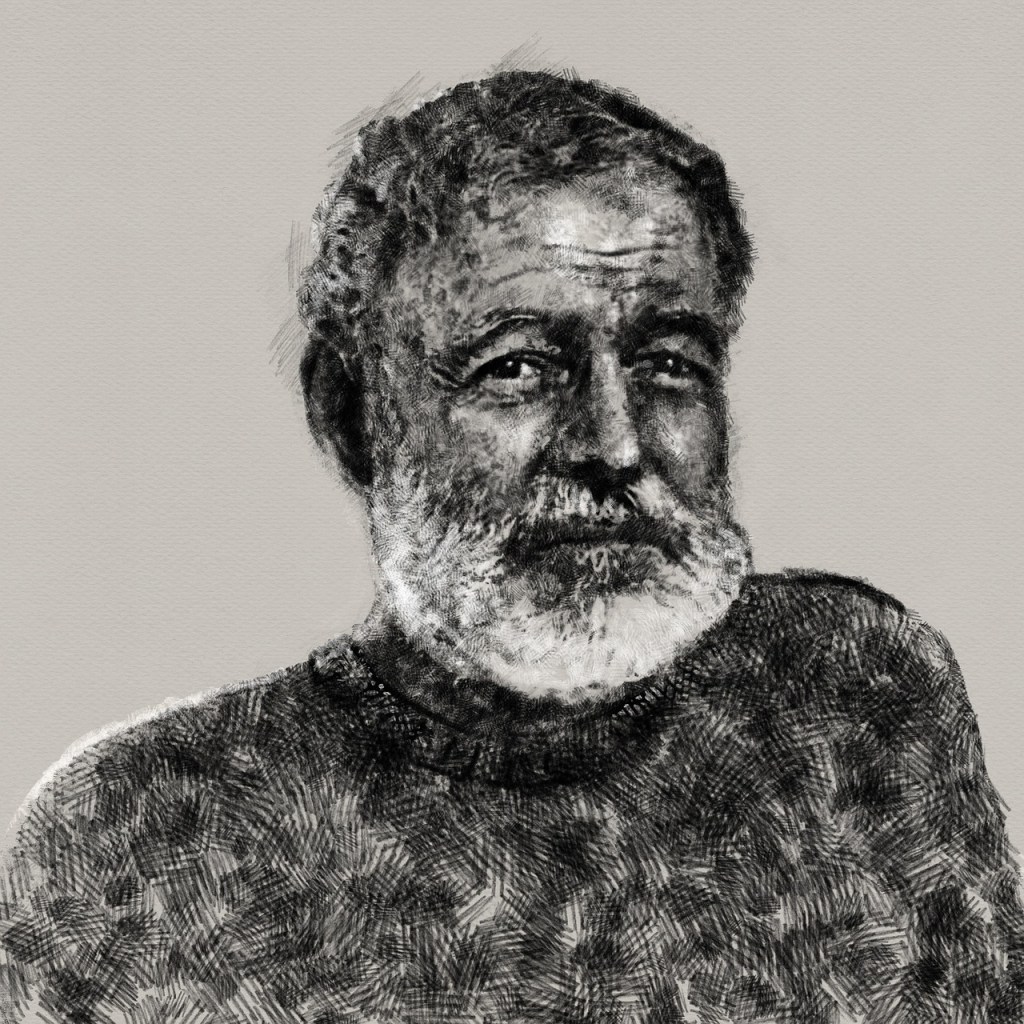
My next piece of advice is to have a cat or a spouse. Cats are not dignified, contrary to their reputations. One of our cats tried to escape from the vet and bonked her head on the glass door to freedom. And my spouse does and says funny things, or prompts them from me. For example, I once took a picture of him in a tweed cap and turned it into a meme (seen here, as you can no doubt tell.)

You can also turn trauma into humor. I once found myself having to get rid of a dead possum, which certainly traumatized me. Another time I almost offed a friend with a bay leaf. Those alarming events worked their way into killer posts, so to speak.

Reading humor can help, too. Think David Sedaris and The Bloggess. For irreverence, there’s Lamb: The Gospel According to Biff, Christ’s Childhood Pal, by Christopher Moore. For vintage humor, there are James Thurber and Erma Bombeck. (Given the example of Thurber and Bombeck, being from Ohio helps too. But I digress some more.)

Then there are humorous movies. Personally, Airplane can still make me LOL. (So can Zero Hour, the film from whence Airplane‘s plot and many lines of dialogue came, only deadly serious. It’s impossible to watch without flashing back (or forward, since Zero Hour is the older movie). But I digress yet again.)

But for myself, I like a good catchphrase that didn’t come from a TV show or movie. It came into being because I wanted to write little asides and put them in as footnotes. But I couldn’t figure out how to make WordPress do that, so I turned to my grammatical friend, the paren. (Not really my favorite mark of punctuation, which is the semicolon. But I digress for the last time this post. I swear it.)

Music and Me: The Saga Begins (and Ends)

It all started with my sister’s cornet and sibling rivalry. My parents rented the instrument (probably already having an inkling of the outcome). She attempted to learn to play it for school band class. It was not a success and the next year, when I was old enough to be in band class, my parents did not rent an instrument for me. I never got over it, so when I graduated from high school, I saved up and bought myself a cheap guitar. (And a sword. I was deeply influenced by The Lord of the Rings.)

I started taking guitar lessons. Then I ran out of money after learning the “Cocaine” song by John Martyn (not the other one). (The sword lessons came much later when I was studying martial arts (ninjutsu, to be specific). We practiced with a wooden katana, so I wasn’t able to use the sword I had bought. But I digress.)

Later, I took guitar lessons from a guy who was the cousin of my rotten then-boyfriend. Later still I bartered with a guitar teacher who needed his dissertation proofread. (He actually learned some aspects of grammar rather than just letting me do all the heavy lifting. (He thought it was hilarious when I told him to “check your apparatus.”) He’s still a Facebook friend. But I digress again.)

I took a break from guitar lessons when I took singing lessons. I’m a terrible singer, and the lessons didn’t help. I also took piano lessons because the teacher gave a discount if you took both. Turns out I’m a terrible piano player too. (The pedals befuddled me just as badly as the pedals on the car when I was learning to drive stick. But I digress some more.)

Later still, I entered what was called a “Pick-a-Thon,” a marathon guitar-picking contest that lasted for days. You didn’t have to play actual songs, which was a good thing in my case, just keep making sounds with the guitar, which was a mercy when you had to visit the facilities—just squat and strum. By the time I had made it through 24 hours, my boss (who was also my friend) gave me time off. I made it to the final two pickers, but I finally gave in (I was hallucinating by that time). My final time was 68 hours and 7 minutes. The music store where this was held gave me a fantastic deal on a really excellent guitar as a second-place prize.

I still couldn’t play it much, though. More lessons ensued, this time with a woman who was: a twin, a former army officer, a pilot, and left-handed. I liked her a lot, but it was kind of weird trying to learn when she played her guitar upside down.

I finally figured out the reason for my lack of progress on the guitar (and the banjo). When I had the money for lessons, I didn’t have the time, and when I had the time, I didn’t have the money. (I briefly had a harmonica, which was inexpensive and didn’t require lessons. I learned the intro to Gordon Lightfoot’s “The Way I Feel” but it made my mouth hurt. But I digress yet again.)

I’m also trying to learn how to whistle. At least I don’t have to buy an instrument or take lessons for that. (So far I can whistle the sound that Wile E. Coyote makes as he’s plunging from a cliff to the ground. Not that there’s much call for that sort of thing. But I continue to digress.)

Right now, I’m in a time-rich and money-poor state. Plus, I don’t have a guitar or a banjo. I’ve never had a piano and still have a terrible singing voice. What I do have is iTunes (or Apple Music as I guess they call it now), 8,000 songs, a study I’m alone in all day, and a house far enough from the neighbors that I can’t be heard when I sing along off-key and loudly. And that’s enough to satisfy me.

Saint Dan

Once upon a time (as all good fairytales begin), a coworker of mine started referring to my husband as “Saint Dan.” I regularly told tales of how he treated me with love, understanding, humor, and sensitivity. (This was not in the immediate runup to our marriage (during which we had been disgustingly romantic, to the extent that our friends claimed they needed a jolt of insulin when we were around), but after we had been married for years. But I digress.)

Some of Dan’s displays of love seemed to my friends to be extravagant. For instance, when I went on a business trip, he left little notes of love and encouragement in my belongings—not just in my suitcase or pockets, but everywhere. There was even a note under the cap of my deodorant. (There was also a piece of paper with a few cat hairs taped to it, to remind me that the cat loved me too. But I digress again.) My travel roommate was somewhere between impressed and unbelieving. And possibly nauseated.

Another example is the story of how Dan once walked upstairs behind me and said, “Those jeans are loose on you. You should get a new pair.” “I hope you turned right around and gave him a big kiss,” my coworker said. Given the difficulty of turning around and bending over to kiss on the stairs, I waited until we were both at the top.

Dan is also great at giving presents. When he was in charge of the budget (It’s my responsibility now. We have different ways of approaching it that appall each other, so we take turns. But I digress in the middle of what I was going to say.), he used to follow me around at stores and conventions, making note of anything I expressed an interest in, then going back later and buying it for me. Once he noticed that I liked a certain dress, managed to slip away, buy it, and hide it in the trunk of the car before I noticed he was gone. Another time he bought me an amber carving of a rabbit that took him months to pay off, so I had forgotten all about it by the time he gave it to me.

He has a sense of humor, too. Sometimes he even gives me a perfect straight line. Once, the movie Gunga Din was coming on and he innocently asked me, “Honey, do you like Kipling?” I almost choked to death as I gasped out, “I don’t know. I’ve never kipled.” He can pick up on a straight line, too. Another time, we went to a Japanese restaurant for our anniversary. I complimented him on how well he was using chopsticks for the first time. “Jan,” he said, “I’m a compulsive overeater. If I had to learn to eat with my elbows, I would.”

Of course, Dan is far from perfect. Once I had to say to him, “Please don’t use power tools after I’ve gone to bed.” (It was one of those things you never expect to hear yourself saying, then one day there you are. But I digress some more.) And he’s not good with directions. When I draw him a map to somewhere (he can’t use a GPS), I have to draw another map on how to get back (he can’t reverse directions either).

(As I was writing this, it occurred to me that there might be an actual Saint Dan. A quick visit with Mr. Wikipedia revealed a few possibilities, the most likely of which seemed (to me) to be St. Daniel of Padua, feast day January 3rd. Possibly of Jewish lineage, he was martyred by being dragged behind a horse. He is called on by women whose husbands are away at war and is often depicted carrying a towel, which might make him the patron saint of Douglas Adams fans. So now that’s something we all know. And I have digressed pedantically for the last time this week. See you next Sunday for more stunningly useless info and digressions!)

The Acceptable Addiction

Once upon a time (okay, it was in high school), when I still had aspirations of becoming a poet, I took a creative writing class. (The teacher, Mr. McKnight, was the school’s football coach, which gives you an idea of what esteem creativity was held in. When I graduated, he wrote in my yearbook that I was the “raison in his bowl of flakes.” I wanted to believe that he was making a pun based on the fact that “raison” is French for “reason,” but I couldn’t really convince myself. But I digress. Already.)

Anyway, to get back to my point (and I do have one), the teacher/coach was convinced that, like his father, he would die of heart problems at age 50. So, when he turned 49, he gave up coffee, the idea being that it was bad for his heart, which is true. We, the class, had to put up with his pacing, irritability, and generally jonesing for coffee. He was going through withdrawal. He was a caffeine addict.

We have 12-step groups for alcohol and drugs. There’s Gamblers Anonymous. There’s even an Overeaters Anonymous program. And while I don’t know of any 12-step programs for nicotine addicts, there are plenty of products that aim to curb the cravings. The power of negativity comes into play, too. Cigarettes have a warning on the package. (No one reads it, any more than they read “Drink responsibly” written in tiny type on the alcohol commercials or the 1-800 number for gambling addiction on the ads for betting services and casinos. But I digress. Again.)

Social disapproval also comes into play. We have M.A.D.D. to combat drunk driving, one of the most successful campaigns ever to change public opinion. Smoking is banned in public spaces and even frowned at outdoors. (There is still such a thing as smoke breaks at work although, I must say, no crossword breaks for those of us addicted to them. But I digress yet again.)

But there is no social disapproval, advertising, warning labels, or 12-step groups for caffeine addicts. In fact, people seem to pride themselves on how many cups they drink per day. Think about all the memes and cartoons you see about an absurdly giant coffee cup that says “I only drink one cup a day” or wishing you could get a coffee I.V. (Coffee I.V.s are a bad idea. There is such a thing as a coffee enema, but I really don’t want to know any more about it. But I digress some more.)

Personally, I get my caffeine through iced tea or Diet Coke. I drank coffee when I had a regular job and there was always a pot in the breakroom. And I will have coffee with cream and sugar—or an Irish coffee—for dessert once in a great while. (I do insist that the Irish coffee be made properly, with Irish whiskey. If the bartender thinks it means coffee with Bailey’s, I send it back. In fact, I’ve been known to ask bartenders how they make an Irish coffee before I order one. Not that coffee with Bailey’s is a bad thing. It’s just not an Irish coffee. But I digress even more.)

Should caffeine be regulated? Well, maybe. It does have hazardous physical effects: increased heart rate, high blood pressure, and heart palpitations among them. Mr. McKnight was right. He’s still alive today and one of my Facebook friends. But I can’t picture a 12-step group without the ubiquitous coffee urn, a warning label on Mr. Coffee machines, or a public campaign called Stop Coffee Addiction Now (SCAN). As far as I can see, coffee addiction is likely to remain nothing to rant about. (This is not a rant. It’s a calm, reasoned exploration of the topic. So there.)

In the Garden

My mother’s favorite hymn was “In the Garden,” and my husband’s favorite place to be is in the garden. Every spring he goes wild ordering seeds and saplings from catalogs and truckloads of dirt and mulch from local purveyors. (Actually, he is already poring over the catalogs and asking me when we’ll have enough money for dirt and mulch. And rocks. He adds assorted rocks to fancy up his gardens. There’s a local place where he can take his pick and load them up in the back of our SUV. It doesn’t run terribly well with that much weight in the back. But I digress.)

When he lived near Philadelphia, Dan had a small greenhouse that was attached to his parents’ house. I think it got heat from the dryer vent. He moved away from there over 40 years ago, but I know he still misses it. (Sometimes, when he’s feeling grandiose, he describes himself as a former greenhouse manager. One Christmas long ago, I bought him a do-it-yourself plastic greenhouse kit, but he’s never used it. But I digress again.) But now he has a big yard in the front and a woods for a backyard, and he gets his ya-yas out there.

Most of the time, he plants native wildflowers and assorted trees, including fruit and nut trees. He tries to eradicate invasive species and propagate plants that are good for pollinators, particularly butterflies. He also has birdhouses and birdfeeders (yes, multiple) on the property.

Dan gardens to refresh his soul. He also gets some exercise there, digging and pruning. (He also gets gardener’s butt burn when his pants ride down and his shirt rides up. But I digress some more. Graphically.) He gets much less exercise in the winter and gets the opposite of the Summertime Blues.

When he doesn’t have a shovel or rake with him, Dan always takes a walking stick with him in anticipation of falling down, which he sometimes does when the earth turns to mud. He has multiple walking sticks, some of which he bought in Gatlinburg and Ireland, and others he’s rehabbed from random branches. He also uses them when he tours the backyard, which is still suffering from tornado damage, or the slope on the side of our property.

Am I involved in his endeavor? Not much. I find my ya-yas in other places. Oh, sometimes he asks me where he should plant something, or which color of clematis I prefer, what I want to be planted by my study window, or where to put the aforementioned rocks. I go out, studiously look over the landscape, and offer a completely uninformed opinion. I also look up plants for him online—how big they get, whether they’re good for pollinators, how much it costs to buy them, and so forth. (He’s annoyed that many of the seed places are putting their catalogs online, which makes it harder to flip pages. He did buy some sassafras trees because he knows I love sassafras tea. But I digress even more.)

Of course, Dan’s gardening is an investment in someone else’s future. At our age, he knows that he won’t be around to see the oaks and pines grow to their full height or maybe even the apple and plum trees bear fruit.

For now, though, he’s got his happy place, and he doesn’t have to go to a beach to find it. It’s right outside the door.

Thoughts on Editing

When it comes to language, I used to be a prescriptivist, telling others how language ought to be used. Now I am a descriptivist, recording how language is used in practice.

Oh, I haven’t entirely given up my mission to get people to use proper grammar, spelling, and punctuation. I still feel that writing “correctly” can be important to the meaning of whatever it is you’re writing about. And I still cringe when someone (usually my husband) says “foilage” instead of “foliage” or “nucular” instead of “nuclear.” But that’s speech, which is very different than writing.

Of course, an editor can’t really edit spoken English aside from pronunciation. Well, there are malapropisms and misplaced modifiers.

Malapropisms occur when a speaker substitutes an incorrect word for a correct one. One headline that makes the rounds on Facebook is about an “amphibious” pitcher, when “ambidextrous” is meant.

Misplaced modifiers are descriptive phrases in the wrong place in a sentence. The classic misplaced modifier is Groucho Marx’s “Last night I shot an elephant in my pajamas. What it was doing in my pajamas I’ll never know.” (A misplaced modifier is often confused with a dangling modifier, which happens when an introductory phrase modifies the wrong subject in a sentence: “Painting for three hours, the portrait was finally finished.” Who is painting for three hours? We don’t know, but it certainly wasn’t the portrait. I once worked with a man who described any kind of grammatical mistake, even a subject-verb agreement error, as a dangling modifier. But I digress.)

One of the places I often encounter “faulty” grammar, spelling, and punctuation is on social media. I have to think twice before I share memes with errors in them because I’m afraid someone will think that I don’t know the difference. (I know Lizzie Borden’s name isn’t spelled “Bordon,” but I couldn’t resist the joke: “If you get any messages from my parents, don’t answer them. They’ve been hacked.” But I digress again.)

Speaking of memes, I once saw one that said one shouldn’t look down on someone who mispronounces less-familiar words. It means they learned them from seeing them in print rather than hearing them. One of my dear friends treated the word “sarcophagus” that way and came to me to learn the proper pronunciation. I was happy to oblige. (I’ve also heard of the phenomenon going the other way. Another guy I knew had only ever heard the name Sigmund Freud spoken. He wrote it down as “Froid,” a fair guess based on the sound, but outrageously inaccurate nonetheless. But I digress yet again.)

When it comes to language I do like, however, I love new additions to English. “Portmanteau” words are particularly fun. They’re made up of two words or parts of words smashed together to mean something new. One that everyone knows (but don’t realize is a portmanteau) is “smog,” which comes from “smoke” and “fog.” (I say I like them, but not the ugly portmanteau words that crop up, especially during the holidays. Nothing is simply a sale. It’s always an “aganza,” “palooza,” “bration,” or “thon.” The first million times someone did that, it may have been clever, but the shine has long worn off. But I digress some more.)

Anyway, back to editing. I hereby apologize to everyone whose infinitives I unsplit and whose prepositions I moved away from the end of sentences. I’m really sorry. My bad. Think of me as a recovering prescriptivist. Maybe not fully recovered yet, but I try.

The Whisker Jar

Cat whiskers are wonderful things. They’re early warning sensory apparatus that let cats know what’s close by. They sense vibrations that indicate changes in air currents, revealing the size, shape, location, and motion of objects or creatures in the cat’s immediate environment. Other sensory organs at the base of the whiskers keep the cat aware of where its body is in space and what’s around it. They supplement the cat’s eyesight. They help keep small particles away from their eyes as well. And their length corresponds to the cat’s shoulders, indicating the width of spaces that cats can get through.

But we know what’s really important. Cat whiskers are adorable. (So are cat eyebrows. Not as prominent as the whiskers by the nose, the eyebrow hairs are wispier. Their function is probably to help protect the eyes but also to give the cat a variety of darling facial expressions. But I digress. I was talking about whiskers.)

Our cat Toby has brittle whiskers. Just when the white appendages start getting long and magnificent like a respectable cat’s, they simply break off, leaving little inch-long stumps. They do grow back, but for a while, he looks like a pincushion instead of a mighty hunter. I guess Toby is just a little less than respectable. (It wouldn’t surprise me. The little dickens.)

We have had cats with properly impressive whiskers. Shaker, a tuxedo cat, accessorized with thick, long vibrissae (to be correct and pedantic). She was very proud of them and clearly thought they were one of her finest assets. They didn’t break off the way Toby’s do, but every now and then, she’d shed one, leaving a fine, thick, easy-to-spot whisker lying on the carpet. Ordinarily, we’d pick up the whisker and store it in a little ceramic pot we called the Whisker Jar. (No, I don’t know quite why we did this. We didn’t do anything with them, like voodoo spells. They just seemed too magnificent to dispose of, and we wanted to see how many we could accumulate. But I digress again.)

Once, however, we decided to have a little fun with one of the whiskers she had shed. We took one of them from the whisker jar and placed it on her head. It stood straight up, protruding from her sleek, black head like an alien antenna. Inspired, we started making boop-boop noises.

Shaker was deeply offended. She was a cat with a great sense of dignity. (Except when she rolled over and showed her fluffy white belly, inviting a belly rub. Then she looked like a chubby black-and-white kitten, which I suppose she used to be. (We got her as a full-grown cat. But I digress some more.)

Anyway, Shaker clearly objected to having her aplomb assaulted in this fashion. She sensed that we were making fun of her (we were) and she expressed her displeasure—and not by leaving an unpleasant deposit somewhere for us to find unexpectedly when we were barefoot. Instead, she used the power of her remaining whiskers. They turned down in a disapproving manner, rendering her face a veritable mask of scorn.

Then we laughed uproariously, compounding the offense. Shaker retreated in high dudgeon, shaking her head indignantly and dislodging the whisker as she went.

We picked it up and put it back in the Whisker Jar. You never know when you might need another belly laugh.

DPF&P

“DBF&P” is one of the mantras that Dan and I have, and we have to use it often. As you may have guessed from the visual, it’s a football term. (Not that either one of us is a football fan. Dan isn’t any kind of sports fan (he asks me regularly if I mind that he isn’t) and I only ever watch Olympic gymnastics. But I digress.)

So, what does DBF&P mean? It’s a saying we use when everything seems to be going wrong. What are we going to do? Drop back five and punt.

It’s useful in so many situations. Don’t have enough money to pay a certain bill? Drop back five and punt. Don’t have any side dishes to go with the pork loin? Drop back five and punt. Don’t know what to tell Dan’s mom about our politics? Drop back five and punt. Can’t get transportation to a doctor’s appointment? Drop back five and punt. (In those situations, DBF&P might mean moving money around; finding the can of sliced new potatoes we bought once upon a time; discussing the weather and the cats; or calling Lyft. But I digress some more.)

Now, as to how we came up with this useful locution, I’d have to say its origins are shrouded in the mists of time. I don’t remember a time when we didn’t use it. And now I pass it along to you. Feel free to use it whenever you don’t know what to do.

What other sports phrases might you use when you don’t know what to do? Pick up the spare? Fake left and juke right? Bite their ear off? Play out the clock? Bob and weave? Take a shot? Tuck? Duck? Bunt? (That one’s actually pretty good.)

But we don’t stop there. Dan and I have other mantras, too. One of my favorites is “Sufficient unto the day is the evil thereof.” (Dan’s usual response to that is, “I knew you were going to say that.”) There’s also, “The cat did it,” “Ow, Toby!” and “I can’t get up. There’s a cat on me.”

We have separate mantras when one or the other of us loses something like our keys or wallet, sayings inherited from our fathers. Mine used to say, “I’m going to tie it on a string and hang it around your neck.” Dan’s father, who was sometimes more colorful, would say, “If it was up your ass, you’d know where it was.” Undeniable words to live by.

I suppose these aren’t really mantras since we don’t sit and meditate on them. Probably not affirmations, either, which have to be more inspiring. Generally, they’re preludes to action (except the one about the cat on the lap). Maybe they’re mottos. Catchphrases, perhaps?

One catchphrase we have is borrowed from a TV series. We always use it when we start singing a lyric and forget the next line. (We do this a lot. Both of us tend to sing somewhat-appropriate songs as part of conversation. If he says that we’re going to clean up the entire kitchen, I’ll burst into “To Dream the Impossible Dream.” If I say I’m going to get around to cleaning the kitchen, he’ll start singing “I Get Around.” But I digress again.) Anyway, when we draw a blank on the next line, we use Homer Simpson’s classic “D’oh!” (Homer himself once used it this way, when he was singing a song about what to do in case of fire. He ended it, “There is something you should learn. Something, something. D’oh!” But I digress yet again.)

I suppose we ought to pay The Simpsons royalties every time we say “D’oh!” I don’t know who to pay for DBF&P.

Mom’s Kitchen

My parents were totally not foodies. My father was a meat-and-potatoes eater, and my mother was a meat-and-potatoes cook. This was a marriage made in culinary heaven.

My mother’s porkchop, however, looked nothing like this picture. Well, the mashed potatoes did, though the gravy was her amazing sawmill gravy, a version that was popular among all our relatives. (Once when we were visiting Cousin Addie and Cousin Jim (actually ancient relatives who may have been cousins to our grandmother (or even great-grandmother. We were pretty lax about genealogy), Cousin Jim looked up from his biscuits and asked, “Who made the gravy?” “Why?” asked Cousin Addie, fearing it displeased him. “It’s good, he said. “Thicker than usual.” My mother had made it. But I digress.)

However, Mom’s plate of pork chops would have looked quite a bit different. The pork chop would be thin, simply floured, and fried until it was tough. (The pork fat would go in a coffee can on the back of the stove to use instead of butter or oil when cooking eggs. But I digress again.)

The zucchini would never have appeared on the plate, not even during the season when neighbors leave orphan zucchini on each other’s doorsteps like oblong green babies.

The asparagus would have come in a can. All vegetables did, except soup beans, which I ate with ketchup. (I thought I hated asparagus. I’d only had the slimy, canned variety, though. When a boyfriend made me fresh asparagus, I changed my mind. But I digress some more.)

She also made dishes that my schoolmates likely never had, such as pressure-cooked tongue, boiled chicken hearts and gizzards, and cornbread with no sugar (baked in a cast iron mold that looked like ears of corn). It’s considered “white trash” cooking now, but at the time it was just supper.

Lunches were grilled cheese sandwiches—Velveeta on white bread— or bologna and cheese on white bread. Subs were made of lunch meat, no lettuce, tomato, olive oil, or mayo. We got them from school fund-raising drives.

Chinese food came from those two stacked cans. Pizzas came in box mixes, a special treat. Desserts were from box mixes, too, or the slice-and-bake variety. The only exception was Mom’s lemon meringue pie, my father’s favorite, homemade, and always magnificent.

One thing I can say about my mother’s cooking is that there was always plenty of it, and leftovers as well. I was shocked when I had dinner at a friend’s house once, a family of six, and saw how fast they ate to be sure of getting enough and how they fought over the last dinner roll.

I was perfectly happy with my mother’s cooking at the time. It wasn’t until much later that I was exposed to a wider culinary spectrum and experienced beef stroganoff (which my father once described as “slop”), egg drop soup, and anything sautéd. (When I finally encountered these foods, it would be said that I had “got above my raising.” But I digress yet again.)

So, yeah, I may have become fond of sushi, calamari, hot-and-sour soup, whole wheat bread, Havarti and gouda cheese, enchiladas, and tiramisu.

But I still love grilled American cheese on white bread. My husband tries to make it for me as a special treat. But it’s not the same when anyone makes it besides Mom.