Category Archives: funny things

What’s So Funny?

Recently, I fell in with a comedy site that has weekly online meetings where members are encouraged to submit their humor for feedback. My interactions with them have proved perplexing. I submitted for analysis a piece I was working on. The response was tepid at best, so I revised and submitted it again. Here’s the first draft:

I Use Satellites to Hunt for Tupperware in the Woods

That’s what a contestant on Jeopardy told Alex Trebek when asked about his hobbies and interests between rounds. Alex was taken aback and, for once, clueless.

I have done the same. (The satellite/Tupperware thing, not flummoxing Alex Trebek. I wish. But I digress.)

What both I and the Jeopardy contestant had in common is “geocaching.”

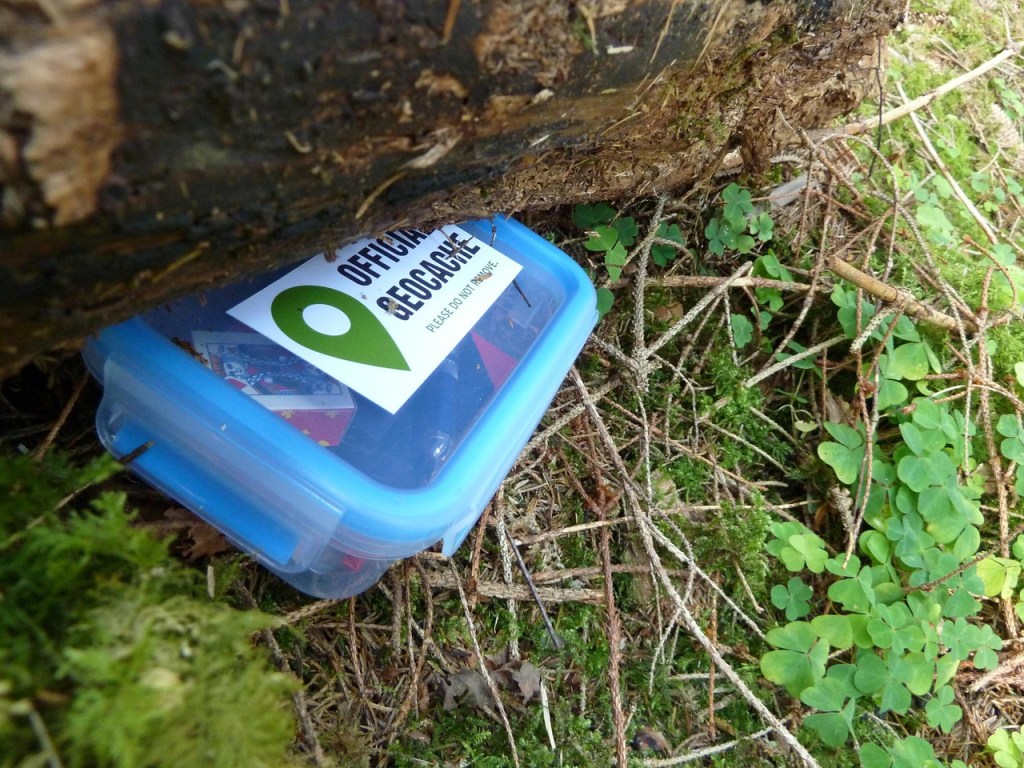
It goes like this. One person hides a piece of Tupperware or other waterproof container (an ammo case is also popular), usually in a natural environment but sometimes within a city or suburb. The container holds a piece of paper, a small pencil, and assorted trinkets, such as a postcard or a small toy. This is called the geocache.

***

Here’s a revision of the first section, rewritten according to what they suggested, or so I supposed.

I Use Satellites to Hunt for Tupperware in the Woods

That’s what a contestant on Jeopardy told Alex Trebek when asked about his hobbies and interests between rounds. Alex should have replied, “So you’re some kind of kitchenware spy,” but missed the opportunity.

I have aspired to kitchenware spying myself.

It’s called “geocaching” to those in on the process. A piece of Tupperware or other waterproof container (an ammo case is popular) is hidden, usually in a natural setting. The secrets within are a piece of paper, a small pencil, and assorted objects of unknown value. This is known in the trade as the geocache or “drop site.”

***

That second version was close to the one that you saw when I posted it. I think it was improved somewhat, but at the next meeting, they suggested even more changes.

I had trouble implementing their suggestions. The first one was “Lose the digressions,” which I was reluctant to do because of the name of my blog and a reasonably consistent shtick when I’m writing what I intend to be humorous pieces. They act like footnotes or record the meanderings of my mind while I write. But I ditched them for the second version, just to see. I also bumped up the spy references, using words like “agent,” “secret identity,” “tradecraft,” “the drop,” and “Ilya Kuryakin.”

On seeing the second version, they suggested that instead of describing how geocaching works, I should use “I” more: “I bait the drop,” “I decipher the clues,” etc. I agree that, in general, unless you’re writing an academic paper, “I” is preferable to “you.” So that was probably good advice.

They also told me I needed more hyperbole and more jokes. I already had some jokes in there: one clue being “Look under the big W” (a reference to It’s A Mad, Mad, Mad, Mad World) and my secret identity as “DjangOH” (in honor of my cat Django, who was named after Django Reinhardt, the jazz musician). They thought that one was pretty good, but assumed I was referring to the movie Django Unchained, which has nothing to do with cats or jazz musicians. They were apparently too young to get the other references as well. I’m beginning to doubt they got the one about Ilya Kuryakin.

Anyway, based on their comments and critiques of other people’s work, I gathered that what they were looking for was zingers, punchlines, and an over-the-top tone, like a stand-up comedian’s.

But that’s not the kind of writing I prefer. I grew up on observational, story-telling humorists like Erma Bombeck, James Thurber, and Jean Kerr. And if I could write one-tenth as well as David Sedaris or The Bloggess, I would count myself a happy writer. Hyperbole, yes, but no punchlines.

So I ask you these questions:

• Should I keep doing what I’ve been doing, with digressions?

• Should I lose the digressions and rename my blog?

• Do you prefer a stand-up comedy-style writing or an observational one (but not like Steven Wright)?

• Do you want to see listicles? Shorter pieces of writing?

• Would you prefer no serious posts like the one last week about my father? Should I have a separate blog for them? (It would be occasional, as I don’t think I could write three blog posts a week.)

I sincerely want your opinions. Please feel free to sound off in the comments.

Apparently obligatory joke:

Ist old lady: My, it’s windy today.

2nd old lady: No, it’s Thursday.

3rd old lady: So am I. Let’s all go get a cup of tea.

I Use Satellites to Find Tupperware in the Woods


That’s what a contestant on Jeopardy told Alex Trebek when asked about his hobbies and interests between rounds. Alex should have replied, “So you’re some kind of kitchenware spy,” but missed the opportunity.

I have practiced kitchenware spying myself.

To make it sound less like spying, it’s called “geocaching.” A secret identity, if you will.

A piece of Tupperware or other waterproof container (an ammo case is popular) is hidden, usually in a natural setting. The secrets within are a piece of paper, a small pencil, and assorted objects of unknown value. This is known in the trade as the geocache or “drop site.”

To get your mission started, go to a website that contains geographical coordinates. Sometimes there’s a cypher that offers an encrypted clue. (“It’s under a big W.”) You use the satellite coordinates and a sophisticated process called warmer/colder until you find the cache. Or not.

To prove you’ve succeeded in your mission, you sign the piece of paper, take an object another agent has left, and replace it with one of your own. This is known in tradecraft as “the drop.” Then you return to the website and report that you have found the cache and made the swap (or not).

The hiding places can be diabolical. One I was in charge of was attached to a statue celebrating sewer workers. Or you may need to locate a next-to-invisible “microcache” that contains only a tiny piece of paper. (BYO pencil.) One I found was a magnetic key holder. Another had an extremely cryptic encryption clue in a foreign language. It contained the expression “2d,” which I at first interpreted as two-dimensional or flat. Instead, the dropsite proved to be cylindrical, a tiny roll of paper wrapped around a nail inserted into a fencepost. The nail was known as a two-penny nail. 2d in British tradecraft means two-penny.

Another cache was the back of an official-looking magnetic sign on the side of an electrical box. To prove you had located it, you had to peel off the magnetic notice, sign the back, and then replace it.

One complication is that you must retrieve the cache without being seen by laypeople. It’s interesting trying to climb up a swing set in a park without looking like that’s what you’re doing. Once, to avoid blowing my cover, I had to mime losing my car keys and looking for them under an overpass where the Tupperware was hidden.

I haven’t hunted Tupperware lately, especially since I sustained an injury. And lost my GPS in a tornado. And need a GPS to find my motivation, which could be anywhere, but probably isn’t in my house. Maybe I lost that in the tornado, too. But I just went back to the website where you find the coordinates, and learned that I was still registered as an agent with a secret identity (DjangOH).

There is at least one cache very close to my home base that I could conceivably find with only the clue and no coordinates. I miss the thrill of the chase. Maybe I can even locate that cache while using my walker. And pretend my husband is Ilya Kuryakin.

Walkin’ the Walk

Babies learn to walk by stumbling around with a Frankenstein gait and frequently falling on their padded butts. And people think it’s cute.

Me, not so much. (It’s true that I have an amply padded butt, but it’s not sufficient to cushion a fall from my height to the floor. Which has happened to me fairly frequently since I had my knee replacement in late April. But I digress.)

The reason this all occurs to me is that I have had to learn to walk all over again. And I don’t look cute as I waddle and toddle and go boom. The going boom part has necessitated stays in the hospital and the post-acute rehab facility (aka nursing home). At least there was someone there to pick me up when I did go boom.

(Dan did fairly well when I boomed at home. (Yes, we’re both boomers. Like that was any secret. But I digress parenthetically.) But he has to work and wasn’t available for eight hours a day, which made us both very nervous. Fortunately, he was home when I fell and broke one ankle in two places. But I digress some more.)

But everything has changed—or is, at least, back to what passes for normal here. I’m at home, doing PT on an outpatient basis, and getting around the house with the walker and a PT technique I learned called “stand and pivot.” (Sounds like a square dance move to me. Perhaps I should curtsy to the walker. But I digress yet again.)

Square dancing isn’t in my immediate (or, most likely, long-term) future. Nor are ballet, polka, and can-can. (Waltz, perhaps. It was probably invented by someone who could do the stand and pivot. But I digress even more.)

Regular walking, though—that may not be beyond my power. At PT last week, I walked 97 feet, and yesterday I walked 250 steps. Both with the walker, of course.

Dan is urging me to try trickier forms of ambulation—climbing stairs and walking up and down a ramp that we installed for my wheelchair. My PT people insist that I need better balance and stamina first. And I don’t want to do anything that involves going boom. Chair-dancing—that I can handle.

AI Writing: Friend or Foe?

You may have heard that AI writing means the death of writing done by actual, live people. In a way that’s true, and in a way it isn’t. Let me explain.

Many—perhaps most—of the fiction books that you see for sale on Amazon and other outlets are AI-written and almost universally bad. Rotten, really. So bad that you want to throw them against the wall. (Unless you have a Kindle, Nook, or other e-reader, of course. Then you only want to delete them. But I digress.) They are too short, too filled with adjectives and adverbs, too lacking in a coherent plot, and too deficient in character development. Even the most potentially vivid genres are bland.

You may say to yourself, “I could write a better novel than this turnip.” And you very likely could. (So why don’t you?)

But AI has taken over most of the writing space. Even books that you yourself don’t write aren’t written by a human being. (I should know. I often freelance for a ghostwriting service that shall remain nameless because of the NDA I signed. They used to have lots of us human beings doing the writing. Now they largely have “writing packages” produced by AI. The only time a human being touches the book is to supervise the AI engine, which sometimes goes madly astray, and to “humanize” the results (it’s known in the trade as “polishing dogshit into gold”). But I digress again. At length.)

That’s the bad side of AI writing. What, I hear you ask, is the good side?

It can make you a better writer.

Hear me out.

Let’s think about the most basic AI writing tool that almost everyone is familiar with: Grammarly. Yes, it follows along behind you and corrects what you’ve written when you’re typing too fast (like “isfamiliar”). And it always changes your word choice to “ducking.” It’s never “ducking.” But, if you pay attention to it, Grammarly is a teaching tool.

Grammarly sends you reports that list your most common mistakes that week (or month, I don’t remember). If it says you have problems with subject-verb agreement, brush up on that. If you have trouble remembering whether commas introduce an independent clause or a dependent one, look it up and try to remember it the next time you write.

Teachers worry that their students will use AI to write their papers for them. (One of my friends now has her students write out their essays longhand, like I did in the Victorian era. But I digress some more.) They may indeed rely on AI. (A survey of students found that they considered it cheating, however.) But there are many AI detectors available to teachers that sniff out suspiciously smelly AI-created sentences and paragraphs and report on how much of a piece of writing seems to be human or AI.

This, of course, has led to ways to avoid the AI detectors. One I saw recently offered a series of prompts a student could give the AI program in order to produce a piece of writing that would appear to be human-written. The list of things the sneaky student should tell the AI program to avoid was comprehensive and long.

It told students to create a prompt that specified not only the topic and tone of the illicit paper, but also to avoid common signs of AI content that the AI checkers teachers use frequently will flag.

The list of things to tell the AI to avoid included: sentences more than 20 words long without one clear idea and paragraphs all the same length; passive voice; abstractions instead of concrete words; sentences of all one length; a lack of measurable facts; suspect punctuation (semi-colons and em dashes) (I disagree with this stricture. I love semi-colons and em dashes, as if you hadn’t noticed. But I digress yet again.); overused words and phrases (an extensive list, including last but not least, cutting-edge, delve, game changer, nonetheless, despite, moist, subsequently, furthermore, utilize, leverage (and any other biz-speak or tech jargon)); adverbs and adjectives; hedging; more than one prepositional phrase or verb phrase; all-caps or numbered lists; and metaphors involving landscapes, music, or journeys. (I once asked ChatGPT to write some poetry, and it really overdid those metaphors. But I digress even more.)

In other words, if you know what to tell the AI not to do, you already know for yourself what not to do—or keep that list handy and refer to it often—you’ll be able to write your own sparkling prose without Robby the Robot’s assistance. And the process of learning to tell the AI how to write undetectably will improve your own writing.

If you think of AI as a way to learn instead of a way to cheat, you’ll do well.

Roommate Roulette

When I spent time in a skilled nursing facility recently, I quickly learned that one didn’t find a compatible roommate. The choice was up to the whims of the powers that be. It could turn out either good or less-than-good. (My insurance company would only spring for a double room, so there was no chance of a private one, except on the occasion when my roommate happened to move out. But I digress.)

All-in-all, my experiences varied from okay to excellent. My first roommate was Norma, who was quiet and inoffensive, but unfortunately addicted to the TV show Gunsmoke, which she watched all day long. I suppose I could have raised an objection, but I was determined to keep the peace and, after all, I could hardly inflict on her eight-plus hours of cooking shows and Star Trek reruns. Norma was released to go home, however, and I had the room all to myself, my chefs, and my aliens.

The next time I returned to the facility, my roommate was Brenda, a woman with a large family who created quite a commotion when they all visited at once, though that was not often. When it happened, I retreated to Pandora and my earbuds (a must for any stay in such a facility).

I was moved to another room when Brenda developed an infection and had to be isolated. (Since we were then across the hall from each other, our Physical Therapist arranged for us to have weight-lifting sessions in our doorways so we could see each other and chat. Sometimes, Shirley, the lady next door to Brenda, joined in as well, and we all chatted while doing curls. But I digress again.)

My best roommate, however, was my third one, Darlene. She didn’t care for TV and had only a few visitors. Among her other ailments, she had PTSD, so she preferred to keep the curtain between us pulled and wouldn’t be distracted by comings and goings in the hall.

The curtain proved no impediment to our growing friendship, however. We started bonding over our shared love of murder mysteries and true crime books. Naturally, the subject of Jack the Ripper came up. (As it does.)

“When we were in England, my husband and I took the Jack the Ripper walking tour,” I shared.

“Oh!” Darlene exclaimed. “I’ve always wanted to go on that.”

“It was a foggy, drizzly evening—very atmospheric. And we booked our walk when Donald Rumbelow was guiding it.”

She recognized the name immediately. “Donald Rumbelow! I’ve read his book on Jack the Ripper! He’s the best!”

“That’s why we chose a tour when he was leading. We also went to 221B Baker St. and saw the Sherlock Holmes Museum. It was a small, narrow building sandwiched between two others. Every floor had displays related to his famous cases. The top floor held a toilet with a blue Delft-like design in the bowl. It looked much too pretty to use. Even if you could make it up all six flights to get there.”

“You’ve been to the places I’ve always wanted to go and done the things I’ve dreamed of doing! Tell me more!” We were off and running on travelers’ tales.

After that, we dissected our favorite mystery series and recommended them to each other. We talked about holidays and favorite foods and family and pets. We spoke of exes and jobs and rated the nurses and aides. We cheered each other on about the distance we’d walked during physical therapy.

And we talked politics. I had been reluctant to share my political views with anyone at the facility, knowing how divisive, not to say explosive, such talk can be. But once again, Darlene and I were completely in sync. We despaired of the state our country is in and blamed the same people for it. When neither one of us could sleep, we talked well into the wee hours of the morning.

Darlene had a birthday while we were both residents, and she shared it with me. Literally. We each ate half of the yummy carrot cake with cream cheese frosting that her family brought her. She reveled vicariously in the little anniversary dinner that Dan arranged for me, which featured sushi, electric candlelight, mood music, and ginger ale in champagne glasses. Dan brought Darlene a case of Diet Cokes and a box of plasticware that her arthritic hands could manage at mealtime. (The aides often forgot.) She let me watch Practical Magic on her DVD player and I ordered her a copy of Fletch when she told me how much she liked it.

I’m out of the facility now, but Darlene is in for the long term. Today, we’re going to stop by and surprise her with a box of the cheese-and-peanut-butter crackers she can’t resist. I can’t wait to see her face light up.

Codger the Codger

One summer, I took a trip with a group of friends. We went up north to enjoy some brisk weather and scenery. Instead, it rained the entire time, and we stayed in the hotel room playing word games. I like word games, but there are limits.

(My husband doesn’t object to my traveling without him, although he does tease me about going to meet my lover Raoul. I call him when I’m on my way home to tell him to make sure the dancing girls leave. But I digress.) When I do go away without my husband, I generally come back to a major appliance. (I like to comparison shop. He just wants to make a decision. But I digress again.)

This time, however, I came back to a new pet. A hedgehog.

I was just as glad not to have a new appliance (we didn’t need any), but a hedgehog? We’re a cat family. (With the occasional rescue dog.)

Obviously, I had questions about the hedgehog.

Why a hedgehog? (shrug)

Where’d you get it? (a guy at work)

What did you name it? (Codger)

Why? (shrug)

Dan set Codger up with a home in a large fish tank (which he had previously used for a snake and some hermit crabs that he claimed were building a secret missile base. But I digress yet again.). Dan acquired a small hut for Codger and a large, green plastic ball for him to play with.

Despite having a toy, Codger was not a joyous pet. He ate mealworms, so we went to the bugstore regularly to get some. Even with a constant supply of worms, he was cranky. I began to suspect how he got his name.

I have seen pictures on Facebook of adorable little hedgehogs reclining in muffin cups or wearing cunning little hats. Codger was not adorable and he did not go in for little hats, no matter how cunning. He snarled and rearranged his furniture. That was the extent of his repertoire.

After a while, Dan and I went away on vacation together. (We do that sometimes, when we don’t need any appliances. But I digress some more.) We left Codger with our friend John, who reported that the creature ate bugs, snarled, and rearranged his tank.

Codger also had a habit of sticking Dan with his spines. Wanting to understand our pet’s behavior, I looked up hedgehogs on Google. It said that you should socialize them when they’re young, or they grow up to be surly as well as pointy. Dan’s friend had evidently stuck him with an overage hedgehog.

(I told Dan that he should try to socialize with Codger. Dan poked him with a plastic fork. “That’s what he does to me,” he explained. (He didn’t want me to reveal this, for fear of being arrested for animal abuse. I convinced him the statute of limitations has expired.) But I digress even more.)

Eventually, Codger passed away. What can I say about the little guy? What he lacked in personality, he made up for in surliness. Perhaps he is now in a better place, feasting on mealworms and snarling at the angels. That’s how I like to picture him, anyway.

It’s All a Blur!

My history with eyeglasses goes way back—over 60 years, in fact. That being the fashion at the time and me being even then the opposite of a fashionista, I wore many pairs of cat-eye glasses.

My husband, Dan, was only a little older than I was when he got his first pair of glasses. Unlike me, he’s near-sighted. (I’m cross-eyed and far-sighted.) He always tells the story of how, once he had glasses, he said to his mother, “Look, Mommy. Those people on television have faces!” (Although we have different diagnoses, we both require Coke-bottle prescriptions. But I digress.)

By the time I was in high school (when I had at last graduated from cat-eye to aviator frames), all my classmates were wearing contacts, and losing them regularly. I was unable to follow suit because of being cross-eyed and, more importantly, because I can’t bear to even think about anything, including me, touching my eye. I recoil whenever there’s a commercial for a drug that requires an eye injection. (That’s true to this day—both the wireframes and the horror of anything touching my eye. But I digress again.)

When I was a child, I had an ophthalmologist, Dr. Saunders, who was the epitome of gentleness and kindness. When it was time for me to select my own eye doctor, I wanted someone with the same vibe. So of course, I went to Dr. Gary, whom I knew from being in the same martial arts class. (I figured that if he needed to touch my eye for any reason, he could at least subdue me first. But I digress yet again.) When I first visited his office, his partner glanced at me and exclaimed, “You’re a hyperope!” which is the technical term for far-sighted, I learned.

Over the years, both my husband and I have been through increasing thicknesses of eyewear and various styles of frames. After all these years, I still prefer wireframes and Dan has come around to my way of thinking. Bifocals were an eventual necessity and I opted for computer glasses as well, since I spend so much time online.

We’ve had a few eye-related emergencies over the years. Mine occurred when I set off a flea bomb in the house and accidentally bombed my face. Fortunately, my glasses offered some protection and there was a bottle of distilled water nearby. Suddenly, I wasn’t so worried about something touching my eyes as Dan held them open and poured.

Dan’s extreme eye occurrence happened when he was driving. All of a sudden, he saw a flash in his right eye, and the vision in that eye became blurry. The next day, he had small, dark pinpoints in his right eye’s field of vision.

A quick trip to Dr. Gary seemed necessary. Dan learned that he had experienced an age-related phenomenon that affects the vitreous fluid in his eye. This information gave me the willies, of course, but Dan took it all in stride. The flash didn’t return and Dan named the largest of the floating points in his eye. He called it “Freddie the Free-Floater.” (Any Red Skelton fans out there? But I digress even more.)

I’m preparing myself for the day when I also see that flash and the dark points in my vitreous fluid. I don’t think I can come up with a better name for them, though. Dan surely wins on that count.

Practical Beauty Tips

If you want to look like a million bucks, get real! And by that, I don’t mean using all-natural charcoal slug placenta serum on your extremities. No, I’m talking about budget reality. You don’t have expendable income that would cover a single day of Angelina Jolie’s beauty regimen. What you need are practical tips like these.

How to exfoliate. Before you bathe, rub your face vigorously with a dry, rough towel. Take a hot shower. After you do, rub your face vigorously with a dry, rough towel. Your epidermis will disappear in a trice. You’ll have a luminescent pink glow just like someone who has lived through ionizing radiation, without the expense of costly fissionable materials.

How to use bath bombs. If you have a bathtub, the directions on the package will work pretty well, as long as you don’t mix up your bath bomb with the similar kind of bombs that you drop into pots of soup for seasoning. The curry and chili varieties may prove painful or leave your skin an interesting new color. But a bath with your bouillon bomb will leave you with an appealing fragrance that attracts hungry men and dogs.

If you have a shower rather than a bath, wrap the bomb in a piece of cheesecloth like a bouquet garni and hang it from the shower head. (Be careful. The bouquet garni technique may confuse you and make it more likely that you will douse yourself with a miso or onion soup bomb. But I digress.)

How to select a fragrance. Go to the perfume counter these days and you’ll think you’re in the produce section of the grocery store. Natural, vegetal scents are the current trend. Think of lemon wedges, herbs, and any vegetable that can be carved into the shape of a rose. Throw them in your blender and garnish your pulse points with them. If you want, take the leftovers from your lunch salad and whiz them up. Don’t forget to put a sprig of parsley behind one ear. Think of it as a leafy, green fascinator.

How to accessorize. Coco Chanel famously advised that when you’re ready to leave the house, remove one accessory before you go. Lose the brooch. (No one ever pronounces it properly anyway. It rhymes with “roach,” not “cooch.” But I digress again.) Or ditch the parsley fascinator. If you’re wearing earrings, the greenery will be un peu de trop.

How to get an eye-catching tattoo. Text tattoos are always popular. You can convey an important message like “No Regrets,” “Slippery When Wet,” or “FTW.” The important thing to remember is to consult a proofreader before the tattoo machine revs up. Otherwise, you might end up with a permanent message that says, “No Regerts.” (Actually, “FTW” might end up as “WTF,” which could be what you say when you see it. But I digress some more.)

(If you want a Chinese symbol, which is a perennial classic, as a tattoo, it’s even more important to hire a knowledgeable proofreader. Most tattoo artists aren’t bilingual and will happily decorate you with characters that mean “oyster sauce” or “I’m ready for the first man I meet.” Assuming that’s not what you asked for. But I continue to digress.)

Next Week! Follow me for more Practical Beauty How-Tos: Tame Your Unibrow With a Birthday Candle; Get Your Weight-Loss Game on With Turnips; and Use Spackle to Freshen Your Look!

Go. Be Funny.

Once the boss editor gave me an assignment. “Go,” he said. “Be funny,” he said. “Come back in an hour.” We were preparing a calendar with amusing sayings and odd observances on various dates.

Now, most writers would be daunted by this sort of thing. I know I was. But in an hour, there I came, quips in hand. “Is this job too easy for you?” he asked.

Actually, writing funny stuff is not easy. I was just feeling quirky that day. (“Dying is easy. Comedy is hard” is a quotation that’s been attributed to any number of those shuffling off the mortal coil, from actors Edmund Gwenn to Jack Lemmon to Peter O’Toole to Meryl Streep (who, not having died yet, almost certainly didn’t say it on her deathbed). But I digress.)

The geniuses of Monty Python certainly seem as though they created comedy easily. And I know a man who can write a funny song, a la Weird Al, in 15 minutes or less. But for most of the writing world, humor is the hardest form of writing. (Except possibly the sestina. Or the humorous sestina, come to think of it. But I digress again.)

How do you build up your humorous writing muscles to the point where you can flex? I recommend hanging out with silly people, like the aforementioned songwriter. (If you’re tempted to use AI, forget it. I asked ChatGPT to write a joke about a cat. It replied, “Why did the cat sit on the computer? Because it wanted to keep an eye on the mouse!” Asked for a joke about a dog, it said, “Why did the dog sit in the shade? Because he didn’t want to be a hot dog!” Apparently, ChatGPT writes at the level of a five-year-old. And when I asked for a humorous sestina, it created one about a knight named Sir Guffaw and his tap-dancing horse. But I digress yet again.)

My next piece of advice is to have a cat or a spouse. Cats are not dignified, contrary to their reputations. One of our cats tried to escape from the vet and bonked her head on the glass door to freedom. And my spouse does and says funny things, or prompts them from me. For example, I once took a picture of him in a tweed cap and turned it into a meme (seen here, as you can no doubt tell.)

You can also turn trauma into humor. I once found myself having to get rid of a dead possum, which certainly traumatized me. Another time I almost offed a friend with a bay leaf. Those alarming events worked their way into killer posts, so to speak.

Reading humor can help, too. Think David Sedaris and The Bloggess. For irreverence, there’s Lamb: The Gospel According to Biff, Christ’s Childhood Pal, by Christopher Moore. For vintage humor, there are James Thurber and Erma Bombeck. (Given the example of Thurber and Bombeck, being from Ohio helps too. But I digress some more.)

Then there are humorous movies. Personally, Airplane can still make me LOL. (So can Zero Hour, the film from whence Airplane‘s plot and many lines of dialogue came, only deadly serious. It’s impossible to watch without flashing back (or forward, since Zero Hour is the older movie). But I digress yet again.)

But for myself, I like a good catchphrase that didn’t come from a TV show or movie. It came into being because I wanted to write little asides and put them in as footnotes. But I couldn’t figure out how to make WordPress do that, so I turned to my grammatical friend, the paren. (Not really my favorite mark of punctuation, which is the semicolon. But I digress for the last time this post. I swear it.)

Saint Dan

Once upon a time (as all good fairytales begin), a coworker of mine started referring to my husband as “Saint Dan.” I regularly told tales of how he treated me with love, understanding, humor, and sensitivity. (This was not in the immediate runup to our marriage (during which we had been disgustingly romantic, to the extent that our friends claimed they needed a jolt of insulin when we were around), but after we had been married for years. But I digress.)

Some of Dan’s displays of love seemed to my friends to be extravagant. For instance, when I went on a business trip, he left little notes of love and encouragement in my belongings—not just in my suitcase or pockets, but everywhere. There was even a note under the cap of my deodorant. (There was also a piece of paper with a few cat hairs taped to it, to remind me that the cat loved me too. But I digress again.) My travel roommate was somewhere between impressed and unbelieving. And possibly nauseated.

Another example is the story of how Dan once walked upstairs behind me and said, “Those jeans are loose on you. You should get a new pair.” “I hope you turned right around and gave him a big kiss,” my coworker said. Given the difficulty of turning around and bending over to kiss on the stairs, I waited until we were both at the top.

Dan is also great at giving presents. When he was in charge of the budget (It’s my responsibility now. We have different ways of approaching it that appall each other, so we take turns. But I digress in the middle of what I was going to say.), he used to follow me around at stores and conventions, making note of anything I expressed an interest in, then going back later and buying it for me. Once he noticed that I liked a certain dress, managed to slip away, buy it, and hide it in the trunk of the car before I noticed he was gone. Another time he bought me an amber carving of a rabbit that took him months to pay off, so I had forgotten all about it by the time he gave it to me.

He has a sense of humor, too. Sometimes he even gives me a perfect straight line. Once, the movie Gunga Din was coming on and he innocently asked me, “Honey, do you like Kipling?” I almost choked to death as I gasped out, “I don’t know. I’ve never kipled.” He can pick up on a straight line, too. Another time, we went to a Japanese restaurant for our anniversary. I complimented him on how well he was using chopsticks for the first time. “Jan,” he said, “I’m a compulsive overeater. If I had to learn to eat with my elbows, I would.”

Of course, Dan is far from perfect. Once I had to say to him, “Please don’t use power tools after I’ve gone to bed.” (It was one of those things you never expect to hear yourself saying, then one day there you are. But I digress some more.) And he’s not good with directions. When I draw him a map to somewhere (he can’t use a GPS), I have to draw another map on how to get back (he can’t reverse directions either).

(As I was writing this, it occurred to me that there might be an actual Saint Dan. A quick visit with Mr. Wikipedia revealed a few possibilities, the most likely of which seemed (to me) to be St. Daniel of Padua, feast day January 3rd. Possibly of Jewish lineage, he was martyred by being dragged behind a horse. He is called on by women whose husbands are away at war and is often depicted carrying a towel, which might make him the patron saint of Douglas Adams fans. So now that’s something we all know. And I have digressed pedantically for the last time this week. See you next Sunday for more stunningly useless info and digressions!)