Category Archives: government

Hungry Children: A One-Act Play

Sharing food with the needy

[Setting: The Halls of Power]

Guy in Suit: The media keep saying that there are hungry children in America.

Other Guy in Suit: Let them eat dinner.

Bleeding-Heart: That’s the problem. They don’t have dinner to eat. Or even breakfast sometimes.

GIS: We already give them lunch at school. That’s five days a week.

B-H: Unless they’re absent or on vacation or a snow day. Or if they can’t pay for it.

OGIS: Then it’s the parents’ problem.

GIS: Why do schoolchildren have so many vacations, anyway? We don’t get all those vacations.

B-H: Uh, yes you do.

GIS: Oh. Well, never mind that now. We were talking about tax cuts…uh, job creators…uh, feeding children. That was it.

OGIS: Suppose the media are right?

GIS: The media are never right unless we tell them what to say.

OGIS: Well, just suppose. For a minute. OK? The problem I see is that it looks good for us to feed poor, hungry, starving American children. By the way, are they as pitiful-looking as poor, starving foreign children?

GIS: Probably not. You were saying?

OGIS: If there are hungry children, and we do need to feed them, how are we supposed to do that without feeding the lousy, lazy, good-for-nothing moochers at the same time?

GIS: Ah, yes, the parents. If we give the parents anything, it should be one bag of rice and one bag of beans. And — hey — they could feed their kids that too.

B-H: But children need good nutrition — fruits and vegetables and vitamins and minerals, and enough to keep them full and healthy.

OGIS: Hey, we have plenty of minerals left over after fracking. Won’t those do?

B-H: No.

GIS: But if we give kids all that fancy food, what’s to keep the parents from eating it?

OGIS: Or selling it for booze or cigarettes or drugs?

GIS: Think about that! The drug dealers would be getting all the good nutrition. Then they could run faster from the police.

OGIS: We can’t have that, now can we?

B-H: But…the hungry children? Remember? Eating at most one meal a day, five days a week, when school is in session?

GIS: That’s plenty. I heard American children are obese, anyway. They could stand to lose a little weight.

[Curtain]

This post, which I wrote a number of years ago, became relevant again. I wish it would stop being relevant.

An Investment in the Future

My investments are not stocks and bonds and they’re not biological, but they affect the future anyway.

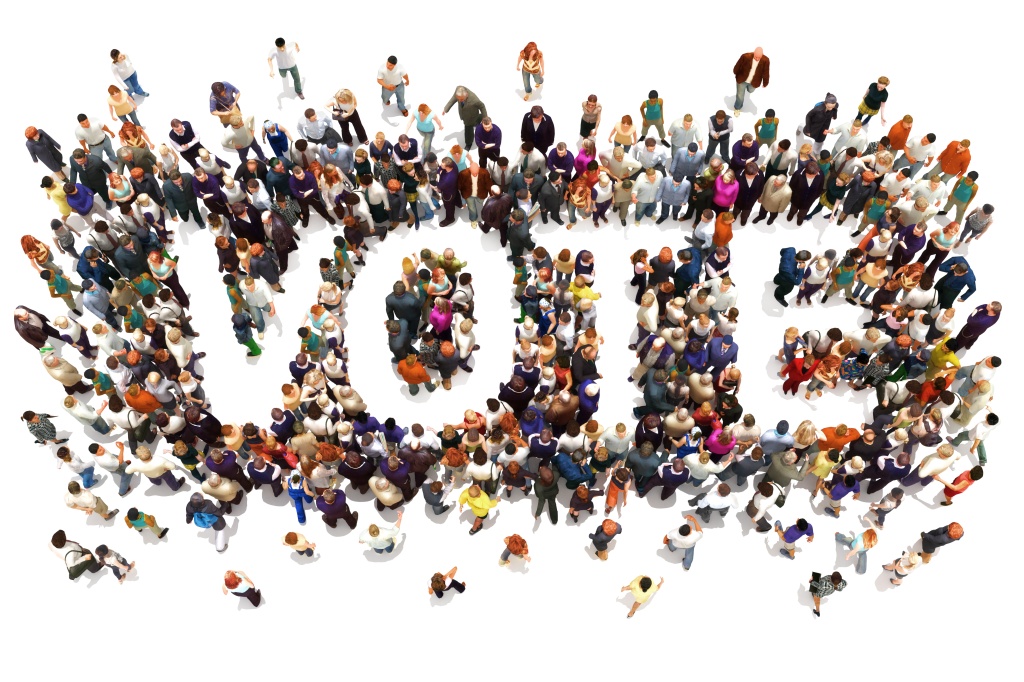
I don’t have any children—I’m the proverbial cat lady—and because of that some people are saying that I’m not contributing to the future of our country or that I shouldn’t get an equal say in how our country is run. And I think that’s just plain wrong.

Some families have no children because they can’t have any. Others don’t want children, for whatever reason. But making the most fundamental right of our society dependent on whether a person has a child is a profound violation of the foundations of our democratic society. Even if you’re a strict constitutional constructionist, there’s absolutely nothing in there about voting being contingent on offspring. (That voting was originally limited to white male property owners is another issue that hasn’t yet been brought up.)

This proposal is billed as “pro-family,” but it’s nothing of the kind. It defines family as only one kind of family and denies rights—not privileges—to the rest. Granting those privileges to children, to be exercised by their parents, contradicts the basic principle of one person, one vote. When those children turn 18, they are welcome, even encouraged, to cast their votes for themselves. But allowing parents extra votes per child is nonsensical.

I wonder how long it will be before the definition of a family is a two-parent (heterosexual) couple with children. Will single mothers get to vote more than once, considering their children? Single fathers? If a family doesn’t include two parents living together, does the voting right automatically go to the mother? The father? These matters are far from clear. And unless I’m mistaken, they would require a constitutional amendment to go into effect. In other words, it’s grandstanding.

But leaving that political nonsense aside, what are the rights that childless people have, or should have, regarding children?

Well, first of all, our taxes pay for schools, parks, lunch programs, Head Start, child tax credits, nutrition programs, Social Security survivors and dependents, Social Security Disability, Medicaid and health insurance, and of course schools, among others. I’m paying into those whether I have children or not.

I don’t resent that. I think such programs are necessary and I’m glad to help fund them. The children and families they help impact me directly and indirectly. They will be my congressional representatives, my nursing home aides, the inventors of devices that will improve my life—every slot that must be filled to make society run, if not smoothly, then at least adequately.

Of course, not all children have the same start in life or pursue noble or necessary functions. I would like to help them do so. The way I can do this is to vote. These issues and functions affect me in very real ways that I have the right and the privilege to vote for.

And I do vote.

Now, let’s talk about schools. Because I don’t have children, many people think I should have no say in what happens in schools. I disagree. What happens in the schools affects me too. I want doctors who have a firm grounding in accepted science. I want bankers who have a keen grasp on economics. And I want government people who have a thorough understanding of civics. That means I have an investment in what goes on in schools and what children learn.

I’ll never be on a school board or even a member of the PTA, but I do get to vote for who’s on the school board and I pay attention to what they do. Now, I’ve got no problem if people want to homeschool their children or send them to private schools, as long as my tax dollars go to the public schools. Public money, public schools.

But don’t try to take away my rights as a citizen or come up with some hare-brained scheme to make my vote count for less. You can say the children are our future all you want.

But they’re my future too. Whether I’ve given birth to any or not.

What I Love About Election Season

I’m tempted to say “Nothing,” but that would be too obvious.

I’m tempted to say “Watching the debates,” but that would be a lie. (I do enjoy the Bad Lip Reading versions, which are truly hysterical. But I digress.)

I’m not tempted to say “The engaging political discourse and the spirited exchange of ideas,” because that would be a big, fat lie.

However, if there’s a woman candidate, I do like to watch and see how many times the media comments on her fashion sense and grooming and calls her voice shrill and her personality unlikeable. I can keep score and see which outlets do the best and worst jobs. But that seems somewhat unlikely this year, though there may, of course, be female VP nominees—most likely will be unless Joe decides to ditch Kamala, which he shows no sign of doing.

No, what I love about the election season is the opportunity to view rhetorical fallacies in the wild. Slippery slope? Got it. Moving the goalposts? You bet. False equivalence? You know it. Appeal to the common man? All over the place. The places to see them are the debates and the TV commercials. Again, it’s fun to keep score. Keep a checklist handy. It’ll keep you distracted from your outrage.

(One year during election season I was teaching freshman English at a university, and I had a grand time introducing rhetorical fallacies through the above-mentioned method. It wasn’t around at that time, but now there’s a card game called Fallacy, which would have been a dandy teaching aid. But I digress again.)

Of course, there are classic political ads. (Some would say notorious.) The king of them all was Ronald Reagan’s “Morning in America” ad. It starts with a daisy and ends with a mushroom cloud. It was a classic slippery slope fallacy (also called the camel’s nose). The subtext was “Give the Soviets an inch and they’ll scorch the earth.” (This was back when Russia was our enemy.) It was also a notable campaign because it introduced the phrase, “Let’s Make America Great Again,” though no one wore hats that said that. And for a little more nostalgia, let’s remember that Reagan was 69 when he was elected. Back then, we thought that was old. (An underground slogan was “Reagan in ’80. Bush in ’81.” But I digress some more.)

Speaking of Bush (H.W., in this case), he took a vivid and vicious swipe at Michael Dukakis with his “revolving door prison” ad. This was the heyday of attack ads, which I think we’ll see a resurgence of this year. It could be both entertaining and appalling, as well as full of rhetorical flaws. (Also, Dukakis didn’t help himself with a commercial showing him driving a tank, which was supposed to be patriotic, but just looked silly. It was described as “The Photo Op That Tanked,” which I have to admit was a clever headline, unlike so many others that try to be witty. But I digress even more.)

I also love seeing how many times the candidates use the words “patriotic” and “freedom” without ever defining them and whether they refrain from talking about re-education camps or death panels. What I really love about election season, though, is one when there’s no violence. May it be so.

Remembrance

I saw a post on social media yesterday that showed Native children dressed in school uniforms. Their image, wearing Native garb, was reflected in a pool of water. The words “Never Forget” were printed in between the two images. It made me stop and think how few of us remember what happened to Native children who were taken from their families and sent to government schools. It wasn’t taught in the schools I went to and isn’t likely to be taught now in a number of states. How can we remember what we never even knew?

In the spirit of remembrance, though, here is a glimpse at what we at least try not to forget.

Never Again

The Holocaust is the most famous event that we are exhorted never to forget—and never to allow again. As time goes on, there are increasingly fewer people who remember its horrors for themselves. There are movies, books, newsreels, and other media that have kept the memories alive, however. These days, we’re more aware of the concept of genocide, though there are those who deny that the Holocaust happened. January 27 is Holocaust Remembrance Day. It’s worth noting that German schoolchildren are taught not to forget. They learn about the horrors and even visit the sites of concentration camps, which are preserved as memorials to the dead.

Attack on Pearl Harbor

National Pearl Harbor Remembrance Day is observed every year since 1994 on December 7, the “day that will live in infamy” to remember and honor the Americans who were killed in the Japanese surprise attack on Pearl Harbor in Hawaii. More than 2,000 people died and many more were injured. Remembrance Day is not an official national holiday, but flags are flown at half-staff. There are several memorials, the most famous of which is over the site where the USS Arizona was sunk. There is also a memorial to the USS Missouri, the ship where Japan surrendered to the US, ending WWII.

Hiroshima and Nagasaki

The US’s use of the atomic bomb on two cities in Japan is another event that bears remembrance—and avoidance in the future. Japan has designated a church that was nearest the center of the blast at Hiroshima as the official Peace Memorial. There are also a park and a museum at that location. At the Children’s Peace Memorial in the park, thousands of colorful origami cranes, a Japanese symbol of peace, can be seen. Nagasaki has also designated a memorial and a museum. As threats of nuclear war grow increasingly plausible, it’s worth reflecting on the damage done and the lives lost.

NASA’s Day of Remembrance

This year, January 25 has been designated NASA’s Day of Remembrance honoring the astronauts who have died in the process of space exploration. Three crew members died in a fire on the launch pad in 1967, and 14 crew members, including “Teacher in Space” Christa McAuliffe, were lost in the crashes of the Space Shuttles Challenger and Columbia. Kennedy Space Center has a Space Mirror Memorial where workers and visitors often leave flowers.

9/11

This is the most recent event that needs to be remembered. Where we were when it happened is burned into those of us old enough to be aware of it. (It amazes me that I have to write that sentence.) Memorials at Ground Zero as well as in Pennsylvania and Washington have been built—parks and plaques and a 9/11 museum. Actually, countries around the world have memorials for the event as well. There have been solemn ceremonies such as the reading of the names of the dead on the first anniversary of the attack. There have been lots of other changes that remind us of 9/11 in less inspiring ways, such as increased security in airports and a greater awareness of terrorism in the US from a number of other sources.

It’s sad—tragic—that these remembrances involve so much death. And there are more tragedies that I haven’t even mentioned, like President Kennedy’s death (which some of us are old enough to remember for ourselves). Celebrations of people’s lives don’t seem to last that long.

Maybe it’s because the tragedies arouse in us deeper levels of feeling than lives lived well and examples that inspire. Maybe it’s because we hope something good will rise from the ashes.

There’s Prayer in Schools

Despite what you may have heard, there is prayer in public schools. It’s totally legal.

You don’t think so? The government forbids it?

Not true! Students and even teachers pray in school every day. They always have and they always will. Pray all you want.

A student can pray before a test or just because. Groups that meet for that purpose can pray—during a free period, for example. (There was a group in my high school that did this. I attended a few times but left when they started planning a book burning.) There’s absolutely nothing stopping you from praying like this.

The only thing that’s not permitted in schools is requiring anyone else to pray with you or telling them how they have to pray. A principal or teacher can’t start class with a prayer. You can’t insist that students pray over lunch. You can’t base grades on whether or not a student prays. If a student chooses to pray, you can’t tell them which prayer to use. All those things fly in the face of the Establishment Clause of Freedom of Religion in the First Amendment to the US Constitution.

“Congress shall make no law respecting an establishment of religion, or prohibiting the free exercise thereof” is what it actually says. That means that there can’t be a law that makes one religion the official religion of the US. And it means that, if you do have a preferred religion, the government can’t prevent you from practicing it. It’s left up to the individual what religion—if any—they practice.

The problem comes when we’re discussing public institutions, which include public schools. (Obviously, students in religious schools can pray whatever the school says to.) The first part of the clause says that the public institution can’t declare an official religion. That’s why there’s no compulsory prayer in schools. The second part, “prohibiting the free exercise thereof,” says that everyone is free to worship in their own way. That’s why students are able to pray in schools during their free time, by choice, without an official such as a teacher or the principal leading it. The government can’t forbid it.

If prayer were to be required in schools, there would be any number of cans of worms opened. Let’s take a basic Christian prayer—The Lord’s Prayer.

Which version of the prayer would everyone be required to say? There’s a difference between the Catholic version and the Protestant version. But the wording also differs among the Protestant denominations and individual congregations. Debts and debtors? Trespasses? Sins? Many churches specify in the church bulletin which wording to use so that they can pray in unison.

Another can of worms is that not all Americans are Christians. Increasingly, children from other faiths are entering the public schools. Why should they be required to pray a Christian prayer? But what’s the alternative? Couldn’t they just sit quietly while everyone else prays or pray their own prayer silently to themselves? No. That establishes the prayer of one religion as the official classroom prayer to the exclusion of the others. Anyone who doesn’t share that religion gets treated differently. Their prayer is not the one being said for everyone. That’s the establishment clause again.

Then, think about what it would be like if Christians weren’t in the majority in a school. (For the moment, let’s suppose that the majority rules, which is many people’s assumption.)

But Christians aren’t always in the majority in a public school. I always think of the example of the followers of the Bhagwan Rashneesh. A religious community in Oregon, they incorporated as a city, Rajneeshpuram, which had around 7,000 people. Nearby Antelope, Oregon, had a population of about 60.

The State School Superintendent visited the district’s high school and found that it was “permeated with religious symbolism” and “did not look, sound, or feel like a public school.” The religious symbolism was Rajneeshee, of course.

Now imagine those people from nearby Antelope. If their kids had to attend the Rajneeshpuram school, which was officially a public school, how would their parents have liked it if the students were required to say the Rajneeshee prayers? Not so fond of required prayer in public schools now? Ready to take the Rajneeshees to court to prevent their prayers as unconstitutional? That would be my guess.

In other words, be careful what you pray for.

Changing the Culture

Culture change is slow, but it happens. What’s happening now in society isn’t the same as in the past, and it won’t be the same in the future. Culture changes in small and large ways, largely through the coordinated actions of groups of people. Those groups, though, are made up of individuals who want the culture to change.

One of the best examples is the change in how society thinks about drunk driving. It used to be a thing we regretted but accepted – at least until it affected our family directly. Over the years, though, drunk driving affected more and more families, until it could no longer be ignored. Then, on September 5, 1980, Mothers Against Drunk Driving (MADD) was founded. Now, there are chapters in every state in the US and every province in Canada. Candy Lightener, the founder, had suffered the loss of her 13-year-old daughter to a drunk driver, and she couldn’t – wouldn’t – take it anymore.

Over the years since, MADD members have been tireless advocates for more public awareness and stricter laws. They’ve been successful on both counts. Now, more people are having designated drivers, serving nonalcoholic alternatives at their parties, and making drunk drivers anathema in society. States have instituted legal limits on blood alcohol. Bartenders are avoiding lawsuits by cutting down on overserving and confiscating car keys. Drunk drivers are losing their licenses and being given harsher sentences for vehicular manslaughter. The culture changed.

It isn’t something that happens overnight. In fact, in many cases, cultural change is positively glacial. In the 1970s, women across the U.S. were working for reproductive rights and social reforms. But in my high school, it was easy to make fun of feminism. Bra burning. The Equal Restrooms Amendment.

The ERA has still never been ratified. The reproductive rights gained have been rolled back ever since and now have been thoroughly gutted. But the most lingering effect of feminism that I can recall from that time is this: consciousness-raising.

Women’s eyes were opened to the idea that they were equal beings with men. That they deserved equal pay for equal work. Equal treatment under the law. Equal sexual freedom. Equal opportunities. Equal respect. Women gathered in consciousness-raising groups to explore the possibilities.

Times changed. Women entered the workforce, though not without difficulties, all of which needed to be addressed – the “glass ceiling,” still unequal pay, the “mommy track,” lack of child care, and sexual harassment.

What did we get? Our own cigarette now, baby. Lip service to equal pay, but no real change in the pay gap. Sexual freedom that was in many respects sex without consequences – for men. Today, women are still shamed for engaging in non-procreative sex and enjoying it.

The culture change has been incremental and subject to a lot of pushback. In 2018, the Miss America pageant discontinued its swimsuit competition, a largely symbolic gain. Sexual harassment has become legally defined as discrimination, but the “Me Too” movement was greeted with cries of “Not All Men” and complaints about how it’s now impossible to even speak to women without being accused of something. The National Organization for Women is not the successful, respected group that MADD is.

Culture change is coming, though. Compare the status of women now to what it was in the 1970s. Fifty years of progress have happened, though that progress is under increasing attack these days – sometimes literal, violent attacks and the heinous ranting of incels.

I’d like to think that I had a small part in the culture change. Once, when my friends and I were standing in line at a restaurant. I happened to notice a sexist piece of “art” hanging inside. I remarked on it to the host, who said, “If it bothers you, why are you here?”

“You’re right,” I said, then turned on my heel and walked away without looking back. Soon I noticed that my entire party was following me. It was a tiny rebellion, but I hope it raised the restaurant worker’s consciousness by at least a little bit. Hit them in the pocketbook, I always say.

Tip Jar

Choose an amount

¤2.50
¤5.00
¤10.00

Or enter a custom amount

¤

Your contribution is appreciated.

Donate

Bonus Post: Three Dads, One Person

My father had three names. No, I’m not talking about the three names that most people have, though he had those too: James Robert Coburn. But the names he went by were sometimes different.

He was born in Kentucky, the youngest son, so of course everyone referred to him as Jim-Bob. His relatives always called him that. In fact, when I went to his funeral service in Kentucky (he had one in Ohio, too), I had to remember to introduce myself to various mourners as “Jim-Bob’s daughter.”

When he went to work at a government job, people called him simply Jim or James. I still remember that when he went off to work, he wore a tie and shiny black shoes and smelled of Vitalis and Aqua Velva. This is the mental picture I still have of him when I was a child. When he drove us anywhere, my mother would say, “Home, James,” as if he were our chauffeur. (And since my mother didn’t drive, I guess he was.)

His straight-laced, government-approved persona changed when he retired on a medical disability. He struggled against multiple myeloma for nearly 15 years before he died. (I hope there are better treatments now.) He went back to his roots then, again taking on his Jim-Bob persona, though none of his relations were around to call him that. He started wearing jeans, plaid shirts, sneakers or boots, and often a cowboy hat. He wouldn’t shave for several days at a time. I think his spirit felt better then, even though his body kept on betraying him.

When I was in my teens, he acquired his third name, and it was my doing. There was one room in our house called “the sewing room,” where my mother kept her sewing machine, piles of fabric, and jars of buttons. I suppose these days it would be called a “craft room,” as my father often set up a card table there and went about his hobby, reloading spent brass, using a hand-operated device to resize the cartridges and seat the lead and primer. I think he enjoyed the process more than the idea of being thrifty. (He made the bullets himself by melting lead and squeezing them in a mold. My mother made him do that part outside. But I digress.)

Those were the days when a house had only one telephone, and ours was located in the sewing room. This provided little privacy when I was talking on the phone with one of my friends, as teens are wont to do. My father would often kibitz, making little remarks based on the one side of the conversation that he could hear. Every so often, I would say, “Melvin, you keep out of this,” which was an oft-repeated phrase on some TV show or other.

The name stuck among me and my friends. I introduced him that way so often, some people were surprised when they learned he was ever called anything else. (I suppose this was part of my maturing process, when I wanted something to call my parents other than Dad and Mom. My mother acquired the nickname Muzz, for equally obscure reasons.)

Far from getting upset or claiming we were disrespectful, he embraced the name Melvin. (Once he had a leather keychain made, and the name was forever after spelled Melvyn.) It was even included (in parentheses) in his obituary just so my friends could figure out who died. This mightily pissed off my sister, who never acknowledged the nickname.

There were a lot of things I didn’t know about my father, especially his service in the Army in WWII, but this I do know: His Melvyn persona was the one I liked best, the one with which I was able to connect more deeply, and the version I carry with me to this day.

(The picture that heads this post isn’t a very good one, but it’s as good a way as any to remember him. It was taken at my wedding reception, after he had shed his much-loathed tie, which at least he wore for the actual wedding ceremony.)

What I Do – And Don’t – Know About the Vaccine

This week I got my first shot of the Moderna vaccine, which was the kind they had at Walmart, where I was able to get an appointment for me and my husband. I don’t really know the difference between that and the Pfizer one, but I do know the Johnson & Johnson one (also called Janssen, for some reason) requires only one shot to be effective and requires less refrigeration than the others.

Getting the shot itself was okay. My arm didn’t hurt at all until the next day and was then just a minor nuisance.

Actually, my legs hurt more than my arm did, because there was a lot of walking, waiting, and standing involved. The trip went like this: From the parking lot into the store. From the front door to the pharmacy department. Standing in line there, while they tried to find my insurance on their computer. Then to the lawn and garden department at the other end of the store, where the shots were being given, for some reason (one of the things I don’t know about the vaccine). And I had to stand in line there too, while my husband was scoping out planters.

But that’s just me bitching.

The truth is, while I didn’t enjoy every minute of the process, I was overjoyed that I got the vaccination. It’s not that I enjoy injections (or “jabs,” as the rest of the world calls them). I’m not needle-phobic.

One thing I don’t know about the vaccine is why it was so hard to find a location that would give it to us. It would have made sense to get vaccinated at the pharmacy in the store where my husband works, but no. I was put on one of the infinity waiting lists and Dan couldn’t even get on that because he doesn’t have a smartphone so he couldn’t get a text about it. (Dan is the last person in America to have a stupidphone, one of the old flip variety. I think he just likes to pretend he’s a cast member on the original Star Trek.)

I tried a couple of other local pharmacies. I tried registering online, but no appointments were forthcoming. And there were no stadium drive-through vaccinations (that I heard of). At last, I tried Walmart. I’m not fond of Walmart, for any number of reasons. But this time they booked appointments for us within a reasonable time.

Now, as to the supposed dangers of the vaccine. Here’s what I do know.

You cannot get autism from the vaccine, as one of Dan’s coworkers fears. That was definitively debunked years ago (the doctor who started it all lost his license) and was only considered a potential hazard for children when the rumor was first going around (the bogus rumor, I add).

You will not be chipped by Bill Gates. First of all, the tiny needles they use for the vaccination are too small to contain even a microchip like the ones my cats have. And Gates surely has no interest in where I go (which isn’t of interest to much of anyone at all, not even me). Nor do I think he cares what I spend, as long as some of it is on Microsoft Windows, which I need to do my work. Besides, your cell phone is perfectly adequate to track your movements, if anyone is interested.

You will not get the Mark of the Beast along with the vaccine. None of the vaccines I’ve gotten – smallpox, flu, etc. – have had the least effect on my soul. I don’t see why this one should be any different.

Taking the vaccine is not the first step in a long, convoluted trail to government control and a cashless society that keeps track of where we go and rules our bank accounts (see Bill Gates, above).

Getting the vaccine has not changed my DNA (or even my RNA). I would not pass along tainted genes to any hypothetical children, and I will not turn into a half-human-half-animal person. DNA doesn’t work that way, and neither do vaccines.

I do believe I might get flu-like symptoms when I get my second dose, but I’ve handled the flu before. It’s a drag, but not as big a drag as COVID.

All in all, I’m glad I got vaccinated. All I really have to say about it is “Go ye and do likewise.”


Peanuts and Politics

Things get vicious during election season. Yard signs. TV ads. Facebook posts. Tweets. Even memes. These things are expected and I can ignore them, share them, change channels, or whatever seems necessary, depending on whether I agree with what they say.

What really bugs me, though, is the use of beloved comic characters in political memes. It’s like when politicians use various rock or country songs at their rallies without the permission of – or paying royalties to – the artist. It’s rude. But more than that, it’s illegal. Creators need to be acknowledged for their work and not have it used without permission.

It doesn’t bother me so much when Hollywood stars are used in memes, for some reason. Sam Elliott, for example, appears in memes, usually with the tagline, “You must be some special kind of stupid.” I figure Sam Elliott is big enough to take care of himself, and if he or his agent objected to this use of his image, they could sue, or at least distribute a letter, counter-meme, tweet, or other communication objecting to the use of his image.

No, it’s the beloved icons of our childhood being used for political purposes that gets my goat (or donkey or elephant). The Peanuts characters, for example, appear in memes representing both parties. You see Lucy pulling the football away from Charlie Brown, and suddenly it’s a metaphor for some legislative policy or promise or position. Linus carries a protest sign with a political message on it that was never there in the original strip.

We (or at least I) don’t know what Charles Schulz’s political leanings were. Would he object to half of these appropriations of his characters? All of them? Which side, if any, should his estate sue or want to issue an injunction against? The answer is far from clear. But I, for one, would prefer to remember Peanuts the way they were in my childhood – naive, lovable Charlie Brown; trusting but insecure Linus; crabby Lucy; talented Schroeder; imaginative Snoopy; lovable Woodstock; and all the others.

In fact, the only remotely political thing I remember from the comics is that the three things one should never discuss with others were “politics, religion, and the Great Pumpkin.”

One set of comic characters you never see misappropriated, though, are Disney-owned ones like Mickey Mouse. Disney is notoriously litigious and goes after anyone who infringes on their copyrights. Even a school that used Disney figures in an unlicensed mural received a cease-and-desist letter and the threat of a lawsuit. Most creative types don’t have Disney’s vast power and considerable finances behind them. It may seem unkind for Disney to be so prickly about the use of their work, but they are merely exercising their legal rights.

If only all creative types could do so. I like to think that there would be fewer political memes starring Peppermint Patty or Calvin and Hobbes, and more original humor regarding political sentiments. I just wish the “wits” responsible for them would create their own cartoons and leave our childhood ones alone.

We All Know What Labor Day’s About. Or Do We?

Labor Day is the day when we don’t have to work. Instead, we have picnics and barbecues and sit on our lawn chairs drinking beer. There might be a parade with classic cars for the grown-ups and clowns for the kids. Some businesses close their doors for the holiday. Others run special Labor Day sales and back-to-school specials, and deck their stores and commercials with red, white, and blue. It’s a national holiday, so someone must have once thought it was a good idea to give everyone a day off to mark the end of summer. In fact, it was such a great idea that someone made a whole weekend of it.

All of that may be true now, but it wasn’t how Labor Day started. It began as a holiday to celebrate the labor movement, trade unions, and the ways workers have contributed to building the United States. Take a closer look at that. It means the little guys – workers – who dared to pit themselves against Big Business – the bosses – and march, protest, and yes, sometimes riot in pursuit of ideals such as a living wage, weekends off, the eight-hour day, pensions, the ability to strike, and other changes.

(May 1st was also a candidate for “International Workers’ Day,” but conservative president Grover Cleveland felt that May 1st would celebrate a bloody confrontation in Chicago called the Haymarket Affair; socialism; and anarchy. In the fashion industry, Labor Day is considered the date past which one should not wear white or seersucker. But I digress.)

The labor movement and trade unions have fallen on hard times, what with politicians trying to gut their effectiveness, minimal concessions from bosses regarding rights, and the prevailing sentiment that “unions were useful once, but now have gone too far or been taken over by the mob.”

One of the heroes of the labor movement in the 1960s and 70s was César Chavez, a leader of the United Farm Workers’ trade union, which used nonviolent tactics such as strikes, pickets, and boycotts to advocate for better conditions for agricultural workers. He was posthumously given the Presidential Medal of Freedom.

Other people have been associated with the labor movement and conditions of workers, nearly all of them leftists in their politics. In 1974, U.S. author “Studs” Terkel wrote Working, subtitled People Talk About What They Do All Day and How They Feel About What They Do. And Barbara Ehrenreich’s gritty 2001 book Nickeled and Dimed: On (Not) Getting By in America chronicled her three-month journalistic experiment of working at minimum-wage jobs like waitress, hotel maid, house cleaner, nursing-home aide, and Walmart clerk.

This year’s COVID crisis has caused us to focus on who really are the essential workers in our society. To many people’s surprise, it turned out to be manufacturing workers, truck drivers, shelf stockers, and nursing home workers. Whole industries suffered from the lack of waitstaff, bartenders, cleaners, and cooks. Mom-and-pop shops took a bad hit. And of course, police, doctors, nurses, EMTs, and other hospital workers were deemed the most essential of all. Some workers were offered “hazard pay” if they continued to stay at their posts during the first months of the pandemic. Many, if not most, workers, unless they were working from home, wore masks and were abused by those who did not. Masks and other personal protective equipment were in short supply in many hospitals, clinics, and nursing homes.

This year’s Labor Day celebrations should be a celebration of these essential workers, not just an end-of-summer opportunity for beer, parades, and speeches about how workers are the backbone of the country and, oh, yeah, what a great country it is, with the stock market (i.e., the bosses) doing so well.

At the very least, we should thank the people who keep society rolling in good times and bad, who manufacture and provide us with the necessities of daily living, and who remain largely unsung until a crisis forces us to pay attention to them – the workers. The laborers for whom this holiday is named.