Tag Archives: voting

I Love Politics!

No, wait!! Actually, I loathe politics. It’s voting I like.

No, wait! That’s not completely true. There was a time when I loved politics. It was when I was teaching English at the college level. When election season rolled around, I had the perfect canvas for illustrating rhetorical fallacies.

It was especially nice because I didn’t have to play favorites. Absolutely everyone, of whatever political persuasion, was putting out ads that nicely demonstrated any fallacy you’d care to choose. Whee! There goes a strawman sliding down a slippery slope! And are those ad hominems I see jumping on the bandwagon? An appeal to an Authority who’s moving the goalposts?

Now that I’m no longer teaching, I just find the rhetoric anywhere from annoying to abhorrent.

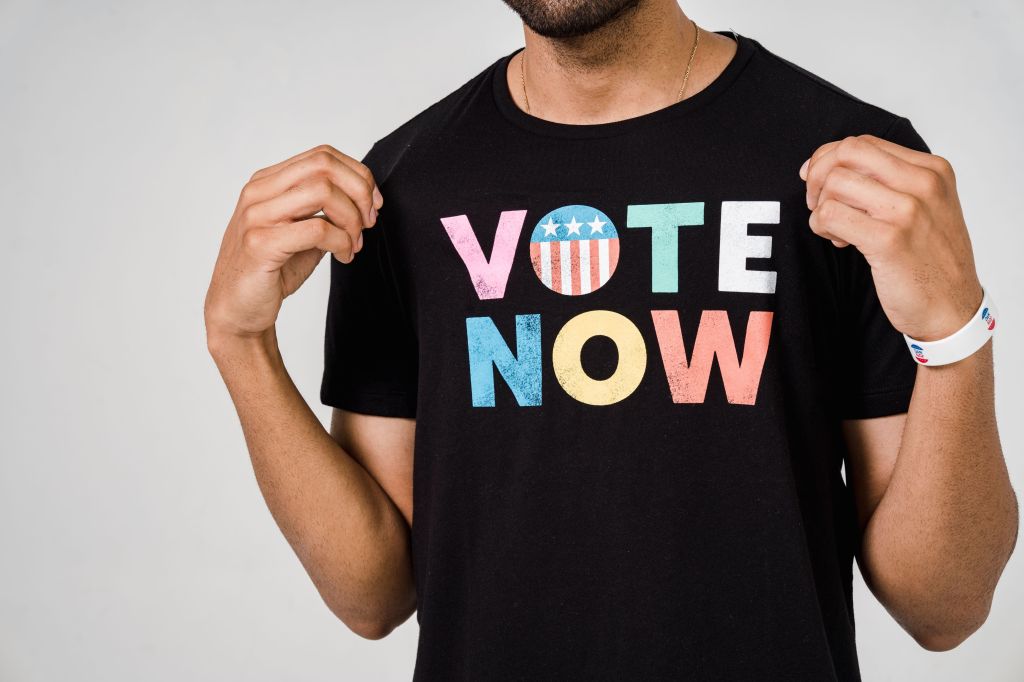
This year we decided to vote early, largely because Election Day falls just one day after Dan’s second cataract surgery. True, we had to go to the county seat to do it, but we were willing to make the sacrifice because a favorite diner is just two miles down the road from it. Our reward for having performed our civic duty was a Hogzilla (pulled pork and cole slaw) sandwich for me and liver and onions for Dan. And caramel apple lime vodka mules for dessert, which were surprisingly refreshing. Plus, we had fun trying to stab apple cubes with our stirrers.

Dan and I vote in every national election and many of the midterms and locals. I have a philosophy about voting that explains why we do it so faithfully. It is simply this: If you don’t vote, you’re not allowed to bitch about the results. We want bitching privileges; therefore, we vote.

The races in Ohio have been particularly nasty, with ad hominem attacks in particular. And based on the ads, there will be a lot to bitch about.

A Brief Guide to the Terms I’ve Used

  • Strawman. Exaggerating, oversimplifying, or misrepresenting someone’s argument to make it easier to attack. (Proposition: We should reduce the amount of homework students have to do. Reply: So you think that fewer students should get into college.)
  • Slippery Slope. Claiming that a minor step will inevitably trigger a dramatic, unstoppable negative cascade of events. (If you allow same-sex marriage, soon you’ll have people marrying sheep and dogs.)
  • Ad Hominem. Discrediting the person rather than addressing the issue. (The candidate is a Communist. Therefore, they shouldn’t be allowed to regulate city parks.)
  • Jumping on the Bandwagon. (50,000 dentists recommend this toothpaste, so you should use it.) (What do the other 150,000 recommend?)
  • Appeal to Authority. Something must be true because an “expert” says it is, even if they’re not qualified. (Thomas Jefferson said society should be entirely farm-based. He was an expert on the economy of his time, not ours.)
  • Moving the Goalposts. Changing the rules after the opponent has already met the challenge. (I asked you to wash the dishes after dinner. (Person does so.) Sure, you washed the dishes. Why didn’t you dry them and put them away?)

There are many more rhetorical fallacies, but that’s enough for today, don’t you think?

An Investment in the Future

My investments are not stocks and bonds and they’re not biological, but they affect the future anyway.

I don’t have any children—I’m the proverbial cat lady—and because of that some people are saying that I’m not contributing to the future of our country or that I shouldn’t get an equal say in how our country is run. And I think that’s just plain wrong.

Some families have no children because they can’t have any. Others don’t want children, for whatever reason. But making the most fundamental right of our society dependent on whether a person has a child is a profound violation of the foundations of our democratic society. Even if you’re a strict constitutional constructionist, there’s absolutely nothing in there about voting being contingent on offspring. (That voting was originally limited to white male property owners is another issue that hasn’t yet been brought up.)

This proposal is billed as “pro-family,” but it’s nothing of the kind. It defines family as only one kind of family and denies rights—not privileges—to the rest. Granting those privileges to children, to be exercised by their parents, contradicts the basic principle of one person, one vote. When those children turn 18, they are welcome, even encouraged, to cast their votes for themselves. But allowing parents extra votes per child is nonsensical.

I wonder how long it will be before the definition of a family is a two-parent (heterosexual) couple with children. Will single mothers get to vote more than once, considering their children? Single fathers? If a family doesn’t include two parents living together, does the voting right automatically go to the mother? The father? These matters are far from clear. And unless I’m mistaken, they would require a constitutional amendment to go into effect. In other words, it’s grandstanding.

But leaving that political nonsense aside, what are the rights that childless people have, or should have, regarding children?

Well, first of all, our taxes pay for schools, parks, lunch programs, Head Start, child tax credits, nutrition programs, Social Security survivors and dependents, Social Security Disability, Medicaid and health insurance, and of course schools, among others. I’m paying into those whether I have children or not.

I don’t resent that. I think such programs are necessary and I’m glad to help fund them. The children and families they help impact me directly and indirectly. They will be my congressional representatives, my nursing home aides, the inventors of devices that will improve my life—every slot that must be filled to make society run, if not smoothly, then at least adequately.

Of course, not all children have the same start in life or pursue noble or necessary functions. I would like to help them do so. The way I can do this is to vote. These issues and functions affect me in very real ways that I have the right and the privilege to vote for.

And I do vote.

Now, let’s talk about schools. Because I don’t have children, many people think I should have no say in what happens in schools. I disagree. What happens in the schools affects me too. I want doctors who have a firm grounding in accepted science. I want bankers who have a keen grasp on economics. And I want government people who have a thorough understanding of civics. That means I have an investment in what goes on in schools and what children learn.

I’ll never be on a school board or even a member of the PTA, but I do get to vote for who’s on the school board and I pay attention to what they do. Now, I’ve got no problem if people want to homeschool their children or send them to private schools, as long as my tax dollars go to the public schools. Public money, public schools.

But don’t try to take away my rights as a citizen or come up with some hare-brained scheme to make my vote count for less. You can say the children are our future all you want.

But they’re my future too. Whether I’ve given birth to any or not.