Tag Archives: rhetorical fallacies

I Love Politics!

No, wait!! Actually, I loathe politics. It’s voting I like.

No, wait! That’s not completely true. There was a time when I loved politics. It was when I was teaching English at the college level. When election season rolled around, I had the perfect canvas for illustrating rhetorical fallacies.

It was especially nice because I didn’t have to play favorites. Absolutely everyone, of whatever political persuasion, was putting out ads that nicely demonstrated any fallacy you’d care to choose. Whee! There goes a strawman sliding down a slippery slope! And are those ad hominems I see jumping on the bandwagon? An appeal to an Authority who’s moving the goalposts?

Now that I’m no longer teaching, I just find the rhetoric anywhere from annoying to abhorrent.

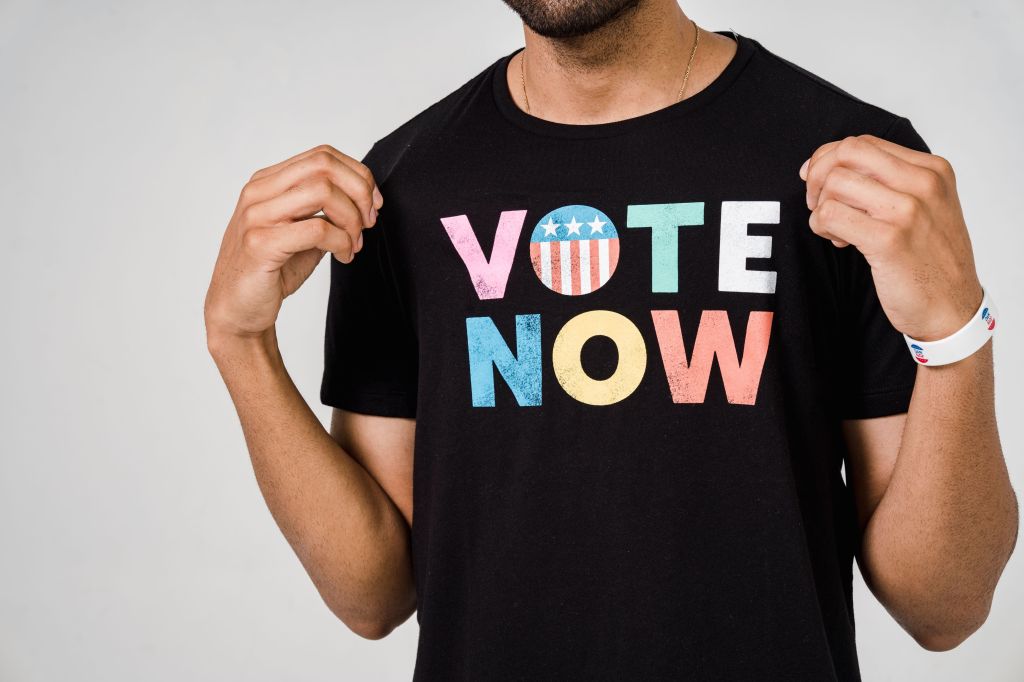
This year we decided to vote early, largely because Election Day falls just one day after Dan’s second cataract surgery. True, we had to go to the county seat to do it, but we were willing to make the sacrifice because a favorite diner is just two miles down the road from it. Our reward for having performed our civic duty was a Hogzilla (pulled pork and cole slaw) sandwich for me and liver and onions for Dan. And caramel apple lime vodka mules for dessert, which were surprisingly refreshing. Plus, we had fun trying to stab apple cubes with our stirrers.

Dan and I vote in every national election and many of the midterms and locals. I have a philosophy about voting that explains why we do it so faithfully. It is simply this: If you don’t vote, you’re not allowed to bitch about the results. We want bitching privileges; therefore, we vote.

The races in Ohio have been particularly nasty, with ad hominem attacks in particular. And based on the ads, there will be a lot to bitch about.

A Brief Guide to the Terms I’ve Used

  • Strawman. Exaggerating, oversimplifying, or misrepresenting someone’s argument to make it easier to attack. (Proposition: We should reduce the amount of homework students have to do. Reply: So you think that fewer students should get into college.)
  • Slippery Slope. Claiming that a minor step will inevitably trigger a dramatic, unstoppable negative cascade of events. (If you allow same-sex marriage, soon you’ll have people marrying sheep and dogs.)
  • Ad Hominem. Discrediting the person rather than addressing the issue. (The candidate is a Communist. Therefore, they shouldn’t be allowed to regulate city parks.)
  • Jumping on the Bandwagon. (50,000 dentists recommend this toothpaste, so you should use it.) (What do the other 150,000 recommend?)
  • Appeal to Authority. Something must be true because an “expert” says it is, even if they’re not qualified. (Thomas Jefferson said society should be entirely farm-based. He was an expert on the economy of his time, not ours.)
  • Moving the Goalposts. Changing the rules after the opponent has already met the challenge. (I asked you to wash the dishes after dinner. (Person does so.) Sure, you washed the dishes. Why didn’t you dry them and put them away?)

There are many more rhetorical fallacies, but that’s enough for today, don’t you think?

Political Noise

USA Flag Man YellingThis was written seven years ago. Unfortunately, it’s just as relevant today.

A friend of mine started a Facebook page called Political Noise. I wish he hadn’t.

Oh, I don’t mind that he (mostly) keeps his political rants on a separate page from his puns, movie reviews, and discussions of pop culture. What I mind is the title. There’s already too much noise in politics.

So much noise that the signal can’t get through.

Wikipedia defines signal-to-noise ratio (or SNR) as “a measure … that compares the level of a desired signal to the level of background noise.” Think of an old-fashioned television set or radio.  When there’s too much static, you can’t get a clear picture or clear sound. At most, you get a snowstorm of non-information or a meaningless buzz.

That’s what’s happening in interpersonal communication these days. It’s worse because of upcoming elections, of course. It seems that whoever shouts the loudest gets the most attention. The content – the message – has become irrelevant.

In fact, the content has dwindled to nothing. Words that no longer retain any meaning are flung at the heads of those who are supposed to be recipients of the message. Patriot, citizen, terrorist, liberal, fascist, tyrant, and other, cruder, forms of common words no longer have denotations (agreed-upon definitions), but only connotations (emotional content). Linguist S. I. Hayakawa nailed it back in 1941:

[W]e discover that these utterances really say “What I hate (‘liberals,’ ‘Wall Street’), I hate very, very much,” and “What I like (‘our way of life’), I like very, very much.” We may call such utterances snarl-words and purr-words.

Then there’s the problem of who’s supposed to be receiving the message, the snarls and purrs. Sadly, the answer seems to be, only those who already agree with you. Try as they might, nay-sayers’ voices will not be heard – certainly not understood. Multiple viewpoints are not welcome.

We are all shouting across an abyss and can neither hear nor be heard. The only response is an echo.

If ideas are not in play, surely facts must be. Alas, not. Facts are fungible and loaded with political opinions. Want a fact about climate change or voter suppression or welfare, or, god help us, guns? People on both sides can rustle up some statistics from somewhere. There is always a scientist who’s an outlier, or is funded by someone with an agenda. Cherry-picking and rhetorical fallacies (strawman, slippery slope, post hoc ergo propter hoc, appeal to the common man or to authority, etc.) have become Olympic-level sports.

Not only is this cacophony damaging, it is counterproductive. No one convinces anyone of anything by shouting at them. The goal isn’t really persuading anyone else – you can’t do that by telling people they’re evil and stupid. The only goal is reinforcing oneself and one’s own worldview – intellectual masturbation.

I do not think that the situation will change for the better once the elections are over. I can’t believe that people will stop, take a step back, and lower their voices or the heat of their rhetoric. The only solution offered for noise is louder noise.

Some of us wish for clearer signals, less interference, a volume knob that begins at less than 11. Less shouting and more hearing. Listening. Thinking. Considering. Compromising. Maybe the secret is asking questions instead of yelling slogans. What do you suggest? Why do you think that will work? Whom will that help? How can we best use our time, our resources, our selves?

I’m not a little old-fashioned lady asking for a little old-fashioned civility here. Empty politeness is not the solution. Real work is – the extremely hard work of true communication. Sharing ideas, not screaming them. Trying solutions, instead of dismissing them. The mental work of trying to understand; the physical work of acting locally; the emotional work of finding common ground; the spiritual work of valuing one another. These are ways to get signals through the noise.

If what we really want to do is communicate, not pat ourselves on the back and vilify others, that is. But all I hear are snarls and purrs.