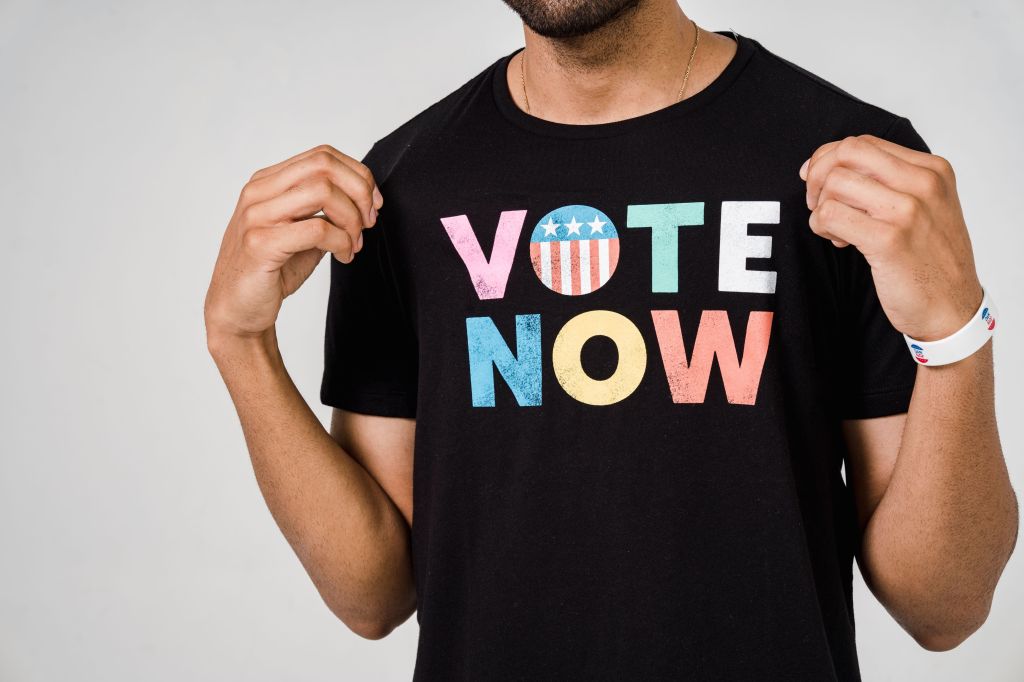
No, wait!! Actually, I loathe politics. It’s voting I like.
No, wait! That’s not completely true. There was a time when I loved politics. It was when I was teaching English at the college level. When election season rolled around, I had the perfect canvas for illustrating rhetorical fallacies.
It was especially nice because I didn’t have to play favorites. Absolutely everyone, of whatever political persuasion, was putting out ads that nicely demonstrated any fallacy you’d care to choose. Whee! There goes a strawman sliding down a slippery slope! And are those ad hominems I see jumping on the bandwagon? An appeal to an Authority who’s moving the goalposts?
Now that I’m no longer teaching, I just find the rhetoric anywhere from annoying to abhorrent.
This year we decided to vote early, largely because Election Day falls just one day after Dan’s second cataract surgery. True, we had to go to the county seat to do it, but we were willing to make the sacrifice because a favorite diner is just two miles down the road from it. Our reward for having performed our civic duty was a Hogzilla (pulled pork and cole slaw) sandwich for me and liver and onions for Dan. And caramel apple lime vodka mules for dessert, which were surprisingly refreshing. Plus, we had fun trying to stab apple cubes with our stirrers.
Dan and I vote in every national election and many of the midterms and locals. I have a philosophy about voting that explains why we do it so faithfully. It is simply this: If you don’t vote, you’re not allowed to bitch about the results. We want bitching privileges; therefore, we vote.
The races in Ohio have been particularly nasty, with ad hominem attacks in particular. And based on the ads, there will be a lot to bitch about.
A Brief Guide to the Terms I’ve Used
- Strawman. Exaggerating, oversimplifying, or misrepresenting someone’s argument to make it easier to attack. (Proposition: We should reduce the amount of homework students have to do. Reply: So you think that fewer students should get into college.)
- Slippery Slope. Claiming that a minor step will inevitably trigger a dramatic, unstoppable negative cascade of events. (If you allow same-sex marriage, soon you’ll have people marrying sheep and dogs.)
- Ad Hominem. Discrediting the person rather than addressing the issue. (The candidate is a Communist. Therefore, they shouldn’t be allowed to regulate city parks.)
- Jumping on the Bandwagon. (50,000 dentists recommend this toothpaste, so you should use it.) (What do the other 150,000 recommend?)
- Appeal to Authority. Something must be true because an “expert” says it is, even if they’re not qualified. (Thomas Jefferson said society should be entirely farm-based. He was an expert on the economy of his time, not ours.)
- Moving the Goalposts. Changing the rules after the opponent has already met the challenge. (I asked you to wash the dishes after dinner. (Person does so.) Sure, you washed the dishes. Why didn’t you dry them and put them away?)
There are many more rhetorical fallacies, but that’s enough for today, don’t you think?
Discover more from But I Digress . . .
Subscribe to get the latest posts sent to your email.

