Category Archives: humor

What’s So Funny?

Recently, I fell in with a comedy site that has weekly online meetings where members are encouraged to submit their humor for feedback. My interactions with them have proved perplexing. I submitted for analysis a piece I was working on. The response was tepid at best, so I revised and submitted it again. Here’s the first draft:

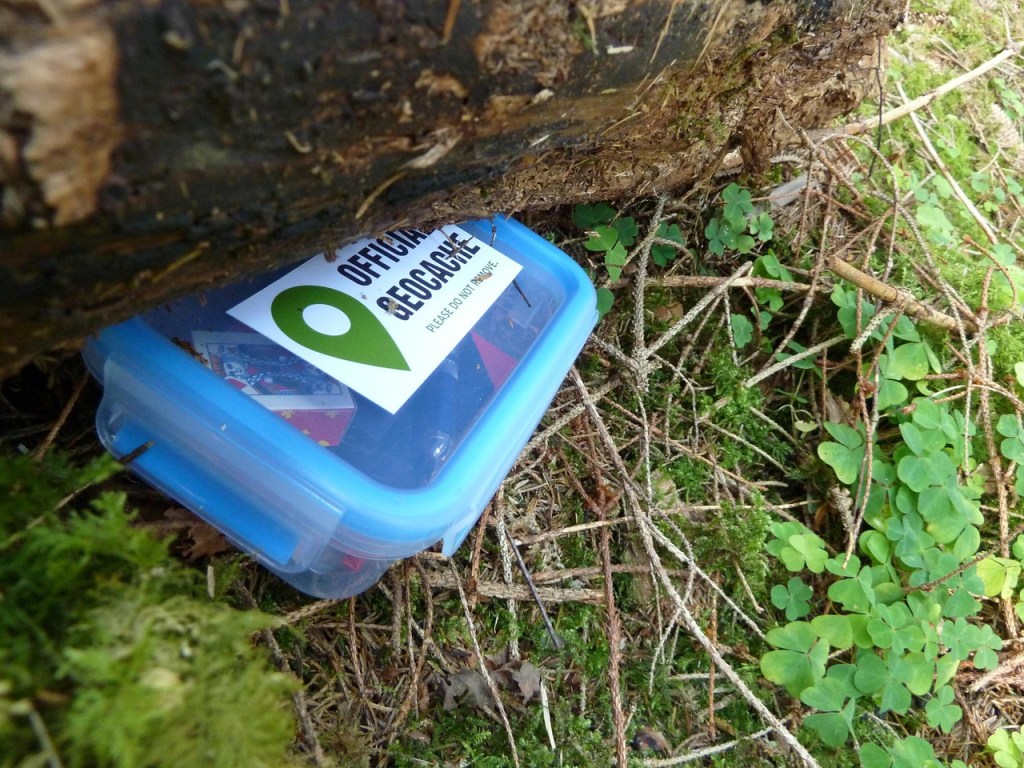
I Use Satellites to Hunt for Tupperware in the Woods

That’s what a contestant on Jeopardy told Alex Trebek when asked about his hobbies and interests between rounds. Alex was taken aback and, for once, clueless.

I have done the same. (The satellite/Tupperware thing, not flummoxing Alex Trebek. I wish. But I digress.)

What both I and the Jeopardy contestant had in common is “geocaching.”

It goes like this. One person hides a piece of Tupperware or other waterproof container (an ammo case is also popular), usually in a natural environment but sometimes within a city or suburb. The container holds a piece of paper, a small pencil, and assorted trinkets, such as a postcard or a small toy. This is called the geocache.

***

Here’s a revision of the first section, rewritten according to what they suggested, or so I supposed.

I Use Satellites to Hunt for Tupperware in the Woods

That’s what a contestant on Jeopardy told Alex Trebek when asked about his hobbies and interests between rounds. Alex should have replied, “So you’re some kind of kitchenware spy,” but missed the opportunity.

I have aspired to kitchenware spying myself.

It’s called “geocaching” to those in on the process. A piece of Tupperware or other waterproof container (an ammo case is popular) is hidden, usually in a natural setting. The secrets within are a piece of paper, a small pencil, and assorted objects of unknown value. This is known in the trade as the geocache or “drop site.”

***

That second version was close to the one that you saw when I posted it. I think it was improved somewhat, but at the next meeting, they suggested even more changes.

I had trouble implementing their suggestions. The first one was “Lose the digressions,” which I was reluctant to do because of the name of my blog and a reasonably consistent shtick when I’m writing what I intend to be humorous pieces. They act like footnotes or record the meanderings of my mind while I write. But I ditched them for the second version, just to see. I also bumped up the spy references, using words like “agent,” “secret identity,” “tradecraft,” “the drop,” and “Ilya Kuryakin.”

On seeing the second version, they suggested that instead of describing how geocaching works, I should use “I” more: “I bait the drop,” “I decipher the clues,” etc. I agree that, in general, unless you’re writing an academic paper, “I” is preferable to “you.” So that was probably good advice.

They also told me I needed more hyperbole and more jokes. I already had some jokes in there: one clue being “Look under the big W” (a reference to It’s A Mad, Mad, Mad, Mad World) and my secret identity as “DjangOH” (in honor of my cat Django, who was named after Django Reinhardt, the jazz musician). They thought that one was pretty good, but assumed I was referring to the movie Django Unchained, which has nothing to do with cats or jazz musicians. They were apparently too young to get the other references as well. I’m beginning to doubt they got the one about Ilya Kuryakin.

Anyway, based on their comments and critiques of other people’s work, I gathered that what they were looking for was zingers, punchlines, and an over-the-top tone, like a stand-up comedian’s.

But that’s not the kind of writing I prefer. I grew up on observational, story-telling humorists like Erma Bombeck, James Thurber, and Jean Kerr. And if I could write one-tenth as well as David Sedaris or The Bloggess, I would count myself a happy writer. Hyperbole, yes, but no punchlines.

So I ask you these questions:

• Should I keep doing what I’ve been doing, with digressions?

• Should I lose the digressions and rename my blog?

• Do you prefer a stand-up comedy-style writing or an observational one (but not like Steven Wright)?

• Do you want to see listicles? Shorter pieces of writing?

• Would you prefer no serious posts like the one last week about my father? Should I have a separate blog for them? (It would be occasional, as I don’t think I could write three blog posts a week.)

I sincerely want your opinions. Please feel free to sound off in the comments.

Apparently obligatory joke:

Ist old lady: My, it’s windy today.

2nd old lady: No, it’s Thursday.

3rd old lady: So am I. Let’s all go get a cup of tea.

I Use Satellites to Find Tupperware in the Woods


That’s what a contestant on Jeopardy told Alex Trebek when asked about his hobbies and interests between rounds. Alex should have replied, “So you’re some kind of kitchenware spy,” but missed the opportunity.

I have practiced kitchenware spying myself.

To make it sound less like spying, it’s called “geocaching.” A secret identity, if you will.

A piece of Tupperware or other waterproof container (an ammo case is popular) is hidden, usually in a natural setting. The secrets within are a piece of paper, a small pencil, and assorted objects of unknown value. This is known in the trade as the geocache or “drop site.”

To get your mission started, go to a website that contains geographical coordinates. Sometimes there’s a cypher that offers an encrypted clue. (“It’s under a big W.”) You use the satellite coordinates and a sophisticated process called warmer/colder until you find the cache. Or not.

To prove you’ve succeeded in your mission, you sign the piece of paper, take an object another agent has left, and replace it with one of your own. This is known in tradecraft as “the drop.” Then you return to the website and report that you have found the cache and made the swap (or not).

The hiding places can be diabolical. One I was in charge of was attached to a statue celebrating sewer workers. Or you may need to locate a next-to-invisible “microcache” that contains only a tiny piece of paper. (BYO pencil.) One I found was a magnetic key holder. Another had an extremely cryptic encryption clue in a foreign language. It contained the expression “2d,” which I at first interpreted as two-dimensional or flat. Instead, the dropsite proved to be cylindrical, a tiny roll of paper wrapped around a nail inserted into a fencepost. The nail was known as a two-penny nail. 2d in British tradecraft means two-penny.

Another cache was the back of an official-looking magnetic sign on the side of an electrical box. To prove you had located it, you had to peel off the magnetic notice, sign the back, and then replace it.

One complication is that you must retrieve the cache without being seen by laypeople. It’s interesting trying to climb up a swing set in a park without looking like that’s what you’re doing. Once, to avoid blowing my cover, I had to mime losing my car keys and looking for them under an overpass where the Tupperware was hidden.

I haven’t hunted Tupperware lately, especially since I sustained an injury. And lost my GPS in a tornado. And need a GPS to find my motivation, which could be anywhere, but probably isn’t in my house. Maybe I lost that in the tornado, too. But I just went back to the website where you find the coordinates, and learned that I was still registered as an agent with a secret identity (DjangOH).

There is at least one cache very close to my home base that I could conceivably find with only the clue and no coordinates. I miss the thrill of the chase. Maybe I can even locate that cache while using my walker. And pretend my husband is Ilya Kuryakin.

Foot Plus Mouth Equals Disaster!

In the comic strip “Peanuts,” Linus says that one should never discuss “politics, religion, or the Great Pumpkin.” That’s good advice, as far as it goes, but the list of things you shouldn’t discuss in public goes much further. In fact, erase that bit about “in public.” They’re dangerous to discuss among friends and family, too.

These days, politics is strictly off the table. You never know who has a concealed carry license. And Linus was certainly right that it’s best to avoid religion. When someone says, “Bless you,” the right answer is “thank you,” even if you’re not a believer. After all, they meant the religious equivalent of “Have a nice day.” (Or “gesundheit,” maybe. By the way, “Bless your heart” should be used with caution when you’re in the South. It can be a verbal middle finger. But I digress some more.)

Another topic to avoid is any that leads to a near-death experience. My husband, Dan, has blundered that way more than a few times. For example, when we were preparing for a party, I washed my hair, blow-dried it, used a curling iron, moussed, and sprayed. As I came down the stairs, Dan asked, “Are you going to do anything with your hair?”

And stay far, far away from talk of pregnancy. Suggesting that a woman is pregnant based on her weight, her clothes, or the way she waddles can be deeply offensive, particularly if she isn’t. In fact, one expert advises that you not comment on a woman’s potential pregnancy unless you actually see a baby emerging from her vagina at that moment. Better safe than hopelessly embarrassed. (I was a victim of this faux pas when I walked into an office looking for a job, wearing a loose denim jumper and a nice blouse. Admittedly, it may not have been the best choice for filling out an application, but the receptionist didn’t have to ask how far along I was. Later, she repeated the story as an amusing anecdote, not realizing that I was in the room and was embarrassed all over again. But I continue digressing.)

Everyone knows by now not to comment on a woman’s anatomy on pain of getting fired or a punch in the mouth. Not even when you’re trying to make a joke. I once told an acquaintance that I wasn’t at a party “because I was home nursing a sick cat.” “Didn’t you get scratched about the breast?” he asked. He almost got scratched about the face.

Then there was the time a guy had two girlfriends and was invited to a wedding. I don’t think he clearly understood the concept of a plus-one. He suggested taking one lady to the ceremony and the other to the reception. He somehow survived the occasion with at least one of the relationships intact. How? I don’t know.

Speaking of weddings, one of Dan’s bigger faux pas was when he suggested that, since his family lived in Pennsylvania and mine lived in Ohio, we should have our wedding on the state line, to inconvenience both families equally. (He was serious. But I digress for the final time. I promise.)

Because you’re bound to offend or insult someone, somewhere, sometime, my best advice, no matter what you are about to blurt out, is to remember your mouth has a zipper. Use it!

Life With Furniture

I’ve never had what I’d call a profound relationship with a piece of furniture. (Except for my bed. It’s an example of Amish woodworking, some kind of hybrid of a sleigh bed and a mission bed. Our relationship was shattered when we bought a mattress that came with an alarm. Unfortunately, the salesman neglected to tell us what tune it played. When we woke the next morning to the cheerful computerized strains of “It’s a Small World,” we swore a solemn oath to rip out both the alarm mechanism and the salesman’s larynx. But I digress.)

All that changed when I broke my ankle in two places. (I should specify. Two bones in my ankle were broken. I broke them in one place, my study, at the same time. But I digress again.) Since then, I have been living in my study and bonding with the recliner.

The thing is, I have to wear a giant black boot on my right leg. Despite the fact that the injury was to my ankle, the boot starts just below my knee. It features a plastic skeleton and exoskeleton, a foam liner, and far too much Velcro. It weighs, by my estimation, about eight pounds. I walk with a limp, not because of the broken ankle (well, not just because of that), but because I have no shoe (singular) with a sole as thick as the boot’s to wear on my left foot. And the recliner is the only furniture that can truly accommodate my needs.

Our house has a second floor, where the bed lives. But I can’t climb the stairs. Climbing them was iffy even when I used a cane (before the ankle accident but after the knee replacement). I’m living in the first-floor study that was the scene of my injury, and giving daily thanks that there’s a bathroom on both floors.

Dan brought a recliner down from upstairs. It doesn’t match the “decor,” and it doesn’t recline all the way. I can extend the footrest to horizontal, but reclining the back and headrest requires a maneuver that I’m physically unable to accomplish. It involves throwing your entire body weight against the backrest. (I have plenty of body weight, but not the strength to fling it with sufficient force. But I digress some more.)

I can at least sleep with my head supported and my legs straight rather than dangling. I sit in the recliner with my legs elevated to read, watch TV, and use my phone. To get to my real computer, I have to sit in my desk chair, where my legs dangle. (Evidently, dangling allows fluid to accumulate in my legs. It happened once. My thighs looked like Christmas hams. My cankles and the tops of my feet looked like puff pastry. My toes looked like Vienna sausages. But I digress even more.)

I see my surgeon on the 8th, and hope to graduate from the boot to something less confining. I was so happy to get the boot in the first place, as it allowed my foot at last to bear weight. (Ever tried using a walker with a knee sling? Don’t.) Now I can’t wait to get rid of the most recent torture device.

I’ll take the boot and the recliner, though, for as long as necessary. One benefit to the arrangement is that our cat Toby loves to lie on my lap as I recline and sleep there to his heart’s content. It makes my recliner extra-cozy and comfy, even if I can’t sleep lying all the way down.

Roommate Roulette

When I spent time in a skilled nursing facility recently, I quickly learned that one didn’t find a compatible roommate. The choice was up to the whims of the powers that be. It could turn out either good or less-than-good. (My insurance company would only spring for a double room, so there was no chance of a private one, except on the occasion when my roommate happened to move out. But I digress.)

All-in-all, my experiences varied from okay to excellent. My first roommate was Norma, who was quiet and inoffensive, but unfortunately addicted to the TV show Gunsmoke, which she watched all day long. I suppose I could have raised an objection, but I was determined to keep the peace and, after all, I could hardly inflict on her eight-plus hours of cooking shows and Star Trek reruns. Norma was released to go home, however, and I had the room all to myself, my chefs, and my aliens.

The next time I returned to the facility, my roommate was Brenda, a woman with a large family who created quite a commotion when they all visited at once, though that was not often. When it happened, I retreated to Pandora and my earbuds (a must for any stay in such a facility).

I was moved to another room when Brenda developed an infection and had to be isolated. (Since we were then across the hall from each other, our Physical Therapist arranged for us to have weight-lifting sessions in our doorways so we could see each other and chat. Sometimes, Shirley, the lady next door to Brenda, joined in as well, and we all chatted while doing curls. But I digress again.)

My best roommate, however, was my third one, Darlene. She didn’t care for TV and had only a few visitors. Among her other ailments, she had PTSD, so she preferred to keep the curtain between us pulled and wouldn’t be distracted by comings and goings in the hall.

The curtain proved no impediment to our growing friendship, however. We started bonding over our shared love of murder mysteries and true crime books. Naturally, the subject of Jack the Ripper came up. (As it does.)

“When we were in England, my husband and I took the Jack the Ripper walking tour,” I shared.

“Oh!” Darlene exclaimed. “I’ve always wanted to go on that.”

“It was a foggy, drizzly evening—very atmospheric. And we booked our walk when Donald Rumbelow was guiding it.”

She recognized the name immediately. “Donald Rumbelow! I’ve read his book on Jack the Ripper! He’s the best!”

“That’s why we chose a tour when he was leading. We also went to 221B Baker St. and saw the Sherlock Holmes Museum. It was a small, narrow building sandwiched between two others. Every floor had displays related to his famous cases. The top floor held a toilet with a blue Delft-like design in the bowl. It looked much too pretty to use. Even if you could make it up all six flights to get there.”

“You’ve been to the places I’ve always wanted to go and done the things I’ve dreamed of doing! Tell me more!” We were off and running on travelers’ tales.

After that, we dissected our favorite mystery series and recommended them to each other. We talked about holidays and favorite foods and family and pets. We spoke of exes and jobs and rated the nurses and aides. We cheered each other on about the distance we’d walked during physical therapy.

And we talked politics. I had been reluctant to share my political views with anyone at the facility, knowing how divisive, not to say explosive, such talk can be. But once again, Darlene and I were completely in sync. We despaired of the state our country is in and blamed the same people for it. When neither one of us could sleep, we talked well into the wee hours of the morning.

Darlene had a birthday while we were both residents, and she shared it with me. Literally. We each ate half of the yummy carrot cake with cream cheese frosting that her family brought her. She reveled vicariously in the little anniversary dinner that Dan arranged for me, which featured sushi, electric candlelight, mood music, and ginger ale in champagne glasses. Dan brought Darlene a case of Diet Cokes and a box of plasticware that her arthritic hands could manage at mealtime. (The aides often forgot.) She let me watch Practical Magic on her DVD player and I ordered her a copy of Fletch when she told me how much she liked it.

I’m out of the facility now, but Darlene is in for the long term. Today, we’re going to stop by and surprise her with a box of the cheese-and-peanut-butter crackers she can’t resist. I can’t wait to see her face light up.

What Went on at the Nursing Home?

Well, to me it was post-acute rehab care, but there were long-term and memory units, so let’s call it a nursing home. I was there for about a month and a half recovering from complications of my knee replacement.

When I checked in, the first person I met was my roommate, a 90-year-old woman named Norma. I’m not sure what she was in the home for. What I did know was that James Arness was her secret love crush. I know this because she kept Gunsmoke playing on the room’s TV eight or more hours per day. Being the newcomer to the room and being over 20 years younger, I didn’t feel I should offer to arm wrestle the remote away from her.

(I was equipped, however. I had my phone, complete with Nook, Kindle, Facebook, and Pandora, complete with a charging cable and a pair of earbuds. I was set. When Norma left to stay with relatives, I had an essentially single room and complete control of the remote. But I digress.)

For those who didn’t choose to stay in their rooms watching TV, there were lots of activities, starting most days with a coffee hour and Wii bowling. Throughout the week, there were concerts, Bible stories, card games, trivia sessions, karaoke, cooking classes, and movie-and-popcorn days. There was a beauty salon for appointments, and one week, even a prom.

I mostly stuck with my phone and its assorted diversions, as well as non-Gunsmoke TV. (The one time I went to a “Family Feud”-style contest, the talk devolved into politics, and I bowed out. And I never even went to my own prom, so theirs didn’t appeal to me, at least. But I digress again.)

Another diversion for me was the age-old sport of door-staring. The restroom and room doors were made of wood, and I could spend endless time staring at them and identifying shapes I could see. There was one spot that looked like a spy peeking through a crack, or if you looked at it another way, a surly baby. Then there was one area that looked like the Virgin Mary or the Dr. Who that my husband likes (the one with the long scarf), only with a coat hook for a head. (Technically, this activity is known as pareidolia, which is a fun fact to know and tell. If you can pronounce it, that is. But I digress yet again.)

It was also fun to collect names. That is, to see how many different ways the staff referred to you. Most of the time, I was called Miss Janet or Mrs. Coburn (both of which are inaccurate), but I was also called Babe, Hon, Sweetie, and even Girlfriend. The woman in the next room was called Chiquita, which I never was.

(I’ve heard this described as “infantilizing” nursing home residents by using endearments instead of their real names. My mother told me that at one place she stayed, there was a woman who had a Ph.D. When she needed help, she would stand in the doorway and shout “Yoo-hoo.” I don’t know what the staff actually called her, but ever after, I thought of her as Dr. Yoo-hoo. But I digress some more.)

The staff had games of their own. They would hide little cutout figures of ducks or gnomes (or something) around the facility and see who could collect them all first. It was entertaining to see the nurses and aides careening down the corridors, laughing and squealing as they searched for the numbered items.

Another pleasant distraction was the little ice cream cart that the staff took around. I couldn’t have any because of my diet, but Dan was there once when it came around and scored himself a root beer float. Most of the time when Dan visited, we held hands and watched reruns of Star Trek.

To me, that was the most fun in the nursing home.

Codger the Codger

One summer, I took a trip with a group of friends. We went up north to enjoy some brisk weather and scenery. Instead, it rained the entire time, and we stayed in the hotel room playing word games. I like word games, but there are limits.

(My husband doesn’t object to my traveling without him, although he does tease me about going to meet my lover Raoul. I call him when I’m on my way home to tell him to make sure the dancing girls leave. But I digress.) When I do go away without my husband, I generally come back to a major appliance. (I like to comparison shop. He just wants to make a decision. But I digress again.)

This time, however, I came back to a new pet. A hedgehog.

I was just as glad not to have a new appliance (we didn’t need any), but a hedgehog? We’re a cat family. (With the occasional rescue dog.)

Obviously, I had questions about the hedgehog.

Why a hedgehog? (shrug)

Where’d you get it? (a guy at work)

What did you name it? (Codger)

Why? (shrug)

Dan set Codger up with a home in a large fish tank (which he had previously used for a snake and some hermit crabs that he claimed were building a secret missile base. But I digress yet again.). Dan acquired a small hut for Codger and a large, green plastic ball for him to play with.

Despite having a toy, Codger was not a joyous pet. He ate mealworms, so we went to the bugstore regularly to get some. Even with a constant supply of worms, he was cranky. I began to suspect how he got his name.

I have seen pictures on Facebook of adorable little hedgehogs reclining in muffin cups or wearing cunning little hats. Codger was not adorable and he did not go in for little hats, no matter how cunning. He snarled and rearranged his furniture. That was the extent of his repertoire.

After a while, Dan and I went away on vacation together. (We do that sometimes, when we don’t need any appliances. But I digress some more.) We left Codger with our friend John, who reported that the creature ate bugs, snarled, and rearranged his tank.

Codger also had a habit of sticking Dan with his spines. Wanting to understand our pet’s behavior, I looked up hedgehogs on Google. It said that you should socialize them when they’re young, or they grow up to be surly as well as pointy. Dan’s friend had evidently stuck him with an overage hedgehog.

(I told Dan that he should try to socialize with Codger. Dan poked him with a plastic fork. “That’s what he does to me,” he explained. (He didn’t want me to reveal this, for fear of being arrested for animal abuse. I convinced him the statute of limitations has expired.) But I digress even more.)

Eventually, Codger passed away. What can I say about the little guy? What he lacked in personality, he made up for in surliness. Perhaps he is now in a better place, feasting on mealworms and snarling at the angels. That’s how I like to picture him, anyway.

Down the Rabbit Hole

Almost five years ago, I wrote a post about how memories from my (and likely your) childhood were being repurposed for political statements and propaganda.

This time I’m writing about a classic piece of literature being rewritten for other purposes. (Largely unobjectionable ones, it’s true, but it’s the principle of the thing. But I digress.)

The work in question is Alice’s Adventures in Wonderland (more often known as Alice in Wonderland). It’s one of my favorite pieces of literature and I have returned to it many times since I first read it (murfle) decades ago.

(I have a friend who despises Alice. He finds it to be nonsense (which it obviously is) and incomprehensible. This despite the fact that he has returned to it frequently to see if it makes any more sense. (He ought to like at least part of it because he’s a mathematician, like the author, Lewis Carroll. I recommended The Annotated Alice (edited by Martin Gardner), which explains the jokes, Briticisms, and outdated expressions. (It also includes “Jabberwocky” in French, German, and IIRC, Latin.) But I digress, pedantically and at length.)

The “quotations” in question are not political but psychological or philosophical. I’m not saying they’re invalid—merely that they are misquoted, misattributed, or completely made up.

One of the most common misquotes is attributed to the Cheshire Cat:

“You’re mad, bonkers, off your head. But I’ll tell you a secret. All the best people are.”

What the Cheshire Cat actually really said is much more complex. Here’s the context:

“But I don’t want to go among mad people’” Alice remarked.

“Oh, you can’t help that,” said the Cat: “we’re all mad here. I’m mad. You’re mad.” 

“How do you know I’m mad?” said Alice.

“You must be,” said the Cat, “or you wouldn’t have come here.” 

One quotation supposedly from the Mad Hatter is:

The secret, Alice, is to surround yourself with people who make your heart smile. It’s then, only then, that you’ll find Wonderland.

Unobjectionable if sappy, but not from the book. The same with this one:

But, said Alice, if the world has absolutely no sense, who’s stopping us from inventing one?

The most annoying fake dialogue is this one, between Alice and the White Rabbit.

“Do you love me?” Alice asked.

“No, I don’t love you!” replied the White Rabbit.

Alice frowned and clasped her hands together as she did whenever she felt hurt.

“See?” replied the White Rabbit. “Now you’re going to start asking yourself what makes you so imperfect and what did you do wrong so that I can’t love you at least a little. You know, that’s why I can’t love you. You will not always be loved Alice, there will be days when others will be tired and bored with life, will have their heads in the clouds, and will hurt you. Because people are like that, they somehow always end up hurting each other’s feelings, whether through carelessness, misunderstanding, or conflicts with themselves. If you don’t love yourself, at least a little, if you don’t create an armor of self-love and happiness around your heart, the feeble annoyances caused by others will become lethal and will destroy you. The first time I saw you I made a pact with myself: ‘I will avoid loving you until you learn to love yourself.’”

The White Rabbit was late to play croquet with the Queen of Hearts. He wouldn’t have had time to discourse on self-love.

Alice has been in the public domain since 1907, so one can misquote or invent all they want. (The Disney movie version only came out in 1951, The book was in the public domain, but the movie isn’t. I think we can expect a live-action film. I hope they lose the repellent pink-and-purple Cheshire Cat, though I doubt they will. But I digress again.)

Surely no one would do this kind of thing to The Wizard of Oz…or would they? [squints suspiciously]

New Love Languages

Noted author Gary Chapman has written that there are five “Love Languages.”

They are physical touch, quality time, words of affirmation, acts of service, and gift-giving. Others have suggested that there are seven love languages that add emotional support and intellectual sharing to the total. (These all sound just fine, but trouble arises when a couple speak different languages. If one offers physical touch and the other longs for quality time, they’re destined to clash. But I digress.)

I would like to suggest two more: baton twirling and cake decorating.

In general, I don’t care for cheerleaders, especially the ones for professional sports, who wear the skimpiest of outfits and do the lewdest of dances. That’s the stereotype, at least. I understand that nowadays, cheerleaders perform acrobatic moves and build themselves into complex pyramids. (Evidently, I need to rethink my prejudice regarding cheerleaders. But I digress again.)

Baton twirlers, on the other hand, I hold in higher esteem. They have a talent to show that involves a piece of equipment and dexterity. (Not completely unlike the tuba player in the marching band, who never gets the credit they deserve. But I digress some more.)

However, I discovered something when I talked to a coworker. Her daughter was a baton twirler, and Mom watched her practice in their yard, offered tips from her own twirling days, and came to every game she twirled at. What I realized was that it was her mother’s way of speaking love. If you define it in terms of the seven love languages, the eighth one (baton-twirling) could also be called consistency.

Consistency comes in any number of ways. The key element is being there. Someone who gives consistent attention is someone you can rely on. They’ll read your novel drafts (every time you rewrite them) and accompany you to all your dreadful office parties. You just know that when you need them, they’ll be there, whether that’s to remove a tick or (to choose an example not totally at random) open a letter from the IRS. Or watch you throw a stick in the air and catch it.

The other love language I learned about (cake decorating, in case you’ve lost track) was also inspired by a coworker. Every year, she created a cake for her son and decorated it in honor of one of his interests—cartoon or comic book character, motocross, whatever he happened to care about that year. These were elaborate decorations, not just a toy motorcycle popped on top of a bakery cake or something similar. They were elaborate, decorative, inspired, and personal. I’ve seen the pictures.

(It should be noted that this was in the days before everyone learned how to make buttercream roses, tempered chocolate, Swiss meringue, macarons, gelees, mousselines, molecular gastronomy, and all the other spiffy elements you can learn on YouTube or Food Network. But I digress yet again.)

I would call this the love language of creativity—making something special with your hands for a loved one. It doesn’t have to be something edible, though of course it can be. A flower you’ve grown yourself, a bookshelf you’ve crafted, or a refurbished treasure that’s been broken or forgotten are all examples of creative love. (My husband and my mother found a rag doll of mine (Raggedy Johnny, like Raggedy Andy, only John Denver) in disrepair after a move and fixed him up. That’s the sort of thing I mean. But I digress even more.)

I don’t expect baton twirling or cake decorating to appear in the next edition of the Love Languages book. But I do think that Consistency and Creativity deserve consideration. So does Consideration. After all, at heart, aren’t all love languages Consideration?

Paczki-Palooza

It’s Lent. So why are there three dozen paczki in my freezer?

As usual, this story begins with my husband.

(Actually, let’s start a little further back. If you’re not familiar with paczki (pronounced ponchkee, paunchkee, etc., depending on where you’re from), they’re Polish donut-like devices filled with cream, curd, or jam. They’re made and eaten in the lead-up to Mardi Gras (Fat Tuesday), the day before Ash Wednesday, the start of Lent. They were allegedly invented when an annoyed cook threw a ball of dough at her husband, and it landed in the fryer oil instead. I totally believe this origin story, knowing how annoying husbands can be. But I digress.)

The next thing to know is that Dan works in a store that has a bakery section. For the last few weeks, Dan has been bringing home boxes of paczki—blueberry, raspberry, lemon, and Bavarian cream.

But this week, as Lent rapidly approached, the bakery started marking down the paczki. And Dan can’t resist marked-down baked goods. He keeps me supplied with muffins (my usual breakfast). He’s the carb-peddler. He brings home French bread, Italian bread, sourdough bread, coffee cakes, apple caramel pies, and nearly anything else made with flour, eggs, and butter. (Fortunately, he doesn’t bring home game-day cookies shaped and decorated like little footballs. Or Jack-o-lantern cookies, for that matter. But I digress again.)

So, naturally, he brought home NINE boxes of paczki this week. (He did call and warn me, “I’m going to be bad,” which can mean nearly anything. But I digress some more.)

I’ve been stuffed with paczki for the last couple of weeks and couldn’t bear the sight of that many more. So we had a paczki party this week. Now, for most people, this would involve inviting over a bunch of people, making a huge pot of coffee, and chowing down.

But no. We couldn’t organize a party like that in the time it would take for the pastries to go stale. (When we do have a party (which isn’t very often), we have it at a Chinese restaurant. And paczkis would not really be welcome there. Still more digression.)

What we did have was a box of small plastic zipper bags. (We always have them on hand because Dan always takes peanut butter sandwiches to work with him, for his lunch and his breaks. I would get tired of peanut butter day after day, but he feels, as the old joke goes, “How can you ever get tired of food?” But I digress yet again.)

We sat down with our stack of paczki boxes and our box of bags and began stuffing, one paczki per bag. We licked the sugar off our fingers and stuffed all the bags in the freezer. When we get a craving for a paczki (which may not be until the run-up to next year’s Lent), we’ll just pull one out of the freezer and indulge. Or maybe Dan will take one for lunch. Or maybe I’ll give up on breakfast muffins.

I just hope there are no baked-goods-related holidays coming up for a while. I’m in sugar shock already.