Science Madness

The problem these days is not so much “mad scientists” as people who are mad at science.

Where did the Mad Scientist trope come from anyway? Arguably it was Mary Shelley’s horror novel Frankenstein, published in 1818. Science fiction classics like Jules Verne’s The Island of Dr. Moreau (1896) kept up the theme and the “Golden Age” of science fiction provided many more examples.

In these novels, scientists either tampered with things better left alone or succumbed to a lust for power. Death rays and the precursors of gene splicing abounded. The outcome was mostly dreadful, except for those few gallant hero scientists who managed to save Earth from a deadly plague/alien/monster/giant something.

While the ’30s, ’40s, and ’50s were the heyday of mad scientists in fiction, those years also constituted a time when real scientists were heroes. The atomic bomb ended WWII in the Pacific. Polio was conquered. The “Space Race” that led to many scientific breakthroughs began, thanks to the Soviets and their Sputnik (1957).

Back then, scientists were revered.

Later on, not so much.

The conflict between science and religion heated up. Of course, there was conflict going way back – before Mary Shelley warned us about “playing God.” Galileo and Kepler removed us from our “God-given place” in the center of the universe, and Darwin implied that we were just another animal. The Earth suddenly became billions of years old,  circling a mediocre star.

Then there was fallout, both literal and figurative, from the atomic bomb. Medical science gave us thalidomide. NASA used up billions of dollars, with no obvious monetary payoff down the line, and some people decried the space program for spending money that could be used for problems on Earth.

And all that led to changes in the general public’s attitude toward science.

By the ’60s. medicine was under fire from those who found Eastern philosophy and natural healing just as good or better. Physicists were condemned for the same atomic bomb for which they had been lauded. Science didn’t seem like such a good deal after all.

And there’s some truth to the complaints. Many scientists believed that math, physics, and chemistry were all. If it didn’t have numbers attached to it, forget it. Psychology, sociology, anthropology, and most other -ologies were “soft sciences,” barely sciences at all. Hard sciences ruled.

Slowly, the ground under science shifted. Now science has become to many people the enemy, the domain of elitists and narcissists and people who feel they are entitled by their intellect to run the world.

Of course, the stereotypes from early science fiction had something to do with that.

But the Average Man (and Woman) had a bone, or at least a fossil, to pick with science and scientists. Again, science was denying what the general public believed.

Increasingly, people believed in the efficacy of non-Western medicine, or at least the non-efficacy of Western medicine. Science believed in genetics and stem cells and cloning.

People believed in the spiritual realm. Scientists believed in the measurable.

People believed in religion. Science believed in science.

You can see where this is heading – right back to the days when people thought science meant the reanimation of corpses, invasions of bug-eyed monsters, and the creation of death rays. Because what, after all, is the distance between growing human organs and creating Frankenstein, between cloning a sheep and making a half-man-half-fly, between a laser-guided missile and a death ray?

And many scientists are arrogant, dismissive of popular opinion, and unwilling to engage in dialogue with opposing viewpoints. “Because I said so,” seems to be enough for them. “Real” scientists look down their noses at “popularizers” who look to educate the public about science.

Unfortunately, everyone is shouting and no one is listening.

Personally, I am a sometimes science geek as well as a word nerd, thanks to high school chemistry and physics, college astronomy, and lots of nonfiction reading. I don’t think science knows it all, and it’s a long way from figuring it all out. I also think that psychology and spirituality and art have a lot to teach us about the human condition and our place in the universe, STEM classes and careers notwithstanding.

But the pushback against science scares me. NASA is wasting its time chasing UFOs. Streaming channels that used to be devoted to science now feature ghost chasers and treasure hunters. I’m not saying that science never stumbles, but it provides the best answers we have to some of the problems that plague us, including plagues.

I don’t advocate returning to a time when science was the be-all and end-all of thought and education, or to the time when fictional science made scientists suspect. I just think science deserves more respect than it’s getting now.
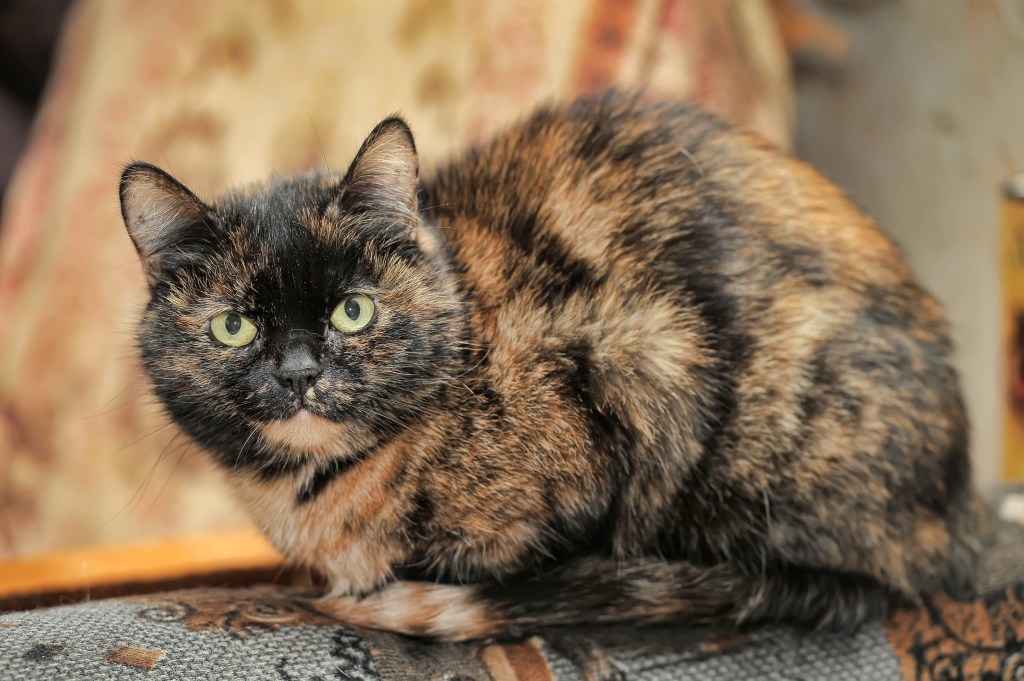
Tortitude

Tortoiseshell cats have the reputation of being “divas,” “feisty,” “strong-willed,” “independent,” “aloof,” and with a temper, given to hissing and scratching – in other words, a general pain in the owner’s ass. There’s even been a study that supposedly validates this. But yet cat lovers, including me, have given their hearts to and shared their homes with beautiful tortoiseshell kittens and cats.

(There is also some disagreement on whether they are beautiful or not. Some find their mottled fur patterns ugly. I don’t. I once saw a carpet that had a pattern that looked like a tortie. It was an ugly carpet. The cats themselves are gorgeous. But I digress.)

There’s even a name for the supposedly difficult personality of torties – tortitude. It’s meant to encapsulate the sometimes-unpleasant attitudes they might display. (The Urban Dictionary says “torbies” (tortie/tabby combos) share these traits.) I, however, have never found torties’ attitudes unpleasant.

Oh, mine have had their moments. Louise was a toe-biter as a kitten. I vividly remember her needle-like teeth piercing my tender toe flesh. But she grew out of it and turned into a loving, totally agreeable cat with an amazing purr. I could cradle her in my arms and she would sigh with satisfaction. I would melt.

Not that torties can’t be mischievous or quirky. Anjou once got into my purse and stole a chocolate bar. (I know chocolate is supposed to be bad for cats, but she suffered no ill effects.) She was also fond of eating a few slices of bread from a loaf and making croutons from the rest of it. The first night I got her, Bijou slept across my throat. Later, she was known to scratch the heater in the bathroom that was next to her litter box. (“Listen,” we said. “Kitty’s playing the harp.” Though I suppose it really sounded more like a steel drum. But I digress again.) Bijou also once crashed a party I had thrown, sauntering into the living room with a tampon applicator held in her mouth, looking like a little kitty Groucho Marx, but more embarrassing.

One time at the NYC Cat Show, I got to spend a little time with a breeder who told me about torties. He said they were “the candy bar of cats – a little bit sweet and a little bit nuts.” (He also told me how to tell the difference between a Norwegian Forest Cat and a Maine Coon. It has to do with the shape of the cats’ muzzles. But I digress yet again.) (I was in New York on business and stayed a couple of extra days. In addition to checking out the cat show, I also took in the Broadway musical Cats. It was my Kitty Weekend. But I digress more.)

I started adopting torties when I went looking for calicos and the shelter didn’t have any. Torties are a kind of calico or calicos are a kind of tortie. I can never remember which. I came home from the shelter with my first cat, who was also my first tortie. I’ve actually had more torties than I have calicos over the course of my cat-owning life.

So. Tortitude. Is it a real thing? If you ask me, tortitude isn’t a drawback. To me, tortitude equals sweet, loving cats that look much better than a walking carpet. (Sorry, Chewbacca. It had to be said.)

Gift Giving: The Good, the Bad, and the Weird

Giving gifts is an act fraught with significance and anxiety. (At least it is for me. Once I walked into a store to buy a baby shower gift and instantly got a Charlie horse near my collarbone. It felt like a ping-pong ball under my skin. Only excruciatingly painful. But I digress. Already.) How much should I spend? Will the person re-gift this? How the hell do I wrap and ship a live goat? (No, I’ve never actually tried to do this. I use Kiva.com for all my goat-gifting needs. More digression already.)

Never fear. Here are some tips on what to do, what to avoid, and how to make sure your gift is really special.

The Good. My husband, Dan, is the best gift-giver I know. His strategy is to follow me discreetly around a mall or exhibit hall, note what I ooh and ahh over, and sneak back to buy it. Sometimes he even pretends the store was out of whatever to make the surprise even more of a roller-coaster of disappointment and delight.

Another good strategy is the one he and my mother cooked up one year. They went through old boxes and closets and found things I had forgotten about that were a bit the worse for wear – a tambourine, a doll, a ceramic Christmas tree I had made – then cleaned, repaired, and refurbished them.

I have a hard time getting gifts for my husband. He belongs to the “Here’s what I want; just get me that” school of thinking. That is no fun. But I probably should just go with his requests, because I often end up getting him things he doesn’t want or use, like a yogurt maker or a GPS for his car. (Truthfully, I am the GPS for his car. I suppose I should be glad that he prefers me to electronics, but somehow I’m not. But I digress.)

Once, though, I thought of Exactly the Right Thing. He had an old, orange-striped cat, and I had a friend who was a painter. She told me how to take a good natural-light photo of the cat and then turned it into a painting.

The Bad. Rex, a former boyfriend, never knew what to get me for any occasion. He therefore unilaterally decided that I would henceforth collect heart-shaped boxes. I received boxes decorated with ribbons, fashioned from colorful stones, and so forth – none of which I particularly wanted. (Teapots. Eggcups. Stuffed armadillos. Almost anything would have been more to my taste. I sometimes wonder how many other women he knew suddenly found themselves collecting heart-shaped boxes. Something to store in those boxes – say, jewelry – would have been much more welcome. I’m digressing a lot today.)

The Weird. If you know as many weird people as I do, you enter the realm of weird gifts. The world’s ugliest Goodwill tie fitted with a microchip that plays “You Light Up My Life.” A 12 Days of Christmas-themed “Three French Hens” – three eggs decked in tiny black lace garter belts. A toy chicken that walks and lays malted milk balls. The Black Widow model slingshot (my father gave me that one).

If there’s a White Elephant or pick-or-take gift exchange it can get weird quickly, too. A mug that says “I Don’t Have Herpes.” Sea monkeys. An inexplicable purple and orange glass thing. Twenty dollars worth of toilet paper. (It makes an impressive-sized package, if you get the really cheap kind. People love that. Just like they love digressions.) It’s even more strange when the weird gift is the one that people fight over.

There are also other considerations besides the appropriate gift. For instance, there’s:

Wrapping. My efforts at wrapping resemble those of a ten-year-old child. But at least I try to be creative. I once wrapped an umbrella to look like a candy cane, if a wrinkled, uneven one. And if I give boring socks (in addition to a more interesting gift), I like to wrap each pair in a different-sized and -shaped package.

Gift cards. Some feel that receiving them is boring and giving them is a cop-out. Not my friend Michael. He has an entire philosophy of gift cards. He explains, “To me, respecting the gift means using it on something outside the ordinary, or at least something I would have trouble allowing myself to get with family funds. Something that will stay associated with the giver in my mind, at least for a while.” Think of that the next time someone gives you a gift card.

Poverty Christmas. One of the best holidays I remember was when all of my friends and I were broke the same year. Separately, we each had the idea of hand-making or hand-selecting gifts. I cross-stitched potpourri sachets. Meg baked cookies. Phil went to a used bookstore and found exactly the right book for everyone. Rhonda decorated small baskets of inexpensive treats. That was really an “It’s the thought that counts” kind of year. Since we all did it, it wasn’t even embarrassing.

There you have it: my advice on gift-giving. Go good. Go weird. Go small. But don’t try to make someone collect heart-shaped boxes.

Seven Reasons I Hate The Bloggess

jennymeFirst, let me say that I read The Bloggess’s (Jenny Lawson’s) blog all the time. I have her books and I read them all the time too. But secretly I hate her, and here’s why.

1. She had a weirder childhood than I did. She lived in a small Texas town full of farm critters and wild animals, and weird characters, including her father the taxidermist, and has interesting poverty stories, like the one about the bread-sack shoes. I lived in a nondescript middle-class suburb with a stay-at-home mom and a dad that went to work every day smelling of Vitalis and Aqua Velva, rather than deer blood.

(This was also the problem I had trying to write country songs. You can’t get very far with “I was born an industrial engineering technician’s daughter/in the Central Baptist Hospital of Lexington, KY.” But I digress.)

2. She had more interesting pets, with more interesting names than I did. She had a raccoon named Rambo that wore Jams and a delinquent turkey named Jenkins. Later she had a dog named Barnaby Jones Pickles and now has one named Dorothy Barker. Her cats are named Ferris Mewler and Hunter S. Thomcat. We had dogs named Blackie and Bootsie and rabbits named Christina and Mittens. Our recent dogs have been Karma and Bridget, and the only eccentric cat names we’ve bestowed have been Django and Dushenka.

(Ordinarily, I don’t like cat names like Baryshnikat and F. Cat Fitzgerald. I think cat names should be something you wouldn’t be embarrassed to yell out the door if one of them wanders off, like Louise or Garcia. I suppose the Bloggess’s neighbors are by now used to anything. But I digress again.)

3. She has more interesting disorders than I do. I have bad knees and bipolar disorder type 2 (and a blog about it, www.bipolarme.blog). The Bloggess has generalized anxiety disorder, anti-phospholipid syndrome, rheumatoid arthritis, depression, and, apparently, an obsession with chupacabras and vaginas. This gives her much more to write about. Although I do have two blogs. Two! In your face, Bloggess!

4. She’s less inhibited than I am. The Bloggess would have ended that last paragraph, “In your face, motherfucker!” I didn’t learn to cuss till I was in my 20s and no one I meet ever believes I swear until I do. Then they’re shocked. Also, I swear all the time, except in my blogs, where I’m afraid I’ll offend readers, all of whom I assume have tender sensibilities. The Bloggess knows her readers better than that.

5. She has way more readers than I do. And she’s published books and has another coming out. I have some followers, but I think most of them want to sell me books on how to publicize my blog. I should probably study a book like that, but I’d rather read ones about emerging viruses, cloud cities on Venus, and mostly true memoirs. On the other hand, I have the distinction of being the only writer ever to have articles in both Catechist and Black Belt magazines. So take that, moth . . . Bloggess!

6. She and her husband have more interesting arguments than my husband and I do. We never even talk quietly about whether Jesus was a zombie.

7. She has a stronger voice than I do. I mean her writing voice. I had no idea what her speaking voice was like until I saw a video clip of her on the web, talking about vaginas. But when I’m going to write in my blogs, I have to lay off reading her for a day or two, because her voice takes over my weak, tiny mind and it wants to sound like her. I wish I could write like that. Or at least as well as that.

But, like the Bloggess, I am a strangeling. And that’s a start.

The Future of Sex and Cleaning

Forget about all the robot assembly and manufacturing machines that are out to steal our jobs. As far as I can see, the only occupations  chores activities that are likely to be overrun by robotic thieves are sex and cleaning.

Let’s start with everyone’s favorite – cleaning. (I mean favorite in terms of one thing we’d like to have taken off our to-do lists  hands plates – including cleaning the plates.)

Of course everyone knows by now about the Roomba and its cousins, those vacuuming wizards and automatic cat transports. And although they’re not the Jetsons’ Rosie the Robot Maid, they’re fine. As far as they go. Which supposedly is around corners and table legs, over shag carpets and pet stains, and through any detritus (other than Legos, which have overcome every attempt to remove them from floors so that they don’t attack unwary feet. But I digress.).

But do you have any idea what other household chores have been usurped by mechanical minions?

A quick tour around the Internet reveals the possibilities. As of this writing, there are, in addition to mechanized, self-propelled vacuums, robotic:

window-washers

barbecue grill-cleaners

gutter-cleaners

pool-cleaners

dustpans (I can’t make this stuff up)

baby-rockers

plant- and lawn-waterers

and lawnmowers. (At $2100 per, a bit pricey compared to the kid down the street or your own reluctant teenagers. But I digress again.)

It would be nice if there were one robot that would satisfy all our needs  do all that, but unfortunately, every chore needs its own robot. So we humans still have to multitask, even though our machines don’t.

But, speaking of multi-tasking, there is the RealDoll (Abyss Creations), apparently the be-all and end-all  epitome (for now) of sex dolls. They’re easy, but  not cheap. And they’re marketed to men. (Do I need to say that? The sexbots-for-women industry is tiny  minuscule  nearly invisible  not yet growing  unimpressive.) Starting at about what you’d pay for a robotic lawnmower, but rising rapidly  at increasing price points or more, you can have a “plastic pal who’s fun to be with.” (Apologies to Douglas Adams. Couldn’t resist.)

Make no mistake, for that price you’re getting more than your standard blow-up doll. Or blow-up sheep (which I’ve actually seen). More than “just silicone orifices,” according to one writer, the sexbots are jointed, with synthetic skin, and customizations tailored to the customer’s preferences  desires specifications as far as hair color, skin tone, eyes, clothing, booty jiggliness, and genitalia go.

(That customizable genitalia feature has me perplexed. According to the specs, that can mean “removable, exchangeable, flaccid, or hard.” I don’t quite get why someone would want a sexbot with flaccid genitalia. And if you know, don’t tell me. Removable kind of gives me the creeps too. But I digress yet again.)

For those of you not in touch with  an aficionado of  deeply into conversant with the world of artificial intelligence, any number of quandaries are brought into being by the creation of sexbots. You (well, not you) pay for them, so are they prostitutes? What happens when a company decides to make a robo-sex-sheep (and you know they will)? Will a sexbot that can fulfill antisocial desires make it more or less likely that users will act out criminal lusts IRL (as the saying goes)?

Sexbot visionaries have lots of plans for the future: camera eyes for facial recognition, multiple downloadable personalities, etc. The goal is to have either a sexbot that can pass the Turing Test (being indistinguishable from a human being in conversation, the gold standard of AI) or one that you can fall in love with.

Long before then, however, we’re going to need a sexbot-cleaning cleaning robot. ‘Cause otherwise, ew.

How I Faced My Fear … And Failed

This is my idea of hell:

A semitruck rolled early Friday, spilling a load of honeybees on the Interstate 5 median at the Interstate 405 interchange near Lynnwood….As temperatures warmed and the bees became more agitated, firefighters sprayed a mixture of foam and water on the hives to slow down or kill some of the bees. Television reporters swatted at swarms of the insects surrounding their cameras and clumps of bee carcasses littered the roadway.

Yes, I am an apiphobe, also known as a melissophobe. (No, I don’t fear apes. That would be pithecophobia. No, not fear of people named Melissa, either. Seriously? Apis mellifera is the scientific name of the bee. But I digress.)

In actuality, I’ve only been stung by a bee once. I was in my early teens and given to going barefoot whenever possible. While walking through someone’s yard, I happened to step sideways and the outside of my baby toe brushed up against the backside of a bee.

I know the bee had no intention of stinging me. It was an accidental encounter on both our parts. A little baking soda and a bandaid and I was fine. Physically. My lack of reaction to the sting proved that I was not allergic – except in my own mind. Although I hadn’t panicked during the actual stinging, now panic is my instant reaction to the approach of any bees, wasps, or other stinging insect. (Ticks, too. Anything that impinges on my bodily boundaries. It’s a wonder I’m able to have sex at all. But I digress. Again.)

I tried to overcome this fear. I really did.

During my college years, I had a relationship (Mistake!) with a man who intended to keep bees. Somehow I thought that if I studied beekeeping, it might be beneficial to the relationship. (Mistake!) As it happened, the college I was attending had on its faculty Roger Morse, one of the world’s most noted authorities on bees. He did mostly research, but also taught two courses, Anatomy of the Honeybee (which was highly technical) and Beekeeping 101.

I signed up for the beekeeping course – this despite the fact that I was an English Major in the College of Arts and Sciences and the courses on bees were in the College of Agriculture. The university insisted we broaden our minds by enrolling in several classes unrelated to our majors. The beekeeping class consisted of lectures and a lab component. Lectures were sort of nice, and quite interesting. We passed around samples of honeycomb and honey made from the pollen of various flowers and plants – buckwheat honey, orange blossom, and the like. Since then I’ve also had lavender honey, which has to be my favorite.

Lab was something else again. I was OK when we were dissecting honey bees. (When I got to the bee’s wee intestine, I learned that bee poop is bright orange-yellow, which makes sense, because pollen. Everyone poops, and that’s how bees do. But I digress, yet again.) But when we got to tending beehives and interacting with live bees, my old fears came to the fore.

At first, we were given netted helmets, heavy gloves, and smokers, which were supposed to calm the bees. (I still don’t get why spraying smoke into their homes would calm them. It would panic almost any other animal. Although capnophobia, fear of smoke, seems to mean only cigarette smoke. But I digress. As if you haven’t noticed.) The rest of the class gradually got away from using these crutches, but I clung to them the entire time, along with a dose of Valium before lab. I would even eat almond cookies before lab, because I had heard that bees don’t like the scent of almonds. (Which presents the question: Why do they like the scent of almond flowers, but not the nuts? But I digress some more.)

I managed to pass the course, but failed at the relationship and at conquering my fear. To this day, when a stinging insect appears anywhere in my vicinity, even if it is paying no attention whatsoever to me, I freeze, try my best not to scream, and wait in terror for someone braver to shoo the thing away. My husband always tries to convince me that it was not a bee, but a dragonfly or a hummingbird. This does not fool me for a second, but I suppose he’s trying to be helpful.

And now, National Geographic tells us that bee enthusiasts and scientists are trying to create artisanal bees (artisanal honey, okay. But artisanal bees?), in what they call “The Quest for a Superbee.”

Great. Now I get to be a superapiphobe.

Travels With Mom

jan1 001“Oh, I could never travel with my mother!” I’ve heard this from many people when I tell them about the trips my Mom and I took together.

We traveled to Myrtle Beach.

We traveled to Wisconsin.

We traveled to Indianapolis.

We traveled to Ireland.

We traveled to Rio de Janeiro.

(I think the picture here is in Rio because I have cankles. Long flights give me cankles. Could be Ireland, though. I had cankles there too. But I digress.)

The trip to Rio was actually our first. I came over to my mom’s house one day and she said, “Guess where I’m going? Rio!”

“Rio, Brazil?” I asked.

“I guess so,” she said.

She wanted to take one of us girls with her and thought that, since my sister was older, she should get the first chance. My sister was unwilling to go through what she saw as the incredible hassle of acquiring a passport. I already had a passport, which was not that much trouble to get, so my sister ceded me the first opportunity. She took the next one.

After that, we took turns traveling with our mother. My sister accompanied her on domestic trips (including a cruise to Hawaii), and I went on the international ones, along with a few here in the States. Occasionally, Mom would take both of us on a short trip to a nearby state, but these were not nearly as much fun.

I understand why some people would not enjoy traveling with their mothers, but I had no such problem. I once had an awful trip to and from San Francisco with my mother-in-law, but that was because of canceled flights, rerouting, and lightning visible outside the plane window. It was the trip from hell. To hell. Changing in hell. With a layover in hell. None of that was due to my mother-in-law, however.

There were certain aspects of traveling with my mother that I found especially engaging. One was her willingness to try new things. New foods, new beverages, new means of travel, new destinations – new experiences in general. She didn’t always like them, but by God, she tried them. She took a sip of her caipirinha, made a face, and handed it to me. (So did several other ladies on the trip. I got soused, but not so much that I couldn’t translate their local money for them. There had been major inflation and three different issues of bills. But I digress again.)

Another was Mom’s sheer delight in whatever was happening. One time in Rio we had to get up early for a tour and didn’t have time to go to the buffet, so we ordered in breakfast. When it came, my mother started exclaiming over the tiny pots of jam and the carafe of hot chocolate – how cute and convenient they were.

“Mom, haven’t you ever had room service before?” I asked. She had not. I had traveled on business and was quite used to the service, but it was all new to her.

She also didn’t mind that I arranged things, and took over planning for some of our free time on the tours. Of course, I factored in her likes and dislikes and made sure to work in the scenic tours or landmarks she particularly wanted to see. But if I wanted to start a shopping expedition in the local gem shops or thought spending a few hours on the beach would be nice, that was fine with her.

We also had similar tastes in scheduling. Neither of us was able to fit in with the Brazilian custom of having dinner after 9 p.m. By that time, we were both ready to settle in for the evening and get ready for bed after a long day of running around and sightseeing. And if my activities proved too strenuous or lengthy for her, I would find a cafe where we could stop and have a cold drink, rest our feet, and relax until we were both ready to carry on. (Later on, when I was in San Francisco with my friend Kathy, she did the same for me. But I digress some more.)

I also liked the guided tours Mom booked through AAA. While they did allow some free time for individually chosen activities, for the most part, they provided a bus, a driver, a tour guide, scenic and historic destinations, and times and places to eat. I know this is considered a drawback by many people. But it was much easier on both of us to have these details already arranged. I was not ready to handle the details of renting a car, driving a car in an unfamiliar location, planning an itinerary, dealing with the luggage, making hotel or bed and breakfast reservations, and all the other details that the tour company took such good care of. Mom was adventuresome, but not a seasoned traveler, and I was more than willing to let someone else do the heavy lifting – literally (suitcases) and figuratively. It left more time and attention for enjoying ourselves.

Sometimes Mom’s innocence was touching. In Ireland, we stayed a couple of nights in a bed and breakfast. Mom never quite got the idea that, although we were staying in someone’s home, it was a business arrangement. When we left, she gave the proprietors the world’s ugliest hand-crocheted pillow, waved at them, and promised, “I’ll write!”

Even the domestic trips were fun. In Wisconsin, we bought assorted local cheeses and the bus driver had a cooler to pack them so the whole bus didn’t smell like garlic cheddar. In Myrtle Beach, Mom wanted to fish off the pier. She caught one fish, at most five inches long, but her smile was wide and her eyes were bright. She let another fisher on the pier have her prize catch – after I took a picture of her with it.

Eventually, Mom’s health declined and she wasn’t able to travel anymore. She told me once that when she was a little girl, she used to watch the planes fly over and think that she would never get to go on one to some exotic place.

I’m so glad I was with her when she finally did.

Sir Boinks-a-Lot

All our cats have nicknames. Some more than one.

Louise was The Queen of Everything.

Garcia was Mr. Underfoot.

Dushenka is Ms. Crazy Eyes.

(Everyone was Baby-Cat except Louise. Other memorable cats have been Matches (Badness, Checkers), Chelsea (Chips), Shaker (What-a-Pie), Maggie (Gelfling, Gertzie-Girl), Laurel (Keet), Joliet (The Silly Pet), and Bijou (Angel Kitty). But I digress.)

Then there was Django. (He was named after guitarist Django Reinhardt. I figured if Dan could have a cat named after a guitarist, so could I. But I digress again.) A robust gray-and-white male, he was the one we called Sir Boinks-a-Lot.

Would you like to guess how he got his name? Hint: It wasn’t because he boinked a lot.

No, he just tried to boink a lot.

Gender didn’t matter. He would go after either boy-cats or girl-cats – neither with any degree of success. He was neutered. His intended didn’t even have to be another cat. Or even animate. We once caught him trying to mount a feather duster.

But the escapade that earned him his nickname was when he tried to have carnal knowledge of my husband’s elbow. Never mind that there was no orifice. Sir Boinks-a-Lot was determined to make one. He kept drilling and drilling, but he never struck pussy (so to speak).

Dan’s theory was that when he worked on his computer, his forearm resembled the shape of an aroused female cat. His hand and wrist were the head, his arm the body, and his raised elbow the…er…target zone. Or it could be that Django was near-sighted with no sense of smell.

My theory was just that he was a horny bastard. (Django, I mean. We will not discuss how pets come to resemble their owners. But I digress yet again.)

He was also camera shy, which is why there’s a stand-in for him here, but then again, who wants their sexual peculiarities displayed all over the Internet? No, wait. Don’t answer that.

Alas, Sir Boinks-a-Lot is no longer with us, though he proved as determined about fighting cancer as he was about finding someone or something that welcomed his advances. We still miss him terribly.

I think even Dan’s elbow misses him a little. Although it’s tough to tell with an elbow.

R-E-S-P-E-C-T: Find out What It Means to Everyone

“Hello, Marvin,” I said, as I stepped to the front of the line at the polling place.

“Hello,” he said, looking puzzled. “Let’s see if I can remember your name.” He thought a minute.

“Janet,” I said. No light went on in his eyes. “Coburn,” I added.

“I know I must have seen you around somewhere.”

“Actually, no. I just read your name off your name tag and wanted to be friendly.”

“I forgot I was even wearing it,” he said.

* * *

My husband was working in the electronics department of the store. He saw a customer looking at the merchandise. She was apparently transexual or in transition.

“Hello,” Dan said, with a friendly expression on his face. “Is there something I can help you with?”

The woman seemed taken aback.

* * *

Dan also sees many customers from Arabic-speaking countries. He greets them the same way, then helps them as best he can, holding up items and doing his best at understanding heavily accented English.

Those customers always come back. Sometimes, late at night, they talk to Dan, compliment him on his full, lush beard, and introduce him to their friends.

* * *

I was walking through the university’s Student Union building, leaning on my cane. Tired, I tried to take a seat on a convenient chair, but missed my landing and fell to the floor.

Instantly, a group of young women appeared at my side, expertly hoisted me into the chair, and offered to get me juice or a hot, comforting beverage. (I was a bit shaky after my tumble.)

When I assured them I was fine, they returned to the juice bar or went off to class, with no fuss or fussing. It was a big deal to me, but seemed just another event to them.

* * *

Not so long ago, there was a vogue for “random acts of kindness” – helping unknown recipients by putting a coin in an expiring parking meter or paying for the next person in line at the toll booth. And these were indeed nice things to do. They did add a little kindness to the world. Largely, they were anonymous.

What I would like to see in the world, however, are random acts of respect – using a person’s name, waiting on all customers with an attentive expression and welcoming word, helping a fallen stranger.

In fact, these shouldn’t be random acts of respect. Ideally, they should be everyday occurrences, practiced by everyone. We know that’s not going to happen, or at least not anytime soon.

So for now, let’s concentrate on “random.” Just try it whenever you think about it, or once a day. Use a person’s name – even if it annoys you when a server tells you hers, don’t summon her by saying, “Hey, waitress!” Say “Thank you” to the baggage attendant that just lifted your 50-lb. suitcase, even if you’re furious that you had to pay extra for it. Smile and nod at the worker who cleans your hotel room as you pass her in the hall. Shake hands when you’re introduced to the young person with blue hair and sleeve tats.

Do it because it will surprise someone. Do it because it will make someone feel good. Do it because you’re a good person. Do it because your mother told you to be polite. Do it because it’s the only lift a person may get all day. Do it because the people you meet every day deserve respect and too often don’t get it. Do it because we’re all human beings, sharing the planet.

And say “thanks” or nod and smile when someone shows respect to you. You deserve it too. Then keep the chain going.

Practice won’t make perfect. But it will make better. Help. Greet. Smile. Thank. Look at someone when you talk to them. To quote a well-known song, “Little things mean a lot.”

A Marriage Made in the Kitchen

Flour, eggs and LoveI think it all started with the naked Julia Child impressions. We were newly married and everything was fun. We weren’t entirely naked while cooking, of course – aprons were a requirement and oven mitts (worn strategically) were allowed. There were other rules, too – no deep-frying, for example, for obvious reasons. Using plummy, authoritative voices we would do a fictitious play-by-play of dinner preparation: “Place the turkey in the oven for 350 minutes at 120 degrees. Oopsie! [take slug of wine].”

Of course, at that stage it wasn’t really a turkey. We were the newly married poor and subsisted on mac-n-cheese, frozen burritos, and anything else that cost $.27 or less. Cooking was simple, fun, and entertaining. Not that we could afford to entertain. All of our friends should be grateful for that.

We didn’t get serious about cooking until years later when friends of ours came up with a recipe they called “Experimental Chicken.” It was wonderful and was wonderfully different every time they cooked it. “By God,” I said, “if Tom and Leslie can cook, so can we!”

At the time, we weren’t foodies. Either they didn’t exist yet or hadn’t made their presence known to the likes of us. Our early attempts at cooking were really “modifying” existing products. We’d take Hamburger Helper “Beef Stroganoff,” substitute stew meat for hamburger, and use real sour cream instead of the packaged powder that was supposed to morph somehow into a sauce. It may not have been actual cooking, but it was an improvement over the boxed version. We also improved mac-n-cheese by adding tuna and peas to it. Protein and veggies! What a great idea!

Then we branched out into original one-pot meals. (We still prefer one-pot meals. Both of us hate to do dishes.) “Cowboy beans” was one of our specialties: ground beef, pork-n-beans, and cheese. Call it minimalist cooking if you want to be kind. As we became more adventurous we began to add ingredients like refried beans, tomatoes, chiles, green peppers, onions, and assorted spices, then serve them with tortillas and salsa for do-it-yourself burritos. We never went back to the $.27 frozen ones.

At last the Food Network came into our lives. Stuck at the time in severe depression, I watched the shows endlessly for the calm voices and helpful tips. I finally learned the term “flavor profiles.” Our cooking life was revitalized. I became the chef and my husband was the sous-chef.

We seldom used recipes. The experimental nature of the original chicken inspiration had stuck with us. We belonged to the look-in-the-fridge-and-pantry-and-go from-there school. “Cut that chicken into bite-sized pieces,” I would say. “No, my bite-sized, not yours. Now pass me the paprika, please. The smoky paprika. Now, everyone into the pool! Mixy-mixy!” We developed our food repertoire to include a killer ratatouille and something that resembled a quiche.

Then came a bigger change – my back wouldn’t allow me to stand at the stove and the tremor in my hands made me dangerous with a knife. So Dan took over as head chef, and I became the food consultant. His first attempts were a little sad. “A casserole needs some moisture in it – milk, stock, or something – to hold it together, especially if there’s rice or noodles involved,” I would gently suggest.

Gradually Dan came into his own. I only had to answer questions about whether I wanted my fish baked or broiled, or whether sage or lemon pepper was needed. Once I explained them, he instantly caught on to shepherd’s pie and frittata. They’re now his signature dishes, so lovely that we could post pictures on the Internet if we were into food porn, and tastier than many a restaurant meal.

I still fondly remember those days of naked Julia Child impressions, though I have no particular desire to recreate them. But since then, our cooking partnership has evolved just as our marriage has – for richer, for poorer, in sickness and in health, with laughter and spice, and a willingness to let each other take the lead at different times. All in all, a tasty recipe for two.