Foot Plus Mouth Equals Disaster!

In the comic strip “Peanuts,” Linus says that one should never discuss “politics, religion, or the Great Pumpkin.” That’s good advice, as far as it goes, but the list of things you shouldn’t discuss in public goes much further. In fact, erase that bit about “in public.” They’re dangerous to discuss among friends and family, too.

These days, politics is strictly off the table. You never know who has a concealed carry license. And Linus was certainly right that it’s best to avoid religion. When someone says, “Bless you,” the right answer is “thank you,” even if you’re not a believer. After all, they meant the religious equivalent of “Have a nice day.” (Or “gesundheit,” maybe. By the way, “Bless your heart” should be used with caution when you’re in the South. It can be a verbal middle finger. But I digress some more.)

Another topic to avoid is any that leads to a near-death experience. My husband, Dan, has blundered that way more than a few times. For example, when we were preparing for a party, I washed my hair, blow-dried it, used a curling iron, moussed, and sprayed. As I came down the stairs, Dan asked, “Are you going to do anything with your hair?”

And stay far, far away from talk of pregnancy. Suggesting that a woman is pregnant based on her weight, her clothes, or the way she waddles can be deeply offensive, particularly if she isn’t. In fact, one expert advises that you not comment on a woman’s potential pregnancy unless you actually see a baby emerging from her vagina at that moment. Better safe than hopelessly embarrassed. (I was a victim of this faux pas when I walked into an office looking for a job, wearing a loose denim jumper and a nice blouse. Admittedly, it may not have been the best choice for filling out an application, but the receptionist didn’t have to ask how far along I was. Later, she repeated the story as an amusing anecdote, not realizing that I was in the room and was embarrassed all over again. But I continue digressing.)

Everyone knows by now not to comment on a woman’s anatomy on pain of getting fired or a punch in the mouth. Not even when you’re trying to make a joke. I once told an acquaintance that I wasn’t at a party “because I was home nursing a sick cat.” “Didn’t you get scratched about the breast?” he asked. He almost got scratched about the face.

Then there was the time a guy had two girlfriends and was invited to a wedding. I don’t think he clearly understood the concept of a plus-one. He suggested taking one lady to the ceremony and the other to the reception. He somehow survived the occasion with at least one of the relationships intact. How? I don’t know.

Speaking of weddings, one of Dan’s bigger faux pas was when he suggested that, since his family lived in Pennsylvania and mine lived in Ohio, we should have our wedding on the state line, to inconvenience both families equally. (He was serious. But I digress for the final time. I promise.)

Because you’re bound to offend or insult someone, somewhere, sometime, my best advice, no matter what you are about to blurt out, is to remember your mouth has a zipper. Use it!

AI Writing: Friend or Foe?

You may have heard that AI writing means the death of writing done by actual, live people. In a way that’s true, and in a way it isn’t. Let me explain.

Many—perhaps most—of the fiction books that you see for sale on Amazon and other outlets are AI-written and almost universally bad. Rotten, really. So bad that you want to throw them against the wall. (Unless you have a Kindle, Nook, or other e-reader, of course. Then you only want to delete them. But I digress.) They are too short, too filled with adjectives and adverbs, too lacking in a coherent plot, and too deficient in character development. Even the most potentially vivid genres are bland.

You may say to yourself, “I could write a better novel than this turnip.” And you very likely could. (So why don’t you?)

But AI has taken over most of the writing space. Even books that you yourself don’t write aren’t written by a human being. (I should know. I often freelance for a ghostwriting service that shall remain nameless because of the NDA I signed. They used to have lots of us human beings doing the writing. Now they largely have “writing packages” produced by AI. The only time a human being touches the book is to supervise the AI engine, which sometimes goes madly astray, and to “humanize” the results (it’s known in the trade as “polishing dogshit into gold”). But I digress again. At length.)

That’s the bad side of AI writing. What, I hear you ask, is the good side?

It can make you a better writer.

Hear me out.

Let’s think about the most basic AI writing tool that almost everyone is familiar with: Grammarly. Yes, it follows along behind you and corrects what you’ve written when you’re typing too fast (like “isfamiliar”). And it always changes your word choice to “ducking.” It’s never “ducking.” But, if you pay attention to it, Grammarly is a teaching tool.

Grammarly sends you reports that list your most common mistakes that week (or month, I don’t remember). If it says you have problems with subject-verb agreement, brush up on that. If you have trouble remembering whether commas introduce an independent clause or a dependent one, look it up and try to remember it the next time you write.

Teachers worry that their students will use AI to write their papers for them. (One of my friends now has her students write out their essays longhand, like I did in the Victorian era. But I digress some more.) They may indeed rely on AI. (A survey of students found that they considered it cheating, however.) But there are many AI detectors available to teachers that sniff out suspiciously smelly AI-created sentences and paragraphs and report on how much of a piece of writing seems to be human or AI.

This, of course, has led to ways to avoid the AI detectors. One I saw recently offered a series of prompts a student could give the AI program in order to produce a piece of writing that would appear to be human-written. The list of things the sneaky student should tell the AI program to avoid was comprehensive and long.

It told students to create a prompt that specified not only the topic and tone of the illicit paper, but also to avoid common signs of AI content that the AI checkers teachers use frequently will flag.

The list of things to tell the AI to avoid included: sentences more than 20 words long without one clear idea and paragraphs all the same length; passive voice; abstractions instead of concrete words; sentences of all one length; a lack of measurable facts; suspect punctuation (semi-colons and em dashes) (I disagree with this stricture. I love semi-colons and em dashes, as if you hadn’t noticed. But I digress yet again.); overused words and phrases (an extensive list, including last but not least, cutting-edge, delve, game changer, nonetheless, despite, moist, subsequently, furthermore, utilize, leverage (and any other biz-speak or tech jargon)); adverbs and adjectives; hedging; more than one prepositional phrase or verb phrase; all-caps or numbered lists; and metaphors involving landscapes, music, or journeys. (I once asked ChatGPT to write some poetry, and it really overdid those metaphors. But I digress even more.)

In other words, if you know what to tell the AI not to do, you already know for yourself what not to do—or keep that list handy and refer to it often—you’ll be able to write your own sparkling prose without Robby the Robot’s assistance. And the process of learning to tell the AI how to write undetectably will improve your own writing.

If you think of AI as a way to learn instead of a way to cheat, you’ll do well.

The Comeback of Bullying

TW: suicide, violence

Some people have suggested lately that bullying is a good thing. This flies in the face of most people’s understanding of the effects of bullying and years of anti-bullying campaigns in schools.

We all think we know what bullying is, or at least that we know it when we see it. But what is bullying, really?

Bullying can be physical, verbal, or psychological, just like other forms of abuse. It can happen face-to-face or online. Online bullying is increasingly common and more difficult to deal with because much of it happens after school hours and because of the speed and vast reach of bullying speech or images.

Joanna Schroeder, a media critic and author, says that “the word ‘bullying’ often stands in for plain old bigotry or discrimination.” She notes that a slur for people with intellectual disabilities (the “R-word”) has been making a comeback.

The Anti-Bullying Alliance provides a succinct definition. Bullying, they say, consists of four characteristics:

• the hurting of one person or group by another person or group

• repetitive hurtful speech or behavior

• intentional behavior

• a real or perceived imbalance of power.

So, bullying is hurtful, repeated, and intentional behavior. That’s easy enough to understand. Let’s examine the last characteristic, the imbalance of power.

An imbalance of power in the workplace of a superior and a subordinate is a clear example. In schools, principals and teachers would be one example, and teachers and students would be another. But how does this play out in terms of student versus student? Where’s the power and the imbalance?

The imbalance of power can be obvious, such as that between the quarterback of the football team and the other players or the imbalance between a senior and a first-year student. A perceived imbalance can exist because of students who are larger in size, more athletic, neurotypical, physically unimpaired, or belonging to a majority racial or ethnic proportion of a school. They are perceived as having more power than those children who do not possess those qualities. And a clique of “mean girls” or a group of “rich kids” has the perceived superior power of popularity. Any of these imbalances can play into bullying. The Centers for Disease Control and Prevention has reported that higher rates of bullying are directed at girls, LGBTQ students, and teenagers with developmental disabilities.

In the case against bullying, we have seen accounts that some children who die by suicide have been subjected to extreme bullying and others who perpetrate mass shootings have, too. (There are often other factors that contribute to their deadly actions. Bullying is rarely the whole answer.) Deaths have occurred during incidents of college hazing of pledges or recruits by the senior members of organizations. Mental health professionals view bullying as too serious a problem to be considered a character-building exercise.

So, if it’s so harmful, why is bullying losing its bad reputation? Some people think that society has gone too far in “coddling” children and that they need to toughen up or be less sensitive. The world they will live in is often harsh, and children must grow into adults who are aware of that and able to handle it. In this increasingly popular view, sensitivity is for the weak, and only the tough will succeed. There is anecdotal evidence to support this view. We can all think of bullies who have succeeded in politics, business, entertainment, or the media.

“If I’d never got bullied, I don’t think I’d be where I am today,” said one TikTok influencer. “I don’t think I would have the motivation to prove people wrong.” He believes that bullying “is not as bad as it is made out to be.” He has said, however, that it’s “never OK to turn to physical violence or pick on people based on their race, religion or disabilities.” But he maintains that at least some kinds of bullying are not as harmful. One wonders what his definition of bullying is and what the Anti-Bullying Alliance would say about it.

Just as the self-esteem programs of the 1980s, so popular at first, drew increasing criticism as leading to “participation trophies” and the devaluing of personal accomplishment, the idea of bullying may be undergoing a redefinition as a response to “wokeness” being seen as “weak.” It remains to be seen if this opinion will spread to society at large rather than just the bullies we already have.

Quotations in this post first appeared in the Oct. 6, 2025 edition of the New York Times in an article by Callie Holtermann.

Life With Furniture

I’ve never had what I’d call a profound relationship with a piece of furniture. (Except for my bed. It’s an example of Amish woodworking, some kind of hybrid of a sleigh bed and a mission bed. Our relationship was shattered when we bought a mattress that came with an alarm. Unfortunately, the salesman neglected to tell us what tune it played. When we woke the next morning to the cheerful computerized strains of “It’s a Small World,” we swore a solemn oath to rip out both the alarm mechanism and the salesman’s larynx. But I digress.)

All that changed when I broke my ankle in two places. (I should specify. Two bones in my ankle were broken. I broke them in one place, my study, at the same time. But I digress again.) Since then, I have been living in my study and bonding with the recliner.

The thing is, I have to wear a giant black boot on my right leg. Despite the fact that the injury was to my ankle, the boot starts just below my knee. It features a plastic skeleton and exoskeleton, a foam liner, and far too much Velcro. It weighs, by my estimation, about eight pounds. I walk with a limp, not because of the broken ankle (well, not just because of that), but because I have no shoe (singular) with a sole as thick as the boot’s to wear on my left foot. And the recliner is the only furniture that can truly accommodate my needs.

Our house has a second floor, where the bed lives. But I can’t climb the stairs. Climbing them was iffy even when I used a cane (before the ankle accident but after the knee replacement). I’m living in the first-floor study that was the scene of my injury, and giving daily thanks that there’s a bathroom on both floors.

Dan brought a recliner down from upstairs. It doesn’t match the “decor,” and it doesn’t recline all the way. I can extend the footrest to horizontal, but reclining the back and headrest requires a maneuver that I’m physically unable to accomplish. It involves throwing your entire body weight against the backrest. (I have plenty of body weight, but not the strength to fling it with sufficient force. But I digress some more.)

I can at least sleep with my head supported and my legs straight rather than dangling. I sit in the recliner with my legs elevated to read, watch TV, and use my phone. To get to my real computer, I have to sit in my desk chair, where my legs dangle. (Evidently, dangling allows fluid to accumulate in my legs. It happened once. My thighs looked like Christmas hams. My cankles and the tops of my feet looked like puff pastry. My toes looked like Vienna sausages. But I digress even more.)

I see my surgeon on the 8th, and hope to graduate from the boot to something less confining. I was so happy to get the boot in the first place, as it allowed my foot at last to bear weight. (Ever tried using a walker with a knee sling? Don’t.) Now I can’t wait to get rid of the most recent torture device.

I’ll take the boot and the recliner, though, for as long as necessary. One benefit to the arrangement is that our cat Toby loves to lie on my lap as I recline and sleep there to his heart’s content. It makes my recliner extra-cozy and comfy, even if I can’t sleep lying all the way down.

Roommate Roulette

When I spent time in a skilled nursing facility recently, I quickly learned that one didn’t find a compatible roommate. The choice was up to the whims of the powers that be. It could turn out either good or less-than-good. (My insurance company would only spring for a double room, so there was no chance of a private one, except on the occasion when my roommate happened to move out. But I digress.)

All-in-all, my experiences varied from okay to excellent. My first roommate was Norma, who was quiet and inoffensive, but unfortunately addicted to the TV show Gunsmoke, which she watched all day long. I suppose I could have raised an objection, but I was determined to keep the peace and, after all, I could hardly inflict on her eight-plus hours of cooking shows and Star Trek reruns. Norma was released to go home, however, and I had the room all to myself, my chefs, and my aliens.

The next time I returned to the facility, my roommate was Brenda, a woman with a large family who created quite a commotion when they all visited at once, though that was not often. When it happened, I retreated to Pandora and my earbuds (a must for any stay in such a facility).

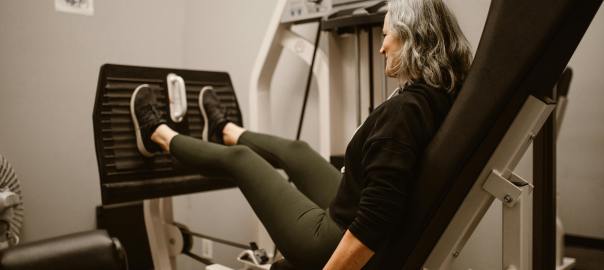
I was moved to another room when Brenda developed an infection and had to be isolated. (Since we were then across the hall from each other, our Physical Therapist arranged for us to have weight-lifting sessions in our doorways so we could see each other and chat. Sometimes, Shirley, the lady next door to Brenda, joined in as well, and we all chatted while doing curls. But I digress again.)

My best roommate, however, was my third one, Darlene. She didn’t care for TV and had only a few visitors. Among her other ailments, she had PTSD, so she preferred to keep the curtain between us pulled and wouldn’t be distracted by comings and goings in the hall.

The curtain proved no impediment to our growing friendship, however. We started bonding over our shared love of murder mysteries and true crime books. Naturally, the subject of Jack the Ripper came up. (As it does.)

“When we were in England, my husband and I took the Jack the Ripper walking tour,” I shared.

“Oh!” Darlene exclaimed. “I’ve always wanted to go on that.”

“It was a foggy, drizzly evening—very atmospheric. And we booked our walk when Donald Rumbelow was guiding it.”

She recognized the name immediately. “Donald Rumbelow! I’ve read his book on Jack the Ripper! He’s the best!”

“That’s why we chose a tour when he was leading. We also went to 221B Baker St. and saw the Sherlock Holmes Museum. It was a small, narrow building sandwiched between two others. Every floor had displays related to his famous cases. The top floor held a toilet with a blue Delft-like design in the bowl. It looked much too pretty to use. Even if you could make it up all six flights to get there.”

“You’ve been to the places I’ve always wanted to go and done the things I’ve dreamed of doing! Tell me more!” We were off and running on travelers’ tales.

After that, we dissected our favorite mystery series and recommended them to each other. We talked about holidays and favorite foods and family and pets. We spoke of exes and jobs and rated the nurses and aides. We cheered each other on about the distance we’d walked during physical therapy.

And we talked politics. I had been reluctant to share my political views with anyone at the facility, knowing how divisive, not to say explosive, such talk can be. But once again, Darlene and I were completely in sync. We despaired of the state our country is in and blamed the same people for it. When neither one of us could sleep, we talked well into the wee hours of the morning.

Darlene had a birthday while we were both residents, and she shared it with me. Literally. We each ate half of the yummy carrot cake with cream cheese frosting that her family brought her. She reveled vicariously in the little anniversary dinner that Dan arranged for me, which featured sushi, electric candlelight, mood music, and ginger ale in champagne glasses. Dan brought Darlene a case of Diet Cokes and a box of plasticware that her arthritic hands could manage at mealtime. (The aides often forgot.) She let me watch Practical Magic on her DVD player and I ordered her a copy of Fletch when she told me how much she liked it.

I’m out of the facility now, but Darlene is in for the long term. Today, we’re going to stop by and surprise her with a box of the cheese-and-peanut-butter crackers she can’t resist. I can’t wait to see her face light up.

I’m Back!

You may have noticed that I haven’t posted in this blog lately. I owe you an explanation. Between a knee replacement, lymphedema, and an ankle broken in two places, I’ve been spending my time in and out of hospitals and skilled nursing facilities. Now that my healing is progressing and I am recuperating further at home, I’m ready to start writing again!

What Went on at the Nursing Home?

Well, to me it was post-acute rehab care, but there were long-term and memory units, so let’s call it a nursing home. I was there for about a month and a half recovering from complications of my knee replacement.

When I checked in, the first person I met was my roommate, a 90-year-old woman named Norma. I’m not sure what she was in the home for. What I did know was that James Arness was her secret love crush. I know this because she kept Gunsmoke playing on the room’s TV eight or more hours per day. Being the newcomer to the room and being over 20 years younger, I didn’t feel I should offer to arm wrestle the remote away from her.

(I was equipped, however. I had my phone, complete with Nook, Kindle, Facebook, and Pandora, complete with a charging cable and a pair of earbuds. I was set. When Norma left to stay with relatives, I had an essentially single room and complete control of the remote. But I digress.)

For those who didn’t choose to stay in their rooms watching TV, there were lots of activities, starting most days with a coffee hour and Wii bowling. Throughout the week, there were concerts, Bible stories, card games, trivia sessions, karaoke, cooking classes, and movie-and-popcorn days. There was a beauty salon for appointments, and one week, even a prom.

I mostly stuck with my phone and its assorted diversions, as well as non-Gunsmoke TV. (The one time I went to a “Family Feud”-style contest, the talk devolved into politics, and I bowed out. And I never even went to my own prom, so theirs didn’t appeal to me, at least. But I digress again.)

Another diversion for me was the age-old sport of door-staring. The restroom and room doors were made of wood, and I could spend endless time staring at them and identifying shapes I could see. There was one spot that looked like a spy peeking through a crack, or if you looked at it another way, a surly baby. Then there was one area that looked like the Virgin Mary or the Dr. Who that my husband likes (the one with the long scarf), only with a coat hook for a head. (Technically, this activity is known as pareidolia, which is a fun fact to know and tell. If you can pronounce it, that is. But I digress yet again.)

It was also fun to collect names. That is, to see how many different ways the staff referred to you. Most of the time, I was called Miss Janet or Mrs. Coburn (both of which are inaccurate), but I was also called Babe, Hon, Sweetie, and even Girlfriend. The woman in the next room was called Chiquita, which I never was.

(I’ve heard this described as “infantilizing” nursing home residents by using endearments instead of their real names. My mother told me that at one place she stayed, there was a woman who had a Ph.D. When she needed help, she would stand in the doorway and shout “Yoo-hoo.” I don’t know what the staff actually called her, but ever after, I thought of her as Dr. Yoo-hoo. But I digress some more.)

The staff had games of their own. They would hide little cutout figures of ducks or gnomes (or something) around the facility and see who could collect them all first. It was entertaining to see the nurses and aides careening down the corridors, laughing and squealing as they searched for the numbered items.

Another pleasant distraction was the little ice cream cart that the staff took around. I couldn’t have any because of my diet, but Dan was there once when it came around and scored himself a root beer float. Most of the time when Dan visited, we held hands and watched reruns of Star Trek.

To me, that was the most fun in the nursing home.

Hooked on Scrolling

Back in the day, my husband used to bitch about how people were glued to their phones at all times—even while walking somewhere. “How can they see where they’re going?” he’d ask. “What if they don’t see a car and it hits them?”

I’ll bet you can see where this is going. Now Dan is as much of a cellphone addict as the people he used to look down on.

He has a history of finding changes in technology unwelcome. He didn’t even want to get a regular cellphone in the first place. It was only after a protracted argument caused by one of us not notifying the other where they were and when they’d be home. I pointed out that this would not be a problem if we had phones we could carry around with us and not rely on a landline.

Finally, he began to see it my way and caved. I purchased inexpensive cellphones and gave him one. It was the kind with almost no features or difficult-to-access ones. (To be honest, it was the kind that parents are now encouraged to get for their kids. Like that would go over big and occasion bliss. No internet connection? No social media? They’d sooner just leave it in the box. But I digress.)

The low-ball cellphones we got worked okay, except for one tiny problem—Dan kept losing them. Not once or twice, mind you, but regularly. Once he even lost it in another state. (My dad would have said, “I’m going to tie it on a string around your neck so you won’t lose it.” His dad would have said, “If it was up your ass, you’d know where it was.” But I digress some more.) But even when he lost each flip-phone he insisted on replacing it with another just like it.

The problem only got worse when I bought a smartphone for myself. Dan refused to give up his rickety flip-phone. He did marvel at the many things I could do with the smartphone, like play Puss-in-Boots Fruit Ninja or get directions to the sushi place nearest to our hotel.

What changed his mind was advances in technology. When he heard that 5G was on the horizon and the flip-phone would flip its lid in fear, he consented to me selecting him a smartphone. A simple one. It should do as little as possible except make and accept phone calls. No Fruit Ninja for him.

Soon, however, he discovered that with it, he could get online. He had a computer and was used to the wonders he could find on the Web. (Web-wonders, as it were.) Mostly, he read the news, checked the weather, and watched YouTube videos of cute kitties, which, after all, was why Al Gore (or that guy with the series of tubes) invented the Internet.

Soon he was scrolling regularly. (It strikes me as ironic that scrolls were a very early form of communication, but now the word as well as the world has gone high-tech. But I digress yet again.)

Singer-songwriter Tom Paxton once wrote, “The news is all bad, but it’s good for a laugh.” Now that even the news isn’t good for a laugh, Dan has increased his intake of cat videos and stories about archaeology. And sworn off doomscrolling.

Bro!

I’m sick of the bros! It’s not just that boys and men call each other bro. It’s how the term has invaded our culture. We have dude-bros, tech-bros, bro-grammers, bromance (which has been added to the Oxford English Dictionary), bro code, brobituary (something said of a guy who just got married), brohemian, and even Bernie bro (a supporter of Bernie Sanders).

(It’s also now common usage in TV commercials. For example, one of the most ridiculous is an ad showing two or three guys eating the same combination of pizza and sides and calling each other bundle-bros. But I digress.)

A little research shows that “bro” may have started with surfer culture. Nowadays, however, it is associated with misogyny, entitlement, and hyper-masculinity of the toxic variety. A bro doesn’t associate with women, except as a sexual conquest. The expression “bros before hoes” is a repellent example of this. The term is also used to assert that an activity is heterosexual, not gay—bro-hug, for example.

(I don’t think anyone calls my husband “bro” at work, though if they do, I don’t want to know. (Sometimes they call him Santa or Jerry.) And he isn’t into the “manosphere” of bro-culture. Dan’s philosophical. He says, “Call me anything but late for dinner.” But I digress again.)

The word itself has gone through changes over the years. Starting with “bro,” the word later was often pronounced as “brah” (a variation I knew wouldn’t last long because it sounds like “bra”), and more recently as “bruh.” (Which sounds like someone started to say “brother,” had a brain fart, and stopped.)

(Why has this happened? My personal theory has to do with the Great Vowel Shift, which is a real thing that linguists talk about. The pronunciation of certain vowels in English changed over the years (primarily between the 1400s and the 1600s). For example, the pronunciation “beet” in the Middle Ages became “bite,” which is how the word is pronounced now. “Here” became “her” and “hoos” became “house.” It has to do with the position of the teeth and the tongue in the mouth when saying those words and applies mostly to long vowels. It didn’t happen just in English, but in other languages like Swedish and Norwegian. It’s really only useful when you’re reading Chaucer aloud, but who does that except English majors and linguists? But I digress, at length and boringly.)

While we’re on the subject of forms of address (which I was a moment ago), I’d like to note that women have no way of informing each other of a flat tire. Let’s take the case of a man with a tire that’s deflating. Another man can say, “Hey, buddy (or mister, dude, guy, or, presumably, bro), your tire is low.” (Women can say, “Hey, mister,” too.) When the person with the flat tire is a woman, men can yell, “Hey, lady, your tire is low.” But there are no good ways for women to impart this information to other women. A woman could say, “Hey, lady (or sister or sis or miss), your tire is low,” but none of those sounds right. The best they can do is yell, “Excuse me, your tire is low,” but that doesn’t indicate who has the deflating tire. It could be anyone in the traffic pattern. (Women are therefore restricted to “excuse me” rather than “hey.” I suppose women could always point at the other woman’s tire without yelling anything, but that’s a little ambiguous. But I digress some more.)

What would the female equivalent of bro be? Sis? Sounds like the tire is leaking. Lady? Too formal. Chick? Too sixties. Woman? Too technical. Bitch? Just no. Female? Too dismissive. Anything else I can think of is just too vulgar. I guess we just have to wait for language to catch up to “bro.”

Who Controls the Remote Control?

“Where’s the clicker?” resounds through the room. (That’s what we call the remote control. Clicker is two syllables shorter than remote control and exactly as long as remote. But I digress.)

“I don’t know.”

“You had it last.”

“I thought I put it on the table.”

“Well, you didn’t, unless you put it under the peanut butter jar, and it’s not there.”

“Maybe it’s in your desk drawer.”

“I never put it there. Maybe it’s on the floor between your feet.”

“I don’t see it there.”

“Maybe it dove into the cushion of your chair. Fish for it!”

“Maybe Toby took it.” (Toby’s the cat.)

“No, he’s watching Bird TV.” (Looking out the window.)

This is an accurate account of a conversation that occurs nearly daily (nightly, too, sometimes on the same day). The seeking, scrambling, fishing, and fumbling. The recriminations. The prospect of an un-entertained evening stretching out before us.

(I look back fondly on the days when the remote was attached to the TV or VCR (yes, I’m old) by a long plastic leash. All you had to do was follow it like a trail of breadcrumbs and there the clicker was! You could also follow it the other way to find out where the TV was, not that we used it that way all that much. But I digress again.)

When Dan gets tired of the cooking, crime, and comedies I like, he says, “Can I see the clicker?” If I’m feeling puckish, I simply hold it up within his line of sight. He sighs and says, “Gimme that.” (I don’t really do that. Much, that is.)

I must say I don’t understand the way Dan uses the remote. Rather than selecting a program to watch, he goes to a movie channel and clicks through every film listed, muttering, “That’s a good one” or “Haven’t seen that in a while.” He never quite commits to a movie, even if I say I like one of them. He waits until I go to bed to select a movie and watch it or episodes of Quantum Leap. Or wakes up at 3:00 a.m. and goes downstairs to do the same.

(We do have different taste in movies. I like musicals, swashbuckler movies, and anything starring Kris Kristofferson. Dan likes war movies, Thin Man movies, and anything featuring Peter Sellars, none of which features Kris K. But I digress some more.)

But we were talking about remote controls. At least I was. I think.

Custody of the clicker passes back and forth during the day. When Dan’s at work, it’s mine, all mine. I spend most of the day with the TV on, even when I’m doing my writing. I usually have the live channels on and flip around when I get bored with one. On any given day, I may listen to a few episodes of Ink Master, a couple of Buffy, some Dr. Pimple Popper, and maybe Forensic Files, if they have an episode I haven’t already seen. I don’t generally pay attention to what’s on. It’s just my “emotional support noise.” I don’t like sitting in a completely quiet house, and the cat doesn’t make that much noise. Or if he does, there’s something very wrong.

(It was Dan who got me started on Dr. Pimple Popper. I was reluctant to watch it because it had such a dopey, repellent name. But after a few episodes, I found it tolerable. It was another medical show, kind of like Mystery Diagnosis or Monsters Inside Me, both of which I like, except with cysts and lipomas instead of parasites. But I digress even more.)

Then, when Dan comes home, we have to negotiate what to watch. Big Bang Theory or The Dirty Dozen? Dr. Strangelove or Forged in Fire? Beat Bobby Flay or Bell, Book, and Candle? The Three/Four Musketeers or Arsenic and Old Lace?

Finally we settle on something. It doesn’t really matter what. Inevitably, Dan falls asleep in the comfy chair. I grab the clicker and change the channel.