Monthly Archives: October 2017

The Big and Tall Blues

While I am pleased to see that “curvy” (plus-size) women are being featured in clothing and retailer ads on TV, and encouraged to accept – nay, celebrate – their figures, I have noticed a certain lack.

Where are all the plus-size men?

Well, we all know the answer to that. They’re on TV commercials as the butt of every joke, the loser in every office, the fall guy in every set-up. Or they’re dancing in a manner destined to spark derision. (Never mind that Drew Carey proved on the intro to his sitcom that hefty guys can bust a move.)

But in clothing commercials or ads for retailers that carry clothing? Nary a big guy to be found.

It should be noted that this merely reflects the reality of shopping. If a store has a “big and tall” section, it usually caters to tall and defines “big” as topping out at 3X (and those are always sold out, which should tell retailers something).

Then there are the b-and-t shops, which charge a hefty (sorry) premium for larger sizes. C’mon, it’s not like a few extra inches of fabric costs that much. If shoe manufacturers can afford the extra leather, canvas, or whatever for wide sizes, why do larger Dockers cost $50-75? (And that’s the last time I shopped. It could be even higher now.)

And while we’re on the subject, think of the difficulty I had finding a stock photo to illustrate this post. What I got when I searched were images of Santa; rednecks with shotguns; and men eating giant, dripping burgers or pizza. (Most of them had beards, too, which apparently are correlated with weight in someone’s mind.)

But let’s get back to real life. The plus-size men I know don’t even have a clue where they can find underwear that fits. They go from Target to Penney’s to Sears, only to find a dearth of options. It’s like large men are being urged to go commando. And if they do find undies that fit, they invariably are plain white. (Though this is a flaw in women’s undergarments as well. What, do you run out of flowers and stripes at size 10?)

What does this leave? Internet shopping, of course. And the price and selection problems persist there as well. At least women have sites like eShakti where we can have fashionable styles tailored to our dimensions, at only a nominally higher cost, and can find ready-made plus sizes in flattering and diverse designs (and by flattering, I don’t mean just vertical stripes).

Wait. Where was I? Oh, yes. Plus-size men’s clothing. The men’s rights movement has appeared not to have noticed the lack of clothing choices and the insulting ads, being more vigilant about custody decisions and uppity feminists, but they perhaps ought to take a lesson from the women who are working for body-positive fashion choices.

Until large men (let’s be clear here – fat boys https://www.youtube.com/watch?v=QkTJTAS7ePE) get aware and vocal about their limited choices, unequal representation, and demeaning depictions, they will have to live with the choices that the fashion and retailing industries give them. And that’s a meager diet.

I have known, and admired, and lusted after large men. I just wish they had something decent to wear.
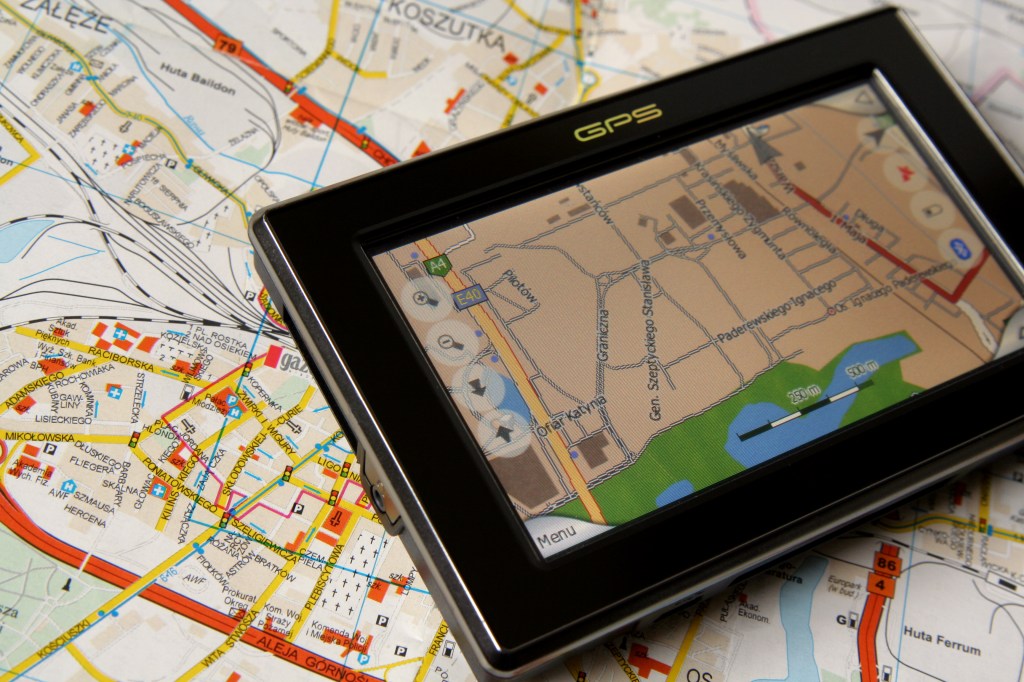
I Am a GPS

The other day I was musing on all the things I’ve been in my life – daughter, wife, student, college graduate, cashier, editor, writer, blogger, and more. But I realized there were more roles, ones that I acquired because my husband assigned them to me.

Unfortunately, my husband is topographically challenged, so I have to be his GPS. I know it’s not his fault; he just doesn’t have those little magnetic bits in his head that tell him how to go around a city block and know where he is, or to reverse-engineer directions so he knows how to get back from wherever he’s gone.

As a consequence, I have to go with him to the plant store, the KFC, and even the airport (north or south on the main highway?), despite the fact that he’s lived here for over 40 years.

I bought him an actual GPS once but he refused to use it because I refused to set it up for him. (I thought he would be capable of setting it up on his own. This was before GPS units had reached their current level of ease and Google Maps took over. But I digress.)

Another role was Dictionary. Well, and Thesaurus too. Let’s just say that spelling is not his strong point. He used to love amazing his co-workers by dialing a number, saying, “Dictionary,” and getting an automatic definition or spelling.

Of course, this spilled over into his college work, when I also became his typist and copy-editor as well as spellcheck. And sometimes his content editor as well. (He did write the papers himself. He earned that degree.)

Once when he had to be out of town I even went to his class and took notes for him. (One guy in the class was so impressed he said I was the best wife in the world. But I digress again.) Luckily, it was a religion class, not a math class.

My husband returned the favor. When it was my turn in college and I was writing a paper on William Carlos Williams and Wallace Stevens (my “Willie and Wally” paper), Dan went through the indexes of every book I got from the library and put a sticky note at each reference.

(I know another couple who put each other through college, each working menial jobs while the other studied. I was impressed, at least until they divorced. But I digress some more.)

But the role I hate most is snooze alarm. If he asks me to wake him up at 3:30 (which I maintain is the clock’s job), and I do, he’ll say, “Give me another half an hour.” Then ten more minutes. Like I dispense time or sleep. I used to be the ATM, too, and dispensed $20 bills to him at need.

I can’t complain too much about my husband, though. He has definite roles too, prime among them Picker-Up of Icky Things. No matter if it’s something hairy in the back of the fridge or something dead in the driveway, it’s in his domain.

I know every good marriage is a matter of give and take, and that couples do well who share their strengths and weaknesses. But honestly, the clock has an actual snooze alarm, and I can pick up icky things if given tongs and a shovel (unless they’re also smelly, which is when I call for help).

At least I don’t have to be the ATM anymore. My husband figured out how to work one of those.

The Nature of Terrorism

According to the definition of “terrorism,” we have some pretty half-assed terrorists out there.

Merriam Webster defines terrorism as “the systematic use of terror especially as a means of coercion.” Another definition says: “a surprise attack involving the deliberate use of violence against civilians in the hope of attaining political or religious aims.”

And the word terrorist is defined as “a person, group, or organization that uses violent action, or the threat of violent action, to further political goals….”

What’s missing from terrorism as spoken of by the media, politicians, and the general public? The goal. The coercion. Especially when discussing “domestic terrorism,” most of the examples have no goal. When no goal can be accomplished or even named, what you have is crime, not terrorism.

Oh, certainly some of them have goals – pointless, ineffective ones. The 9/11 attacks had a goal of destabilizing U.S. political, military, and financial structures. In that sense, it was terrorism. But as a goal, it was poorly thought-out. Political, military, and financial power in the U.S. are simply too complex and decentralized to be destroyed or even much hindered by destroying a symbol of that power.

Destroy the Pentagon and military power remains (not that the bombers succeeded in destroying the Pentagon). Destroy the World Trade Center and American capitalism carries on. Eliminate the White House and structures exist for the government to continue. While those events were powerful as symbols, as attempted coercion, they had the opposite of the effect intended. They did not weaken U.S. power; if anything, they increased it.

Goals of more “successful” terrorist actions have been more precise, and more effective. The terrorist acts of the Irish Republican Army resulted in the release from prison of members of their organizations. The domestic Islamic terrorism of the Taliban caused women in Afghanistan to abandon jobs and other freedoms for fear of violence against them. The violence and threat of more violence coerced them into altering their behavior.

Compare the lack of effectiveness of “Islamic terrorism” in the U.S. Any Sharia law enacted? No. Any convicted prisoners freed? Any populations so terrorized that they abandon former freedoms and daily routines? These shootings and bombings have been crimes, but not actual terrorism. Or at least not terrorism successful in its objectives.

And what of “lone-wolf” terrorism in the U.S.? (Let’s remember that Timothy McVeigh was not a lone wolf. He had accomplices. And they caused terrible death and destruction, but not terror in the sense of attempted coercion.) David Koresh’s Branch Davidians did not have an apparent goal. They caused fear for the people held hostage and for the lives of the government representatives trying to remove them from their compound. But they posed no real threat to the ATF, the U.S. government, or the population of Waco, TX – only to themselves and their children. The Unabomber’s schizophrenic efforts seemed random to anyone who could not follow his demented logic, because they were, indeed, random and unhinged.

The anthrax scare was perhaps the most ineffective of all. While ostensibly targeting the media and the Congress (again, to what supposed effect?), they primarily caused terror among tabloid mailroom employees and assistants who open mail for higher-ups. Fear, maybe. Terror, no. There were no demands, no goals, no proposed change in potential victim behavior.

In the U.S., the most “successful” terrorist actions have been those against abortion clinics and gay meeting places. Abortion clinics have not been eliminated (at least by bombings and shootings), but employees have in response to the death and destruction quit their jobs or instituted complex and expensive security measures. Bombings and shootings at gay night clubs and hate crimes against individuals, for example, have not eliminated the gay population, of course, but they may have had a chilling effect on the gay community and their willingness to speak up, gather in public, and feel secure in public spaces.

And what of other “terrorist” attacks like the Boston Marathon bombing? Did that event have its desired effect of bringing attention to the situation in Chechnya? No. What does the citizen-on-the-street know about Chechnya? Any more than before? That bombing and other attacks have been expressions of impotent rage, futile protests, and deadly crimes, but they have not been terrorism.

Calling these actions “terrorism” gives them a power they do not have. Terrorism is meant to alter the everyday behavior of people or institutions. To some small extent, they have done that. Americans are more vigilant, more suspicious, more angry, but not more ready to give in to the goals (if any) of the terrorists. That suspicion and anger are in many cases too widespread and likewise devoid of specific achievable goals, but they are certainly not effects that supposed terrorists intended.

The terrorists have not won. Yes, they’ve killed and maimed and destroyed property and lives, strained our resources, and made us unreasonably fearful. But they’ve hardly accomplished anything.


You and Your Manuscript: Struggle and Success

Suppose you are a freelance writer or want to become one (and I suppose you are or do because you’re reading this).  Here are a few tips and tricks on how to make your manuscript more publishable.

First, as anyone will tell you, read the publication. And that means more than just the How to Submit page and the rates they pay. If you have a touching story about how your darling Muffin passed away, don’t send it to every magazine with the word “cat” in the title. Cat Fancy, for example, is about registered breeds of show cats. You’d be better off sending it someplace like I Love Cats, which pays very little but will give you a byline to wave in the next editor’s face. Likewise, if you have an article on how to select a vet or home remedies for ear mites, don’t send it to a publication that already has a monthly column that is written by a vet.

Write down any ideas. Despite what you think now or how good it is, you will not remember it later. Keep the bad ideas too. Later they may turn into good ideas – for a different market, say, or a different novel. Make a file called “Works in Progress.” Write ideas on sticky notes. Whatever. Then, when you hit a dry spell (which you will), look them over. Maybe they won’t look quite as stupid as they did at first.

Have a schedule. I don’t mean a Stephen King-10,000-words-a-day schedule. Or even 1000 words, necessarily. The idea is to establish a rhythm. I post my blogs on Sundays, for example, so I like to start on Wednesday by choosing a topic; Thursday and Friday to write; Saturday to proof, tag, and illustrate; and Sunday to proof and post. Yes, proof twice, at least.

Don’t be a slave to a schedule. I’m writing this on a Friday, which isn’t ideal according to my wibbly-wobbly, timey-wimey schedule. Just leave enough leeway in it that if something important comes up, you can shuffle a bit. For example, I often choose my illustration on Thursday or Friday, instead of Saturday. If you think you’ll have your novel done by Labor Day, figure Christmas, or maybe even Easter. Unless a publisher has given you a deadline.

Illustrations aren’t absolutely necessary – except when they are. Some publishers like The Mighty and Medium want you to submit a photo with your story. Others don’t. And when they say photo, they mean a professional one, not one of your Aunt Sally at a family picnic (unless yours is a true crime book and your Aunt Sally is a serial killer). So cough up a few bucks and get a royalty-free image from Fotolia or Adobe or a free one from Creative Commons. And know the difference between landscape (horizontal) and portrait (vertical).

A title is part of your writing too. Even when the editors change it (and they probably will). A title should make your readers want to read. “A Dreary Day”  is not a good title. “How to Survive a Dreary Day” is better.

Have more than one project. If you just can’t face your blog, start a mystery novel. If you can’t even look at your mystery novel one more day, write a children’s story. Then come back to your old project with a fresh brain.

Pick a point to move on. Even though people will tell you how many times some famous novel was rejected, you don’t have to keep on with something that’s not working. Pick a certain amount of time that feels reasonable to you – the end of the year, two years, whatever – and then move on to something else. Or rewrite the piece entirely – first person instead of third person, or vice versa, for instance.

These bits of advice will stand you in good stead whether you are writing a novel, a magazine article, a poem, an autobiography. Maybe not a play or a movie script. I don’t have any experience with those. But for prose and fiction. most of these rules (well, more like guidelines, really) will apply. Unless you’re Stephen King. But I doubt that he reads my blog.