Category Archives: cooking

Paczki-Palooza

It’s Lent. So why are there three dozen paczki in my freezer?

As usual, this story begins with my husband.

(Actually, let’s start a little further back. If you’re not familiar with paczki (pronounced ponchkee, paunchkee, etc., depending on where you’re from), they’re Polish donut-like devices filled with cream, curd, or jam. They’re made and eaten in the lead-up to Mardi Gras (Fat Tuesday), the day before Ash Wednesday, the start of Lent. They were allegedly invented when an annoyed cook threw a ball of dough at her husband, and it landed in the fryer oil instead. I totally believe this origin story, knowing how annoying husbands can be. But I digress.)

The next thing to know is that Dan works in a store that has a bakery section. For the last few weeks, Dan has been bringing home boxes of paczki—blueberry, raspberry, lemon, and Bavarian cream.

But this week, as Lent rapidly approached, the bakery started marking down the paczki. And Dan can’t resist marked-down baked goods. He keeps me supplied with muffins (my usual breakfast). He’s the carb-peddler. He brings home French bread, Italian bread, sourdough bread, coffee cakes, apple caramel pies, and nearly anything else made with flour, eggs, and butter. (Fortunately, he doesn’t bring home game-day cookies shaped and decorated like little footballs. Or Jack-o-lantern cookies, for that matter. But I digress again.)

So, naturally, he brought home NINE boxes of paczki this week. (He did call and warn me, “I’m going to be bad,” which can mean nearly anything. But I digress some more.)

I’ve been stuffed with paczki for the last couple of weeks and couldn’t bear the sight of that many more. So we had a paczki party this week. Now, for most people, this would involve inviting over a bunch of people, making a huge pot of coffee, and chowing down.

But no. We couldn’t organize a party like that in the time it would take for the pastries to go stale. (When we do have a party (which isn’t very often), we have it at a Chinese restaurant. And paczkis would not really be welcome there. Still more digression.)

What we did have was a box of small plastic zipper bags. (We always have them on hand because Dan always takes peanut butter sandwiches to work with him, for his lunch and his breaks. I would get tired of peanut butter day after day, but he feels, as the old joke goes, “How can you ever get tired of food?” But I digress yet again.)

We sat down with our stack of paczki boxes and our box of bags and began stuffing, one paczki per bag. We licked the sugar off our fingers and stuffed all the bags in the freezer. When we get a craving for a paczki (which may not be until the run-up to next year’s Lent), we’ll just pull one out of the freezer and indulge. Or maybe Dan will take one for lunch. Or maybe I’ll give up on breakfast muffins.

I just hope there are no baked-goods-related holidays coming up for a while. I’m in sugar shock already.

Mom’s Kitchen

My parents were totally not foodies. My father was a meat-and-potatoes eater, and my mother was a meat-and-potatoes cook. This was a marriage made in culinary heaven.

My mother’s porkchop, however, looked nothing like this picture. Well, the mashed potatoes did, though the gravy was her amazing sawmill gravy, a version that was popular among all our relatives. (Once when we were visiting Cousin Addie and Cousin Jim (actually ancient relatives who may have been cousins to our grandmother (or even great-grandmother. We were pretty lax about genealogy), Cousin Jim looked up from his biscuits and asked, “Who made the gravy?” “Why?” asked Cousin Addie, fearing it displeased him. “It’s good, he said. “Thicker than usual.” My mother had made it. But I digress.)

However, Mom’s plate of pork chops would have looked quite a bit different. The pork chop would be thin, simply floured, and fried until it was tough. (The pork fat would go in a coffee can on the back of the stove to use instead of butter or oil when cooking eggs. But I digress again.)

The zucchini would never have appeared on the plate, not even during the season when neighbors leave orphan zucchini on each other’s doorsteps like oblong green babies.

The asparagus would have come in a can. All vegetables did, except soup beans, which I ate with ketchup. (I thought I hated asparagus. I’d only had the slimy, canned variety, though. When a boyfriend made me fresh asparagus, I changed my mind. But I digress some more.)

She also made dishes that my schoolmates likely never had, such as pressure-cooked tongue, boiled chicken hearts and gizzards, and cornbread with no sugar (baked in a cast iron mold that looked like ears of corn). It’s considered “white trash” cooking now, but at the time it was just supper.

Lunches were grilled cheese sandwiches—Velveeta on white bread— or bologna and cheese on white bread. Subs were made of lunch meat, no lettuce, tomato, olive oil, or mayo. We got them from school fund-raising drives.

Chinese food came from those two stacked cans. Pizzas came in box mixes, a special treat. Desserts were from box mixes, too, or the slice-and-bake variety. The only exception was Mom’s lemon meringue pie, my father’s favorite, homemade, and always magnificent.

One thing I can say about my mother’s cooking is that there was always plenty of it, and leftovers as well. I was shocked when I had dinner at a friend’s house once, a family of six, and saw how fast they ate to be sure of getting enough and how they fought over the last dinner roll.

I was perfectly happy with my mother’s cooking at the time. It wasn’t until much later that I was exposed to a wider culinary spectrum and experienced beef stroganoff (which my father once described as “slop”), egg drop soup, and anything sautéd. (When I finally encountered these foods, it would be said that I had “got above my raising.” But I digress yet again.)

So, yeah, I may have become fond of sushi, calamari, hot-and-sour soup, whole wheat bread, Havarti and gouda cheese, enchiladas, and tiramisu.

But I still love grilled American cheese on white bread. My husband tries to make it for me as a special treat. But it’s not the same when anyone makes it besides Mom.

I Can’t Do That!

There are some things I just can’t do or at least am very, very bad at. There are the obvious ones like flapping my arms and flying or walking on water. There are things I just never learned to do like playing the harmonica or doing the hula. But there are also things that I simply can’t do, don’t want to do, or do miserably badly.

The most annoying one is in that last category—singing. Oh, I do sing, mostly alone in my own house at the top of my voice. I’ve tried singing in other places. I was in choir in junior high and was always last chair or next-to-last chair. One other poor singer and I swapped places regularly. (I must mention that taking choir meant that I was part of a heinous concert in which 40 white kids with no rhythm or soul whatsoever performed “Sittin’ on the Dock of the Bay.” But I digress.) I will sing in a large audience where everyone else will drown me out. I once even took singing lessons, which had no effect whatsoever. The problem is that I may start roughly on key, but over the course of the song, I sing flatter and flatter until by the end I’m in some other key altogether. I desperately wish I could sing well, though.

(Once my husband, in an effort to cheer me up, said, “There are people who sing worse than you.” “Name three,” I replied. Long silence. Then he said, “That wheelchair guy.” I was appalled. And I didn’t know whether I was more appalled that he couldn’t name Stephen Hawking or that he couldn’t think of two more people. I mean, he could have mentioned Shel Silverstein or my sister. But I digress again.)

Another thing I’m not reliably capable of is riding carnival rides. I can handle most of them okay, but there are ones that I absolutely refuse to go on. First are roller coasters that flip you upside down. The second are those towers that spin and then drop the floor out from under you as you’re pasted to the walls. I understand the physical principle of centripetal acceleration that keeps you from falling out, but they still look iffy to me. Maybe I’m just not confident in the maintenance and repair of carnival rides.

(For a long time, I was leery of Ferris wheels, because I had nosebleeds as a child and my mother wouldn’t let me go on them because she feared the height would bring one on. This despite the fact that every nosebleed I ever had was when I was lying in bed, which was at a height of only a couple of feet off the ground. (I do admit that the idea of having a nosebleed when the wheel stopped at the top and dripping blood on everyone else below me was pretty appalling.) As an adult, I have ridden the ride and never experienced a nosebleed. But I digress some more.)

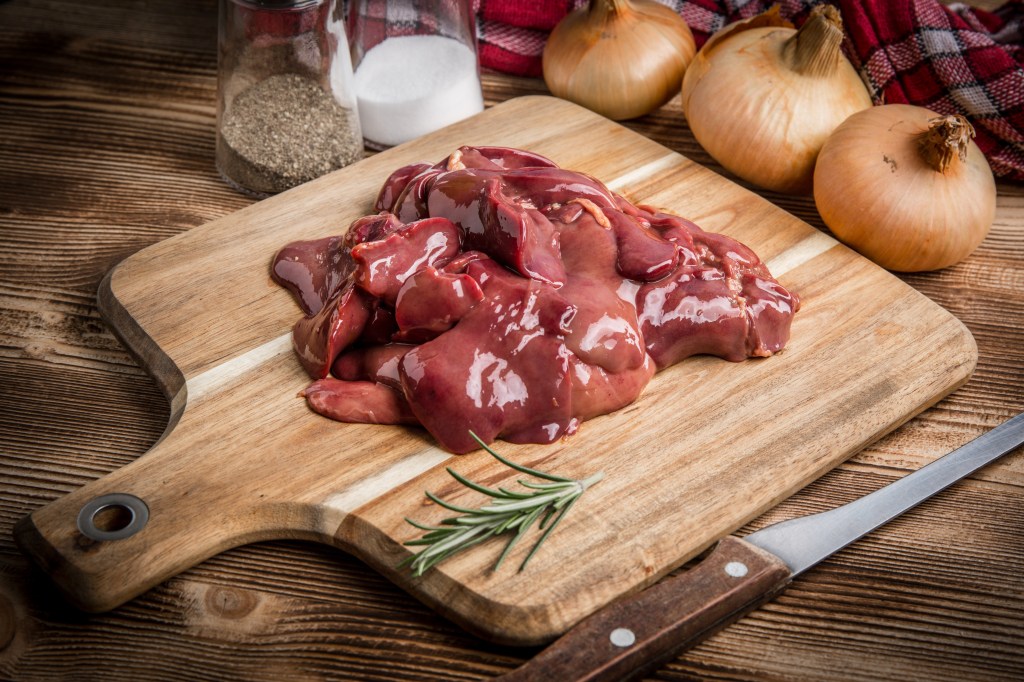
And then there’s eating liver and onions. I’m not fond of that many onions in one place, but that’s not the problem. It’s the texture of the liver, grainy as well as meaty. I simply, literally, gagged on it. It wouldn’t get past my uvula. (That’s apparently its only function—guarding against liver.) After several valiant attempts, both my mother and I simply gave up trying. (I can eat other foods with peculiar textures. Octopus. Gizzards. Tongue. Snails. In fact, once when I was going on a business trip, I had a hint that the boss, who used to order dishes for everyone at the table, would present us all with escargot. I went to a local restaurant where no one knew me and ordered some before we went, just to see if my uvula would object. I found that snails go down quite easily. They have the texture of gizzards, which don’t bother me, and taste like scampi since both are served in garlic butter. And yes, the boss did order escargot for all. But I digress yet again.)

That’s all for this week. I’m going to try again to flap my arms and fly. Maybe sing while I’m doing it. But I’m not going up on the roof to experiment. That would be crazy.

Chopped Rules!

I love the Food Network show Chopped. It’s calming. It is a competition show, but there are no hosts or contestants who yell or sound like wrestling announcers. (I’m looking at you, Guy Fieri.) They don’t even provide recipes. (That’s okay with me since I hardly ever have to make dinner with pork bung, stinging nettles, and green bean ice pops.) I do pick up a few tips: When they say “lacks seasoning,” they mean salt. (This is something my husband doesn’t understand.) You can glaze turkey with tangerine juice. (I used orange juice.) You can’t plate the way a normal person does. It has to be piled up like food Jenga. But I digress.)

There are everyday rules that apply to the show…well, every day. If you get blood on your plate, the judges won’t eat it (unless blood is one of the basket ingredients, which is not altogether impossible). Honor the ingredients (no, I’m not sure what that means either—bow to them, maybe?).

But beyond the official rules, there are “rules” that ought to be Rules. These are the things that a contestant should absolutely not do.

Don’t try to make risotto or polenta. Most of the time there’s not enough time (the rest of the time, there’s too much). If there’s not enough time, risotto will come out so al dente that the dente means tooth of the chipped variety. If there’s not enough time for polenta, you’ll have grits. Also, they both require a lot of attention—adding liquid and stirring—so if you want to make anything else (you do), it won’t come out right either.

Don’t try to make panna cotta. There just isn’t enough time for it to set up, even in the blast chiller. You might as well just put some strawberries in and say you’re serving cold fruit soup for dessert. Cold fruit soup is a thing and a yummy one at that.

Don’t use truffle oil. You may be tempted. After all, truffles are a high-end ingredient. But truffle oil overwhelms anything it touches. (Another common trap is using extracts. Almond. Amaretto. Anise. Rose water (which will make your dish smell and taste like soap). You should probably take the hint when you learn that rose water is used for make-your-own lip gloss (if you’re into that kind of thing). But I digress some more.)

Beware of garnishes. In the world of Chopped, NFG means Non-Functional Garnish. (Never mind what it means in the rest of the world.) Basically, it means any garnish you can’t eat or wouldn’t want to. They’re put on a dish just to make it look pretty. Think parsley, which used to garnish everything and now simply isn’t seen. Whole ghost peppers added for color. Even the little mint leaves that, like parsley on dinner plates, used to decorate any dessert are now out of vogue.

Beware of the oven. Ovens are tricky. They will never (I repeat, never) cook that puff pastry in time. Or the phyllo dough. Or the croissants. Probably not even the cookies, and definitely not the cupcakes. (The cupcakes will also not release from the pan, which means you have to dig out the tops and call the result “deconstructed.”) On the other hand, if you put streusel in the oven, it will burn. And if you keep opening the door and peeking in the oven, you’re toast, so to speak, though your bruschetta won’t be.

How do I avoid these pitfalls in my own daily life? That’s easy. I make peanut butter and jelly or bologna and cheese sandwiches, or microwave some soup. (If you’re thinking Dan would object to this, he doesn’t. My efforts are for lunch. He does the dinners. Except when I have to make the cornbread to go with the cowboy beans. But I digress yet again. I guess I’ve digressed a lot this week if you’re keeping score. I just can’t help myself. Just like I can’t help myself when a cooking competition comes on. I’ll even turn off InkMaster to watch Chopped.)

Yes, No, and OMG NO!

Sometimes I’m like a toddler who turns up her nose at any new food. Sometimes I’m like a teenager who will eat anything that doesn’t move. But I have my rules.

“Yes” foods. I will eat (and have eaten) sushi, octopus, eel, snails, and goat. (I first ate sushi when it was impossible to refuse, hand-made by my martial arts instructor’s wife.) I even once ate a raw oyster, though it just tasted briny. Now that I’ve at least tried it, I have no desire to do it again. It was the texture I objected to, and raw oysters pretty much have only one texture—slimy. (You may say that octopus, eel, and snails all have a slimy texture, but not if they’re prepared correctly. Octopus can be gelatinous or rubbery if you under- or overcook it, but is tender and toothsome if cooked for the right length of time. Eel is great when barbecued. Snails have the texture of chicken gizzards, which I learned to eat as a child, and have a flavor just like scampi because they’re served in garlic butter. But I digress. At length.)

“No” foods. My husband trained himself to like okra just so he could say he’ll eat anything. Except veal. He has humanitarian concerns about veal. I say good for him! But not good for me. I won’t eat okra no matter how it’s cooked. I just can’t get over the combination of slimy and hairy textures of okra.

Mustard is another of my nos. I had to tell my husband a reason I didn’t like it so he would stop bugging me to “just try it.” I told him that it tasted metallic. I did manage honey mustard dressing that I couldn’t avoid on a salad, but I didn’t enjoy it. (I once had dinner at a sushi restaurant with a group of people. The high point of the evening was when a husband asked his wife, “Do you really want me to tell the kids you wouldn’t even try it?” Her glare was positively poisonous. But I digress some more.)

Brussels sprouts were a big no for me until I had them in Slovenia. I didn’t know enough Slovenian (none, that is) to ask for the recipe, but they were delicious. We’ve tried roasting them and sprinkling them with parmesan cheese, and they’re tolerable that way, but I still long for the Slovenian version, whatever it was.

Most of my aversions are governed by texture. For instance, I never cared for egg salad because it’s too often mushy. (One time I ate mushy egg salad because it was impossible not to. My sister’s MIL served the sandwiches to us as we were passing through the area. My husband finally made it agreeable by the simple technique of making it chunky rather than pureeing it with an immersion blender or, as we refer to it, a motor boat. But I digress again.)

“OMG NO!” food. Liver-and-onions is the one food I can’t eat no matter how it’s prepared or how I try. And boy, have I tried. My mother used to serve it pretty regularly when I was a kid. She finally gave up on trying to get me to eat it when I literally (not figuratively) gagged on it, which upset the rest of the family’s dining pleasure. I feel that since I actually did try it in childhood, I’m under no obligation to try it again. I know tastes can change with age, but gagging isn’t likely to. I just hope I never get into a situation where the only polite thing to do is to try it.

Good Ol’ St. Pat

By some bizarre circumstance, I’m able to post this on both Sunday, as I usually do, and St. Patrick’s Day. Here’s a list of what I’m not going to write about: green beer, four-leaf clovers, or shamrocks (those were practically the only visuals I saw when I was looking for an image to go with this post.) I will not be writing about St. Patrick and how he was really a Roman and chased the snakes out of Ireland. I’m not going to write about the Fighting Irish of Notre Dame.

No, I’m going to talk about Irish food. The picture you see here is shepherd’s pie, meat and vegetables and gravy topped with mashed potatoes. It’s so good that it’s made its way into our food repertoire. Except that traditional shepherd’s pie is made with lamb. We make it with beef, which technically makes it a cottage pie, and often with mushrooms. Then we sprinkle cheese on top and run it under the broiler because cheese.

(Actually, I had shepherd’s pie a number of years ago in a restaurant in Michigan. They didn’t serve it in the traditional way. They made three scoops of it on a plate, which looked disturbingly like triple breasts. But I digress.)

When Dan and I went to Ireland a couple of years ago, I told him not to expect the lousy cuisine that Ireland and England are said to produce. I knew better. Ireland, after all, is surrounded by water and has lakes and many a river running through it as well. I knew we were in for some good seafood.

We had fish and chips pretty often, supplemented with beautiful, succulent pink salmon, either fresh or smoked (which is also called lox around here). But the best seafood I had was a luscious, juicy, huge bowl of mussels I had in a small place in the seaside town of Dingle.

Irish breakfasts are amazing, too. They feature bacon, sausage, eggs, potatoes, beans, soda bread or toast, broiled tomatoes, mushrooms, and white or black pudding. Sometimes scones with jam and clotted cream (which I always thought sounded gross, but is really like Irish cream churned to near but not quite butter. But I digress again).

Nor do the drinks suck. There’s Irish breakfast tea (which I forgot to mention when I described breakfast), darker and heartier than English breakfast tea. Then there’s beer. Dan drank Guinness, which is served warm. I don’t care much for warm beer, so I learned that if you want cold beer, you have to ask for a pint of lager, which is what I did.

There’s also Irish coffee made in the traditional manner, with Irish whiskey, sugar, and real whipped cream on top. (I’ve found that if you ask for Irish coffee in an American bar, what you sometimes get is coffee with Bailey’s Irish Cream in it, which is not the same at all. (If I can get a real Irish coffee in a restaurant (I’ve learned to ask first how they make it), I sometimes have one for dessert. But I digress some more.) When we toured the Tullamore Dew distillery, we had the real thing.

So, what are we doing for St. Patrick’s Day (besides avoiding Irish bars where college students end up vomiting green beer in the gutter, I mean). Well, I think I’ll ask Dan to make a shepherd’s pie, then kick back with some Guinness for him and Harp Lager for me and listen to some Irish music or watch The Commitments. Wear Guinness and Sean’s Bar t-shirts. Maybe look at the photos from our trip.

We’ll do it just for the craic, as they say in Ireland.

Munchy Memories

Food is one of the most powerful ways to evoke memory. Just the smell of biscuits or chocolate chip cookies can take you right back to your mother’s or grandmother’s kitchen. Food is a trigger—a pleasant one—that helps you recall warm feelings and better times. In other words, food and the past are intimately intertwined. I have lots of that kind of food associations.

When my husband’s friend John and I used to go on what we called a “hot date,” we would invariably go to a diner and then thrift shopping. Maybe a bag of M&Ms to share for dessert. (My husband knew all about this and approved. He knew we wouldn’t take “hot date” literally. He also doesn’t mind when I joke about the dancing boys coming over when he’s away or my lover Raoul. But I digress.)

There’s a very retro diner in a nearby suburb called the Hasty Tasty, so that’s where we usually went, though sometimes we’d hit Waffle House or a small, family-run Mexican place. The Hasty Tasty has booths, waitresses who don’t greet you with “Hi, I’m Amy. I’ll be your server today,” and daily specials, my favorite of which is the chicken-n-dumplings on Thursdays. I haven’t been there in a while since John died, but I remember him and our dates fondly. I miss him even more than the Thursday special.

My Aunt Thelma owned a small hotel right across from another diner in Campton, KY. This was back in the 70s, so it was authentically retro, with the counter-n-stools, jukebox devices at every seat, and a pinball machine in the corner. They made a mean burger, grilled on a flattop, of course, and their chili was amazing. Along with the penny candy in the general store that Aunt Thelma also owned, the diner features in my favorite memories of Campton.

Comfort food helps you cope with feelings of depression and loneliness. That’s the magic it wields. I have many types of comfort food. Mashed potatoes (a common comfort food for many), mac-n-cheese, and chicken fried rice all somehow make me feel better.

In this part of my life, I’ve become a semi-foodie (or at least a gourmand), but when I want a grilled cheese sandwich, I want the kind that diners serve or that my mother made for me. White bread and American cheese (even Velveeta) are what I crave. Sliced diagonally The grilled sandwich that my husband made for me recently was delicious. It featured a thick slice of ham and Havarti cheese, but it just didn’t hit the right notes the way a more humble sandwich does.

I also have fond memories of a truly non-foodie food: the do-it-yourself pizza kit that came in a box. It included a packet of what you could turn into dough with the addition of water, a long metal can of sauce, and a smaller can of parmesan. If you paid extra, you could get one with pepperoni. Throughout my childhood, this and school cafeteria “pizza” were the only kind I had.

We didn’t have a round pan for baking it, so we used a rectangular baking tray. It was too long for the pizza dough, so we had a short, rectangular pizza. We used to fight over the corner pieces. (We did have an old, round lard can lid, but it was battered and lumpy, not good for baking even the least imposing pizza. But I digress again.)

Another favorite childhood memory is watermelon in the backyard in the summertime. Unlike eating watermelon in the kitchen/dining room, at the picnic table, we could simply dispense with plates and napkins and let the juice roll down our chins and make them sticky. We could spit seeds for distance.

But there was one other aspect of backyard watermelon that made the treat even watermelon-ier. That was a light sprinkling of salt. Salt improves most foods it comes in contact with—every form of eggs and potatoes, to name just two. Even desserts need a pinch of salt in the recipe to make them dessert-ier. On Food Network competition shows, when they say a dish “lacks seasoning,” what they mean is salt.

I tried to introduce my husband to the pleasure of watermelon with salt. He tried it, but it didn’t impress him. For Dan, it wasn’t a sense memory the way it is for me (unlike his mother’s stuffed peppers, which I have never been able to successfully replicate).

We are creating our own sense memories, though, and they’ve been added to my list of comfort foods. He makes mac-n-cheese with tuna and peas, shepherd’s pie (which has the advantage of having lots of mashed potatoes on it and gravy in the bottom to soak them in), and something we call deconstructed cheeseburger mac.

These will figure prominently in the years to come when I need soothing, comfort, and memories.

A Marriage Made in the Kitchen

Flour, eggs and LoveI think it all started with the naked Julia Child impressions. We were newly married and everything was fun. We weren’t entirely naked while cooking, of course – aprons were a requirement and oven mitts (worn strategically) were allowed. There were other rules, too – no deep-frying, for example, for obvious reasons. Using plummy, authoritative voices we would do a fictitious play-by-play of dinner preparation: “Place the turkey in the oven for 350 minutes at 120 degrees. Oopsie! [take slug of wine].”

Of course, at that stage it wasn’t really a turkey. We were the newly married poor and subsisted on mac-n-cheese, frozen burritos, and anything else that cost $.27 or less. Cooking was simple, fun, and entertaining. Not that we could afford to entertain. All of our friends should be grateful for that.

We didn’t get serious about cooking until years later when friends of ours came up with a recipe they called “Experimental Chicken.” It was wonderful and was wonderfully different every time they cooked it. “By God,” I said, “if Tom and Leslie can cook, so can we!”

At the time, we weren’t foodies. Either they didn’t exist yet or hadn’t made their presence known to the likes of us. Our early attempts at cooking were really “modifying” existing products. We’d take Hamburger Helper “Beef Stroganoff,” substitute stew meat for hamburger, and use real sour cream instead of the packaged powder that was supposed to morph somehow into a sauce. It may not have been actual cooking, but it was an improvement over the boxed version. We also improved mac-n-cheese by adding tuna and peas to it. Protein and veggies! What a great idea!

Then we branched out into original one-pot meals. (We still prefer one-pot meals. Both of us hate to do dishes.) “Cowboy beans” was one of our specialties: ground beef, pork-n-beans, and cheese. Call it minimalist cooking if you want to be kind. As we became more adventurous we began to add ingredients like refried beans, tomatoes, chiles, green peppers, onions, and assorted spices, then serve them with tortillas and salsa for do-it-yourself burritos. We never went back to the $.27 frozen ones.

At last the Food Network came into our lives. Stuck at the time in severe depression, I watched the shows endlessly for the calm voices and helpful tips. I finally learned the term “flavor profiles.” Our cooking life was revitalized. I became the chef and my husband was the sous-chef.

We seldom used recipes. The experimental nature of the original chicken inspiration had stuck with us. We belonged to the look-in-the-fridge-and-pantry-and-go from-there school. “Cut that chicken into bite-sized pieces,” I would say. “No, my bite-sized, not yours. Now pass me the paprika, please. The smoky paprika. Now, everyone into the pool! Mixy-mixy!” We developed our food repertoire to include a killer ratatouille and something that resembled a quiche.

Then came a bigger change – my back wouldn’t allow me to stand at the stove and the tremor in my hands made me dangerous with a knife. So Dan took over as head chef, and I became the food consultant. His first attempts were a little sad. “A casserole needs some moisture in it – milk, stock, or something – to hold it together, especially if there’s rice or noodles involved,” I would gently suggest.

Gradually Dan came into his own. I only had to answer questions about whether I wanted my fish baked or broiled, or whether sage or lemon pepper was needed. Once I explained them, he instantly caught on to shepherd’s pie and frittata. They’re now his signature dishes, so lovely that we could post pictures on the Internet if we were into food porn, and tastier than many a restaurant meal.

I still fondly remember those days of naked Julia Child impressions, though I have no particular desire to recreate them. But since then, our cooking partnership has evolved just as our marriage has – for richer, for poorer, in sickness and in health, with laughter and spice, and a willingness to let each other take the lead at different times. All in all, a tasty recipe for two.

The Sport of Cooking

Food has become a sport. Personally, I blame Guy Fieri.

There are plenty of cooking competitions these days – and eating competitions, too, which make me feel queasy just watching them, so I don’t.

But recently, sporting events for chefs seem to have taken over the streaming channels. And they come with all the unwelcome accouterments of regular sports competitions.

There are some, such as Chopped, that avoid the worst of sports talk, other than the inspirational “I want to teach my children that they can go for their dreams” and “If you try your best, you haven’t really lost” and “Either you win or you learn something,” which, now that I think of it, are more common in parents watching or coaching kids’ sports than in adult sports.

What Guy Fieri has done, though, is to infuse cooking competitions with the worst aspects of sports. I suppose it could have been done by the powers that be at The Food Network, but the examples all seem to have his personal stamp on them.

The most sports-like is Tournament of Champions, which has just completed its fourth season and is already gearing up for a fifth.

Just from the title, you can tell it’s based on sports. Then there’s the format. The competition is based on brackets like a basketball tournament, with seed rankings like a tennis tournament (or Robot Wars, which does not feature cooking robots but does have the format of a cage match. But I digress.) (Beat Bobby Flay also somewhat resembles a cage match, but that’s not emphasized. I keep digressing.)

As a host, Guy Fieri projects a pro wrestling vibe. He bellows the names of the contestants as they enter from opposite sides of the arena, and he has nicknames for everyone – The Jetster for Jet Tila, Bee-Dub for Brooke Williamson, and Superchef for Darnell Ferguson (about whom more in a moment). There are even commentators, who also have nicknames – Justin Warner (Wolfman (or Wild Card)) and Simon Majumdar (Scoop). Guy’s son Hunter interviews the contestants after the match is over. It’s clear that Hunter is the heir apparent to Guy’s Food Network empire.

It’s also clear that Guy is grooming Darnell “Superchef” Ferguson for Fieri-style success. Ferguson was a frequent contestant (and frequent winner) on Guy’s Grocery Games and now has his own show, Superchef Grudge Match. It’s structured as a boxing match, only without the nicknames for competitors. It’s kind of a junior Tournament of Champions. The contestants compete for prize money and bragging rights, but the winner also gets the loser’s favorite chef’s knife. (There is lots of trash talk and sometimes even side bets involving social media accolades, monogrammed aprons, and, in one memorable case, a tattoo of the winner’s name. But I digress yet again.)

For myself, I don’t do competitive cooking – or eating. (Once, when I was a kid, I had dinner at a friend’s house. Hers was a large family, and when the food was served, everyone competed to get their food, serving spoons and forks flying. I was stunned. In our house, dining was much calmer. But with so many people trying to get a fair share, it was normal for them. But I digress even more.) Sometimes, it’s all I can do to put together something edible. Trying to do it with a time constraint and an audience is simply beyond me.

I’ve got to admit, though, that I love watching someone else doing it. It’s appalling and fascinating at the same time. With actual sports, other than the Olympics, I just don’t get the fascination. Maybe if they had to prepare a dinner to celebrate their wins or console themselves for their losses, with medals for the best dishes…now that, I’d watch!

Tip Jar

Choose an amount

¤2.50
¤5.00
¤10.00

Or enter a custom amount

¤

Your contribution is appreciated.

Donate

In the Kitchen 2.0

I watch way too much Food Network. I’ve only ever tried to make two recipes I learned there and one was really only a theory, not an actual recipe. The actual recipe I tried was Ina Garten’s Triple Ginger Cookies. (I learned that when Ina says “jumbo eggs,” she means jumbo eggs.) The theory was Bobby Flay’s Tangerine Turkey, which I adapted to use orange juice instead of tangerine.

(Bobby Flay is so predictable. No matter what he cooks, he always includes one or more of his favorite ingredients. In addition to the tangerine juice, he invariably includes Calabrian chiles, pomegranate molasses, and either bourbon or tequila. Sometimes even when he’s making dessert. I don’t know why they even bother to have a blind tasting on Beat Bobby Flay. But I digress.)

But, even as Flay never changes, lots of changes do occur in the cooking world – all manner of trends come and go. For a while in the 70s, everyone who got married received a fondue pot. Later, the trend was blackened everything, which meant either burnt or way too spicy. Now we have pumpkin spice everything. Though with nearly everyone hating on it, it may not last for much longer.

But there are other trends in food and cooking, and the times, they are a’changing. What do we have now?

I’m glad you asked. We have bacon on everything. Avocado toast. Salted caramel. Poached eggs. Cauliflower. And, apparently, buttered saltines.

Bacon is such a trend that it appears everywhere. Strawberry-bacon crepes. Garnish for a Bloody Mary. I can’t say whether this is a recent trend. It feels like it’s gone on forever. Today I heard that men’s second favorite thing, apart from sex, was not beer but bacon. (I just had a brilliant idea for a new flavor of edible panties. But I digress some more.)

Avocado toast has a rep for being the chosen chow of hipsters. Although I have no objection to it (I love avocados and have eaten many a slice of toast), I’m not sure what’s so exciting about guacamole on bread. Though you do eat guacamole with chips, and that’s another grain product.

Salted caramel is something I heartily approve of, and I hope it stays in vogue for many, many years. I wouldn’t have thought just from hearing the name that it would be good, but I love caramel and was willing to try a new version of it. Now I’m hooked. Makes me wonder what other candies would be improved by salt. Chocolate? Butterscotch? Peppermints? No, probably not, though someone is bound to try it sooner or later.

Poached eggs are appearing everywhere, especially on sandwiches. The idea is to rupture the egg when you chomp into the sandwich so the yolk becomes some kind of marvelous sauce. The chefs describe it as “unctuous,” which I have always associated with “oleaginous,” loosely translated as “smarmy,” something I don’t want my sandwiches to be. I once ate a burger with a poached egg and it unctuoused all over my sweater. I was not a happy chomper.

Cauliflower came around with the advent of the gluten-free movement. As I understand it, gluten-free food is really beneficial only if you have celiac disease, but that doesn’t stop every Tom, Dick, and Harriet from swearing by it. And everyone who likes gluten in their mac-n-cheese, pizza crust, and rice pilaf swearing at it.

As for buttered saltines, I just learned this week that this was a thing. Personally, I don’t think it sounds very exciting, not the way bread and butter is.

Celebrity chefs are responsible for a lot of other kitchen trends, not necessarily associated with food. Take clogs, for example (specifically Crocs). I recently read a whole article on this – I think it was in the LA Times. Apparently, Crocs are valued for their non-slip soles and their ease of cleaning up after spaghetti sauce spills on them. But I’ve noticed that celebrity TV chefs are now wearing fancy sneakers – brightly colored or sequined ones. I don’t know how well they stand up under bolognese, but I guess if you’re a celebrity chef, you can always buy new ones.

Even kitchen equipment has changed. It used to be that no self-respecting chef would go anywhere without their squeeze bottles, the kind that used to hold ketchup and mustard in diners. They were used to decorate plates (and food) with dots, spirals, and squiggles of whatever sauce was on the menu. (Old joke: “Do you have everything on the menu?” “Yes, what would you like?” “A clean menu.”)

Nowadays, chefs have paintbrushes to put a swoosh of sauce on the plate for the food to rest on. If they can’t afford paintbrushes, they make a swoop with the back of a spoon. Which is all well and wonderful, but you can’t write Happy Birthday in chocolate on a plate if you’re using a spoon or a paintbrush. (Unless it’s a wee tiny one.)

When I was in college, there was a class called Food Facts and Fads. I never took it, so I don’t really know, but I think the fads they were talking about were extreme diets. Personally, I say to heck with the fad diets! Bring on the salted caramels!

Tip Jar

Choose an amount

¤2.50
¤5.00
¤10.00

Or enter a custom amount

¤

Your contribution is appreciated.

Donate