Category Archives: family

The Purple Leash

What does a woman do when she’s suffering domestic abuse but has a beloved pet she doesn’t want to leave? She may stay and endure the abuse because there is no shelter that will accept her pet as well. Her choice is to abandon her pet and go to a shelter alone or to remain in an abusive household. For many women, it’s an impossible choice, with no good answer.

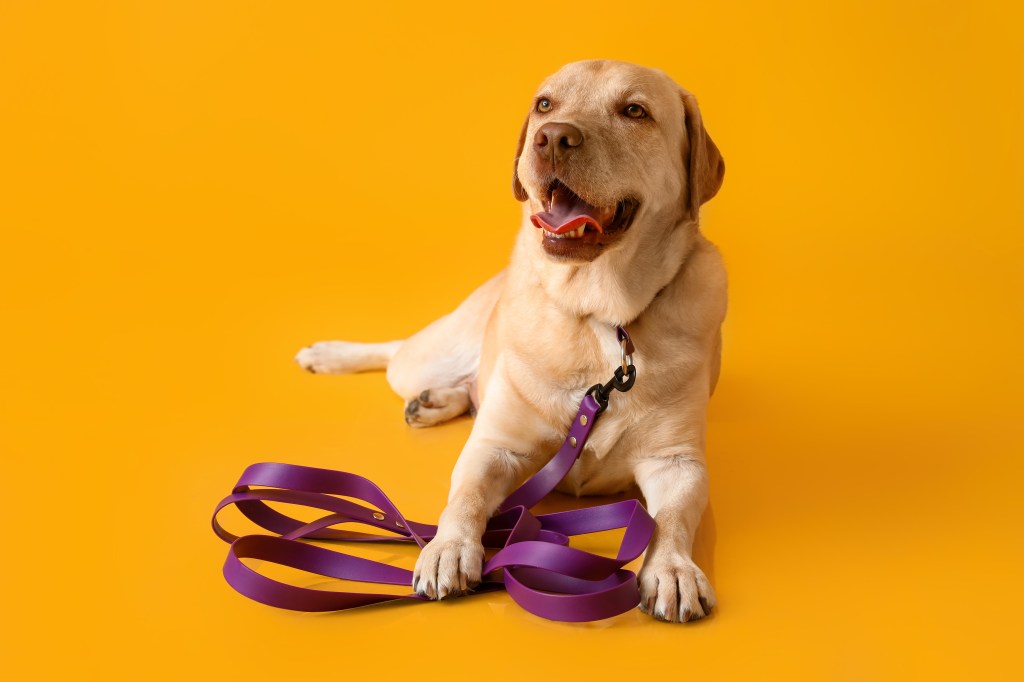
Purina is working on the problem. They, along with Greater Good Charities and RedRover, have instituted what they call the Purple Leash Project. It’s a call to action for domestic violence shelters to have facilities where women can bring their pets with them when they have to go there. (Purple is the ribbon color for Domestic Violence Awareness Month.)

In most places, there are very few shelters for women that are also shelters for their pets. And, sad as it is, lack of shelter for dogs and cats can lead abused women to stay in dangerous situations rather than seeking help. They may treasure their pets as they would children. Or they may worry that their abuser would abuse the animal too for revenge because they left. Some even know that their abuser is prone to violence against animals, having witnessed it.

As one woman put it, “I endured domestic violence for many, many years and due to the fact that I could not leave my dog behind and our local shelter does not accept pets, I stayed. I stayed for over a year and a half.”

Another anonymous woman said, “I cannot thank you enough for taking this issue seriously. I actually cried when I watched your video as no one to date has taken this subject seriously. We have no shelters that allow pets in my area. Please continue to fight for what is right. For some of us, our dogs are everything.”

A woman named Angie added, “I wasn’t expecting I wouldn’t be able to bring Princess. And that was heartbreaking, especially for the kids. I feel proud just knowing other families will be able to keep their pets…that’s just awesome. Because, for us, Princess was everything.”  

This October, in support of Domestic Violence Awareness Month, Purina is offering a Purple Leash Project digital coupon and will donate 50¢ to RedRover for each coupon redeemed through October 31, up to $300,000. I know it’s late in October, but there’s still time to take advantage.

Purina has also joined forces with renowned artist Kristen Visbal to create statues of a woman and a dog, titled Courageous Together. They’ll be making their way around the country in 2024 to raise awareness of why pets are a crucial part of the conversation around domestic violence.

That Hoodoo That You Do

Having the in-laws visit is a situation that is fraught with peril. There’s the frantic pre-cleaning cleaning, the cleaning, the post-cleaning cleaning, and the tidying up. There’s the delicate balance over what foods to stock up on and whether or not to go out for a meal or meals, and other aspects of potential entertaining. And, for those of us who don’t have the luxury of a guest room, there are the sleeping arrangements.

But the particular challenge that I want to discuss is when my MIL visited us.

We cleaned, of course, though perhaps not up to her standards. We loaded the pantry and the fridge with the mineral water, breakfast items, and snacks she preferred, plus more than our usual supply of staples, meat, vegetables, bread, fruit, and beverages.

No guest rooms chez nous, but at the time, we had a pull-out sofa bed. Being at least aware of one or two of the social norms, Dan and I would take the sofa, giving up the bed to Mom. We made sure there were clean sheets, blankets, towels, and such.

But upon seeing the sleeping arrangements, Mom announced, “I won’t sleep in that bed!”

“What’s the matter?” we asked, puzzled.

“That … thing. The one hanging over the bed. It’s a hoodoo. I can’t sleep under that.”

Now, Dan has been to Africa, where he encountered some shamans, and I have been to Jamaica, where I failed to encounter any voodoo priests, but in all our travels, neither one of us had ever acquired a hoodoo. (I did encounter lepers in Jamaica once (or persons living with Hansen’s Disease, as we would say now). (I was there reporting on charity work.) The residents’ cases were no longer active, but they lived apart in their own establishment (aka “leper colony”). They liked singing religious and folk songs, and when I asked if there was anything they needed, one man asked for new guitar strings. But I digress.)

At any rate, no hoodoos were acquired from anywhere.

The suspected hoodoo was a small wicker circle with various objects attached: a piece of red yarn, a bean from the castor plant, a cat whisker, a small bag of polished stone chips. It hung over my side of the bed.

What it was, of course, was a dream catcher.

I have nightmares from time to time. (I also have the usual anxiety dreams about being lost in a hotel, missing a plane, and not being able to find a clean toilet. Now that I think about it, as much as I love it, travel makes me anxious. But I digress again.) During one particularly bad spell, Dan made me the dream catcher. The items attached to it were ones that had special significance to me. The red yarn was a scrap from my mother’s crocheting. The stones were for my love of the semiprecious variety. The cat whisker—well, do I have to explain that one? (No, I never tried to kill anyone with a castor bean. It was a plot point in a mystery novel I was writing, though. But I digress yet again.)

It was a whimsical, tender memento that held no special power but that showed how much concern Dan had for me and how much he wanted to relieve my distress.

What it was not, was a hoodoo. (I’ve never seen an actual hoodoo, so I don’t know what they look like. I guess I can see how a dream catcher could be mistaken for one by someone who has no idea what a dream catcher is but is well up on hoodoos. But I digress some more.)

Our choice was obvious—remove the hoodoo or banish Mom to the sofa bed. It was a tough decision, but we removed the offending object (the dream catcher, that is) and Mom agreed to sleep in the bed. The dream catcher went right back up after the visit ended.

No sense wasting a perfectly good hoodoo.

El Ka-Bong!

Once again, it all started with a cat, of course. I innocently walked downstairs on my commute to my office, and there he was. Toby. For the purposes of this story, aka Mr. Underfoot.

As you may have guessed by now, he was underfoot. I tripped over the wretched little beast and I tested gravity, landing on my ample, padded ass. (There used to be a photo of me on a zipline titled “My Giant Flying Ass,” due to the fact that the photographer was on the ground beneath me. The photo was quickly deleted. But I digress.) My fall would have been inconsequential, if mildly embarrassing.

Alas, there was a chair interrupting my trajectory. Not a nice, soft, comfy chair, either. A solid wood one. And I didn’t hit it ass-first. No, It intersected my fall on the back of my head. I shouted, and Toby took off.

I didn’t quite see little tweeting birdies fluttering around my brow, but I rapidly acquired one of their eggs on the back of my head. (Hence the title of this post. Extra points if you get the reference without Googling. But I digress again.) (Back in the day we used to call this a pump-knot rather than a goose egg. Why? I don’t know. No pumps seemed to be involved. Added digression.)

Now, the problem with being flat on your back at my age and level of decrepitude is that there isn’t a good way to re-achieve vertical status. In point of fact, there isn’t one.

Added to this indignity is the fact that my phone was in my study. (There was no pocket in my nightshirt. I habitually spend the night without a phone within reach. Weird, I know. But I digress yet again.) In order to summon help, I had to make it to my desk.

What to do? I managed to locomote by a crab-like method, scooting along on the aforementioned ass and hoisting myself as much as possible with my arms. Hoist, scoot, repeat. (With occasional pauses for much-needed rest.) There were obstacles along the way—a coffee table, for example, which didn’t provide enough leverage to get me off the ground, damn it. I maneuvered past the comfy chair, which likewise wasn’t any help at that point.

I made it to my desk and nabbed the phone. Did I call 9-1-1? I did not. I called my husband, who works just a mile and a half away. Even though it wasn’t time for his break, he came for me. And helped maneuver me into the comfy chair, where I caught my breath.

“You’re going to the ER,” he announced. I wasn’t inclined to argue. I exchanged my slippers for sturdy shoes and, leaning on Dan, made it to the car. (It seemed ridiculous to call an ambulance. The hospital is also about 1.5 miles from home. But I digress some more.)

At the hospital, I told my tale of woe, leaving out the part about my ass. They solemnly wrote, “tripped over cat” in my chart and wheeled me off for a CT scan (formerly known, ironically, as a CAT scan). Back in my cubicle, waiting for results, the nurse noticed my nightshirt. “How many cats do you have?” she asked.

“Just the one,” I said. “That’s enough.”

“I thought the 12 pictures of cats on your nightshirt might be your own cats. And you’ve got paw prints on your sneakers. You must love cats.”

Not so much at the moment, I thought.

When the CT results came back, they revealed no internal bleeding and only mild scrambling of my white and gray matter, plus some strain on my neck. I hopped into a wheelchair (well, tottered to one) and was on my way home, where I slept for the next 12 hours. Dan poked me regularly to make sure I was still breathing.

So, what did I learn from this experience? First, that maybe I should consider keeping my phone with me at all times. (I suppose I could wear it in a little pouch on a string around my neck. Or convince women’s PJ manufacturers to offer pockets. But I digress for the last time today.) Second, that we ought to move that chair out of the line of passage between the stairs and my study. And finally, that we need to change Toby’s nickname so that maybe it will decrease the time he spends underfoot.

Yeah, right. That’ll work.

An Investment in the Future

My investments are not stocks and bonds and they’re not biological, but they affect the future anyway.

I don’t have any children—I’m the proverbial cat lady—and because of that some people are saying that I’m not contributing to the future of our country or that I shouldn’t get an equal say in how our country is run. And I think that’s just plain wrong.

Some families have no children because they can’t have any. Others don’t want children, for whatever reason. But making the most fundamental right of our society dependent on whether a person has a child is a profound violation of the foundations of our democratic society. Even if you’re a strict constitutional constructionist, there’s absolutely nothing in there about voting being contingent on offspring. (That voting was originally limited to white male property owners is another issue that hasn’t yet been brought up.)

This proposal is billed as “pro-family,” but it’s nothing of the kind. It defines family as only one kind of family and denies rights—not privileges—to the rest. Granting those privileges to children, to be exercised by their parents, contradicts the basic principle of one person, one vote. When those children turn 18, they are welcome, even encouraged, to cast their votes for themselves. But allowing parents extra votes per child is nonsensical.

I wonder how long it will be before the definition of a family is a two-parent (heterosexual) couple with children. Will single mothers get to vote more than once, considering their children? Single fathers? If a family doesn’t include two parents living together, does the voting right automatically go to the mother? The father? These matters are far from clear. And unless I’m mistaken, they would require a constitutional amendment to go into effect. In other words, it’s grandstanding.

But leaving that political nonsense aside, what are the rights that childless people have, or should have, regarding children?

Well, first of all, our taxes pay for schools, parks, lunch programs, Head Start, child tax credits, nutrition programs, Social Security survivors and dependents, Social Security Disability, Medicaid and health insurance, and of course schools, among others. I’m paying into those whether I have children or not.

I don’t resent that. I think such programs are necessary and I’m glad to help fund them. The children and families they help impact me directly and indirectly. They will be my congressional representatives, my nursing home aides, the inventors of devices that will improve my life—every slot that must be filled to make society run, if not smoothly, then at least adequately.

Of course, not all children have the same start in life or pursue noble or necessary functions. I would like to help them do so. The way I can do this is to vote. These issues and functions affect me in very real ways that I have the right and the privilege to vote for.

And I do vote.

Now, let’s talk about schools. Because I don’t have children, many people think I should have no say in what happens in schools. I disagree. What happens in the schools affects me too. I want doctors who have a firm grounding in accepted science. I want bankers who have a keen grasp on economics. And I want government people who have a thorough understanding of civics. That means I have an investment in what goes on in schools and what children learn.

I’ll never be on a school board or even a member of the PTA, but I do get to vote for who’s on the school board and I pay attention to what they do. Now, I’ve got no problem if people want to homeschool their children or send them to private schools, as long as my tax dollars go to the public schools. Public money, public schools.

But don’t try to take away my rights as a citizen or come up with some hare-brained scheme to make my vote count for less. You can say the children are our future all you want.

But they’re my future too. Whether I’ve given birth to any or not.

My Emotional Support Ambient Noise

I need lots of emotional support. I get it from my husband. I get it from my cat. I get it from my bed, my pillow, and my blankets. I get it from my computer and my writing. I get it from music.

But I also get it from my television.

I need noise—some kind of noise—to keep me functioning until I go to bed. After that, I need no noise at all. Even the fans bother me. (Once I had to tell my husband, “Please don’t use power tools after I’ve gone to bed.” It was something I never thought I’d have to say, but there you are. Or there I was. But I digress.)

You’d think that television would produce the kind of noise that wouldn’t let me write. This is true of music, except for instrumental music. Music with vocals is just too distracting. Half the time I want to sing along. The rest of the time, the vocals are just too intrusive. (My theory, supported by neuroscience, is that my brain uses two areas when I hear vocal music—the part that recognizes language and the part that processes music. Combine the two and I have no brain left over for writing. But I digress again. Pedantically.)

Television, however, provides vocals but not much music, at least not the kind that invades my brain. And I don’t even really listen to the voices either, which I turn down not quite to a subliminal level.

How can I avoid hearing the voices? I put on programs I’ve watched a million times before, like Buffy the Vampire Slayer, Inkmaster, Chopped, Mystery Diagnosis, or Forensic Files. They rattle around in the background, but not in my brain. (Occasionally, I glance over at the screen if something really interesting is going on such as the critiques on the episode of Inkmaster when everyone was supposed to tattoo someone’s ass and they all tattooed the flank/hip area. “Doesn’t anyone know where the ass is?” asked Dave Navarro. But I digress some more.)

This may be genetic (the need for ambient noise, not the location of the ass, though come to think of it, that’s genetic too). Anyway, my mother used to crochet a lot, and she often had a baseball game on in the background with the sound turned low. She didn’t even like baseball. I can only assume that it provided her with the kind of comforting background noise that I like. I imagine that football would be too raucous and basketball would be too frenetic. She could have chosen golf, I suppose, but baseball it was, at least during the season.

Anyway, I spend most of my time at home, alone in my study trying to write or edit. When Dan comes home, there’s plenty of noise and it’s attention-grabbing, not ambient. If I’m still writing, he’s quiet, except when he goes in the living room and watches TV there, usually the Screaming and Explosions Channel.

So, why do I think of my programs as emotional support? The house is pretty quiet when I’m alone here, except for the faint clicking of my keyboard and the cat, who pussy-foots and busy-noses when he’s not asleep. Ambient noise keeps me from feeling lonely and imagining that any tiny sound is an impending disaster. Loud sounds made by the cat signal actual disasters. My ambient noise grounds me and marks the passage of time. And it’s a whole lot more soothing than power tools.

Lost Kitty Tale

Once there was a kitty who chose us as her family. My husband had seen her around the neighborhood, and one day she came trotting through the flowerbed up to our door and asked to be let in.

Dan instantly wanted to keep her. She was a young-ish calico, and he knew how much I love calicos. But I wasn’t sure. Our most recent calico, Julia, who was the most beautiful cat in the world (or so she told us) had died just a little while before, and I didn’t think I was ready to give my heart to another one.

Then fate stepped in. We saw a flyer in our neighborhood for a missing calico cat. The address was very close to us. So we called the people who put up the flyer and invited them over to check out the stray.

At this point, any normal person would have held out the cat and said, “Is this her?”

But I’m not (as you probably have noticed) a normal person. I left the cat in the bathroom, which is where we keep stray cats until they pass a vet check.

I approached the guy, the putative owner. “So you’ve lost your cat.”

“Yes,” he said.

“A calico.”

“Yes.”

“Is she thin or chonky?”

“Medium, I guess.”

“What color are her eyes?”

“Yellow.”

I continued the interrogation.

“What color is her nose?”

“Pink.”

“What’s her chin look like?”

“I don’t know. Nothing special, I guess.”

“What color are her feet?”

“White….” (He was beginning to catch on to the not-normal thing.)

He was batting less than 50 percent. Her nose was pink and her feet were white, which could have been true of any cat. But there were telltales. The stray was slender, not medium. There was a slight gray smudge on her chin. She had one green eye and one yellow, which was a dead giveaway.

At that point, I brought the cat out.

“No,” the neighbor said, disappointed. “That’s not her.” And he sadly left.

That was the moment that I knew that not only had she chosen us, but I had chosen her too.

We named her Dushenka (Russian for “Little Soul”) and she stayed with us for 12 years. She still escaped and went walkabout on occasion, just to keep her hand—er, her paw—in, but she always came back to us. We were hers.

Fur-Babies and the Other Kind

Lots of people refer to their pets as “fur-babies.” Other people think it’s disrespectful to human babies and their parents. I’m here to weigh in on the debate about which kind of baby is better.

I’ve had cats for many years. I almost never refer to them as fur-babies.

I do treat them like babies, however. I babble baby talk at them. I cradle them in my arms like babies (if they let me). I give them cutesie nicknames (like ToTo BooBoo). I’ve never had to bottle-feed a kitten, but you’d better believe I would. And I’ve even zerberted a cat whose belly had been shaved. It made a “foof” noise. (Autocorrect wanted to change “zerberted” to “perverted.” It has a point. But I digress.)

When I married, all I could offer my in-laws were grand-kittens and grand-puppies. It wasn’t that we couldn’t have human babies. We just never did. (Fortunately, Dan’s brother took care of that duty, and his kids have supplied assorted great-grands, four of whom are even close enough to visit Mom Reily. She has cats, too. I don’t know if she calls them fur-babies. But I digress again.)

One thing that people who do call their cats (and maybe their dogs) fur-babies do is dress them up in precious little outfits. I can’t approve of it. I’m with cat guru Jackson Galaxy on that issue. Maybe at Halloween, just for the day, but forget about little Easter outfits. Cats are not known for appreciating bonnets. I think they’re almost guaranteed to shred them, and there goes your investment. Dogs may be more accommodating, but they just look goofy (or Goofy).

Many comparisons can be made between baby types. Both kinds have their own little personalities, play adorably, and are great to cuddle. Both human babies and fur-babies are endlessly distracting and good for some laughs.

It takes a couple of years to potty-train a human baby and get them to eat people-food. Kittens come practically litter-trained and are able to eat kitten-food as soon as they’re old enough to leave their mama. (They can also eat people-food, though it’s not advisable. But I’ve had cats that have eaten and enjoyed pumpkin, corn, bread (one would tear open a loaf of bread and eat a couple of slices, making croutons of the rest), doughnuts, and chocolate bars (yes, yes, I know, those are bad for pets, but Anjou suffered no ill effects.) But I digress some more.)

Fur-babies are superior to human babies because you don’t have to save for their college or worry about them boosting cars or getting into any drugs other than catnip. Throughout their lives, it’s possible to pick them up and hold them (unless we’re talking St. Bernards).

Human babies are superior to fur-babies because, after a certain amount of time, they can talk and tell you what’s causing them distress. (Until then, they equal fur-babies in yowling and howling.) They do cool things like graduate from high school and college and get married. (Both fur-babies and human babies are eventually capable of producing offspring, of course. I don’t know of any trap-neuter-release strategies for human babies. That would just be wrong. But I digress yet again.)

I must admit to preferring fur-babies. But human babies are superior to fur-babies in one major regard—you can expect them to live a good long time (barring unfortunate circumstances, of course). You’re lucky if your fur-babies live 20 years—most don’t make it that long.

If you have fur-babies, you must prepare yourself for losing a being that you love dearly. I won’t say that you love them as much as you’d love a human baby, but their loss does leave a hole in your heart that even another fur-baby can’t totally fill. You may swear that you’ll never get another one, but somehow you always do, even knowing that that fur-baby’s life is limited too. They’re addictive that way.

We put ourselves through it again and again for the love of fur-babies. Their lives may be limited, but love and sorrow balance out in some equation that’s emotional, not mathematical. Love never is.

Bonus Post: Discovering My Mother

MuzzPMI’m not a mother, and I don’t play one on TV.

But my mother was one (obviously), and with Mother’s Day here, I’ve been thinking about her.

When I was a kid, my mother was a part of our loving, stable family. And at that time, that was all I needed to know. She was very much in my father’s shadow, as he was a larger-than-life, memorable character.

Here are some things I learned about her later.

She was an exceptional caregiver. My father had multiple myeloma for over a decade, and she was always there when he needed her.

She had needs too. She knew she was doing a good job taking care of my father, But she wanted someone else to tell her that, to validate her.

She was not a great cook. Except that to my dad, she was. He was a meat-and-potatoes guy and she gave him exactly what he liked, when he liked it, and how he liked it. Since then I’ve eaten a lot fancier, but I still say she made the best grilled cheese sandwich ever. With white bread and Velveeta.

She was lots of fun to travel with. I understand from other people that they would not even consider traveling with their mothers. We went to Brazil together, and Ireland, and many places around the U.S.

She tried new things. In Brazil she tried local food and drink. If she didn’t like it, she gave it to me or disposed of it, but at least she tried it first.

She was a devoted Christian, but not a bully about it. Once we were in a group and someone remarked that God was a woman. I cringed a little, but what she politely said was, “Oh? Why do you say that?” She told her church ladies that of course she would go to a synagogue or temple if asked. She explained, “How can I expect them to listen to me if I won’t listen to them?”

She was generous. She donated to the Humane Society and other charities. She gave away most of the things she crocheted, to friends or to church bazaars.

She thought globally, even without the Internet. She had pen pals around the world with whom she traded crochet patterns and family news. Sabita, her friend from India, came to visit and her whole family stayed at my mom’s house.

Most people called her sweet, especially when she was older. And she was, but that misses her complexity. She could be determined – even stubborn – and whimsical. She was down-to-earth and creative. She loved bass voices and yellow roses. She was sentimental and believed, at least a little, in ESP. She gave stale candy to trick-or-treaters she deemed “too old.” She never minded my father’s incessant flirting or that his nickname for her was “Old Squaw.”

And she was a better shot than my father.

When she couldn’t sleep at night, she would sing herself to sleep with hymns. Before she died, she made my husband Dan promise to sing “How Great Thou Art” at her funeral. And he did.

There are lots more stories I could tell. Why all my friends and I called her “Muzz.” How the campfire scene in Blazing Saddles cracked her up. How she would say, “Just a suggestion,” because she didn’t want to meddle in my marriage. Why she named me Janet. How she told our friend John that dying took too long.

I hate Mother’s Day and all the gooey cards and sales pitches for chocolate and diamonds. But I still love my mother, Ella Delena Rose Coburn, and will always miss her.

P.S. The picture of my mother was taken by dear friend and artist Peggy McCarty. I hope she doesn’t mind my using it.

Saga of the CPAP

“You want me to put KY jelly up my nose?” I asked.

“Basically, yes,” the tech replied.

It was my first appointment getting a CPAP machine. The tech who fitted the mask warned me of possible nasal irritation and suggested I use a “non-petroleum personal lubricant.” Hence my question.

For those not in the know, CPAP machines are the best solution for sleep apnea, which occurs when you stop breathing multiple times during the night. It can be just as serious as it sounds. Snoring and feeling exhausted all day (which I had) are some of the symptoms, and being overweight is one of the contributing factors (which I must admit to).

I was diagnosed after going through a sleep study with assorted wires glued all over my head and body. I had to sleep like that, if I could. I brought along a stuffed bunny to help. (The tech who applied the wires quizzed me—did I know what EKG meant? Yes, I did. Did I know what EEG meant? Yes, I did. Did I know what EGG meant. “Egg,” I replied, evidently the first person ever to get it right. But I digress.)

It was thus determined that I do indeed have sleep apnea. (Or at least hypopnea, a slightly milder version, from the roots “hypo” for low and “pnea” for breathing. Think “hypoglycemia” and “pneumonia.” Now I digress pedantically.)

I was then fitted for the CPAP machine, which consists of a box and a mask. The box blows air rhythmically into your nose while you sleep, thus forcing you to breathe. The mask channels the air into your nose, along with the smell of whatever you had for dinner, if your bedroom is just above the kitchen, which ours is.

The first CPAP machine I got had a tattletale chip in it to record whether I was using it or not. They were in awe when they discovered that I used it even when napping.

Actually, my husband has the full-blown version of sleep apnea and started using a CPAP before I did. His snoring was prodigious as well. He could wake both of us when he really got going. The two of us together created a racket that would raise the dead, if we didn’t both die from sleep apnea first.

He has more trouble with his mask than I do, and his problem can’t be solved with a popular sexual aid. For some reason, probably the stress he puts on them, the straps get tangled, and the plastic parts break. He’s always asking me to untangle or tighten the straps. Sometimes I have to adjust them in the middle of the night when I can’t see well. Inevitably, I velcro the straps to his hair, which is curly enough to be the loops to the hooks.

We take our CPAPs with us whenever we travel. It’s a hassle. The air pressure machine, the hose, and the mask take up half the space in a carry-on. There are smaller ones, including one that’s no bigger than a small bandaid but is way too expensive. Besides, I’d have to go through another sleep study to get a prescription for a new CPAP. My bunny’s up for it, but I’m not.

I Can’t Do That!

There are some things I just can’t do or at least am very, very bad at. There are the obvious ones like flapping my arms and flying or walking on water. There are things I just never learned to do like playing the harmonica or doing the hula. But there are also things that I simply can’t do, don’t want to do, or do miserably badly.

The most annoying one is in that last category—singing. Oh, I do sing, mostly alone in my own house at the top of my voice. I’ve tried singing in other places. I was in choir in junior high and was always last chair or next-to-last chair. One other poor singer and I swapped places regularly. (I must mention that taking choir meant that I was part of a heinous concert in which 40 white kids with no rhythm or soul whatsoever performed “Sittin’ on the Dock of the Bay.” But I digress.) I will sing in a large audience where everyone else will drown me out. I once even took singing lessons, which had no effect whatsoever. The problem is that I may start roughly on key, but over the course of the song, I sing flatter and flatter until by the end I’m in some other key altogether. I desperately wish I could sing well, though.

(Once my husband, in an effort to cheer me up, said, “There are people who sing worse than you.” “Name three,” I replied. Long silence. Then he said, “That wheelchair guy.” I was appalled. And I didn’t know whether I was more appalled that he couldn’t name Stephen Hawking or that he couldn’t think of two more people. I mean, he could have mentioned Shel Silverstein or my sister. But I digress again.)

Another thing I’m not reliably capable of is riding carnival rides. I can handle most of them okay, but there are ones that I absolutely refuse to go on. First are roller coasters that flip you upside down. The second are those towers that spin and then drop the floor out from under you as you’re pasted to the walls. I understand the physical principle of centripetal acceleration that keeps you from falling out, but they still look iffy to me. Maybe I’m just not confident in the maintenance and repair of carnival rides.

(For a long time, I was leery of Ferris wheels, because I had nosebleeds as a child and my mother wouldn’t let me go on them because she feared the height would bring one on. This despite the fact that every nosebleed I ever had was when I was lying in bed, which was at a height of only a couple of feet off the ground. (I do admit that the idea of having a nosebleed when the wheel stopped at the top and dripping blood on everyone else below me was pretty appalling.) As an adult, I have ridden the ride and never experienced a nosebleed. But I digress some more.)

And then there’s eating liver and onions. I’m not fond of that many onions in one place, but that’s not the problem. It’s the texture of the liver, grainy as well as meaty. I simply, literally, gagged on it. It wouldn’t get past my uvula. (That’s apparently its only function—guarding against liver.) After several valiant attempts, both my mother and I simply gave up trying. (I can eat other foods with peculiar textures. Octopus. Gizzards. Tongue. Snails. In fact, once when I was going on a business trip, I had a hint that the boss, who used to order dishes for everyone at the table, would present us all with escargot. I went to a local restaurant where no one knew me and ordered some before we went, just to see if my uvula would object. I found that snails go down quite easily. They have the texture of gizzards, which don’t bother me, and taste like scampi since both are served in garlic butter. And yes, the boss did order escargot for all. But I digress yet again.)

That’s all for this week. I’m going to try again to flap my arms and fly. Maybe sing while I’m doing it. But I’m not going up on the roof to experiment. That would be crazy.