Category Archives: food

Paczki-Palooza

It’s Lent. So why are there three dozen paczki in my freezer?

As usual, this story begins with my husband.

(Actually, let’s start a little further back. If you’re not familiar with paczki (pronounced ponchkee, paunchkee, etc., depending on where you’re from), they’re Polish donut-like devices filled with cream, curd, or jam. They’re made and eaten in the lead-up to Mardi Gras (Fat Tuesday), the day before Ash Wednesday, the start of Lent. They were allegedly invented when an annoyed cook threw a ball of dough at her husband, and it landed in the fryer oil instead. I totally believe this origin story, knowing how annoying husbands can be. But I digress.)

The next thing to know is that Dan works in a store that has a bakery section. For the last few weeks, Dan has been bringing home boxes of paczki—blueberry, raspberry, lemon, and Bavarian cream.

But this week, as Lent rapidly approached, the bakery started marking down the paczki. And Dan can’t resist marked-down baked goods. He keeps me supplied with muffins (my usual breakfast). He’s the carb-peddler. He brings home French bread, Italian bread, sourdough bread, coffee cakes, apple caramel pies, and nearly anything else made with flour, eggs, and butter. (Fortunately, he doesn’t bring home game-day cookies shaped and decorated like little footballs. Or Jack-o-lantern cookies, for that matter. But I digress again.)

So, naturally, he brought home NINE boxes of paczki this week. (He did call and warn me, “I’m going to be bad,” which can mean nearly anything. But I digress some more.)

I’ve been stuffed with paczki for the last couple of weeks and couldn’t bear the sight of that many more. So we had a paczki party this week. Now, for most people, this would involve inviting over a bunch of people, making a huge pot of coffee, and chowing down.

But no. We couldn’t organize a party like that in the time it would take for the pastries to go stale. (When we do have a party (which isn’t very often), we have it at a Chinese restaurant. And paczkis would not really be welcome there. Still more digression.)

What we did have was a box of small plastic zipper bags. (We always have them on hand because Dan always takes peanut butter sandwiches to work with him, for his lunch and his breaks. I would get tired of peanut butter day after day, but he feels, as the old joke goes, “How can you ever get tired of food?” But I digress yet again.)

We sat down with our stack of paczki boxes and our box of bags and began stuffing, one paczki per bag. We licked the sugar off our fingers and stuffed all the bags in the freezer. When we get a craving for a paczki (which may not be until the run-up to next year’s Lent), we’ll just pull one out of the freezer and indulge. Or maybe Dan will take one for lunch. Or maybe I’ll give up on breakfast muffins.

I just hope there are no baked-goods-related holidays coming up for a while. I’m in sugar shock already.

Mom’s Kitchen

My parents were totally not foodies. My father was a meat-and-potatoes eater, and my mother was a meat-and-potatoes cook. This was a marriage made in culinary heaven.

My mother’s porkchop, however, looked nothing like this picture. Well, the mashed potatoes did, though the gravy was her amazing sawmill gravy, a version that was popular among all our relatives. (Once when we were visiting Cousin Addie and Cousin Jim (actually ancient relatives who may have been cousins to our grandmother (or even great-grandmother. We were pretty lax about genealogy), Cousin Jim looked up from his biscuits and asked, “Who made the gravy?” “Why?” asked Cousin Addie, fearing it displeased him. “It’s good, he said. “Thicker than usual.” My mother had made it. But I digress.)

However, Mom’s plate of pork chops would have looked quite a bit different. The pork chop would be thin, simply floured, and fried until it was tough. (The pork fat would go in a coffee can on the back of the stove to use instead of butter or oil when cooking eggs. But I digress again.)

The zucchini would never have appeared on the plate, not even during the season when neighbors leave orphan zucchini on each other’s doorsteps like oblong green babies.

The asparagus would have come in a can. All vegetables did, except soup beans, which I ate with ketchup. (I thought I hated asparagus. I’d only had the slimy, canned variety, though. When a boyfriend made me fresh asparagus, I changed my mind. But I digress some more.)

She also made dishes that my schoolmates likely never had, such as pressure-cooked tongue, boiled chicken hearts and gizzards, and cornbread with no sugar (baked in a cast iron mold that looked like ears of corn). It’s considered “white trash” cooking now, but at the time it was just supper.

Lunches were grilled cheese sandwiches—Velveeta on white bread— or bologna and cheese on white bread. Subs were made of lunch meat, no lettuce, tomato, olive oil, or mayo. We got them from school fund-raising drives.

Chinese food came from those two stacked cans. Pizzas came in box mixes, a special treat. Desserts were from box mixes, too, or the slice-and-bake variety. The only exception was Mom’s lemon meringue pie, my father’s favorite, homemade, and always magnificent.

One thing I can say about my mother’s cooking is that there was always plenty of it, and leftovers as well. I was shocked when I had dinner at a friend’s house once, a family of six, and saw how fast they ate to be sure of getting enough and how they fought over the last dinner roll.

I was perfectly happy with my mother’s cooking at the time. It wasn’t until much later that I was exposed to a wider culinary spectrum and experienced beef stroganoff (which my father once described as “slop”), egg drop soup, and anything sautéd. (When I finally encountered these foods, it would be said that I had “got above my raising.” But I digress yet again.)

So, yeah, I may have become fond of sushi, calamari, hot-and-sour soup, whole wheat bread, Havarti and gouda cheese, enchiladas, and tiramisu.

But I still love grilled American cheese on white bread. My husband tries to make it for me as a special treat. But it’s not the same when anyone makes it besides Mom.

Don’t Harsh My Buzz

Haters gonna hate. But I wish they wouldn’t, at least when it comes to personal preferences.

At this time of year, there is one major group of haters: those who hate pumpkin spice, who think it ought to be abolished. Who make fun of the people who enjoy a nice pumpkin spice latte.

I don’t get it. I love cinnamon, ginger, nutmeg, allspice, and cloves. I’m especially fond of cinnamon and ginger. In fact, I love them so much that I believe all pumpkin pies should be made with more of the spices than are called for in the recipe so as not to be overwhelmed by the pumpkin, which is, after all, not all that flavorful.

And yet some people hate on pumpkin spice “everything.” I don’t often drink coffee and never lattes, so I don’t know exactly how a pumpkin spice latte tastes. But my bet is that it doesn’t contain any actual pumpkin flavor. It’s got to be doctored with only the spices. I don’t see anything wrong with that. Obviously, there’s a market for it, or Starbucks et al. wouldn’t be offering it. And offering it in September is totally legitimate. September is the gateway to fall.

(Except this year, of course. September is meant to herald the onset of sweater weather. This year, it’s still the month of boob sweat rash. But I digress.)

There are lots of other things made with pumpkin spice that are delightful as well. There are cakes and cookies, candy and cereal, bread and pancakes, soup and cheesecakes, muffins and doughnuts, macarons and popcorn, protein shakes and yogurt. But if you hate pumpkin pie spice, you can simply not buy them. You don’t have to declare how much you dislike them. As some of my friends say, “Don’t yuck my yum.” (We old hippies say “Don’t harsh my buzz,” hence the title of this post. Other formulations include “Don’t harsh my mellow,” and “Don’t be a buzzkill.” But I digress again.)

There are other things that people hate on. Country music. Rap music. Superhero movies. Horror movies. Romance novels. Science fiction novels. Et endless cetera.

Some of these impinge on me personally. I love country music (at least classic country and what they call Americana these days). Yet when a person says that they love country, people assume they’re an ignorant, racist redneck. I love science fiction, but I’m not a teenage, basement-dwelling geek. Those are stereotypes. Like most stereotypes, there’s a reason they exist. And also like stereotypes, they don’t apply to everyone.

Basically, I think all this hate would lessen if more people understood Sturgeon’s Law, which says, “90 percent of everything is crap.” (Sturgeon is Theodore Sturgeon, a science fiction author. One of the Big Names, at least of the old guard. But I digress some more.)

What Sturgeon meant is that 90 percent of anything you’d care to name is crap: 90 percent of country music is crap; 90 percent of rap music is crap; 90 percent of science fiction is crap; 90 percent of romance novels are crap; and so on. And 90 percent of coffee drinks are crap, I suppose.

That leaves 10 percent of everything that isn’t crap—indeed, it may be extraordinary. But the catch is that you have to wade through the 90 percent of crap to get to the 10 percent of great. And most people aren’t willing to wade through the crap to get to the non-crap. It’s much easier just to dismiss the whole 100 percent as crap.

All I’m really asking is that you leave the pumpkin spice lovers alone. Don’t yuck their yum. If you don’t like country music, you don’t have to go through the 90 percent to get to the 10 percent that I love. Don’t harsh my buzz.

Life would be a lot more pleasant if everyone would simply refrain from yucking yums and harshing buzzes.

Is that too much to ask?

I Can’t Do That!

There are some things I just can’t do or at least am very, very bad at. There are the obvious ones like flapping my arms and flying or walking on water. There are things I just never learned to do like playing the harmonica or doing the hula. But there are also things that I simply can’t do, don’t want to do, or do miserably badly.

The most annoying one is in that last category—singing. Oh, I do sing, mostly alone in my own house at the top of my voice. I’ve tried singing in other places. I was in choir in junior high and was always last chair or next-to-last chair. One other poor singer and I swapped places regularly. (I must mention that taking choir meant that I was part of a heinous concert in which 40 white kids with no rhythm or soul whatsoever performed “Sittin’ on the Dock of the Bay.” But I digress.) I will sing in a large audience where everyone else will drown me out. I once even took singing lessons, which had no effect whatsoever. The problem is that I may start roughly on key, but over the course of the song, I sing flatter and flatter until by the end I’m in some other key altogether. I desperately wish I could sing well, though.

(Once my husband, in an effort to cheer me up, said, “There are people who sing worse than you.” “Name three,” I replied. Long silence. Then he said, “That wheelchair guy.” I was appalled. And I didn’t know whether I was more appalled that he couldn’t name Stephen Hawking or that he couldn’t think of two more people. I mean, he could have mentioned Shel Silverstein or my sister. But I digress again.)

Another thing I’m not reliably capable of is riding carnival rides. I can handle most of them okay, but there are ones that I absolutely refuse to go on. First are roller coasters that flip you upside down. The second are those towers that spin and then drop the floor out from under you as you’re pasted to the walls. I understand the physical principle of centripetal acceleration that keeps you from falling out, but they still look iffy to me. Maybe I’m just not confident in the maintenance and repair of carnival rides.

(For a long time, I was leery of Ferris wheels, because I had nosebleeds as a child and my mother wouldn’t let me go on them because she feared the height would bring one on. This despite the fact that every nosebleed I ever had was when I was lying in bed, which was at a height of only a couple of feet off the ground. (I do admit that the idea of having a nosebleed when the wheel stopped at the top and dripping blood on everyone else below me was pretty appalling.) As an adult, I have ridden the ride and never experienced a nosebleed. But I digress some more.)

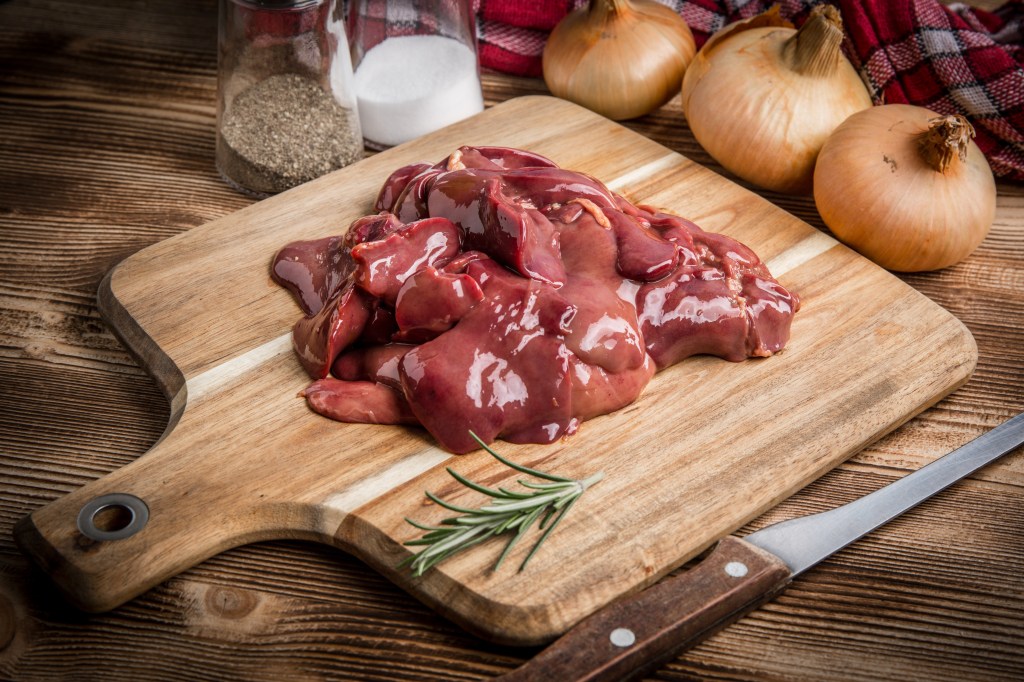
And then there’s eating liver and onions. I’m not fond of that many onions in one place, but that’s not the problem. It’s the texture of the liver, grainy as well as meaty. I simply, literally, gagged on it. It wouldn’t get past my uvula. (That’s apparently its only function—guarding against liver.) After several valiant attempts, both my mother and I simply gave up trying. (I can eat other foods with peculiar textures. Octopus. Gizzards. Tongue. Snails. In fact, once when I was going on a business trip, I had a hint that the boss, who used to order dishes for everyone at the table, would present us all with escargot. I went to a local restaurant where no one knew me and ordered some before we went, just to see if my uvula would object. I found that snails go down quite easily. They have the texture of gizzards, which don’t bother me, and taste like scampi since both are served in garlic butter. And yes, the boss did order escargot for all. But I digress yet again.)

That’s all for this week. I’m going to try again to flap my arms and fly. Maybe sing while I’m doing it. But I’m not going up on the roof to experiment. That would be crazy.

Chopped Rules!

I love the Food Network show Chopped. It’s calming. It is a competition show, but there are no hosts or contestants who yell or sound like wrestling announcers. (I’m looking at you, Guy Fieri.) They don’t even provide recipes. (That’s okay with me since I hardly ever have to make dinner with pork bung, stinging nettles, and green bean ice pops.) I do pick up a few tips: When they say “lacks seasoning,” they mean salt. (This is something my husband doesn’t understand.) You can glaze turkey with tangerine juice. (I used orange juice.) You can’t plate the way a normal person does. It has to be piled up like food Jenga. But I digress.)

There are everyday rules that apply to the show…well, every day. If you get blood on your plate, the judges won’t eat it (unless blood is one of the basket ingredients, which is not altogether impossible). Honor the ingredients (no, I’m not sure what that means either—bow to them, maybe?).

But beyond the official rules, there are “rules” that ought to be Rules. These are the things that a contestant should absolutely not do.

Don’t try to make risotto or polenta. Most of the time there’s not enough time (the rest of the time, there’s too much). If there’s not enough time, risotto will come out so al dente that the dente means tooth of the chipped variety. If there’s not enough time for polenta, you’ll have grits. Also, they both require a lot of attention—adding liquid and stirring—so if you want to make anything else (you do), it won’t come out right either.

Don’t try to make panna cotta. There just isn’t enough time for it to set up, even in the blast chiller. You might as well just put some strawberries in and say you’re serving cold fruit soup for dessert. Cold fruit soup is a thing and a yummy one at that.

Don’t use truffle oil. You may be tempted. After all, truffles are a high-end ingredient. But truffle oil overwhelms anything it touches. (Another common trap is using extracts. Almond. Amaretto. Anise. Rose water (which will make your dish smell and taste like soap). You should probably take the hint when you learn that rose water is used for make-your-own lip gloss (if you’re into that kind of thing). But I digress some more.)

Beware of garnishes. In the world of Chopped, NFG means Non-Functional Garnish. (Never mind what it means in the rest of the world.) Basically, it means any garnish you can’t eat or wouldn’t want to. They’re put on a dish just to make it look pretty. Think parsley, which used to garnish everything and now simply isn’t seen. Whole ghost peppers added for color. Even the little mint leaves that, like parsley on dinner plates, used to decorate any dessert are now out of vogue.

Beware of the oven. Ovens are tricky. They will never (I repeat, never) cook that puff pastry in time. Or the phyllo dough. Or the croissants. Probably not even the cookies, and definitely not the cupcakes. (The cupcakes will also not release from the pan, which means you have to dig out the tops and call the result “deconstructed.”) On the other hand, if you put streusel in the oven, it will burn. And if you keep opening the door and peeking in the oven, you’re toast, so to speak, though your bruschetta won’t be.

How do I avoid these pitfalls in my own daily life? That’s easy. I make peanut butter and jelly or bologna and cheese sandwiches, or microwave some soup. (If you’re thinking Dan would object to this, he doesn’t. My efforts are for lunch. He does the dinners. Except when I have to make the cornbread to go with the cowboy beans. But I digress yet again. I guess I’ve digressed a lot this week if you’re keeping score. I just can’t help myself. Just like I can’t help myself when a cooking competition comes on. I’ll even turn off InkMaster to watch Chopped.)

Yes, No, and OMG NO!

Sometimes I’m like a toddler who turns up her nose at any new food. Sometimes I’m like a teenager who will eat anything that doesn’t move. But I have my rules.

“Yes” foods. I will eat (and have eaten) sushi, octopus, eel, snails, and goat. (I first ate sushi when it was impossible to refuse, hand-made by my martial arts instructor’s wife.) I even once ate a raw oyster, though it just tasted briny. Now that I’ve at least tried it, I have no desire to do it again. It was the texture I objected to, and raw oysters pretty much have only one texture—slimy. (You may say that octopus, eel, and snails all have a slimy texture, but not if they’re prepared correctly. Octopus can be gelatinous or rubbery if you under- or overcook it, but is tender and toothsome if cooked for the right length of time. Eel is great when barbecued. Snails have the texture of chicken gizzards, which I learned to eat as a child, and have a flavor just like scampi because they’re served in garlic butter. But I digress. At length.)

“No” foods. My husband trained himself to like okra just so he could say he’ll eat anything. Except veal. He has humanitarian concerns about veal. I say good for him! But not good for me. I won’t eat okra no matter how it’s cooked. I just can’t get over the combination of slimy and hairy textures of okra.

Mustard is another of my nos. I had to tell my husband a reason I didn’t like it so he would stop bugging me to “just try it.” I told him that it tasted metallic. I did manage honey mustard dressing that I couldn’t avoid on a salad, but I didn’t enjoy it. (I once had dinner at a sushi restaurant with a group of people. The high point of the evening was when a husband asked his wife, “Do you really want me to tell the kids you wouldn’t even try it?” Her glare was positively poisonous. But I digress some more.)

Brussels sprouts were a big no for me until I had them in Slovenia. I didn’t know enough Slovenian (none, that is) to ask for the recipe, but they were delicious. We’ve tried roasting them and sprinkling them with parmesan cheese, and they’re tolerable that way, but I still long for the Slovenian version, whatever it was.

Most of my aversions are governed by texture. For instance, I never cared for egg salad because it’s too often mushy. (One time I ate mushy egg salad because it was impossible not to. My sister’s MIL served the sandwiches to us as we were passing through the area. My husband finally made it agreeable by the simple technique of making it chunky rather than pureeing it with an immersion blender or, as we refer to it, a motor boat. But I digress again.)

“OMG NO!” food. Liver-and-onions is the one food I can’t eat no matter how it’s prepared or how I try. And boy, have I tried. My mother used to serve it pretty regularly when I was a kid. She finally gave up on trying to get me to eat it when I literally (not figuratively) gagged on it, which upset the rest of the family’s dining pleasure. I feel that since I actually did try it in childhood, I’m under no obligation to try it again. I know tastes can change with age, but gagging isn’t likely to. I just hope I never get into a situation where the only polite thing to do is to try it.

Good Ol’ St. Pat

By some bizarre circumstance, I’m able to post this on both Sunday, as I usually do, and St. Patrick’s Day. Here’s a list of what I’m not going to write about: green beer, four-leaf clovers, or shamrocks (those were practically the only visuals I saw when I was looking for an image to go with this post.) I will not be writing about St. Patrick and how he was really a Roman and chased the snakes out of Ireland. I’m not going to write about the Fighting Irish of Notre Dame.

No, I’m going to talk about Irish food. The picture you see here is shepherd’s pie, meat and vegetables and gravy topped with mashed potatoes. It’s so good that it’s made its way into our food repertoire. Except that traditional shepherd’s pie is made with lamb. We make it with beef, which technically makes it a cottage pie, and often with mushrooms. Then we sprinkle cheese on top and run it under the broiler because cheese.

(Actually, I had shepherd’s pie a number of years ago in a restaurant in Michigan. They didn’t serve it in the traditional way. They made three scoops of it on a plate, which looked disturbingly like triple breasts. But I digress.)

When Dan and I went to Ireland a couple of years ago, I told him not to expect the lousy cuisine that Ireland and England are said to produce. I knew better. Ireland, after all, is surrounded by water and has lakes and many a river running through it as well. I knew we were in for some good seafood.

We had fish and chips pretty often, supplemented with beautiful, succulent pink salmon, either fresh or smoked (which is also called lox around here). But the best seafood I had was a luscious, juicy, huge bowl of mussels I had in a small place in the seaside town of Dingle.

Irish breakfasts are amazing, too. They feature bacon, sausage, eggs, potatoes, beans, soda bread or toast, broiled tomatoes, mushrooms, and white or black pudding. Sometimes scones with jam and clotted cream (which I always thought sounded gross, but is really like Irish cream churned to near but not quite butter. But I digress again).

Nor do the drinks suck. There’s Irish breakfast tea (which I forgot to mention when I described breakfast), darker and heartier than English breakfast tea. Then there’s beer. Dan drank Guinness, which is served warm. I don’t care much for warm beer, so I learned that if you want cold beer, you have to ask for a pint of lager, which is what I did.

There’s also Irish coffee made in the traditional manner, with Irish whiskey, sugar, and real whipped cream on top. (I’ve found that if you ask for Irish coffee in an American bar, what you sometimes get is coffee with Bailey’s Irish Cream in it, which is not the same at all. (If I can get a real Irish coffee in a restaurant (I’ve learned to ask first how they make it), I sometimes have one for dessert. But I digress some more.) When we toured the Tullamore Dew distillery, we had the real thing.

So, what are we doing for St. Patrick’s Day (besides avoiding Irish bars where college students end up vomiting green beer in the gutter, I mean). Well, I think I’ll ask Dan to make a shepherd’s pie, then kick back with some Guinness for him and Harp Lager for me and listen to some Irish music or watch The Commitments. Wear Guinness and Sean’s Bar t-shirts. Maybe look at the photos from our trip.

We’ll do it just for the craic, as they say in Ireland.

Munchy Memories

Food is one of the most powerful ways to evoke memory. Just the smell of biscuits or chocolate chip cookies can take you right back to your mother’s or grandmother’s kitchen. Food is a trigger—a pleasant one—that helps you recall warm feelings and better times. In other words, food and the past are intimately intertwined. I have lots of that kind of food associations.

When my husband’s friend John and I used to go on what we called a “hot date,” we would invariably go to a diner and then thrift shopping. Maybe a bag of M&Ms to share for dessert. (My husband knew all about this and approved. He knew we wouldn’t take “hot date” literally. He also doesn’t mind when I joke about the dancing boys coming over when he’s away or my lover Raoul. But I digress.)

There’s a very retro diner in a nearby suburb called the Hasty Tasty, so that’s where we usually went, though sometimes we’d hit Waffle House or a small, family-run Mexican place. The Hasty Tasty has booths, waitresses who don’t greet you with “Hi, I’m Amy. I’ll be your server today,” and daily specials, my favorite of which is the chicken-n-dumplings on Thursdays. I haven’t been there in a while since John died, but I remember him and our dates fondly. I miss him even more than the Thursday special.

My Aunt Thelma owned a small hotel right across from another diner in Campton, KY. This was back in the 70s, so it was authentically retro, with the counter-n-stools, jukebox devices at every seat, and a pinball machine in the corner. They made a mean burger, grilled on a flattop, of course, and their chili was amazing. Along with the penny candy in the general store that Aunt Thelma also owned, the diner features in my favorite memories of Campton.

Comfort food helps you cope with feelings of depression and loneliness. That’s the magic it wields. I have many types of comfort food. Mashed potatoes (a common comfort food for many), mac-n-cheese, and chicken fried rice all somehow make me feel better.

In this part of my life, I’ve become a semi-foodie (or at least a gourmand), but when I want a grilled cheese sandwich, I want the kind that diners serve or that my mother made for me. White bread and American cheese (even Velveeta) are what I crave. Sliced diagonally The grilled sandwich that my husband made for me recently was delicious. It featured a thick slice of ham and Havarti cheese, but it just didn’t hit the right notes the way a more humble sandwich does.

I also have fond memories of a truly non-foodie food: the do-it-yourself pizza kit that came in a box. It included a packet of what you could turn into dough with the addition of water, a long metal can of sauce, and a smaller can of parmesan. If you paid extra, you could get one with pepperoni. Throughout my childhood, this and school cafeteria “pizza” were the only kind I had.

We didn’t have a round pan for baking it, so we used a rectangular baking tray. It was too long for the pizza dough, so we had a short, rectangular pizza. We used to fight over the corner pieces. (We did have an old, round lard can lid, but it was battered and lumpy, not good for baking even the least imposing pizza. But I digress again.)

Another favorite childhood memory is watermelon in the backyard in the summertime. Unlike eating watermelon in the kitchen/dining room, at the picnic table, we could simply dispense with plates and napkins and let the juice roll down our chins and make them sticky. We could spit seeds for distance.

But there was one other aspect of backyard watermelon that made the treat even watermelon-ier. That was a light sprinkling of salt. Salt improves most foods it comes in contact with—every form of eggs and potatoes, to name just two. Even desserts need a pinch of salt in the recipe to make them dessert-ier. On Food Network competition shows, when they say a dish “lacks seasoning,” what they mean is salt.

I tried to introduce my husband to the pleasure of watermelon with salt. He tried it, but it didn’t impress him. For Dan, it wasn’t a sense memory the way it is for me (unlike his mother’s stuffed peppers, which I have never been able to successfully replicate).

We are creating our own sense memories, though, and they’ve been added to my list of comfort foods. He makes mac-n-cheese with tuna and peas, shepherd’s pie (which has the advantage of having lots of mashed potatoes on it and gravy in the bottom to soak them in), and something we call deconstructed cheeseburger mac.

These will figure prominently in the years to come when I need soothing, comfort, and memories.

The Mystic Rules of Life

I don’t have a corner on wisdom. Indeed, I barely have a corner on learning, around the corner and down the dusty path from wisdom.

I have, however, lived mumble-murfle years, and in that time, I have learned a thing or two. Maybe three, tops. Nonetheless, I have formulated what I like to call The Mystic Rules of Life. (Actually, I didn’t so much formulate them as accumulate them. I can’t claim that any of them had their origin with me. I sort of found them under the bed, communing with the dust bunnies, and claimed them for my own. But I digress.)

Anyway, for what it’s worth, here they are.

Everything should come with too much cheese. The corollary to this is that there is no such thing as too much cheese. My husband and I are the sort who, when we’re in an Italian restaurant and a server with a Parmesan cheese grater shows up and says, “Tell me when” reply, “Just crank that thing until your arm falls off.”

This rule applies to our own cooking. I’ve known us to use Parmesan, Asiago, and five cheese Italian blend in the same recipe. (Yes, I know cheese is binding. We have prunes for dessert. Or prunes and Metamucil. But I digress again.) Speaking of five cheese blend, that’s my favorite kind of pizza, although I also like pepperoni and mushrooms. I never get it, though, as Dan insists on all the meats and veggies the crust will hold. Five cheeses would probably cause catastrophic structural failure.

(By the way, this mystic rule applies to gravy, too. With mashed potatoes, not pizza. Pizza with gravy would be messy as well as unappealing. Until someone invents a mashed potato pizza, that is. I suppose this is another digression.)

It’s easier to ask for forgiveness than permission. You may not get permission if you ask first. Of course, there’s no guarantee that you’ll get forgiveness after you do whatever-it-is, and that means the whatever-it-is will be an even bigger deal. But, as Kris Kristofferson noted, “I’d rather be sorry for something I’ve done than for something that I didn’t do.” (It’s amazing how often Kris is right about things. “Freedom’s just another word for nothing left to lose.” “The going up was worth the coming down.” “Jesus was a Capricorn.” “Everybody’s got to have somebody to look down on.” “If you don’t like Hank Williams, you can kiss my ass.” (A musical digression.))

Pee first. No matter what the next thing is, pee first. Going to bed? Pee first. Running an errand? Pee first. Seeing a movie? Pee first. Taking a shower? Pee first. Walking the dog? Pee first. It’s always best to pee before you commit yourself to any other action. You may end up in a place where peeing is difficult or, worse, impossible. Or one where you simply don’t want to pee. I have those dreams all the time where I’m looking for a bathroom but can’t find one, or at least not one I can use. It’s disgustingly filthy, has no doors, or is just a pipe in the floor without even an outhouse around it. (I usually wake up having to pee, but (so far) I haven’t woken up to find that I’ve wet the bed. I suppose that’s one circumstance when it isn’t better to pee first. Get out of bed? Pee after. But I digress some more.)

Gravity is not our friend. Sure, gravity keeps us firmly attached to the Earth. But when you consider the many ways gravity makes us fall down, it becomes more of a hindrance than a help. And I’ve experienced most of them. This Mystic Rule only applies on Earth, however. If you can make it to the moon, the gravity is only one-sixth that of Earth. That’s a lot more friendly. (Speaking of friendly, author Mary Roach once said, “Gravitation is the lust of the cosmos.” I have nothing against lust, but really, gravitation is the vacuum cleaner of the cosmos. Last digression for this week.)

You’d think that as I get older and (supposedly) wiser, I’d encounter more Mystic Rules of Life, but I haven’t found any lately. Guess I should look under the bed again, but I suspect that the dust bunnies (or, more likely by now, dust gorillas) have rules of their own that don’t apply to people.

Fish Tales From the Midwest

It’s not as hard as it used to be to find sushi here in the Midwest. It can be hard finding good sushi. Fortunately, I live in a community that contains an Air Force base and a university with programs such as bioengineering that draw a diverse and sophisticated population. It is no longer impossible to find good sushi. The variety may be less than what’s available on either coast or in bigger cities, but someone (like me) with a taste for the Japanese delicacy can find satisfaction, along with sashimi, sunomono, and low-sodium soy sauce.

But it hasn’t always been easy. Here are some fish tales from my journey from doubter to aficionado.

___

The first time I tried sushi was in one of those social situations where it is simply impossible to refuse. (Not unlike the time I first ate egg salad, which I loathe, at my sister’s mother-in-law’s. Since then, I’ve come to tolerate my husband’s version of egg salad. But I digress.)

I belonged to a martial arts club, and one weekend we were invited to the sensei’s house to help answer mail and do some other dojo-related paperwork chores. His wife, a lovely Japanese lady, served up a plate of sushi. That she had made by hand. Using seaweed from her family’s farm in Japan. Short of a deadly fish allergy, there is no conceivable way to refuse such an offer. So we all gulped a little and then gulped a little.

I don’t know what everyone else thought, but I found it odd yet somewhat pleasant. I believe I acquitted myself well. And I decided that if the opportunity ever came up again, I would certainly indulge.

___

That opportunity came on our fifth wedding anniversary. We got dressed up and went to a tony Japanese restaurant about 45 minutes away. (Sushi had not yet penetrated the local market. Now it’s available in the local supermarket and we have a standing order for Wednesdays. But I digress again.)

We ordered a sushi appetizer and tempura entrees. I informed my husband that under no circumstances was he allowed to ask for a knife and fork. The sushi portion of the meal went swimmingly until Dan noticed the little pile of green paste on his plate and scooped up a healthy mouthful. Of course, it was wasabi, and of course, the top of his head blew off. A fan of horseradish in all its forms, he still likes wasabi, but now in more judicious quantities. The pickled ginger is much more forgiving.

(Later in the dinner I complimented him on how well he was doing with the chopsticks, despite his lack of practice. He replied, “Honey, I’m a compulsive overeater. I’d eat with my elbows if I had to.” But I digress some more.)

___

Not everyone is enthusiastic about their first encounter with sushi, or compelled by circumstance to try it. But sometimes another person can be convincing and compelling.

I once dined with a husband and wife at a Japanese restaurant. The wife passed on the sushi.

The husband turned to her and said:

“Do you really want me to tell the children that you wouldn’t even try it?”

Bam! Emotional judo for the win. She had no response possible, aside from the most profound of dirty looks and a small bite of the sushi.

___

I have no problem with people who actually don’t care for sushi – once they’ve tried it. My friend Tom was a case in point. We were dining at an excellent sushi bar and he expressed a desire to give it a try.

It was beautiful sushi. Gloriously dark red tuna reposed on a pillow of sticky rice. Of course, when Tom asked to try a piece, I had to say yes. If he was ever going to like sushi, this was the piece he would like (aside from oshinko or other non-raw-fish varieties, of course).

And he didn’t like it. But I was so proud of him for trying. Without even the threat of disappointed kids.

___

My husband’s coworkers were not so brave. They had a tradition on birthdays of letting the celebrant choose the restaurant. Dan chose a local sushi bar and had to put up with the disgusted faces and the gagging noises they made as he ate his way through a platter of assorted delights.

Of course, when sushi became trendy a few years later, all the fellows were bragging about how much they loved it. Dan refrained from reminding them that they were raving over what they had once considered – and derided – as bait.

___

And what of fugu fish, the potentially deadly blowfish that, unless properly prepared, can kill with an insidious neurotoxin? Am I brave enough to try that?

Fortunately, I don’t have to answer. There are, to the best of my knowledge, no properly qualified fugu masters in our area and so no fugu on the menu anywhere around.

But suppose I ever get into a social situation where eating fugu is the only possible option. In that case, I like to think I would smile, say, “Domo arigato gozaimasu,” and dig in. It might be the last thing I ever did, but I would die politely.