I Hate Party Games!

I hate sales “parties” – those occasions when friends and acquaintances invite you over and try to sell you candles or kitchen supplies or lingerie. They shouldn’t be called parties at all. It offends my sense of proper definitions.

(I dodge these on principle anyway. At one place I worked, there was a lot of “You went to Norma’s make-up party but you didn’t come to my bath products party.” If I didn’t go to any of them, everybody could get pissed off at me equally.)

I hate shower “parties” too – weddings, impending parenthood and the like. They cause me massive anxiety, especially when they involve gift giving.

I did go to one wedding shower that I enjoyed. It consisted of cake, drinks, presents, and conversation. We had fun instead of being forced to simulate fun.

Most all, I hate party games. They are boring. They are dopey. Often they are embarrassing. Once I started refusing to play the games, people stopped inviting me to those sorts of parties, which was fine with me.

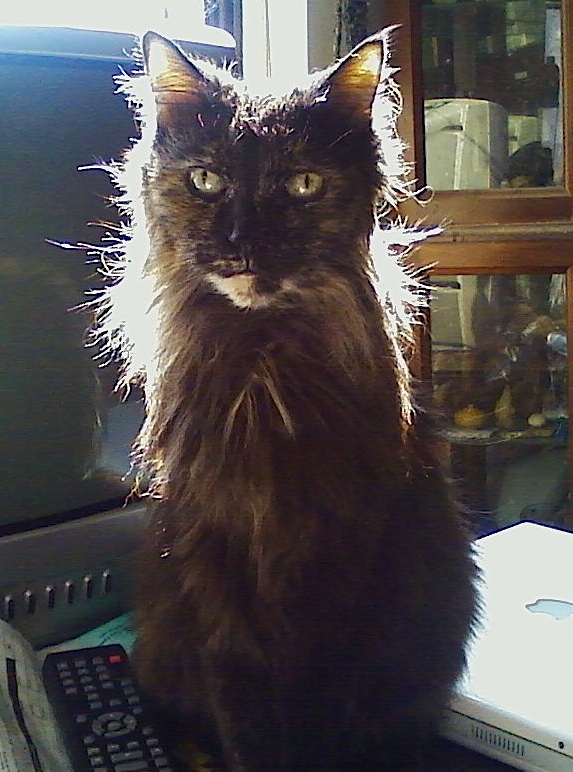
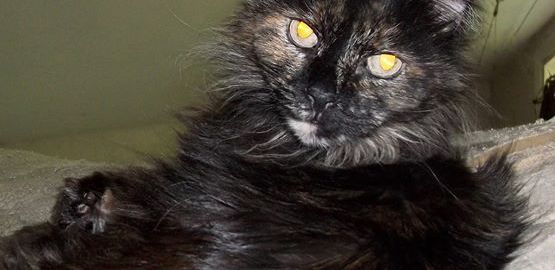
It’s impossible to escape party games entirely, of course, if you work for a company that goes in for mandatory collegial jollity. I work freelance at home now. I have my own little parties for me, my husband, and the cats.

One party game I encountered at an unavoidable party simply astonished me. The hostess had hidden toothpicks around the house in various unobtrusive locations – lurking on window ledges, nestled in lamp bases, perched on baseboards – and the guests were challenged to find all of them in a certain amount of time.

She is the only person I know who ever had guests play that particular game. She’s the only person I know who would even think of playing that game. The mind boggles.

Even if I gave parties, I would never have stupid games. Even if I did have games, I would never have the toothpick game.That game will never be played in my house. (I bet you can guess why.)

P.S. I also hate that thing they do at business meetings where everyone has to introduce themselves and say some personally significant tidbit such as what they like about themselves. I always swear the next time that happens, I’m going to say, “I really love my peaches and I’m capable of shaking my own tree.” Just to listen to the resounding silence afterward.


Crowdsourcing Cat Names

My mother-in-law has two new cats and really needs help naming them.

One is a little black male cat (with the required ten white hairs), 18 mos. old, and very affectionate. He needs a name because what she calls it is archaic, but not really a good idea in modern society, if you get my drift.

The other is another male, four years old, buff-colored with blue eyes. She calls it Buffy, which makes one think of a girl who slays vampires. It follows her around, but will not yet allow petting.

In the past, she has had cats named Frisky, Dilly Sue, and Bingo (Dan and I always called Bingo “Mr. Woo,” but that’s another story.)

Also, she also used to call our cat Matches by the name “Checkers,” which we decided was his evil twin.

Just for reference, our cats have been named Matches, Bijou, Anjou, Chelsea, Shaker, Maggie, Julia, Laurel, Garcia, Louise, Jasper, Django, and Dushenka. Plus two fosters named Joliet and The Devil Kitten From the Crawlspace of Hell, but that’s another story too. (No, not all at once; just a few at a time. I’m not that crazy. Yet.)

If I had pictures of the new kits on the block, I would post them, but so far I don’t.

So here goes my experiment in crowdsourcing cat names: Please help!

The Noble Armadillo

A new friend asked me the other day if there’s anything I collect. Not many of my collections have been very successful. Back when I was able to travel overseas, I was working on a Beers of the World t-shirt collection. Now I can’t fit into any of them or acquire more. (Yes, you can get anything on the Internet, but I had to be where they actually sold the beer for it to count.)

Another failed collection started when a boyfriend decided that I would start collecting heart-shaped boxes, made from various materials. I know it was just so he would automatically have a go-to present whenever a gift-giving occasion came up. That collection lasted about as long as the boyfriend.

What I collect now are armadillos. I started this back in the 70s and now have armadillos made from a variety of materials: wood, stone, aventurine, concrete. Plush armadillo toys. Crocheted armadillos. Armadillo pins and earrings.

The prize of my collection is an armadillo purse. Her name is Erma. She makes me easy to identify (“My wife is joining me here. She’ll be the one with the armadillo purse.”) and is a great conversation starter (“Is that real?” “Where did you get that?” “Where I come from we call that “possum on the half-shell.'”).

(Brief digression: My mother found her in a catalog. I don’t know which one.)

At this point, you may be asking, “Why armadillos? They aren’t native to Ohio. People don’t keep them as pets. As a cat owner, why don’t you collect cat items?” (I do.)

Armadillos are fascinating creatures. You may not know this, but armadillos are one of the few animals besides humans that can catch leprosy because their body temperature is so low, so they are used in leprosy research. I can thank an armadillo that my childhood leprosy now hardly bothers me at all.

(Bazinga! I made that part up – the part about having had leprosy. The research part is true.)

But I digress. Again.

There are two main reasons that the armadillo is my SA (significant animal). The first is musical.

Back in the 70s, there was a subgenre of country music variously called progressive country, outlaw country, or redneck rock. Artists such as Willie Nelson, Kris Kristofferson, David Allen Coe, Ray Wylie Hubbard, Waylon Jennings, and others broke from the Nashville music scene and started making records that featured their own bands instead of studio musicians, rock and folk influences, gritty or provocative lyrics, and so on. I was a big fan of this music and still am. (Now it goes by some other name – Americana, maybe, though I think of it as retro-alt-country.)

So where do the armadillos come in? The place that attracted and supported and freed these musicians was Texas, where armadillos abound. One of the main clubs was the Armadillo World Headquarters. That theme song for Austin City Limits is popularly known as “I Wanna Go Home With the Armadillo,” though its real name is “London Homesick Blues.” Austin and the musicians adopted the armadillo as their symbol.

And so did I.

The other reason I identify so strongly with the armadillo is that it has such unique defense mechanisms. The first is to roll up in its protective armored shell, like a pillbug. The other is to jump straight up in the air about two and a half feet.

The pillbug thing works pretty well and they probably ought to stick to that. But the jumping strategy has one major flaw.

The main menace the armadillo faces is the automobile. Their leap puts them right at car bumper height. Splat. Roadkill.

And I identify with that.

Over the years I have tried or developed various coping and defense mechanism that resembled the armadillos’, and worked about as well. Using the pillbug technique, I would retreat into a shell and let the world pass me by. Which it did, but I never got to see much of it.

When I decided to abandon that strategy, to engage with the world, I encountered lots of scary things. And how I dealt with them always seemed to end with a big, messy splat.

And that’s why I keep Erma and the armadillo collection around – to remind me of the music that still sustains me, and to remind me that what I think are ways to dodge anxiety and fear and danger just might turn out to be counterproductive.

I Blame the Cats. Always.

cuddly cat is ashamed with paw over his head

I used to live in a drafty log home on a windy hill. There were plenty of odd noises, especially at night. Now I live in a regular home in a windy valley, with lots of clutter. There are still plenty of odd noises, especially at night.

It’s been my policy to blame the cats (usually from three to five of them) for any noises – rattling, thumping, skittering, whining, tapping, crashes, howls, et endless cetera.

Even if every cat in the house is occupying my lap at the time, I still try to find a way to blame it on them.

One night, however, my husband and I were peacefully sleeping, when I thought I heard a noise in the living room.

Whispering.

Whatever else they do, cats don’t whisper. For once I couldn’t blame them. It had to be burglars, discussing what they wanted to take or which house to hit next or why we had such crappy stuff and was any of it worth anything.

I didn’t want to wake my husband, because then I’d have my N.O.W. card taken away, so I tried to remember where we put the baseball bat and extended my hearing as far as it would go. I crept closer to the bedroom door, where I could hear the sounds better.

Then I realized that there was indeed whispering, but that it was in French.

Even in my fearful, groggy state, I couldn’t believe that there were actually burglars in my house, in Ohio, speaking French.

So I tiptoed into the living room. If for some unlikely reason, there were French-speaking burglars, I could astound them with my knowledge of French, threaten to call the gendarmes, or at least ask them for directions to the library.

When I tentatively poked my head into the room, however, I found that the television was on and a foreign film was playing.

Hm. My husband won’t watch foreign films because the subtitles distract him. Besides, he was asleep in bed.

Then I realized what had happened. Someone had activated the remote and selected a film channel. With the sound very low. Although I couldn’t name the culprit, it was clearly Matches or Maggie or Chelsea or Shaker, all of whom were giving me the “Who, me?” look. There was no use dusting for paw-prints. One of them had done it, or they all cooked up the plot together.

So the one time I knew it couldn’t be the cats, it was. Now I blame them for everything. Always.

We Don’t Do That Any More, Do We?

Here’s a story that caught my eye recently.

http://www.cnn.com/2014/03/08/us/mississippi-unmarked-graves/index.html?hpt=hp_bn1

It’s long, but worth reading. But for you busy people, I’ll summarize.

Two thousand unmarked graves were found on the grounds of an old hospital. Whose could they be? Civil war dead? Victims of an epidemic?

No. That section of the old hospital was an asylum, and the bodies were those of inmates. The insane. The developmentally delayed. The rebellious. Anyone the family wanted to hide and forget.

Of course, we don’t do that any more. No more locked, back wards. No more Snake Pits. No more Cuckoo’s Nests.

No, the asylums (pardon me, behavioral health residential facilities) have largely been closed and the inmates (pardon me, clients or residents or patients) released.

After their 30 days of insurance coverage run out.

To a group home that has a waiting list longer than the Mississippi.

To outpatient centers that hand out meds that may or may not have an effect or even be taken.

To the streets.

To a society that hates and fears them, lumps them all together as eyesores and NIMBYs, panhandlers, homeless and jobless, and spree killers.

Of course there are mentally ill people who are able to function in society on some level or another. They’re the ones who have likely never been in a locked ward. Those with understanding families, good insurance, nearby therapists, and a support system of friends. People who can hold a job. The ones who hardly ever shoot other people.

Still, the functional mental patients, your coworkers and neighbors and even family members are afraid to “come out” as needing help or getting help. They won’t even admit to taking Prozac, despite it’s being one of the most prescribed drugs in America.

Why is that? Because even if the asylums are gone, largely closed by lack of funding rather than obsolescence, the stigma remains. As a society, we have the impression that all people with mental disorders are psychotics or schizophrenics, lurking nearby just waiting for the chance to get their names in the papers and on TV.

We don’t lock up mental patients much any more. Now we’re humane. We give them apathy, invisibility, fear, and maybe a few drugs.

And the same old stigma.

Journalism: A New Low

I recently saw an article online that asked whether readers were using toilet paper correctly.

No, not the ever-popular issue of whether the end of the paper goes under or over, but of the two ways to use toilet paper (scrunched or folded), which was better. No conclusion was reached, and surveys suggested that Americans are pretty evenly divided on the (t)issue.

What a waste of electrons! (Pun not intended, but there anyway. Sometimes my brain just does that.)

Do not tell me that this is merely “infotainment,” or that, well, I read the story after all. I did read it, but what I was afterward was neither informed nor entertained.

No, what I was getting at (Look! There goes the point!) was that while print journalism is probably dying, online journalism is no replacement. Of course, neither was television journalism. (Maybe radio journalism had something, but I wasn’t around for that.)

Television “journalism” suffers from a combination of bias (liberal and conservative), preaching to the choir, and the same variously qualified talking heads. Even the network newscasts devote only a few snappy sound bites that barely ripple the surface of an event or issue; favor good video over good writing or analysis; use thesame words as every other network (snowpocalypsecomes to mind); and ignore important but non-sexy stories. And don’t even get me started on Sweeps Week. Just don’t.

Then we come to what passes for online journalism. Newspaper headlines could be unintentionally funny (Police Shoot Man With Knife), but online news services have recently offered these examples of sheer stupidity:

Miley Cyrus Finally Reveals Why She Sticks Out Her Tongue

Does pee turn to snow in icy cold?

Apparently CIA did not tell truth

Would you buy wine for your cat?

Pumpkin poaching goes unsolved

Will lies hurt witness’s credibility?

Man stole brains sold on eBay

While even stupider headlines can certainly be found with next to no research, many of those headlines came from supposedly reputable news organizations (CNN.com, I’m looking at you).

Every political season I take a break from news, and even parodies of same, because I start screaming when I watch, listen, or read. I may have to extend that policy to non-political season as well, if indeed such a thing exists. I figure if Armageddon arrives (and has been fact-checked on snopes.com), one of my friends will e-mail me about it.

Why I Won’t See the Hobbit Movies

People who have known me since I was a teenager would be shocked to hear me say that. I was/have been/still am one of the most devoted Tolkien fans ever – since back in the 1970s when the first wave of Hobbit hysteria hit.

I loved the Lord of the Rings movies. I sat in the theater reciting my favorite lines along with the actors. I curled up in my seat in a fetal position and sobbed when the characters left to sail West. These were my friends and they were leaving.

I knew that Peter Jackson had to make some choices in order to film three books. He could not possibly put in everything. Indeed, some fans were upset that favorite scenes didn’t make it in (Tom Bombadil, for example). I was upset by what they put in that wasn’t in the books (the whole Arwen-is-dying nonsense).

Which brings me back to The Hobbit. At first I fully expected to see it. Then I started hearing things that made me doubtful.

It was going to another trilogy. You make a trilogy of films from a trilogy of books; that’s fine. You make a trilogy of films out of a single book and a short one at that, no good can come of it. You will have to add and pad and then Gad! Stuff that Tolkien never wrote – lots of stuff.

It was another dramatic epic struggle between Supreme Good and Primal Evil. The Hobbit was a children’s story, for crying out loud, that Tolkien wrote for his young son. A simple quest story – There and Back Again.  The Lord of the Rings came later, featured more complex and grown-up themes, including sweeping battle scenes with thousands of extras. The Hobbit was not a “prequel.” It was a stand-alone book. But The Lord of the Rings, which was and needed to be a sweeping dramatic epic struggle between powerful, apocalyptic forces, made money and lots of it. So let’s do it again, whether that’s what the first book was about or not.

The characterizations and tone had been changed to make the films more dramatic and serious. My husband was watching it in another room, and I asked him what was up with all the screaming and yelling and battles. He said, “I was watching The Hobbit.” My jaw dropped.

Conflict, sure. Danger, sure. But so much yelling and screaming that I thought it had to be a war film (or Robocop without the guns)? Much of the book was sweetly comic, with just enough threat, suspense, and fighting to keep its intended readers – children – interested. Millions of us as teens and young adults loved the book as it was. We recognized the value of children’s literature, and still do. The Harry Potter books and films had a massive following that included me and my friends in our 40s and 50s and beyond. We don’t need the works revised for “mature audiences.”

The last straw for me, though, was Radagast the Brown, a brother wizard of Gandalf’s. He was mentioned ONE TIME in The Hobbit and had only a tiny role in The Lord of the Rings. He was essential to no plot, subplot, or theme. He was, as they say in opera, a spear-carrier. Or in this case a staff-carrier.

At first I shrugged. More padding. So what? Then I heard what they did with the character.

They PUT A BIRD’S NEST ON HIS HEAD and had him drive a SLEIGH PULLED BY BUNNIES.

There is no excuse for that sort of thing and I am not paying money to see it. I’ll stay home and re-re-re-re-re-re-re-read the book.

Sleigh-bunnies. Feh.

Cats, Etc: Conversation With Louise

964327_3238643262628_1752925090_o


I understand this is Throwback Thursday, which means that bloggers can recycle old posts. I haven’t been blogging long enough to have many old posts, but this is a contribution from Louise, one of my cats, pictured above.

Me: Louise, honey, I’m glad you love your mama, but please don’t sit/stand/lie on my throat.
Louise: Meow (translation: But I’m the Queen of Everything.)

Me: Honeycat, it’s lovely floof, but please don’t eat it. It looks much better outside you than inside.
Louise: Meow (translation: But I’m Her Royal Floofiness.)

Me: Louise, darling, you have cat food breath.
Louise: Meow (translation: Yeah, well, you have human food breath. What’s your point?)

Valentine’s Day. Bleah.

I have very few happy memories associated with Valentine’s Day. The only one I can think of offhand is the one when my long-distance boyfriend actually sent me flowers. I took a Polaroid picture of them and married him. (Not directly because of that, but it sure helped.)

I would post the picture of the flowers, but scanning a Polaroid from a hundred or so years ago seldom produces anything but a colorful blob. I suppose I could pass it off as a scanned Polaroid of an Impressionist painting.

But I digress. (I do that a lot.)

Valentine’s Day came to my attention, as it does to most of us, in grade school, where it was shown to be a meaningless exercise. I do not think that making “mailboxes” out of brown paper lunch bags had any actual educational value. And, after the teachers figured out that letting the kids decide whom to give valentines to was a way of separating winners from losers, valentines for every classmate became mandatory. The only technique left to express your true feelings was to decide which valentines you thought were the crappiest and give them to the people you liked least. So perhaps it was an exercise in passive-aggressive behavior, which is an important thing to know and recognize.

Then there were homemade valentines, usually reserved for relatives. These did teach me an important lesson. I would make my paper heart, ask my mother how to spell “valentine,” sign my name, seal the envelope, and continue on to the next. (Lather. Rinse. Repeat.) After about the fifth round of this game, my mother suggested that I write all my cards before I sealed them up, thus having a model for the spelling of “valentine.” It seemed to work.

But again, I digress.

The funny thing (to me) about Valentine’s Day, other than the commercials that equate romantic love with nearly anything you can purchase, is that it reverses the usual ways holidays come to be.

For many (or most) holidays, pagan peoples had a series of holidays celebrating natural events – planting, harvest, astronomical events – and important concepts – fertility, remembering ancestors – throughout the year. The Christian churches did not like to encourage pagan celebrations, but they couldn’t actually say, “Don’t celebrate.” Back then that was about the only fun to be had.

So the various churches took the various pagan holidays and grafted Christian meanings onto them, the most notable being Christmas. I’m not knocking Christmas or saying you shouldn’t believe in it or shouldn’t spend gobs of money on presents. But certain related pagan customs have survived. The Christmas tree was a Druid practice, for example.

(Other graftings did not take as well, so now we have fertility symbols including bunnies and eggs somehow associated with the birth of the Savior.)

However, Valentine’s Day is exactly the opposite sort of holiday. It started out religious and has been so altered that the connection is nearly invisible. St. Valentine was a Christian. He never gave flowers or chocolates or diamonds to anyone. This post that’s been floating around the Internet puts it nicely:

Valentine

(Image from Ethika Politika)

No, what Valentine did was send encouraging notes to other Christians and sign them “Your Valentine” while awaiting execution.

Kind of sucks the romance out of the whole thing, doesn’t it?

I do, however, celebrate Feb. 15, Discount Chocolate Day.

P.S. Don’t get me started on what happens when the government tries to mess with holidays.


A Book Is a Book Is a Book

One would think that, considering my life-long status as an ardent bibliophile, I would have been one of the first to get my knickers in a twist at the rise of the (shudder) e-book.

But no.

I do admit that books are a wonderful, magical invention and that the solidity and heft of a printed book are a comfort. And the smell of them! When I was a kid I used to haunt Dennis Used Books and the moment I walked in, I was overwhelmed with the scent of paper, dust, ink, spices, pipe smoke, and the warm space heater.

I used to go to the library and come home with glorious stacks of books, each awaiting my avid reading. And rereading. And rereading. My mother would insist that I get at least one book I hadn’t read before.

Even as I write this (on a computer, not with a quill pen and a pot of ink), I am surrounded by shelves of books, stacks of books, piles of books, toppling towers of books, bags of books, autographed books, even a couple of first editions.

I wanted a book within reach everywhere. I had a bedside book, a purse book, a bathroom book, a car book, lest I be stranded somewhere with only a ketchup bottle for company. Hell, I used to buy purses based on how many paperbacks they would hold.  (I would try to make each book a different genre so that I could switch back and forth among them without losing track.)

The thing is, many of my bibliophile friends complain of the insubstantiality of electronic editions. And admittedly, they do not offer the same sensory delights as “dead-tree” editions.

But.

The content of a book is still the same content, no matter how it’s delivered. If each new technology had been rejected for its difference and novelty, I would be sitting here surrounded by scrolls of papyrus and creating these words with a pointed stick and a slab of clay.

Printed books were easier to make and distribute than hand-copied ones. Saint Gutenberg brought inexpensive, widely available reading to the masses. Anyone could own a Bible, a biography, a newspaper, a novel. And bibliophiles were born and said, “It is good.”

E-books have made the written word even more accessible. You don’t even have to go out in the snow. Just press a few buttons and you have a new book – or even a very old one – instantly available.

The e-book functions very much like a printed book. It may not replicate the heft or scent, but it remembers where you stopped reading and goes there promptly. It allows you to look up an unfamiliar word without first hunting down a dictionary. It lets you read in bed without disturbing anyone who is sharing that space.

There are some types of content that are not suited to e-books – picture- or photo-heavy texts, for example. (Though I read National Geographic quite happily on my tablet.) But otherwise, the content of a book is still the content of that book, whether it’s ink on a page or pixels on a screen.

And for me, the e-book holds one overwhelming advantage – the very insubstantiality that others dislike. I now can carry with me, wherever I go, 300+ books. Even 3000, if I want to. To a person with a bad back, this is a godsend.