Tag Archives: books

What’s So Funny About Ohio?

If you’re a 3rd grader the funny thing about Ohio is that it’s the state that’s round on both ends and high in the middle.

If you’re near Columbus the funny thing about Ohio is the field of concrete corn that stands majestically by the roadside.

"CornhengeDublinOhio". Licensed under CC BY-SA 3.0 via Wikipedia - https://en.wikipedia.org/wiki/File:CornhengeDublinOhio.jpg#/media/File:CornhengeDublinOhio.jpg
“CornhengeDublinOhio”. Licensed under CC BY-SA 3.0 via Wikipedia

If you’re in Cincinnati the funny thing about Ohio is the Flying Pig statues, marathon, and assorted paraphernalia.

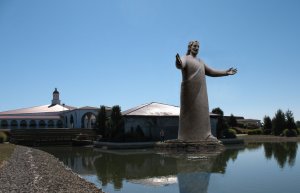
If you’re near Hamilton, Ohio, the funny thing about Ohio is the statue formerly known as Big Butter Jesus. (1)

King of Kings (aka Big Butter Jesus)

King of Kings (aka Big Butter Jesus)
Photo by Cindy Funk

There are undoubtedly other oddities and roadside attractions in Ohio that can be found in various books and websites about the peculiar and amusing sites to be found in various states.

The really funny thing about Ohio, however, is that the state has produced some of the best humor writers ever.

The one that all Ohioans study in school is James Thurber. I was surprised to learn that outside of Ohio he is not as well known. At the very least, Ohio students read “The Night the Bed Fell” and “The Catbird Seat.” (2) His loopy, scrawling cartoons of men, women, and dogs are classics not so much for their artistic merit but for the captions. My favorite is a man and woman in a lobby and the man says, “You wait here and I’ll bring the etchings down.” For some reason that always slays me.

Thurber managed to be funny despite his failing eyesight and rampant misanthropy.(3) He also wrote a series of essays on grammar – a parody of H.W. Fowler’s Modern English Usage – that is enormously amusing to those of us who are amused by that kind of thing. In particular his piece on the subjunctive and sex is worth the price of admission. (4)

The high points of Thurber’s work have been collected in an anthology called The Thurber Carnival. I highly recommend it.

The other native Ohioan who has made her mark in humorous writing is Erma Bombeck.(5) Beginning as a writer for the Dayton Daily News, Bombeck turned her suburban trials and tribulations into comic fodder for such national bestsellers as If Life Is a Bowl of Cherries, What Am I Doing in the Pits?

She is much more widely known than Thurber because of the near-universal appeal of her books and the fact that nobody makes schoolchildren read her.

Every two years there is an Erma Bombeck Writing Workshop held in her memory at the University of Dayton. Attendees work on humor writing, memoirs, and other forms of expression. There are events called “Pitchapalooza” and “Speed Dating for Writers,”(6) a writing contest, and even a showcase for stand-up comedians.

This year the faculty includes Jenny Lawson, the Bloggess; Kathy Kinney, “Mimi” from The Drew Carey Show; multi-talented writer Sharon Short; as well as other authors, speakers, agents, and literary mavens.

I will be there too, as an attendee.(7)  I hope that after this experience, which occurs at the beginning of April, I can use the knowledge, practice, and advice I receive to improve this blog.

Erma Bombeck and James Thurber set a high standard, but those of us who aspire to write need people of outstanding talent to inspire and instruct us. As well as flying pigs and rows of concrete corn to entertain us.


(1) Also known as “Touchdown Jesus.” I always called it “Kris Kristofferson Jesus.” Unfortunately that statue was hit by lightning and replaced by another statue of Jesus made from exactly the same materials. And that’s pretty funny too. I call it “Jesus-Needs-a-Hug Jesus.”
"Lux Mundi"
“Lux Mundi”

(2)”The Secret Life of Walter Mitty” is another well-known work. But the Danny Kaye movie of it has too much Kaye and not enough Thurber.

(3) Often mistaken for misogyny. But by the end of his life, he couldn’t stand anyone.

(4) You can find it online at http://grammar.about.com/od/classicessays/a/whichthurber.htm, but hardly anywhere else.

(5) After whom my armadillo purse, Erma (duh), is named.

(6) Not actually a venue for making dates, this consists of time-limited one-on-ones for aspiring authors to ask questions of pros.

(7) I was lucky to register in time – the workshop sold out in under six hours from the time registration opened. There is a FB page and the website is humorwriters.org.

Review: Furiously Happy

Buy this book!

Jenny Lawson, aka The Bloggess

Now I’ll tell you why.

First, despite what I wrote a previous post, Seven Reasons I Hate the Bloggess (http://wp.me/p4e9wS-56), I really respect and admire her and her writing.

Second, Furiously Happy is every bit as funny as Let’s Pretend This Never Happened, Lawson’s first book. It’s as raucous and uninhibited as her wildly popular blog.

Third, it’s something more.

Oh, there’s still plenty of weird taxidermy, ridiculous fights with her husband Victor, and even a bizarre travelogue of her trip to Australia. (She was not allowed to cuddle a koala, even when she dressed in a full-body koala suit, but consoled herself with the knowledge that koalas have chlamydia.)

But threaded through  her comic, idiosyncratic prose is a serious message about mental health: that we should speak up about it; acknowledge our struggles; and be determinedly, exuberantly, furiously happy when we can, in defiance of our illnesses.

Furiously Happy is a book for the millions of Americans – one in four – who struggle with mental illness, and for the millions more of their families, loved ones, and friends. It entertains and educates and defies the stigma that surrounds mental illness, without being preachy or mired in statistics.

Lawson has heard from people who have made it only as far as the parking lot of her signings because they too have severe anxiety disorders. Others have driven as much as five hours to attend one of her appearances. In her blog (thebloggess.com) and her new book, she lets people know that we are “alone together,” that even if we’re broken, we still have the capacity for magic.

At a recent book signing, Lawson was visibly nervous when she read two chapters aloud. One of these chapters was the one in which she and her mother discuss what is crazy and whether Jenny is. During the Q&A session at the signing, she took care to make the point that mental illness need not prevent people from being, as she says, furiously happy – if they keep on struggling, fighting, and trying, and especially if they have people around who understand and help.

After that she signed her book and anything else the audience brought until the entire group – which was quite large – was satisfied. No one was turned away from the signing line.

Lawson’s writing is not for everyone. Some people will be turned off by her use of profanity, and perhaps others may not appreciate the serious message that this second book contains. However, if you are looking for more rollicking, uninhibited, and unlikely (though largely true) stories, you will certainly find them here. But if that’s all you want, you may prefer to skip the serious chapters.

On the other hand, if you want to learn about mental illness with its attendant difficulties, and why it is so important to bring these topics out of the closet, as it were, then you may find the storytelling ridiculous, irreverent, or distracting. Personally, I enjoy the whole package, and it’s clear that many others do too.

Actually, the book hardly needs my endorsement. It’s been on the New York Times bestseller list for weeks now, and her book tour is drawing large and enthusiastic crowds. But I’ll recommend it anyway. You can start with her first book and find yourself drawn into the other. Or vice-versa.

You should also check out her blog, both for the content and the commenters, many of whom have found in Jenny an inspiration and in the other commenters a like-minded group of self-admitted weirdos, social outcasts, and yes, the mentally ill. That’s really been Lawson’s message all along. She just states it a little more directly in Furiously Happy.

Dodging Nosy Questions

“So, when are you and Janet going to give your mother grandchildren?”

“Why spend $300 per hour on a shrink when it’s not going to do any good anyway?

“Why do you always eat junk food when you know you have high blood pressure?”

“Are those boobs real?”

Questions you can’t answer. Questions you don’t want to answer. Questions you want to slap a person for asking. Questions that are just begging to start a fight. We all hear them, sometimes from our nearest and dearest, and sometimes from total strangers.

There is an answer – other than “Shut up and leave me alone,” which may indeed be your initial reaction, but usually isn’t the best solution. (Except maybe to the boobs question.)

Noted linguist and author of The Gentle Art of Verbal Self-Defense Suzette Haden Elgin recommended a technique called the “Boring Baroque Response.” It’s not a skill everyone has at the ready, but with a little practice, you can expand your ability to deflect the nosy and the belligerent.

The essence of the Boring Baroque Response (or BBR) is storytelling. No matter the question, you stare off into space and launch into the longest, most rambling story you can. Here’s an example:

Idiot: “Why do you always eat junk food when you know you have high blood pressure?”

You: “That’s interesting you should ask. It reminds me of when my parents and I were visiting Cousin Jim and Cousin Addie – you know, the ones that lived near Natural Bridge and had that kitchen that was painted all black. And whenever we visited my sister and I played in the hayloft. But it didn’t have hay, it was really bales of straw. Dried-out corn cobs, too, which they fed to the animals, like the mule. I rode that mule once, bareback, and you wouldn’t believe how bony its backbone was! Anyway, Cousin Addie was making biscuits and gravy – sawmill gravy with milk, not red-eye gravy with coffee – and Cousin Jim always said….”

Keep going as long as necessary until the questioner gives up and goes away. As Elgin noted, “A response like this delivers the following message: ‘I notice that you’re here to pick a fight. Do that if you like, but it’s not going to be much fun for you, because I won’t play that game.'”

According to Elgin, the secret of the BBR is to deliver it with a straight face and a thoughtful, reminiscing tone. Sounding sarcastic or snotty will give away the game. And although the example was (vaguely) related to food, as the question was, it doesn’t have to be. The story can be about your sister and how she wanted to be a veterinarian, which she would have really been terrible at because….Well, you get the idea.

My husband had a version of the BBR that he used when he worked in community-based corrections. He would regale the “clients” with stories full of analogies – “You know when they make steel how they forge it first in really high heat and then plunge it into cold water. Well, that’s kind of like….” He could rarely get out more than a sentence before the listener would edge away, saying, “No stories, please, Mr. R. I’ll behave. I’ll be good. Just no story!”

I don’t know if Elgin ever heard it, but the best BBR I know is the monologue that Grampa Simpson produced when asked to break up a union meeting:

“We can’t bust heads like we used to. But we have our ways…. Like the time I caught the ferry to Shelbyville. I needed a new heel for m’shoe. So I decided to go to Morganville, which is what they called Shelbyville in those days. So I tied an onion to my belt, which was the style at the time. Now, to take the ferry cost a nickel, and in those days, nickels had pictures of bumblebees on ’em. ‘Gimme five bees for a quarter,’ you’d say. Now where were we… oh yeah. The important thing was that I had an onion on my belt, which was the style at the time. I didn’t have any white onions, because of the war. The only thing you could get was those big yellow ones….”

Now that’s classic TV! Just like the episode of WKRP when Mr. Carlson had an idea for a promotion and Les was supposed to report on it live from the shopping center, but the one store didn’t want him standing in front of it because customers couldn’t get in, so then….


Books, etc.: Creating a Lifelong Reader

The other day I saw an article on the web, “Raise Lifelong Readers With These Handy Tips.” (http://blog.theliteracysite.com/raising-readers/?utm_source=social&utm_medium=trnfan&utm_campaign=raising-readers&utm_term=20150713)

It was a good article, and I had to admire the author’s pseudonym, Paige Turner. She (or he) said:

Booklovers are not born. An interest in reading and a delight for stories found within the pages of a book is something that has to be carefully fostered.

For kids who learn an early appreciation for reading, the benefits can be extraordinary … readers have a huge advantage from early on!


The advice in the article was all good: Read to your children, take them to libraries, be a role model, etc.

My mother didn’t know how to teach reading. But she read to me and my sister, as far as I can recall, every day, one on each side of her, nestled on the sofa. We went on frequent trips to the “bookmobile,” a library outreach trailer, and on special occasions to the library itself – even the big one downtown. This ample supply of reading material was supplemented with trips to a favorite used book store. We grew up surrounded by print.

Paige offered good advice, as far as it went, but it omitted one important point, in my opinion:

Love of reading starts before a child can read.

If you wait for your child to learn to read before you share reading experiences with him or her, it may be too late. It takes reading together to make a non-reading child into a reader.

I honestly can’t remember a time when I was a non-reader. Despite Paige Turner’s statement, I was very nearly a born booklover.

My mother didn’t follow all Paige’s good advice. I never remember either her or my father reading for pleasure. (My father did, much later, when he was ill with bone cancer and couldn’t get out of bed. Again the library outreach stepped in, and a dear friend who worked for them, brought him stacks of Zane Grey and Louis L’Amour.)

To me, print is important. Picture books are good, but I think one thing (among many) that my mother did right, was to expose us to print at an early age. Even though we couldn’t read the black marks on the white paper, she read them for us. One thing this promoted was consistency. The story was the same every time, and that lead to the idea that the little black letters had something to do with how the story went.

Without being told, we were learning what reading was, even if we weren’t yet being taught how to do it. The words stood for something – something familiar and delightful, a magic so enticing I couldn’t wait to learn how to create it myself. So I didn’t wait.

Many years later I worked in a bookstore. Often a parent would come in and ask, “How can I get my child to read?”

“How old is the child?” I would ask.

If the child was a teenager, I would offer some suggestions, but inwardly shake my head. For most of them, I knew, it was too late.

That’s one of the reasons I adore the Harry Potter books, flawed as they are – they made reading cool, provided an experience so enthralling that even non-readers, pre-teen, teen, or even adult, would make the effort for a chance to experience the wonder.

(It’s also why I’m glad that the movies didn’t come out until years after the books began their epic sweep.)

Alas, reading is growing more difficult for me. I’ve had eyeglasses since the age of three and my eyes are now on a definite downswing. All the books I collected when my vision was more reliable are becoming blurs to me now.

I certainly need new glasses, and as soon as I can afford them, I will get some. (That’s another thing my parents did right that Paige didn’t mention – regular vision checkups and new glasses as needed.) And I’m intensely grateful that e-readers let you change the type size all the way up to humongous.

But if I’m truly going to be a lifelong reader, I probably ought to start learning braille now.


Books, etc.: Revisiting the Old School

Sarah Seltzer recently wrote on Flavorwire that, as the title of her article says, “We re-read our favorite books as kids and why do we stop as adults?” (http://flavorwire.com/518840/why-do-we-re-read-our-favorite-books-as-kids-and-why-do-we-stop-when-we-get-older)

She says, “[A]ll the reading I do is for a different homework — the social kind. Even popular series like The Hunger Games and the Sookie Stackhouse series make my reading list at least partly to keep me ‘up on the conversation.’”

My experience has been different.

Reading is never homework for me, and really wasn’t when I was a child either. If a friend has read a book that I haven’t, I simply ask what it’s about and what they thought of it. Voilà – conversation.

I certainly did re-read more as a child than as a grown-up. My mother had to insist that when I went to the library, I take out something new in addition to Green Eggs and Ham.

But I – and many of my adult friends – continue to re-read books. Sometimes it’s books we loved as children, and other times it’s children’s literature we’ve just discovered, and still others it’s books we’ve recently encountered. Without even a book group to keep us up to date, my friends and I pass around recommendations. Right now I’m reading Libriomancer on a friend’s advice. Do I care if it’s less trendy than Grey? I do not. Will it make my re-reading list? I won’t know until I finish it.

A while back, I wrote in this blog about “comfort books” – books we return to again and again, for familiarity, for memories, for new insights, for reminders, for nostalgia, or for just plain fun.

We each have our own list of comfort books. My friend Leslie and I both go back to anything by Lois McMaster Bujold (at least yearly) and Catherynne Valente’s Fairyland series. I go back to Mira Grant’s Newsflesh trilogy and Jenny Lawson’s Let’s Pretend This Never Happened, and David Sedaris, and even nonfiction like The Hot Zone and Angela’s Ashes None of these are beloved books from my childhood, but touchstones of my adult life. (Some of them don’t fit the usual definition of “comfort,” but it is, in a way, comforting to me that they retain that spark of awe when revisited.)

When my tastes change (as they have over the years), my re-reading list changes too, though my old favorites remain there for me. Recently I’ve grown tired of the mediocre memoirs and formulaic novels that sell for $1.99 on B&N, and gone looking for books that fill me with wonder when I first read them and are worth a second – or third or fifth – reading. And I’ve found some. Life of Pi (which I just re-read). The Book Thief. Egg and Spoon.

(Do you have any suggestions for books of similar quality? Please, please leave them in the comments section.)

Not that revisiting one’s childhood reading is a bad thing, for as Seltzer notes, there lurk new insights and a mature appreciation of the author’s craft.

Two books from my earlier reading days recently crossed my path again. These are books that endured multiple readings in my teen years – To Sir, With Love and Up the Down Staircase – both tributes to my enduring interest in education (as I would now say) or (at the time) my desire to become a teacher.

Neither book was a waste of time to re-read, and neither, although familiar, spoke to me in the same way it did all those years ago. Re-reading them was both comforting and newly challenging. They stood up to their repeat performances.

Both startled me by their references to high school students as “children.” I suppose to the school system they may be, but I think of many if not most of them as young adults, or at least kids or teens. (I also was taken aback by the word “pupil.” Is that still used in some parts of the country? To me, they are students.)

Some aspects were new to me. As a teen (raised in a lily-white suburb and attending a lily-white school), I noticed but missed the depth of the comments on race in To Sir, With Love. While I understood that Up the Down Staircase highlighted the bureaucracy of the education system in a large city high school, I was clueless about the application of that to all schools, even mine.

“Re-reading offers something that few other cultural experiences do, really: a mix of gentle stability and sharp new insight,” Seltzer says. “Taking the time to re-experience the art we loved best in our past can be a way of spending time with ourselves, and though its rewards are mostly unseen, that may make them all the more important to seek out.”

Now that I can’t argue with.

But I would add that my re-read list keeps growing longer as I grow older. It’s not just childhood favorites that are worth re-reading, but any book that has become beloved to me. And falling in love with a book is definitely not something I’ve left behind. New love can happen at any age.

Now where did I put my copy of Green Eggs and Ham? Ah, there it is – right next to the Lois Bujold.

Books, Etc.: But Where’s the Wonder?

It Hurts When I Poop!(1) That is the actual title of an actual children’s book, though not, I’m sorry to say, the sequel to the classic Everyone Poops.(2)

No, it is an instructive children’s book meant to help youngsters through the trauma of – I don’t know – toilet training? Constipation? Hemorrhoids? At any rate, some kind of fundamental difficulty.

This seems to be the way of children’s books these days. Take a look at your local bookstore (if you still have one) or the wares at Amazon. Book after book in the children’s section are of a genre “How to Get Through the Difficulty of X.” X can be nearly anything.

In particular, The Berenstain Bears seem to have a lot of difficulties. Their books include The Berenstain Bears…
…and the Bully
…Visit the Dentist
…Learn About Strangers
…and Too Much TV
…and Too Much Junk Food
…and Too Much Teasing
…and The Bad Dream
…and the Bad Habit

…to name but a few.

And while the Bears have a bad habit of eating too much junk food and then dread visiting the dentist, other children and anthropomorphized animals cope with still other plights:
Maggie Goes on a Diet
Wilma Jean the Worry Machine
Hooway for Wodney Wat (3)
Mean Jean Recess Queen
Lacey Walker, Non Stop Talker
Olivia Acts Out (4)
The Owl Who Was Afraid of the Dark

Still other books seem problematic. I haven’t read Don’t Squeal Unless it’s a Big Deal, but I wonder how they expect children to differentiate. What’s a “big deal” to a kid and to a grown-up can be quite far apart on the scale of secrets.

Then there are the really problematic books. Awful Library Books (5) has singled these out for their questionable topics and premises, unpleasant underlying assumptions, and creepy illustrations:

Don’t Make Me Go Back, Mommy: A child’s book about satanic ritual abuse (6)
For Your Own Good (foster care)
I Know The World’s Worst Secret (alcoholic mother)
Please Come Home: A child’s book about divorce (7)

These are not issues that can be made “all better” with a quick “real-life” scenario and a flimsy moral.

Granted, issue-oriented children’s books have important uses, but they’re not kid lit. Parents choose them because they think the lessons will be helpful. But such books lack the essential qualities of literature: engaging, complex characters; adventurous or truly touching plot lines; satisfying stories. In a word – imagination. Good children’s literature is fun.

Think about the Harry Potter books, for example. They contain underlying messages about friendship, loyalty, and bravery, as well as standing up to bullies, dealing with disappointment and grief, and defying prejudice. All without titles like Harry Potter and the Dead Godfather.

Children clamored for these books, obsessed about them, mentally dwelt in them. When was the last time you heard a child say, “Oh, Mommy, please, please, please buy me Olivia Acts Out“? How long a waiting list does the library have for Don’t Make Me Go Back, Mommy?

Think about Green Eggs and Ham – a simple book with a simple story that does not explicitly say, “Kids, try new foods. You might like them.” It does not portray an ordinary kid-just-like-you dealing with a problem. It captures the imagination with silliness, propels the minimalist plot along with kid-friendly repetition and rhyme, and reaches a satisfying conclusion. No wonder I checked it out at the bookmobile every single time I went.(8)

There is plenty of good children’s literature for all ages, from the classics (Treasure Island, Charlotte’s Web, Where the Wild Things Are) to more modern tales (Harold and the Purple Crayon, Cloudy With a Chance of Meatballs, Gregor the Overlander).

Michael Longcor said it in his song “Imagination”:

“Imagination is a friend to help you through a friendless land.
Imagination can take you to the stars and back again.
Imagination can make you more than what you thought you’d be.
It can raise a world from ashes. It can set the spirit free.” (9)

Children’s literature crafted with imagination can free the spirit in adults as well as children. It’s something we all need.

(1) No, it doesn’t, I’m glad to say.
(2) A book I always give to new parents of my acquaintance, along with Shel Silverstein’s Uncle Shelby’s ABZ Book.
(3) A book about rhotacism. Think Bawwy Kwipke. Or Rodney Rat. Now you’ve learned a new word. You’re welcome.
(4) Is it just me, or do a lot of these problem children seem to be girls?
(5) awfullibrarybooks.net
(6) No, really. awfullibrarybooks.net/satan-for-kids/
(7) Described by Awful Library Books as “Daddy left because you were bad.”
(8) It’s still my all-time favorite book. Ever.
(9) Michael Longcor http://en.wikipedia.org/wiki/Michael_Longcor, “Imagination,” Kitchen Junk Drawer. Available at http://www.firebirdarts.com/product_info.php?products_id=147

Books, etc.: Quitter

Don’t get me wrong. I can’t stop reading, even if I wanted to, which I don’t. I’ve read while walking down halls. I’ve read while getting blood drawn.(1) I’ve read under the blankets while sleeping on a sofa and nearly melted the Naugahyde. I’ve read when there was nothing to read but the label on a ketchup bottle.

I have always read books straight through to the end, too, no matter what. It seems wrong somehow not to finish a book that I’ve started.

Then came The Horror Novel.(2) The set-up started okay – it didn’t jump right into gore and heads in the microwave. It introduced the characters, like a good novel should. They were a couple, an architect and a stockbroker. They were extremely good-looking, seriously wealthy, and lived in a fine house with all the amenities. You were supposed to feel good about them and – well, horrified – when creepy things started happening to them.(3) Instead, I was rooting for the monster, whatever it was, to slaughter this ridiculous Ken and Barbie. And prevent them from reproducing, if at all possible. And tear down their marvelous house and set the rubble on fire.

I stopped reading, knowing that, in the end, the monster would be vanquished and I would be disappointed – nay, angry.

Now if a book makes me want to throw it against the wall, I abandon it.(4) I feel just a teensy bit guilty when I do, but I’m getting older and my time is limited. I can’t squander it on mediocre fiction or dry-as-dirt nonfiction.(5) There are so many books in the world that I’ll never get through all the ones I want to read.

Nowadays my to-read stack reaches the virtual ceiling and rivals my three floor-to-ceiling bookcases, plus the stacks in my closets, where most women keep shoes.

But at least now I can carry them around in my purse.

(1) I think they struck ink.
(2) Never my favorite genre anyway, unless it’s by Mira Grant.
(3) The first creepy thing was that they came home to an exquisite candlelight dinner that neither one of them had fixed. Oooh, yeah. Make me shudder.
(4) And not just because I use an e-reader and would be destroying my entire collection.
(5) Though I did keep around a biography of Prince Albert – the most boring book ever about the most boring man ever – in case I should run out of Ambien.

Books, etc.: Remembering Suzette Haden Elgin

A few days ago a friend informed me that Suzette Haden Elgin had died. This was not unexpected. She was almost 80, and had been in ill health for a while, and suffering with dementia, along with other disabilities.

I never met her, except through her work, but I mourn her passing.

Suzette was a trained linguist, a language maven, and a writer. She is perhaps best known for her books in the Gentle Art of Verbal Self-Defense series. Though not as well-known as Deborah Tannen’s or John Gray’s works, Suzette’s are practical, straightforward, and supremely useful.

She was interested in many aspects of language. She thought and wrote about language and religion, language and politics (especially framing), language and women’s issues, language and perception, language and culture, and more.

For many years she kept up a Live Journal and two newsletters. Under the LJ name Ozarque, she stimulated thought and discussion of her many fields of interest. These were lively, educational, interactive, and fascinating forums in the way that Live Journal blogs are meant to be and seldom are.

She was a writer of science fiction novels, stories, and poetry. I was astounded by her Native Tongue series. (Who besides me could possibly be interested in feminist linguistic science fiction? Many people, it turns out.)

In the Native Tongue series, Suzette described a newly created “women’s language” called Láadan. She and others pursued the idea and constructed a grammar, a dictionary, and lessons available online – way before anyone tried to do the same with Klingon.

She worked on new fiction until the dementia descended. In her LJ, she would sometimes post poems and songs (particularly Christmas carols) and solicit feedback from her audience, sometimes incorporating their suggestions into the piece. The Science Fiction Poetry Association’s Elgin Awards are given in her memory.

She attended science fiction conventions, where she could meet and interact with her readers. One she often attended was WisCon in Madison, WI, the premier feminist science fiction convention, and in 1986 was one of their Guests of Honor.

On a more personal note, she once took the time to give me feedback on a piece I was writing about bullying, also a concern of hers.

She was a kind, humane, quirky, quick-witted, creative, varied, engaged, humorous, brave lady and a brilliant scholar and writer. I will miss her and her work. The world is poorer for her passing, but richer for her legacy.

The Worst Sex-Ed Book. Ever.

Dr. Seuss is my all-time favorite author of children’s rhyming books. He did not write a sex education book.(1)

Shel Silverstein took over from Seuss as my favorite children’s poet. He did not write a sex-ed book either.(2)

IMHO, no one has equaled those two in writing rhyming books for children, though many have tried. Lord, how they’ve tried. And for the most part, failed miserably.

I once edited a magazine called Early Childhood News, which was intended for an audience of child care center owners, directors, and possibly staff. It was occasionally entertaining.(3) I got a lot of children’s books to review.(4)

Which is where the sex-ed and the poetry come in.(5)

One day an amazing book came across my desk. It was titled How Dad and Mother Made Your Brother, which should have been my first clue.

The book was obviously self-published. To say that it lacked the services of a professional editor and a professional illustrator would be a charming understatement.

The text was written (and illustrated) by a real medical doctor, so I guess that was one up on Dr. Seuss, but it didn’t help. The main characters were – I’m not kidding – Stanley Sperm and Essie Egg.

One memorable illustration(6) showed Stanley and Essie sitting on a bench, courting, I suppose. As I recall Essie had long eyelashes and Stanley had either a top hat or a bow tie. Maybe both. Behind them was the gate to a park, with a sign identifying the location as “Cervix.”

You can probably tell from the bow tie and the park bench that scientific accuracy was not the author’s primary concern. Also, Essie and Stanley were the same size.(7)

And now we get to the poetry. Here’s a sample. The author was attempting to tell where Stanley Sperm had lived, before he met the coy and comely Miss Essie. Somewhat confusingly, it seemed that Stanley had come from one or the other of two towns:

The towns are both named “Testicle”
and they look like two round eggs.
They’re not located on a map,
but between your Daddy’s legs.(8)

Do I have to say I did not review the book? (I thought not.)

I kept it for a time, though, to show disbelieving friends. And possibly as the basis for a party game, with each person reading aloud from it until exploding with laughter, when it would be passed on to the next reader.(9)

Of course, given the sex-ed books currently used in schools, there may be other texts out there that are just as bad, or at least as inaccurate. But for sheer unintentional awfulness, How Dad and Mother Made Your Brother has won its place in the annals of scary books that will make kids never want to have sex. Ever. That being the point of most sex education in schools anyway, as far as I can tell.

(1) That we know of. He did write advertising, so who really knows where he drew the line?
(2) Though he certainly could have. He’s the author/artist of Different Dances and the songwriter of “Don’t Give a Dose to the One You Love Most.”
(3) The ad sales department once insisted I add a column about food, as they desperately wanted to attract Lunchables as a client. Yeah, right. Lunchables. For child care centers. I had no choice in the matter, except for the title of the column, which I made as repulsive as possible – “Food Digest.” Well, it amused me, anyway, even if no one else noticed.
(4) Also, sometimes companies sent me samples of toys they hoped I would promote in the magazine. Not sex toys, though. I also received, for some reason, an anti-circumcision newsletter. I used to count the number of times the word “foreskin” appeared in it, just to look busy.
(5) You were starting to wonder, weren’t you? Go on, admit it.
(6) I’ve been told that only shock treatment will erase it from my memory.
(7) Reminder: The author went to medical school and, presumably, graduated.
(8) I hope that’s enough of a sample, since it is the only verse I memorized. I do recall that the conception scene would have been a real production number, had the book ever made the transition to film.
(9) With bonus points awarded for imitating the voice of Bullwinkle the Moose or possibly Daffy Duck.

Books, Etc. – Books as Mashed Potatoes

Books are like mashed potatoes.(1)

Some books are like mashed potatoes.(2)

Mashed potatoes are warm and creamy, oozing with butter or redolent with garlic, or chunky with fiber-filled shreds of skin, if that’s your thing. They’re yummy and atavistic, a taste that tugs at the link between memory and taste and smell and emotions.

For me, a used bookstore taps into the sensory-emotional link – the scent of dust and aged paper, the warmth of an old heater, the motion of a rocking chair, the calming voice of the owner of a store I went to in my childhood and teens.

Books themselves and the act of reading are less sensory and more intellectual. But just as mashed potatoes are comfort food(3), some books are comfort books.

When I’ve been on a serious reading jag(4), engaging with books that leave me pondering or wrung out, or even sobbing(5), when I’ve overdosed on nonfiction that punches me in the gut or heart(6) I need reading material that’s familiar and soul-satisying without being overwhelming.

I need a comfort book.

I’ve had comfort books since I learned to read – books I’ve returned to again and again, that I never feel I’ve had too much of.(7) My first were Dr. Seuss’s immortal Green Eggs and Ham in my childhood and Bel Kaufman’s Up the Down Staircase, in my early teens.

Later, my go-to comfort books were the Mrs. Pollifax series by Dorothy Gilman – fairly lowbrow adventure/cozy mysteries starring a little old lady working undercover for the CIA. Each book took place in a different country and served up a travelogue more intriguing than the plot and as appealing as the quirky characters and the practicality of the heroine.(8) Also, I know that nothing really bad is going to happen to any of the main characters – none of this “relative dies at the hands of a serial killer” or “best friend is kidnapped and tortured” or “haunting memories of the main character’s dreadful past,” the stuff of much modern crime or spy fiction.

Nowadays my comfort books are largely those by Lois McMaster Bujold. She writes intelligent, witty, engrossing science fiction and fantasy novels, the best-known being the Miles Vorkosigan series. The Vorkosigan books take on sf genres including military sf, space opera, interstellar intrigue, and more, all with solid backgrounds in fields as disparate as biology and engineering.(9)

Of Bujold’s fantasy books, I find most comforting the Chalion trilogy (The Curse of Chalion, Paladin of Souls, and The Hallowed Hunt) or the first of The Sharing Knife series (Beguilement). Falling Free, a mostly stand-alone novel, is also a comfort book, nicely blending the possibilities of technology and humans.

And then there’s Tolkien. Don’t get me started on Tolkien. I’ve read Lord of the Rings dozens of times. My husband, a more visual person than I, has seen the movies dozens of times. As with comfort books, comfort movies no doubt exist. But we won’t get into those. Unless you really, really want to.(10)

Nonfiction comfort books are harder to come by. Familiar but dramatic stories (The Right Stuff), biographies of interesting people (
Catherine the Great: Portrait of a Woman

by Robert K. Massie)(11), and accounts or diaries of exploration do it for me. Ernest Shackleton’s diaries are particularly comforting in the summer. The vivid polar prose actually seems to lower my body temperature.

Your comfort books may be entirely different; in fact, they are almost certain to be, given our differing experiences and reading histories. My friend Leslie returns to the Catherynne Valente Fairyland series (The Girl Who Circumnavigated Fairyland in a Ship of Her Own Making is the first), an excellent choice, but also joins me in nearly yearly Bujold binges.

The best thing about comfort books is that I can curl up with them in bed, on rainy or snowy days, with a cat, and lose myself. After eating a big bowl of mashed potatoes.

Now, that’s comfort!

(1) No. No, they’re not. Let’s try again.
(2) There. That’s better. Let’s continue until the analogy breaks down.
(3) Mac-n-cheese. Fried rice. Club sandwich. Grilled cheese with tomato soup, the way my mother used to make it.
(4) Trying to remind myself that I was once an English major and an aspiring member of the literati.
(5) Markus Zusak’s The Book Thief and Melanie Benjamin’s The Autobiography of Mrs. Tom Thumb were the most recent to make me cry.
(6) Last Man Out: The Story of the Springhill Mine Disaster by Melissa Faye Greene or And the Band Played On by Randy Shilts, for example.
(7) Hence mashed potatoes = comfort.
(8) There are only a few I could probably read now – the first of the series (The Unexpected Mrs. Pollifax) and a couple of ones from the middle of the series that featured characters or settings that appealed to me (Bulgaria and Turkey come to mind).
(9) Of the series, the most comforting is A Civil Campaign, described as A Comedy of Biology and Manners. Memory is the best of the novels, but isn’t always comforting, given my experiences with memories and memory lapses.
(10) Hint, hint.
(11) Avoid Prince Albert, unless you suffer from insomnia. The dullest book ever about the dullest person ever was a biography of Prince Albert. Comfort books are soothing, not boring.

Currently Reading:
Fosse, by Sam Wasson
Captain Vorpatril’s Alliance, by Lois McMaster Bujold