Tag Archives: humor

Walkin’ the Walk

Babies learn to walk by stumbling around with a Frankenstein gait and frequently falling on their padded butts. And people think it’s cute.

Me, not so much. (It’s true that I have an amply padded butt, but it’s not sufficient to cushion a fall from my height to the floor. Which has happened to me fairly frequently since I had my knee replacement in late April. But I digress.)

The reason this all occurs to me is that I have had to learn to walk all over again. And I don’t look cute as I waddle and toddle and go boom. The going boom part has necessitated stays in the hospital and the post-acute rehab facility (aka nursing home). At least there was someone there to pick me up when I did go boom.

(Dan did fairly well when I boomed at home. (Yes, we’re both boomers. Like that was any secret. But I digress parenthetically.) But he has to work and wasn’t available for eight hours a day, which made us both very nervous. Fortunately, he was home when I fell and broke one ankle in two places. But I digress some more.)

But everything has changed—or is, at least, back to what passes for normal here. I’m at home, doing PT on an outpatient basis, and getting around the house with the walker and a PT technique I learned called “stand and pivot.” (Sounds like a square dance move to me. Perhaps I should curtsy to the walker. But I digress yet again.)

Square dancing isn’t in my immediate (or, most likely, long-term) future. Nor are ballet, polka, and can-can. (Waltz, perhaps. It was probably invented by someone who could do the stand and pivot. But I digress even more.)

Regular walking, though—that may not be beyond my power. At PT last week, I walked 97 feet, and yesterday I walked 250 steps. Both with the walker, of course.

Dan is urging me to try trickier forms of ambulation—climbing stairs and walking up and down a ramp that we installed for my wheelchair. My PT people insist that I need better balance and stamina first. And I don’t want to do anything that involves going boom. Chair-dancing—that I can handle.

Life With Furniture

I’ve never had what I’d call a profound relationship with a piece of furniture. (Except for my bed. It’s an example of Amish woodworking, some kind of hybrid of a sleigh bed and a mission bed. Our relationship was shattered when we bought a mattress that came with an alarm. Unfortunately, the salesman neglected to tell us what tune it played. When we woke the next morning to the cheerful computerized strains of “It’s a Small World,” we swore a solemn oath to rip out both the alarm mechanism and the salesman’s larynx. But I digress.)

All that changed when I broke my ankle in two places. (I should specify. Two bones in my ankle were broken. I broke them in one place, my study, at the same time. But I digress again.) Since then, I have been living in my study and bonding with the recliner.

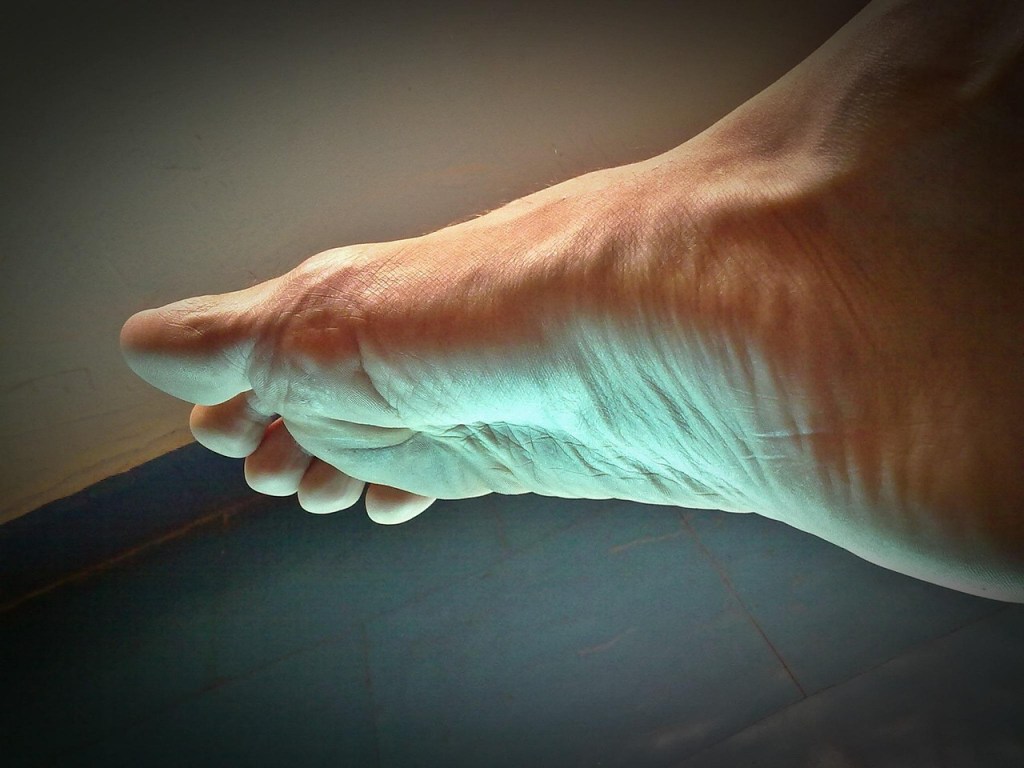
The thing is, I have to wear a giant black boot on my right leg. Despite the fact that the injury was to my ankle, the boot starts just below my knee. It features a plastic skeleton and exoskeleton, a foam liner, and far too much Velcro. It weighs, by my estimation, about eight pounds. I walk with a limp, not because of the broken ankle (well, not just because of that), but because I have no shoe (singular) with a sole as thick as the boot’s to wear on my left foot. And the recliner is the only furniture that can truly accommodate my needs.

Our house has a second floor, where the bed lives. But I can’t climb the stairs. Climbing them was iffy even when I used a cane (before the ankle accident but after the knee replacement). I’m living in the first-floor study that was the scene of my injury, and giving daily thanks that there’s a bathroom on both floors.

Dan brought a recliner down from upstairs. It doesn’t match the “decor,” and it doesn’t recline all the way. I can extend the footrest to horizontal, but reclining the back and headrest requires a maneuver that I’m physically unable to accomplish. It involves throwing your entire body weight against the backrest. (I have plenty of body weight, but not the strength to fling it with sufficient force. But I digress some more.)

I can at least sleep with my head supported and my legs straight rather than dangling. I sit in the recliner with my legs elevated to read, watch TV, and use my phone. To get to my real computer, I have to sit in my desk chair, where my legs dangle. (Evidently, dangling allows fluid to accumulate in my legs. It happened once. My thighs looked like Christmas hams. My cankles and the tops of my feet looked like puff pastry. My toes looked like Vienna sausages. But I digress even more.)

I see my surgeon on the 8th, and hope to graduate from the boot to something less confining. I was so happy to get the boot in the first place, as it allowed my foot at last to bear weight. (Ever tried using a walker with a knee sling? Don’t.) Now I can’t wait to get rid of the most recent torture device.

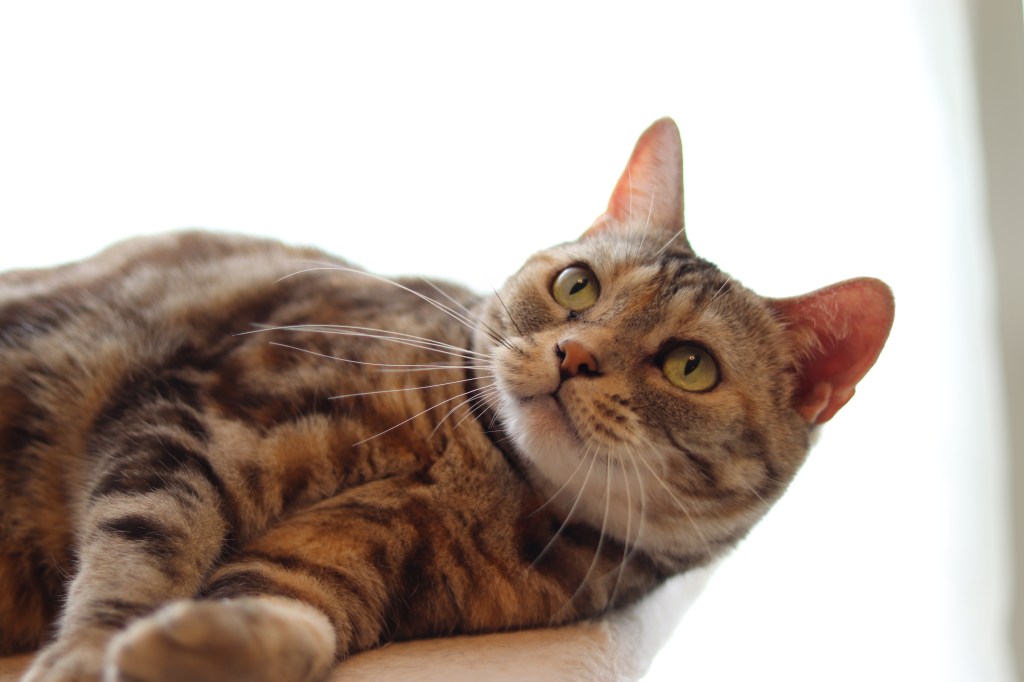
I’ll take the boot and the recliner, though, for as long as necessary. One benefit to the arrangement is that our cat Toby loves to lie on my lap as I recline and sleep there to his heart’s content. It makes my recliner extra-cozy and comfy, even if I can’t sleep lying all the way down.

New Love Languages

Noted author Gary Chapman has written that there are five “Love Languages.”

They are physical touch, quality time, words of affirmation, acts of service, and gift-giving. Others have suggested that there are seven love languages that add emotional support and intellectual sharing to the total. (These all sound just fine, but trouble arises when a couple speak different languages. If one offers physical touch and the other longs for quality time, they’re destined to clash. But I digress.)

I would like to suggest two more: baton twirling and cake decorating.

In general, I don’t care for cheerleaders, especially the ones for professional sports, who wear the skimpiest of outfits and do the lewdest of dances. That’s the stereotype, at least. I understand that nowadays, cheerleaders perform acrobatic moves and build themselves into complex pyramids. (Evidently, I need to rethink my prejudice regarding cheerleaders. But I digress again.)

Baton twirlers, on the other hand, I hold in higher esteem. They have a talent to show that involves a piece of equipment and dexterity. (Not completely unlike the tuba player in the marching band, who never gets the credit they deserve. But I digress some more.)

However, I discovered something when I talked to a coworker. Her daughter was a baton twirler, and Mom watched her practice in their yard, offered tips from her own twirling days, and came to every game she twirled at. What I realized was that it was her mother’s way of speaking love. If you define it in terms of the seven love languages, the eighth one (baton-twirling) could also be called consistency.

Consistency comes in any number of ways. The key element is being there. Someone who gives consistent attention is someone you can rely on. They’ll read your novel drafts (every time you rewrite them) and accompany you to all your dreadful office parties. You just know that when you need them, they’ll be there, whether that’s to remove a tick or (to choose an example not totally at random) open a letter from the IRS. Or watch you throw a stick in the air and catch it.

The other love language I learned about (cake decorating, in case you’ve lost track) was also inspired by a coworker. Every year, she created a cake for her son and decorated it in honor of one of his interests—cartoon or comic book character, motocross, whatever he happened to care about that year. These were elaborate decorations, not just a toy motorcycle popped on top of a bakery cake or something similar. They were elaborate, decorative, inspired, and personal. I’ve seen the pictures.

(It should be noted that this was in the days before everyone learned how to make buttercream roses, tempered chocolate, Swiss meringue, macarons, gelees, mousselines, molecular gastronomy, and all the other spiffy elements you can learn on YouTube or Food Network. But I digress yet again.)

I would call this the love language of creativity—making something special with your hands for a loved one. It doesn’t have to be something edible, though of course it can be. A flower you’ve grown yourself, a bookshelf you’ve crafted, or a refurbished treasure that’s been broken or forgotten are all examples of creative love. (My husband and my mother found a rag doll of mine (Raggedy Johnny, like Raggedy Andy, only John Denver) in disrepair after a move and fixed him up. That’s the sort of thing I mean. But I digress even more.)

I don’t expect baton twirling or cake decorating to appear in the next edition of the Love Languages book. But I do think that Consistency and Creativity deserve consideration. So does Consideration. After all, at heart, aren’t all love languages Consideration?

Mom’s Kitchen

My parents were totally not foodies. My father was a meat-and-potatoes eater, and my mother was a meat-and-potatoes cook. This was a marriage made in culinary heaven.

My mother’s porkchop, however, looked nothing like this picture. Well, the mashed potatoes did, though the gravy was her amazing sawmill gravy, a version that was popular among all our relatives. (Once when we were visiting Cousin Addie and Cousin Jim (actually ancient relatives who may have been cousins to our grandmother (or even great-grandmother. We were pretty lax about genealogy), Cousin Jim looked up from his biscuits and asked, “Who made the gravy?” “Why?” asked Cousin Addie, fearing it displeased him. “It’s good, he said. “Thicker than usual.” My mother had made it. But I digress.)

However, Mom’s plate of pork chops would have looked quite a bit different. The pork chop would be thin, simply floured, and fried until it was tough. (The pork fat would go in a coffee can on the back of the stove to use instead of butter or oil when cooking eggs. But I digress again.)

The zucchini would never have appeared on the plate, not even during the season when neighbors leave orphan zucchini on each other’s doorsteps like oblong green babies.

The asparagus would have come in a can. All vegetables did, except soup beans, which I ate with ketchup. (I thought I hated asparagus. I’d only had the slimy, canned variety, though. When a boyfriend made me fresh asparagus, I changed my mind. But I digress some more.)

She also made dishes that my schoolmates likely never had, such as pressure-cooked tongue, boiled chicken hearts and gizzards, and cornbread with no sugar (baked in a cast iron mold that looked like ears of corn). It’s considered “white trash” cooking now, but at the time it was just supper.

Lunches were grilled cheese sandwiches—Velveeta on white bread— or bologna and cheese on white bread. Subs were made of lunch meat, no lettuce, tomato, olive oil, or mayo. We got them from school fund-raising drives.

Chinese food came from those two stacked cans. Pizzas came in box mixes, a special treat. Desserts were from box mixes, too, or the slice-and-bake variety. The only exception was Mom’s lemon meringue pie, my father’s favorite, homemade, and always magnificent.

One thing I can say about my mother’s cooking is that there was always plenty of it, and leftovers as well. I was shocked when I had dinner at a friend’s house once, a family of six, and saw how fast they ate to be sure of getting enough and how they fought over the last dinner roll.

I was perfectly happy with my mother’s cooking at the time. It wasn’t until much later that I was exposed to a wider culinary spectrum and experienced beef stroganoff (which my father once described as “slop”), egg drop soup, and anything sautéd. (When I finally encountered these foods, it would be said that I had “got above my raising.” But I digress yet again.)

So, yeah, I may have become fond of sushi, calamari, hot-and-sour soup, whole wheat bread, Havarti and gouda cheese, enchiladas, and tiramisu.

But I still love grilled American cheese on white bread. My husband tries to make it for me as a special treat. But it’s not the same when anyone makes it besides Mom.

How to Start a Conversation

I never used to be any good at small talk. I would stand there, tongue-tied, while conversation went on around me. I was afraid I had turned invisible.

Then I met Erma the Armadillo, pictured here. She’s a purse that my mother bought for me from a catalog called, appropriately, What on Earth. This was back in the 90s, and I don’t think she spent more than $25 on the purse. When it came time to scare up a photo to go with this post, I found that today Erma is considered “vintage” and sells for as much as $140, used.

(I have a thing about armadillos. I fell in love with them when I learned that their main defensive technique is to jump straight up two feet, and their main natural predator is the automobile bumper. My defense mechanisms are like that, too. But I digress.)

Erma was actually a lousy purse. She was stuffed with cotton and had only a small zippered slot that would barely hold a driver’s license and a little cash. I had to carry anything else in my pockets. But what she was good at was starting conversations. Not that she spoke, but when other people saw her, they did.

People were fascinated. They always remarked on what an unusual purse Erma was. I would point out that she even had little tiny toenails printed on her stubby little feet. They’d ask where I’d gotten her. They’d ask why I wanted an armadillo purse. They’d ask more questions and share about other purses they’d seen or owned. Children were especially captivated by Erma. They couldn’t get over the fact that she wasn’t a toy and that she had handles. They always wanted to touch her, and I always let them.

When it comes to starting conversations with strangers, I always recommend accessories. My jewelry collection has some peculiar specimens. I have a sushi necklace that my friend Leslie made for me from air-dry clay. I also have a pair of bacon earrings, though I never mix cuisines in an outfit. Another set of earrings that people found amusing were the ones that looked like the planet Earth, complete with continents. (When I wore them, I liked to shake my head violently and shout, “Earthquake!” But I digress again.)

Conversation goes both ways, of course. “That’s an awesome (fill in the blank). Where did you get it?” is a good start on a good chat. People love to tell stories about their possessions, gifts, travels, etc. From there, conversation is an easy two-way street.

(It can fall flat from time to time. I once shared an elevator with a woman who had itsy-bitsy feet. I felt like I might have been staring at them. So I cleverly said, “Those are great boots! They make your feet look really small!” She replied, “They are really small.” After that, the conversation, and the elevator ride, ended. But I digress some more.)

I don’t know how people who don’t have unusual accessories start conversations. “Is that a good book you’re reading?” is one ploy, but it hardly ever works. Most people don’t read books in public, and if they do, they don’t like to be interrupted. And when I read books in public (which I do), I read them on my e-reader or phone, so the general public just thinks I’m doom-scrolling (which I don’t do).

Erma is no longer with me. Her handles wore out and Dan was unsuccessful at replacing them, which he tried to do. I don’t go out much anymore but when I do, I miss her. And the conversations.

The Cat Burglars

I used to live in a drafty log cabin on a windy hill. There were plenty of odd noises, especially at night. Now I live in a regular home in a windy valley, with lots of clutter. There are still plenty of odd noises, especially at night.

It’s been my policy to blame the cats (usually from three to five of them) for any noises – rattling, thumping, skittering, whining, tapping, crashing, howling, et endless cetera. Even if every cat in the house is occupying my lap at the time, I still try to find a way to blame alarming noises on them.

One night, however, my husband and I were peacefully sleeping when I thought I heard a noise in the living room.

It sounded like whispering.

Whatever else they do, cats don’t whisper. For once I couldn’t blame them. It had to be burglars, I thought, discussing what they wanted to take or which house to hit next or why we had such crappy stuff and was any of it worth anything.

I didn’t want to wake my husband, because then I’d have my N.O.W. card taken away, so I tried to remember where we put the baseball bat and extended my hearing as far as it would go. I crept closer to the bedroom door, where I could hear the sounds better.

Then I realized that the noise was indeed people whispering. In French.

Even in my fearful, dazed state, I couldn’t believe that there were actually burglars in my house, in Ohio, speaking French.

So I tiptoed into the living room. If for some unlikely reason, there were French-speaking burglars, I could astound them with my knowledge of French, threaten to call the gendarmes, or at least ask them for directions to the bibliothèque. (That’s most of what I remember of my high school and college French. I also remember some of my college Russian, in which I can say useful things like “Excuse me, please. Where do they sell books on history?” and “Yes, cabbage is a good thing.” (At least I would never be bored or starve.) But I digress.)

When I tentatively poked my head into the living room, however, I found the French speakers were on the television. A foreign film was playing. Funny. I hadn’t left the TV on when I went to bed.

Hm. My husband doesn’t watch foreign films or know any French or other foreign languages. (Actually, that’s not quite true. He knows a song in high school German that goes “My hat has three corners. Three corners has my hat. If it doesn’t have three corners, it’s not my hat.” But I digress some more.) Besides, he was asleep in bed.

Then I realized what had happened. Someone had activated the remote and selected a film channel. With the sound very low. Although I couldn’t name the culprit, it was clearly Matches or Maggie or Chelsea or Shaker, all of whom were giving me the “Who, me?” look. One of them had done it, or they had all cooked up the plot together. There was no use dusting for paw-prints. No doubt they had wiped them off with their floofy tails.

So the one time I knew it couldn’t be the cats, it was. Now I blame them for everything. Always.

The Joy of Napping

Dibujo de una nia en la cama preparada para dormir, es de noche, se est tapando con una manta mientras sonrie

Robert Fulghum tells us that he learned everything he needed to know in kindergarten. I can’t go all the way with him on #1—Share everything—especially when it comes to Facebook, but I’m a solid believer in #12—Take a nap every afternoon. (Well, and #9—Flush.)

I love naps—the sensual pleasure of snuggling into my bed in a cozy little nest of pillows, sheets, and blankets; the quiet purr of the fan and the cat who perches on my hip; the knowledge that, for a time, I can let go of the cares of the day; the promise of renewed spirit and energy; the satisfaction of turning off my phone.

Two of the best ways that I know of improving my mood are having a meal and taking a nap. The one often follows closely on the other, a phenomenon I am told is called “postprandial torpor.” (I’ve often wished I could call in sick to work and claim that affliction. Or “rhinotillexomania.” They sound so serious. But if anyone at your workplace knows Latin, you’re busted. (Which they actually did at one place I worked.) But I digress.)

Naps, however, are part of the reason that I can no longer work regular hours in a regular office. I find that bosses get upset if you take the phrase “break room” too literally. In the past, I’ve contemplated keeping a sleeping bag under my desk, but that would never work. Let’s face it—I snore. Prodigiously. Someone would be sure to notice, and object. (When I was traveling with my mother, she used to beg me to let her get to sleep before I nodded off. But I digress again.)

Fortunately, I work at home, so breaks and naps are entirely my own choice, except in case of deadlines. The transition from desk chair to bed is easy. I’m usually already wearing my jammies, and the commute is just up the stairs. (I can’t nap on the couch. It’s too uncomfortable. I used to be able to nap face-down on an airline tray table. This was useful because the flight attendant, seeing me, would think I was dead and leave me alone for the rest of the flight for fear of alarming the other passengers. But I digress yet again.)

Unfortunately, I’m not able to take “cat naps”—a misnomer if I ever heard one. My cats sleep on average 18 hours a day, and invariably right where a human wants to walk or sit. One of my cats even snores—daintily, but audibly. And no, it’s not a purr. (We’ve been thinking of getting a tiny CPAP machine for her, but we think she’d object to the mask. And cats have unpleasant ways of making their objections known. If you have a cat, you know what I mean. But I digress some more.)

Short, 20-minute naps do me no good. They don’t refresh me at all. In fact, they leave me more muddle-headed than ever. But the real reason I can’t take short naps is that it often takes me 20 minutes or more, usually of reading, to fall asleep. Since that’s the case, it’s hardly worth sleeping less than an hour or two.

But some of the time, even two hours of napping doesn’t do the job. Hence I have invented the Mega-Nap, of at least four hours. Mega-Napping doesn’t usually interfere with my nighttime sleep, either. On one memorable occasion, I Mega-Napped for a good six hours, and woke at 9:30 p.m., just in time to go back to bed and sleep for another 10 hours, giving the cats a run for their snoozes. I also suffer from Nap Attacks, when I hit the wall—hard— and simply must nap, collapse into a heap, or bite someone’s head off. Napping is usually the wisest choice.

With apologies to Robert Fulghum, I do see one glaring difference between kindergarten naps and grown-up naps. Children resist them and resent them and get cranky when they have to take one. Adults seek them and savor them and get cranky if they can’t have one.

What We Deserve

I saw a mattress commercial once that said something like, “You’ll get the good night’s sleep you deserve.” Or maybe it was good dreams. I was taken aback. Do we really deserve a good night’s sleep? The ad appears to not have taken into account new babies and new puppies, known destroyers of a good night’s sleep and neither one a problem solvable with a new mattress. If you’ve recently acquired either a baby or a puppy, a good night’s sleep is not so much something you deserve as something that you desire.

Especially in commercials, there seem to be many things that folks apparently deserve. The most recent one I’ve heard is toilet paper that tears off neatly in pretty scalloped lines. I don’t know about you, but I’ve never desired—or deserved—ass-wipe that made pretty patterns on the roll. I’m satisfied if there is a roll and not just a brown paper tube on the holder. After being stranded once or twice, I won’t even insist on it facing the right way (over the front) as long as it’s there when I need it.

When it comes to what we deserve, I generally think of the very basics. We all deserve to have shelter and food and physical safety. Maslow’s Hierarchy of Needs has these physiological needs as the foundation of its levels of development. Maslow’s theory is that we can’t move on to higher levels of the pyramid until we have completed the ones below. So, until we have our basic needs met, we can’t move on to higher needs like love and belonging, esteem, and self-actualization.

But apart from our basic needs, what do we deserve? Singer-songwriter Mary Chapin Carpenter has some thoughts (or rather Lucinda Williams, who wrote the lyrics). In her song “Passionate Kisses,” she lists “a comfortable bed that won’t hurt my back”—so maybe that mattress is something we deserve after all. Other needs she wants fulfilled are “pens that won’t run out of ink and cool quiet and time to think.” And of course, those passionate kisses. “Shouldn’t I have all of this?” she asks. Yes. Yes, you should, I find myself thinking. Especially the pens. (Those don’t appear on Maslow’s Hierarchy of Needs and neither do passionate kisses, except as a part of the love and belonging tier. But I digress.)

Williams was really onto something. While the comfortable bed and the pens cost money, the cool quiet and the time to think don’t, and neither do the passionate kisses.

I can think of a few other things we deserve as well. Healthcare that won’t bankrupt us. Enough food to stave off hunger, especially for children. Low-cost housing that the working poor can afford. Just to name a few. You know, stuff on the lowest level of Maslow’s Hierarchy.

Unfortunately, those do cost money, which really needs to be provided by social programs that require government funding, either national or local. Charitable organizations can help too, but they can’t shoulder the entire burden. And in the current political climate, funding for social programs is increasingly on the chopping block.

(And no, I’m not suggesting that there should be social programs that would offer funding for pens that don’t run out of ink or passionate kisses. That would be crazy. Maybe there should be a research effort to work on the pen thing, though. But I digress some more.)

For me personally, I think I deserve a mouse and keyboard that won’t run out of juice, a refrigerator that won’t run out of juice, and passionate kisses that won’t run out of juice. My old mattress works just fine.

The Edible Elephant

When you think about therapists and elephants, you probably think of family therapy and the “elephant in the room.” As you may know, it refers to a not-so-secret secret—something everyone in the family knows but won’t talk about, like a family member’s alcoholism. But what if the room the elephant’s in is the kitchen? And what if the necessary thing to do isn’t to talk about the elephant but to cook it up and eat it?

There’s another saying among therapists, “Eat the elephant one bite at a time.” (Yes, I’m in therapy—have been for decades. (I can hear you saying, “Well, that explains a lot.” Don’t deny it.) But I digress.)

What it means, essentially, is “You’re going to be in therapy a long time. Maybe decades. Like Janet.” Thanks to insurance companies (or no thanks to them), therapy that takes six weeks or fewer is preferred. But there you are, some of us take just a tad longer. “Eating the elephant one bite at a time” is like “baby steps” (only much more vivid).

(I don’t know what sauces or side dishes would go with roasted elephant—or, more likely, pressure-cooked elephant. Maybe a peanut sauce. (Sorry not sorry.) But I digress again.)

My father also had an animal metaphor he used on me more often than I’d like to say: “You don’t have to go at it like killin’ snakes.” It’s related to the one about the elephant. It was advice that I didn’t have to do whatever it was I was doing (like filling out college applications) in a desperate hurry. I could take my time.

(I think if they were actual snakes, though, like the tomb full of ones in Raiders of the Lost Ark, I would want to kill as many of them as I could as soon as possible. The saying only applies to metaphoric snakes, I guess. But I also guess that the elephant is metaphoric, too. But I digress some more.)

Once when I was editing educational magazines for a living, I had a writer I liked very much. He had good ideas, wrote them to the right length, and turned them in on time—he was very reliable, and I used him a lot. But one day he sent me an article about not letting paperwork pile up. It was full of animal metaphors, though not, as I recall, elephants or snakes. But when he got to the point of describing a huge stack of overdue papers on one’s desk, he compared it to a rotting water buffalo. It was certainly vivid. And memorable. And, much as I hate to admit it, apropos. But I gently let him know that it was a little too vivid. I told him he could keep the other animals but the water buffalo had to go. (He was not in the least upset. That’s another thing I liked about him. He never kicked about being edited. But I digress yet again. (I just typed “digest” instead of “digress.” I need to wrap up this post.))

The end. Or, rather: You may think that this is the end. Well, it is, but there is another ending. This is it. (Just to get a duck in here with all the other animals.)

Beware the Sentient Cereal

My husband hates TV commercials and other forms of advertising. There’s nothing odd about that. Most of us do.

One thing he objects to is sexism that targets men. If he sees a commercial that presents a man having trouble caring for a child or cleaning the kitchen, then a woman swoops in to solve all his problems, his head explodes. “That makes men look incompetent. That’s sexist!” he says. “You taught me that!” (Well, that’s true. I guess I did. So many commercials, even in these more enlightened days, depict women with disgusting, flimsy garbage bags and the hefty-hefty-hunk providing non-stinky bags as he ripples his pecs. But I digress.)

One of the ads that he has particular trouble with is the one where little angels—cherubs, really—manufacture toilet paper. “They’re dead babies,” he insists, “and they’re making ass-wipe. It’s bad enough putting dead babies to work, but this is demeaning.” That’s a hard argument to argue with. (It’s no use telling him that it’s a metaphor for softness. He only believes in metaphors when he creates them. But I digress again.)

Another one of his least favorites is the Pepto Bismol commercial where they sing about assorted gastrointestinal ailments. “Turn the sound down!” he yells if I have the remote. The idea is for me to mute it before they get to “diarrhea.” Somehow, singing about that bothers him more than the other ailments. (I’m troubled by the fact that they touch their hips when they say the word. I tend not to shoot from the hip, so to speak. But I digress some more.)

He also objects to billboards or restaurant signs that, for example, show a pig offering plates of pork to people. “That’s horrible!” he says. “They’re encouraging people to eat one of their own kind.” He’s right about that, I have to admit. It’s kind of creepy.

Where we seriously part ways is over one certain cereal commercial. It shows cereal squares frolicking, so I’d describe them as anthropomorphized. The cereal bits chase each other and then one eats another one. To Dan, it’s almost as bad as a B-grade horror movie. “I hate this commercial. They’re eating each other!” he cries. “That’s cannibalism!”

“It’s cereal,” I say. “At least pigs are sentient beings. Cereal isn’t.”

“It’s cannibalism, anyway. They’re being portrayed as sentient,” he says. “They walk and talk and play on slides.”

“But it’s just cereal!” I reply. That never ends the argument though, and it doesn’t prevent having the same conversation every time that ad comes on. I just have to wait until another ad comes on and hope it doesn’t trigger another one of his outbursts.

(Some would say that pigs aren’t sentient, but I’m willing to agree with Dan on that. They’re very intelligent. In my worldview (which, of course, is the correct one), most animals are sentient. They have thoughts and emotions, and not all their behaviors are instinctual. You’ll never convince me that a cat isn’t a sentient being. I’ve known ones that can engage in complex behavior like playing fetch or snubbing us. Crows are sentient; they can learn. Elephants are definitely sentient; they can grieve. I don’t know about fish and insects, though. I haven’t decided about them. But I digress yet again.)

But cereal isn’t even alive, much less capable of movement, thoughts, and emotions. It’s inert, not capable of higher functioning. Or any functioning at all, really.

We see these atrocities everywhere. Even some of the streaming services I pay for have ads these days. We don’t want to pay extra for the no-ads variety. They cost enough as is. But the cost to me is hearing Dan shout at the TV, complain about sexism, and argue with me about supposedly sentient cereal. It’s part of what I pay for.