 I officially retired last year, when my birthday hit the federal standards, and I’m here to tell you, it’s not all it’s cracked up to be.
The commercials on investment – sorry, “wealth management” – would have you believe that retirement means a lot of opening your dream business, building your own Wright flyer, and washing elephants in Africa. (Or maybe India. I didn’t get a close look at the elephant’s ears. But I digress.)
What I’ve found is that in retirement, not much has changed for me. Oh, I get a modest infusion of cash every month via Social Security, which is certainly more than welcome. But I haven’t been able to quit my job. It’s freelance – not the sort of job that boasts retirement benefits. And the 401k from when I did have a job like that is long gone, eaten up by a voracious spell of unemployment owing to health problems.
What this all means is that life before and after retirement are markedly similar. I still work that part-time freelance job (which is not, thank God, over the limit for what a person on SS is allowed to earn). I still have to forego foreign travel. I take surveys to earn enough points for dinner at a nice place (within a very limited definition of a nice place). At the end of the month, I doubt my decisions on how many cable channels are enough. I have to buy my wine at Aldi.
Of course, there are benefits. The federal government sees to that (so far). That deposit that appears sporadically between the 9th and the 16th of the month (don’t ask me why) makes a huge difference in my lifestyle and my nerve endings. I am indeed grateful that I do not (yet) qualify for SNAP benefits as well. I am able to pursue my hobbies of yelling at whippersnappers and waving my cane at them.
I know it’s idiotic to use television and as a standard of what life will be like, but I can’t help looking at all the TV shows and commercials. Retired people romp with their grandkids and even babysit them (I don’t have any grandkids and likely wouldn’t babysit them if I did). They play golf, a “sport” I detest. They invest. They have fulfilling sex lives. Their dentures fit. (I don’t have dentures, but it’s the idea of the thing that’s important here.)
Of course, I wouldn’t know what to do with that sort of retirement if I had it. Work has become a habit after these many years and, though I’m sure I wouldn’t miss not doing it, it provides a sense of purpose and familiarity. I traveled when I was younger and could get around without a rent-boy to carry my luggage. There are still places I would like to see, but the places I have been were pretty amazing. If I had the choice to save that money (and I suppose I did), I wouldn’t. Perhaps when and if my memories grow dim, the sights I’ve seen will become distant blurs. But having had the experiences is something that I treasure.
And really, I am blessed, even in this not-quite-idyllic retirement. I still have my husband and we have our cats. We have a roof over our heads and food on the table. We have friends and family and an assortment of other things that, as they say, money can’t buy. I know that not every person of my age and state of life can say the same. (And there is something wrong with a system that lets that happen.)
So, even if I don’t have the golden-sunset vision of retirement, I am largely satisfied with what I do have. Someone else will just have to wash those elephants’ ears. I’ll make do with the kind they have at the local bakery.

 Quick quiz: What do Jesus and the poop emoji have in common? They both are associated with Easter, silly!
 Of course, I was right. Placenta cream is weird. But not that long ago, it was touted as the latest beauty secret and sold to millions of women (skin care for men was not a thing back then). Made from the placentas of sheep, horses, or oceanic creatures, the products were available as skin creams, hair gels or conditioners, and facial masks.
 We all remember going to an amusement park or a store and seeing a rack of hats or keyrings emblazoned with people’s names. What a thrill it was for kids to find their own names, and how disappointing when your name didn’t appear or was spelled another way! (Now, of course, parents are wary of putting children’s names on their clothing because of potential kidnappers. But I digress.)
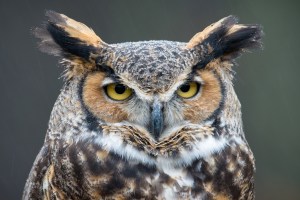 Owls are everywhere these days. I can think of at least four series of commercials that use owls as pitch-birds: ones for travel, eyeglasses, higher education, and decongestant. I almost understand the eyeglasses one, since owls have those big eyes, and I figure the university one is on pretty safe ground, given that owls are associated with wisdom. Geico even had an ad featuring an owl, but given that company’s other commercials, it scarcely fazed me. At least it wasn’t as nerve-shattering as the little piggy one.
 Don’t get me wrong. I love Dr. Seuss. But I think the latest adaptation of the Grinch makes two too many.