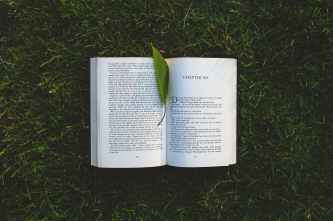
 Everyone knows that the easiest way to raise a child who reads is for the entire family to read. The child should see the parents reading, lots and often.
But that’s not the way it happened in my family. Oh, my folks could read; they just didn’t.
I never remember my father reading anything when I was a child. He got his news from the television. He might thumb through an issue of American Rifleman at the car wash. But he didn’t read books while we were kids.
(Later in life, when he was bedridden with bone cancer, a family friend who worked for the library would bring him bag after bag of Zane Grey and Max Brand and Louis L’Amour novels, which he devoured. But I digress.)
Despite the lack of reading that went on in the house, there was always plenty of stuff to read. Little Golden books and Bible stories at first. I learned to read at my mother’s side, as she read storybook after storybook to us girls. Although she didn’t read for herself, she read for us.
My sister read some. Being a very literal person, every year she would start to read Under the Lilacs while sitting under the lilac bush in our backyard. (I don’t know if she ever finished it.) When she reached the horse-mad stage, she read Black Beauty, My Friend Flicka, Misty of Chincoteague, and anything else equine-related she could get her hands on. Her reading tastes were largely satisfied with that.
I think the thing that turned me into the voracious reader I am today was not the example of my parents, but the sheer amount of literature that was available. Our parents purchased sets of children’s books. (I can’t remember what was in that series now besides Under the Lilacs and Uncle Remus Stories, which gave me fits with the dialect.) We had collections of Nancy Drew books and Tom Swift books.
My mother had a subscription to Reader’s Digest, but I don’t remember her reading it, or the Reader’s Digest Condensed Books that sat in fat rows on our bookshelves. When we weren’t making Christmas trees of the magazines by folding the pages, I read them and the Condensed Books. That’s where I acquired my taste for true adventure, I think. It’s not that big a leap from “Drama in Real Life” to Jon Krakauer’s Into Thin Air. I first discovered To Sir, With Love as an R.D. Condensed book, then devoured everything I could get my hands on about teaching, my career goal at the time.
We also made extensive use of the public libraries and the ever-awesome bookmobile, since my parents’ middle-class income couldn’t keep pace with my reading tastes. And there were used book stores, too, where I could swap a grocery bag full of books for another.
There was no way my parents could screen my reading matter, so they didn’t even try. I didn’t receive a very balanced reading education or a very sophisticated one. I read whatever interested me, from novelizations of The Man from U.N.C.L.E. to histories of Russia. I discovered Dr. Seuss and The Hobbit and Erma Bombeck. “Serious literature” I got from school, but love for reading came at home.
Having parents that read is a good thing, and no doubt it does help turn some children into reading mavens.
But if you ask me, letting a child explore reading at her own pace and through her own interests can be as effective as any planned course of literature or example of parents perusing the Great Books.
It worked for me.
 I wanted to publish a book. And so I did. The second book was more difficult, and not because it was harder to write. I had some things to learn about the realities of publishing.
 You know all those posts you see this time of year about how important it is to support artists and local artisans?
 I’m a book lover. Have been all my life. I don’t even remember learning to read. So why am I now getting rid of most of my books?
 We all remember going to an amusement park or a store and seeing a rack of hats or keyrings emblazoned with people’s names. What a thrill it was for kids to find their own names, and how disappointing when your name didn’t appear or was spelled another way! (Now, of course, parents are wary of putting children’s names on their clothing because of potential kidnappers. But I digress.)