Category Archives: funny things

Blue Hair – Not Just for Punks Anymore

It used to be that we made fun of little old ladies with blue hair. It was the physical sign of social uselessness and impending senility, or so we thought. We mocked them in songs like “Blue Hairs Driving in My Lane” (ttto “Blue Eyes Crying in the Rain,” in case you didn’t pick that up).

It was a thing that old women with white or silver hair did. They’d go to their hairdressers regularly and ask for a blue rinse. (Many of them pronounced it “wrench.” No, I don’t know why.) I also don’t know why they did it. Maybe it was to prevent the hair from acquiring a yellowish tinge, as it sometimes does. Maybe it was a holdover from when you would add “bluing” to laundry to get whites really clean. (Bluing is also something you do to guns to make them dark and shiny. It must work differently on sheets. But I digress.)

Then blue hair came into style – for young people, both men and women. Not the pale, ice blue of the blue rinse, either. These blues were deep and vibrant and also made the wearer unemployable when they first appeared. There are still businesses that feel that way, but a lot have surrendered to the inevitable.

It wasn’t just blue, either. Shocking pink, Day-Glo green, candy-apple red, and deep purple were also popular choices. Wearing hair in Kodachrome colors signaled that you belonged to a tribe of young people that didn’t care for convention, or were musicians, or enjoyed other body mods like piercing. Multi-colored hair went along with mohawks and other radical hairstyles to separate the free spirits from the “straights.”

Why are we now seeing older people sporting other-than-natural hair? Maybe the teens and twenty-somethings simply aged but refused to give up their signature hair. Maybe they became parents of teens and indulged in mutual hair-dying as a bonding experience. Maybe they are baby boomers with memories of letting their freak flag fly, as we used to say. Maybe they retired and no longer cared about employment. Or maybe these women reached an age when they no longer gave a crap about what other people thought of them.

Whatever the reason, they indulge in brightly colored locks. I have considered doing something colorful with my hair, though I meant to start out slowly, with those clip-on strands of pink or green, often adorned with beads or feathers. Instead, I stopped going to the hairdresser at all and let my hair grow long and gray, like my Granny’s did. (Not that I am above using someone else’s non-gray hair on special occasions.)

I still might dabble in crayon colors someday. I admire the older women who defy convention or simply create their own. Many of the women I know have indulged, and not just the artists, either. Women from all walks of life have jumped on the trend and now sport outrageously colored locks. I have the impression that young people enjoy seeing this, but I’m not altogether sure. Maybe the teens will go back to natural hair colors in reaction. The seniors may have stolen the style completely.

Perhaps this trend will fade, like so many others, and seem as ridiculous in old photos as the big hair that almost destroyed the ozone layer from all the hairspray. I prefer to think that seniors are going to continue rocking this look as long as they can and, as new populations reach senior status, they will join in and let their freak flags fly, too!
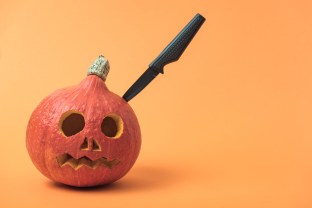
 

Halloween? Bah, Humbug!

I hate Halloween.

Mind you, I have no problem with the pagan event (Samhain) overtaking the religious one (the eve of All Saints Day).

I have no problem with skeleton cookies and other trappings of Mexico’s Day of the Dead (Día de los Muertos).

I have no problem with children dressing up as witches, vampires, devils, or anything else they want to be, whether it smacks of evil or not. (I do hate the “sexy” trend in adult costumes. Sexy crayon. Sexy Mr. Rogers. (No, really.) Whoever thinks these up has too much time on their hands and too much weird on their brains.)

What I hate is the trick-or-treating. (It should really be called treat-or-vandalism.)

When I was doing the trick-or-treating, it was different, of course. There were still difficulties. I wear glasses, and back in the days of plastic dime-store masks, my choices were to wear the glasses but have the mask slip around and make me functionally blind or to wear the mask without glasses and be functionally blind.

Later on, I put together my own costumes out of old clothing and other things around the house. That was fun, though occasionally baffling. I think most people guessed “gypsy” from the bandana and necklace of gold coins, but what they made of the pink flowered dress and tan plush toy snake I just don’t know. Even I don’t remember what that was supposed to be. (The g*psy outfit came long before we all learned about cultural appropriation and ethnic slurs. But I digress.)

Around that time, the first round of tainted candy scares went through, when children took their goodie bags to the ER to be x-rayed for razor blades and had to throw out apples, Rice Krispie treats, and homemade fudge. That took a certain something out of the playfulness. Halloween parties became a trend, where treats could be supervised and stupid party games involving cold spaghetti and peeled grapes could be played. I think those parties have now taken over from door-to-door begging.

My mother loved the trick-or-treating. She would ooh and aah over the cute little kids and their costumes. What she didn’t like were the teenage boys who went around with pillowcases and didn’t even bother to dress as anything. They didn’t even smear on charcoal beards and pretend to be hobos. (Mom always kept a special bowl of last year’s left-over bubblegum just for them. It was unpleasant, but not actually poisonous.)

I think I started hating trick-or-treating when my Mom got older and couldn’t pop up and down to answer the door, so I had to do the popping and dispensing of candy and old bubblegum and describing of the costumes. But I did it for her.

Later, when I was on my own, I lived in upstairs apartments and other locales that didn’t see a lot of costumed traffic, so I had time to think it over and discover how much I disliked the custom.

Over the years, I’ve grown more and more antisocial, nearly to the point of waving my cane at youngsters and calling them “whippersnappers.” We live in a cul-de-sac at the very back of the neighborhood, so we don’t get many visitors anyway. My husband always buys too much candy and we eat our favorites both before and after the fact. (I have to remind him not to get Butterfingers. I hate Butterfingers.)

Actually, buying too much candy is a defense mechanism for him. One year we didn’t have enough, and he didn’t even have enough loose change for everyone. As the kids were departing in sorrow, he yelled out the door in desperation, “Does anyone want some Coke?” He meant the soft drink, but the shocked look on their faces was priceless.

Now I simply refuse to participate, curmudgeon that I am. I stay in the back of the house and turn off the porchlight, the universal signal for “Don’t stop here. Keep moving.” (Though I don’t know why we bother with porchlights, as trick-or-treating is now always done during daylight hours to cut down on car accidents and candy-muggings.)

These days I’m the one with knees that don’t like popping up and down or creaking up and down, really. I get depressed when I see how many little girls have bought into the pink princess-y thing. Opening the door makes me tense, as we have a cat who is a door-darter. Every other year my husband says, “I did it last year; now it’s your turn.” Sorry, not falling for that one. If you like it, fine. If you don’t do it, I’ll just read a nice zombie novel like Feed to mark the occasion.

This year there is a slightly encouraging lately – having a teal-colored pumpkin outside your door if you will be giving out non-food treats, such as small toys, colored pencils, glow sticks, and the like. It will cut down on food-allergy-related deaths, but it will also result in a lot of stomped-on teal pumpkins. The older kids already have made a sport of stomping pumpkins and running. Imagine their annoyance at receiving a pinwheel or a Koosh ball.

The start of the pumpkin-stomping craze was when I stopped decorating too. You can save Christmas ornaments from year to year, but last year’s pumpkins are just sad. I suppose I could find some nice cobwebs in the basement, but getting them intact to the windows upstairs would be difficult.

Honestly, I could just skip Halloween and be perfectly happy. In fact, I do and I am. Call me a spoil-sport or a party-pooper if you will, but spoiling sports and pooping parties are how I celebrate.


Before Food Trucks Were a Thing

Food trucks are big business now – or at least a lot of small businesses. A far, far step up from the “roach coaches” that used to deliver pedestrian sandwiches to large businesses with numerous workers, food trucks now provide everything from street food, to gourmet offerings, to not-so-humble cupcakes.

There may not be a taco truck on every corner, but you can find food trucks singly everywhere from tattoo studios to churches, or a whole flock of them at local festivals, colleges, parks, and parking lots. Long lines, few places to sit, and weather conditions can make food trucks not so easy to access and enjoy, but their many temptations keep the people coming back.

Sometimes these mobile purveyors of good food and gluttonous goodies even turn into brick and mortar shops. Our local Zombie Dogz is a good example. A truck offering all-beef hotdogs with outrageous toppings and creepy names (“The Waking Dead” for a breakfast dog, for example) recently reached the end of its useful days and had enough of a following to open a very popular shop in an advantageous downtown location.

Even the food trucks with more humble offerings are tech-savvy. With Facebook and Twitter they let their fans know where they’ll be and when. Groups of such mobile food purveyors even band together in food truck rallies which they advertise widely on social media.

But lest you think that food trucks are modern inventions, way back in the 70s, there was a food truck that staked out Cornell, the university I attended. Operated by a local bar and grill, The Johnnie’s Big Red food truck appeared regularly at locations in North Campus and West Campus. Weary and hungry students could get sandwiches and subs to take back to their dorms and chow down.

When I learned of this phenomenon, which was advertised by word-of-mouth, I had to try it. One evening I walked up to the window and ordered a sub. To my surprise, the man behind the counter asked, “What kind?”

What we had was a failure to communicate. Growing up as I did in a Midwestern suburb, a sub meant only one thing: a lunch meat sub, which varied only slightly by whether it included ham, pimento loaf, or salami with the bologna and whether it had mayo. They usually had slices of American cheese, though that was not necessarily a requirement. Other amenities such as lettuce and tomato were conspicuously absent, making the sell-by date harder to pinpoint (they didn’t mark them back then). The subs were wrapped in clear plastic and served cold. Selling them was often an activity to raise money for sports teams, marching bands, and the like.

The Johnnie’s trucks sold any kind of sub you could imagine, with dozens of choices of meat, cheese, toppings, and accouterments, wrapped in foil and served hot or cold. I had to step out of the line, look at the menu board that I hadn’t expected or noticed, and figure out what I really wanted.

There was a trick to ordering at the truck, too. If you picked up on the lingo, you could get your made-to-order sandwich faster. It was sort of like the old diners where you told them to “run it through the garden” for a burger with everything. Once I got it down pat, my usual order was “RBC on wet garlic with mush” (roast beef and cheese on garlic bread with pizza sauce and mushrooms).

A far cry from bologna, ham, and pimento loaf. Or hot dog with diced green apples, blue cheese, bacon and drizzled with bbq sauce, for that matter.

Living the Wild Life

Our house felt remote, surrounded by trees and a small stream and prairie grasses and wildflowers. Our neighbors were remote enough that we could have become practicing nudists, were it not for the invention of telescopes. Actually, it was very close to everything required for modern life.

The animals in our area did not know this. We were regularly visited by squirrels, chipmunks, snakes, bats, deer,  and rabbits. (Also wasps and carpenter bees, but those were much less welcome.)

My husband’s favorite visitors were the hummingbirds. Every summer, one brave hummer would fly up to his study window to let him know that it was time to get out the feeder and fill it up, damn it!

When we first looked at the house we would need to rent (after a tornado demolished our beloved home), I was dismayed to see that it was in a cookie-cutter suburb with zero character. But then I saw a blue jay fly out of one of the bushes. It was the first one I had ever seen and I considered it a good omen.

We moved in and began to make the place our temporary home. The first thing we bought was a double bird feeder, with a regular feeder as well as one for hummingbirds.

And the birds came. In droves (or flocks, I guess). Enough to terrify Tippi Hedren. We saw blue jays, sparrows, chickadees, pigeons, and the occasional red-headed woodpecker, once the word got about in the avian community. Many of the birds were messy eaters and showered seeds on the ground around the feeders, which occasioned the arrival of dozens of birds at a time, eager to chow down at our all-you-can-peck buffet. Then something would alarm them, and they would all take off simultaneously.

The alarming something usually proved to be a squirrel. The local squirrels grew fat and sassy on the spilled seeds. When they were depleted, the squirrels made attempts on the feeder itself. Let me assure you, few things are funnier than watching a squirrel courageously climbing that thin pole and then sliding helplessly back to the ground.

Occasionally a squirrel would make it up to feeder height, then be completely stymied by the construction of the feeder. Stranded on top of the feeder, but unable to maneuver down to the perches, the squirrels eventually gave up and resigned themselves to raiding the buffet on the ground.

The neighborhood we’re now living in is very homogenous, with manicured lawns and houses close enough together to discourage even attempted nudism. (None of the neighbors seems bold or reckless enough to practice the art (hobby? lifestyle? pursuit? avocation?)) With such wild life unavailable, we figured that we were out of luck too when it came to spotting frolicking animals (the type unclothed by anything but fur). If the stereotypical suburban houses and lawns were that uninviting, surely there would be little to no local fauna, aside from the ravenous squirrels. Or so we thought.

We were wrong. We have seen a number of local cats strolling through our back yard (if they count). There has been at least one chubby bunny nibbling our conservatively mown grass. And then we saw a different animal, one we couldn’t quite figure out. It was obviously a large rodent of some kind, bigger than a cat would want to attack, and, as it was brown, clearly not a possum. (With which critter I have had some unfortunate experience – https://wp.me/p4e9wS-46. But I digress.)

As it waddled as quickly as it could toward the treeline at the back of the property, we caught a glimpse of a tail, though we didn’t get a good enough look to determine the size and shape of the trailing appendage. Aside from being startled, we had many questions. Was the tail broad and flat enough that this could conceivably be a beaver? (The next suburb over was named Beavercreek, after all, although around our rental house there was nary a wetland to be seen.) Was it a groundhog (or woodchuck)? Did groundhogs have tails?

A quick trip to Google informed us that groundhogs and woodchucks were the same animal; that they did, indeed, have tails; and that they were almost completely herbivores (which I suppose means it was after the seeds, like everybody else). A check of the hive mind on Facebook produced a consensus that what we had seen was most likely a groundhog, as well as a few jokes about how much wood it was or wasn’t chucking.

Our cats, of course, look upon this abundance with assorted amounts of glee and hunger. We placed a cat tree near the window so they could enjoy this version of Cat Food Network, or mope that they couldn’t reach the birdies to bite them.

Will I be glad to get back to the environs and the familiar wildlife that I miss? Of course. But will I also miss this new diversity and fresh delights that I have found? Of course, also.

But since the tornado flattened most of the trees in our old surroundings, I’m afraid that the fauna will likely change. And nudism will be out of the question.


Rearranging the Furniture in My Head

I knew a woman once who, when she was at business conventions and besieged by requests, saturated with meetings, and overwhelmed by the exhibit hall, stated that she had to retreat to her hotel room “to rearrange the furniture in my head.” I thought that was a great way to put it. We all have furniture in our heads and sometimes it’s necessary to place it in areas where we won’t trip over it and bruise ourselves. Or there may be more furniture than we need and we must jettison some of it.
Now, however, rearranging the furniture in my head has become more literal. I’m basically in the position of having to furnish an entire house, and indeed to be involved in planning the shapes as well as the contents of the rooms, since our house was destroyed by a natural disaster.

This is challenging. We loved our house the way it was, with only a couple of changes that we could envision making. We have an architect working on it and he’s made some pretty fine suggestions. He has told us that we can add amenities such as skylights and bay windows, plus making what had been a deck into a screened porch or “catio.” We’re also willing to trade some storage space to have a larger downstairs bathroom. But even if we left the floor plan basically the way it was, there are still a lot of decisions to be made.

It’s the furniture that has me puzzled. All our life, our house has been decorated in what my parents liked to call “Early Married Junk.” (We’ve been married for more than 30 years and that’s still our decor.) Now, having to pick out things that actually go together is stressing me out.

Choosing color schemes is no picnic, for example. We barely had a color scheme for our wedding, starting with off-white so the guests wouldn’t snicker. This was in the days before weddings had themes or groom’s cakes or favors for the guests or designer cocktails. We had a cake decorated in our colors and called it a wedding day.

But now it seems that every room must have a color scheme and a “look.” Boho? Country? Modern? Classic? Retro? Anything but ’50s, no matter what my husband says.

Saying goodbye to our original kitchen decor will not be a hardship. The house was designed in the ’70s and the kitchen was done in orange. Countertops so orange you could lose a pumpkin if you placed it on one of the surfaces. Psychedelic patterned indoor-outdoor orange carpeting that caused hallucinations if you stared at too long. I don’t know what we’ll settle on, but that’s not it. Generally speaking, I think carpeting in the kitchen is a Bad Idea, psychedelic orange or not. Linoleum, tile, press-n-stick “wood” – nearly anything else.

Once I tried to decorate a bedroom. I was going for a travel theme with bright, yellow-gold walls and our assorted souvenirs as accents, with jungle print or brown, rust, and gold bedding. I managed to talk my husband into light oak for the bed, but couldn’t convince him to ditch his cherry chest-on-chest. It was an antique, but also a dark, hulking presence against one wall. We had compromised on each of us decorating one half of the room’s edges. My half had a rattan teacart and etagère. His had classical paintings of naked nymphs, plus brooding African masks that seemed to follow your every move. Admittedly, they did complement the travel theme, but they were still unnerving.

Now we will have a master bedroom, two baths, two studies, a great room, and a kitchen/dinette to deal with. By the time the house is built, I may just decorate every room with padded walls. Until we actually have rooms to put things in, I’ll keep browsing decorating websites and rearranging the furniture-to-be in my head.

Camping Then and Now

There we were, bedding down on sleeping bags in our tents, the cold, hard ground only a layer of canvas or plastic away. When we sprang out the next morning, our lithe teen forms dressed in green shorts and Vibram-soled boots, we hoisted our backpacks and hiked over hill and dale and rocky trails, singing optimistic songs and breathing deep of the fresh air. We ate granola as we walked.

Later that day, we built a fire and sat upon logs, tree stumps, or little water repellent squares while our dinner cooked slowly, smoke curled around our heads, and mosquitos had their meal before we had ours. Then it was more songs, jokes, stories, and talk till it was time to pour water on the fire, make sure the ashes were cool, and return to our sleeping bags, where, after hours more chat (not the electronic kind, either) we dozed off.

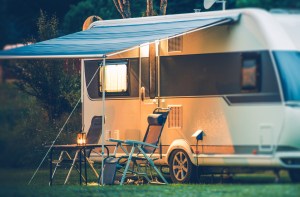
We were Girl Scouts and we thought that was the only way to camp. We’d see camping trailers and pop-up campers and elaborate RVs at the edges of the campgrounds nearest the parking lot and think, “That’s not camping! Those people aren’t having the real camping experience. No tents. No sleeping on the ground. Cooking over propane.” We sneered at them (amongst ourselves, being polite little things) and swore we would never indulge in such a travesty of the outdoor experience. It ought to involve at least a little hardship, after all, or where was the challenge?

Since then we have passed the 40- and 50- and even the 60-year marks and our challenges have largely changed. The last time I slept on the ground was well over a decade ago and an outfitter had to bring the tent, because I no longer owned one. Instead of the chirps of birds and rustle of small animals, the sound of our bones creaking and our groans as we tried to raise ourselves to standing positions awakened us. The outfitter cooked the breakfast and we were truly grateful.

Now even that sort of camping, with its modicum of luxury, is beyond me. For one thing, I need an electrical outlet nearby to run my CPAP machine. For another, my ability to climb from a horizontal position on the ground to an upright posture is, to say the least, difficult, as several falls in my home have proven. Some days I can get up and some days I need help. With my luck, I would be camping on one of the latter.

Now I would welcome a pop-up camper. It may have minimalist beds, but they are off the ground. Even a camping trailer would be nice. Those tents never really kept out the rain anyway and, given the choice, I would much rather sleep under a dry blanket than in a sodden sleeping bag.

(I’m still not completely sold on the huge RVs. I think of them more as a way to see the country than as a way to camp. Though they might be good for families with children and grown-ups even older than I.)

And now we have “glamping,” an ugly portmanteau word of “glamor” and “camping” that touts luxury and style. While glamping you can sleep in comfortable lodges or huge tents fitted out with full-sized beds. With throw pillows, even, in one of the photos I’ve seen. Wikipedia says it offers “the luxuries of hotel accommodation alongside ‘the escapism and adventure recreation of camping.'” “Resort-style services” may be available as you bask in Bali or indulge in a photo safari. In other words, camping for spoiled rich people. I know the rustic-looking cabins with all the comforts of the Waldorf promise a lot, but I can’t help feeling a little like I did as a naive and sturdy Girl Scout.

That’s not camping.


How the World’s Crappiest Typist Got a Job Typing

Actually, I am probably not the world’s very crappiest typist. I don’t use two fingers in the style called “hunt-and-peck.” (Except the one time I had to use a Cyrillic typewriter to write our Russian vocabulary lists. But I digress.) However, I am certainly among the worst.

As a kid, I played with an antique typewriter like the one pictured here. (It wasn’t quite so antique then.) I think there was even a typing manual that went with it, but my sister and I ignored it. We just had fun clacking the little buttons and seeing if we could hit multiple keys at once and cause a traffic jam up by the ribbon.

I might have learned real typing in high school, but I didn’t. Back then, there were different “tracks” of courses for students thought to have different job potential. Typing, along with shorthand and bookkeeping, was in the “secretarial” track curriculum. (They didn’t call it “keyboarding” back then.) I was on the “college prep” track. Evidently, the powers that be thought that college students didn’t need to know how to type.

I learned how wrong they were when I entered college as an English major. A plethora of essay assignments awaited me and all of the professors wanted them typed. (Admittedly, when I became a college teaching assistant, I required the same, having by then learned from my husband just how illegible human handwriting can be.)

So I got myself a portable typewriter and, armed with that onion-skin paper called Corrasable Bond and a jug of Wite-Out, I began to develop my peculiar typing style. (When typewriter ribbons started to include a white correction segment, I was overjoyed.)

But that was the extent of my typing experience. Over the years I learned to use about four to six fingers (including thumbs) to type, all the while looking at the keyboard instead of the paper or screen like I know you’re supposed to. Memorizing QWERTY seemed beyond me.

Then suddenly, when my freelance writing jobs started coming fewer and farther between, I knew I had to find another way to make some money. And because I was by that time used to working at home in my pajamas, my options were limited.

Finally, I noticed an ad for a work-at-home transcription service. They needed typists and proofers. “Hey!” I said. “I’m a pretty darn good proofer after all those years as an English major and a writer and editor. Why don’t I give it a try?”

While I was still in proofer training, however, I figured out that transcribers made, if not the big bucks, at least larger bucks than proofers. The job required listening to audio files and typing everything that was said into a document, proofing it myself, then turning it over to the actual proofers for final scrutiny. I asked to become a transcriber. But could I do it?

Fortunately, there was no actual typing test where I would have to produce so many words a minute without mistakes. (There probably should have been.) The bosses seemed more interested in whether the applicants had trouble understanding foreign accents.

That indeed is one of the major hurdles in transcription as a job. The audios we transcribe are almost universally boring meetings of business people or lawyers. Half the businesspeople have accents and more than half the lawyers mumble. A couple of times I’ve transcribed podcasts (though they were about business topics) and once a series of interviews with an actor promoting his latest TV series. But that’s been about it for interesting material.

And my six-fingered-and-thumbed typing has been good enough, at least to work part-time. It’s kind of appalling how slow I really am and how long it takes me to transcribe 45 minutes of audio, starting and stopping the little foot pedal that controls it, and often “rewinding.”

But I must be getting better. At least part of the time now I can type-excuse-me-keyboard while looking at the screen instead of my wayward fingers.

Cat TV and Other Amenities

Moving is always a challenge. Moving with cats doubly so. Yet, we have accomplished it thrice in a month. And all of us, feline and human, survived. Not necessarily happily, but we survived. The cats were the least happy of all and we tried our best to remedy that situation.

When our house was destroyed by a tornado, at first the cats had to remain in the shell of the house, as we were unable to get them out until the way to our front door was cleared of some of the fallen trees and other debris. (There was a crap-ton of debris.) We made journeys through the wreckage every day to bring them food and water until we were finally able to stuff them in pet carriers and rescue them. They did not appreciate the abrupt transition.

They went from chaos to indignity. The motel we were staying at did not allow pets, so they boarded at the vet, where they were looked after, given shots and medication, and the occasional pets and skritchies any time a worker came through the door. It was better, but still not ideal. From a home to an entire wrecked house to roam in, they saw their environs shrink to cages.

The next hotel we stayed at was pet-friendly, though they were dubious about cats. As they began to waffle (“I dunno…”) I whipped out the paper they had made me sign. With my patented wide-eyed, innocent look, I pointed to the place on the form that specified dogs, cats, birds, and fish as being welcome, though subject to a surcharge in case of damages. (Try and tell me they wouldn’t take cats! We saw mostly dogs around the hotel, though I suppose birds and fish might have escaped our notice.)

We humans suddenly had amenities we had been missing – a huge TV, kitchenette and its accouterments, a laundry on the third floor. But for the cats, there was little in the way of normalcy or entertainment. We bought them scratching pads, which were moderately successful in keeping them from damaging the furniture. My husband put small potted plants on the windowsill where they could knock them off while admiring the fifth-floor view. And they loved the bed, where they took up residence. But all in all, there wasn’t much for an active cat to do.

At last we moved to a rental house nearby. Suddenly the cats had, if not what they had at our original house, a fair facsimile. The first thing my husband bought for the new place was a bird feeder, which he positioned squarely in front of the living room windows. Voilà! Cat TV and an opportunity to play “I wanna bite the birdie.”

Then Dushenka and Toby started exploring the house, busy-nosing and pussy-footing everywhere until they determined their favorite spots to crash. One was the multi-level cat tree, placed thoughtfully within viewing range of the all-bird channel. The other, of course, was our bed.

We knew the cats felt at home when Dushenka was brave enough to go walkabout. Scooting out a poorly guarded door, she led us all around the neighborhood, inspecting people’s yards, and cars, and gardens, as well as a stand of thick brush and fir trees that we humans couldn’t penetrate. We tried tempting her with food and water, to no avail.

Finally, we gave up. We were exhausted and decided to go home and make Wanted posters. As soon as we headed back to the house, there she was, following Dan trot-trot-trot down the street and into the house, since the game was clearly over. We told her she was a naughty girl and in disgrace, which she completely ignored.

Moving so many times within such a short period, a matter of weeks, was hard on us, but we tried our best to make it easier for the kitties. After all, their comfort was the most important. Just ask them.


Living Large in a Hotel

You know all those movies from the 30s where people live in hotels and call for strawberries and champagne and poof! they appear at their door? Well, life in a hotel is not exactly like that, but it does have its moments.

We’re living in a hotel now not because we’re wealthy socialites or retirees looking for an alternative to a nursing home, but because our house was destroyed in a tornado and this is what the insurance company has set up for us. So, first of all, living in a hotel beats the hell of living in a Red Cross shelter, though we were very glad that there was one available the day the tornado hit. They provided hot meals (our current hotel provides hot breakfasts) and purchased us new underwear (which our current hotel has yet to offer).

When we left the accommodations at the First Baptist Church of Kettering, welcome as they were, we set up at a motel right across the street from a McDonalds. We were assigned a suite and later moved to a nicer suite. Both offered a fridge/freezer, microwave, cable TV, and USB ports in the electrical outlets, an amenity which we did not expect but greatly appreciated, what with all the telephone calls we would be making and receiving once we retrieved our cell phones.

Unfortunately, this microscopic motel did not allow pets, so our two cats were put up in a different facility, our vets’ boarding kennel. There they received three squares a day, a cozy room each, and all the loving they could con out of the attendants, plus shots and treatments for the various indignities they had suffered. In some ways, particularly the pets and scritchies, they were better off than we were.

Later, the insurance company moved us to a pet-friendly inn for residence, where we remain to this day (two weeks after the tornado struck). This is a semi-proper hotel. Not that the other was an improper hotel, the kind we spent our wedding night in. But this one features full breakfasts rather than Continental, plus mixers with appetizers three nights per week.

No strawberries and champagne, alas. There is no room service unless you count the local pizza parlors that service the establishment. No cocktail lounge either. But the kitchenette is improved by a full-sized refrigerator/freezer, a cooktop, and a dishwasher in addition to the microwave.

When I traveled with my mother to Rio back in the day, she was delighted by the wee room service amenities such as tiny pots of jam and decanters of cocoa, which she had never encountered before. This hotel equips the guests with not merely soap and shampoo, but small packets of salt and pepper, dishwashing liquid (to go with the plates, glasses, pots and pans, and other kitchen paraphernalia), paper towels, can opener, corkscrew – nearly everything a patron could wish. (The front desk sells laundry soap and there is a coin laundry on the third floor.)

Then there is the housekeeping service. I actually have no problems with this service – they even start the dishwasher if there are enough dirty dishes (though I’m not sure what quantity that is). The problem I have is with my husband. We could never have a maid at our home because (aside from the cost), the house would never be clean enough for a maid to come in and clean. He has a similar problem with the housekeeping staff, which means that we are piling up used paper towels, kitty litter (and barf), and such detritus until such time that enough of these items disappear that the housekeeping staff would not be appalled to vacuum our floors and change the sheets.

All in all, I can’t complain about living in a hotel, though when we move to a rental house (perhaps next week), we will have to make numerous trips to transfer all the clothes, food, and other accouterments that we have acquired during our stay. The bag of potatoes, for example, not to mention the laundry, both done and undone, could easily comprise a single load.

It’s been worth not having champagne and strawberries at our beck and call to have a safe and comfortable place for us and our kitties to recover and feel at least a little more normal. It will be a relief, though, to have a place, even if not our own, to spread out a bit more and resume our habits of daily living and not have to worry about the maids’ opinion of them.

The Naked Audience

I had a public speaking engagement coming up. In fact, my publisher had arranged to have me do a reading/signing of my first book, Bipolar Me, at the local Barnes & Noble.

I do suffer from anxiety but, perhaps surprisingly, this did not have me paralyzed with fear. For one thing, I had supportive friends. Although the most common advice given to people who do public speaking is to picture the audience naked, a friend of mine offered to picture me naked instead if I thought it would help. And my husband offered to stand in the back of the room and shout, “Show us your tits!” if I started to freeze up. Such helpful friends I have!

Perhaps the reason that public speaking doesn’t terrify me is that I studied speech and debate in high school. Once you’ve been in an extemporaneous speaking contest and drawn the topic “If a chicken had lips, could it whistle?” there’s little that can daunt you in the future. (For those interested, I said, no, it could not.)

I also have some experience teaching college and business school English. Sometimes this endeavor was fraught with peril. Once I was teaching a lesson based on a reading about AIDS and one of the students informed me she had heard that it started in Africa with people “messing with monkeys.” I told the class that I denied that was what happened.

One student piped up, “People do screw sheep, you know.” (He did not say “screw.”) I knew this was meant to disconcert me. “Mr. Chadwick,” I replied, “can you please tell us what disease you can get from screwing sheep?” (I did not say “screw” either.) He did a perfect spit-take, the only one I have ever caused or indeed seen in real life.

(I referred to my students as Mr., Ms., or any other courtesy title they were entitled to, on the theory that if they were required to call me Ms. Coburn, I should extend the same dignity to them. But I digress.)

I had even done public speaking at business functions. Once I had to address a group at a power breakfast meeting, introducing a new magazine that the publishing company I worked for was launching. I even opened with a joke. (“I thought that since we’re launching a new magazine, I should open with a toast. My husband said, ‘A toast? At breakfast?’ ‘Okay,’ I said, ‘how about cinnamon raisin toast?'”) There were gratifying chuckles.

Another time, I was asked to give a humorous talk at the retirement dinner of my boss. (Again, my husband was prepared to stand in the back and heckle.) I borrowed a technique I had seen used at a business conference and created an imaginary slide show. I used one of those little clicker gizmos that nuns used to carry in Catholic schools to “advance” the slides and then described whatever scene I wanted to set up a punchline. (“Here’s a picture of Carl dressed as The Big Bad Wolf for Halloween. The next day he called in sick with distemper.”) Afterward, they gave me $100, so I suppose now I can call myself a professional stand-up comic.

My Barnes & Noble talk, though, didn’t exactly go off without a hitch. Only two of my friends showed up (plus my husband). Luckily the event was held in the bookstore’s cafe and I managed to suck in a few patrons, especially during the question and answer session. I had to skip my introduction, as the audience already knew me, and cut my joke, too. (“What is bipolar disorder like? It’s like sex. You can’t adequately explain it to someone who’s never had it.”)

Anyway, I counted the appearance as a success. I read a few short pieces from my book, which I had cleverly printed out in large type beforehand so I wouldn’t squint. I signed a book for one of my friends and a bunch for the store so they could put “Signed by the Author” stickers on them. One member of my accidental audience asked for my autograph and a few words of wisdom, though she didn’t buy a book.

And the store said they’d be glad to have me back when my second book, Bipolar Us, comes out later this year. No joke.