 I read all those posts about what women over a certain age shouldn’t do – wear message t-shirts or leopard prints, for example – and promptly ignore them. I have a great collection of t-shirts (including a Deadpool one) and leopard-print flats and a leopard-print bathing suit. If I stay away from a style of clothing, it’s because I don’t like it (the “cold shoulder” look comes to mind).
What I’m trying to say here is that I’m really bad at acting my age. My main problem is that I don’t know what age I am. I mean, I can remember what year I was born and do the math. But fortunately, everyone else seems confused about my age too.
For a long time, I was often mistaken for younger than I am, which is a good problem to have. The first time someone called me “ma’am,” I had to look around and see who was standing behind me. It turns out the greeter was just a southerner who had been brought up to use “ma’am” as a polite form of address for any woman with any kind of authority. I was a cashier, so I had the power of exact change to wield.
I’ve also been disconcerted when trying to buy a drink. Once I was in a bar and asked for a beer. The server asked for my ID, but the goggle-eyed look I gave her earned me a hasty, “Never mind.” I did have my hair in braids that day, but I was well into my 20s at the time.
And I know that cashiers in supermarkets are required to ask for ID even if the beer-buyer looks to be 90. But I still find it puzzling. “I have underwear that’s old enough to drink,” I tell them, mentally adding, “and if you don’t believe me, I’ll show it to you.”
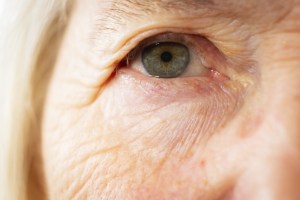
Now, however, that doesn’t happen. To the younger generation, I am evidently a crone. Once I was in a tiny accident – it barely knocked the “I” off my Saturn Ion. But the other motorist seemed in quite a tizzy that I didn’t want to go to the hospital. I assured the young man again and again that I was fine. I may have seemed a bit disoriented because I couldn’t find a pen and paper to take down his insurance info. But he kept insisting that I go to the emergency room to be checked out because, as he put it, “you’re elderly.”
At the time, I was 52.
I admit that I have not aged well. My apparent age is not helped by the fact that, after two back operations, I now sometimes walk with a cane. And I haven’t bothered to get my hair “done” since long before the pandemic.
But in my head, I am 35, tops. I’ve been told that everyone’s mind stops picturing them getting older at some point and forever after thinks they’ll look that way. I expect to see myself in the mirror looking 35, and am always disappointed when I don’t.
This is different from having an inner child, which for a long time I didn’t believe I had. Turns out that was because my inner child is an inner teen. She’s an outlet for all the things I never did as a repressed adolescent – painting my nails, flirting, spending money on ridiculous trinkets. Sometimes I let her out to have her fun for a while, but then I have to put her in a mental box and sit on the lid.
One needs only so many Deadpool t-shirts, after all.

 When couples drive somewhere, usually the man drives. When families watch TV (assuming that they have only one TV), the father or the kids control the remote.
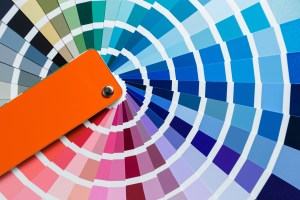 Remember when everyone was having their colors done and what you wore depended on whether you were Summerfall Winterspring? (Bonus points for getting that reference.) I don’t think people do that so much anymore, but I do know there’s a whole lot of money to be made in the world of color. And I don’t just mean adult coloring books, which were a thing, but I think are over.
 Say you’re attending a convention in a nice hotel. (It doesn’t matter what kind of convention. You could be sales reps or Civil War buffs or Young Republicans.) You notice strangely clad people, both young and old, cruising the hallways and crowding the function rooms. Among them are people dressed as Imperial Stormtroopers, elves, and vampires.
 A few weeks ago I wrote about how we were moving, and in finding a new place to live, I thought we might have to live with college students (“Stuck in Our 60s”
  Once my friend Robbin and I resolved to write a cookbook called the “I Never Use a Cookbook” Cookbook. Alas, this never happened, so I thought the least I could do would be to turn it into a blog post. The basic idea was that, except for baking, neither one of us uses actual recipes when cooking. They’re more like theories than recipes, really.
 Big Pharma has a bad rep. And there are certainly valid reasons for that. Recent accounts of price gouging, particularly on common, life-saving drugs like insulin, have had consumers fuming. The cost of newer drugs is sky-high. And there have been an awful lot of drugs that were apparently sent to market too early, leading to a lot of dire side effects and drug recalls. Add to that the dubious practice of advertising prescription medications direct-to-consumer, and Big Pharma has abused the trust of the American people. The drugs they develop and sell may be – indeed, often are – beneficial and even life-saving, but that doesn’t seem to dissipate much of the cloud of bad feeling surrounding American pharmaceutical manufacturing.
 I am sick of all the coronavirus blog posts and memes. But there are a few that I’m particularly sick of, especially the defiant ones and the conspiracy theories. Here’s what I think, for what it’s worth.
 “Keep it down, Gramps! Some of us are trying to study! What is it with the Grateful Dead anyway?
