Tag Archives: general crankiness

Who Is a Lady?


Lately there have been a lot of memes portraying Michelle Obama and Melania Trump. Among the many questions raised, along with personal style, charitable activity, physical grace, and styles of dress, is this: Which one is a true lady? If I remember correctly, one specific meme asked about “showing skin” vs. “class.”)

Since this is a problem of definition and I am a former English major, I felt compelled to jump right in. Here are some definitions I’ve heard for the term “lady.”

“A lady never wears white after Labor Day.” As far as I can tell, all prohibitions regarding fashion have, praise be, flown out the window. Here’s what wisegeek.org has to say about the white/Labor Day rule:

In many parts of the United States, a rule about not wearing white after Labor Day . . . is heavily ingrained. The roots of the idea . . . appear to be shrouded in mystery, and the rule has been greatly relaxed since the 1950s and 1960s, when it was more heavily enforced. People who choose to wear white into the fall are no longer heavily criticized for the choice, and are sometimes embraced as fashion forward trendsetters.

Originally, the restriction applied only to white dress shoes and pumps, which are typically unsuitable for winter weather anyway.

“A lady is never unintentionally vulgar.” My friend Doreen said this, though she was paraphrasing Lillian Day, who said, “A lady is one who never shows her underwear unintentionally.” (The gender-flipped equivalent of this is Oscar Wilde’s “A gentleman is one who never hurts anyone’s feelings unintentionally.” I have also been informed that there is a version that goes “A gentleman is one who, when he pisses in the sink, removes the dishes first.”)

“A lady only accepts countertop appliances.” This idiosyncratic rule was voiced by my friend Karen upon learning that a male acquaintance had offered to buy a mutual friend a dishwasher. I’m sure there must be a rule somewhere about gifts of jewelry (“A lady only accepts semi-precious stones”), and if there isn’t, I’m inventing it now. One has to be more than just good friends with a man to accept diamonds.

“A lady has modest and maidenly airs and virtue a blind man could see that I lack.” Uh-oh. Now I’m quoting from Man of La Mancha. Someone stop me. It takes us into Madonna/whore territory, where I suppose this discussion has been heading all along. Or Lady/Tramp. No wait, that’s Disney.

Notice that in all but the first and last instances, the qualities of a lady can be seen only by her actions and not by her appearance. A lady is as a lady does, as it were. That’s one reason that Michelle/Melania memes are ridiculous. You can’t tell whether either woman is a lady simply by her appearance. It is her actions (not showing underwear, not accepting large appliances) that are better at separating ladies from women.

And after all, isn’t that what we’re talking about here? Having rules that separate women from other women and making a judgment on who is the better person? This dichotomy has assorted male versions as well (sperm donor/daddy, gentleman/jerk, redneck/anyone else), but it’s the woman/lady rules that carry a real bite. Ladies are worthy of respect; mere women are not, is the implication. There are even further distinctions: lady/slut is the most common and most invidious.

It’s my belief that these comparisons are frivolous and ridiculous, meant to divide (and conquer) women by pitting them against one another instead of paying attention to issues and distinctions that really matter. Then another person is entitled to hoist his (yes, his) nose in the air and say,”Women will never be able to hold power when they’re always sniping at each other and obsessing about shoes.”

Apologies to Doreen and Karen, who I think were being ironic rather than sniping, but if we want other people to stop judging us, we should give ourselves a break too. “Lady” is a term with little meaning. It essentially says only, “I like and approve of this woman but not that one.” It’s not worth mud-slinging about. Or wasting our time on insulting memes.

What’s With All the Crazies? Are They Crazy?

Yes. Yes, they are.

And no, they’re not.

I say yes, because so many political extremists out there are acting, well, crazy.

And you can define  “crazies” any way you want – alt-right, alt-left (two handy meaning-free terms), in-office, out-of-office, politicians, your Facebook friends, your Uncle Ned, whatever. We’ll just leave out for the moment the tin-foil hat squad.

Whoever your opponents are, there’s more than a fair chance that some of them are acting irrational, delusional – some variety of crazy. Is it crazy to run down peaceful protestors? Yes. Is it crazy to still be battling over the outcome of an election that happened close to a year ago? Yes. Is it crazy to carry rifles in Walmart? Yes. Is it crazy to spend news air time on the First Lady’s shoes? Yes.

Most of all, though, people are acting paranoid. Everyone on the “other” side is out to get us, destroy America, or at least scare the pants off us. Conspiracy theories abound. And nearly all of them are crazy. (I wrote about this a short while ago: http://wp.me/p4e9wS-AH).

And paranoid means crazy, right? (Unless, as the saying goes, “they” are out to get you.)

Well, not actually. “Paranoid” is a clinical term from psychology, and it has a specific meaning: Paranoid Personality Disorder is an actual psychiatric condition, manifested by, among other things, “generally unfounded beliefs, as well as … habits of blame and distrust, [which] might interfere with their ability to form close relationships,” as WebMD says.

Those traits your political or social opponents may have, but most of them don’t also:

  • Read hidden meanings in the innocent remarks or casual looks of others
  • Perceive attacks on their character that are not apparent to others; they generally react with anger and are quick to retaliate
  • Have recurrent suspicions, without reason, that their spouses or lovers are being unfaithful

The fact is that none of us (except perhaps psychiatrists) can diagnose a person as paranoid or any other variety of mentally ill without having met the person and performing detailed interviews and tests (I’ve written about this too: http://wp.me/p4e9Hv-6F).

So, if by “crazy” we mean “mentally ill,” then no, the political and social “crazies” are not “crazy” as a group. Their tweets and posts and dinner table conversation are simply not enough to declare them mentally ill.

This is also true of public figures. We can say that Donald Trump, to choose an example not entirely at random, has narcissistic traits, or is a narcissist in the garden-variety meaning of the word, but we cannot say that he has Narcissistic Personality Disorder, an actual clinical diagnosis. We may think he’s crazy, but we can’t say whether he’s mentally ill.

Our readiness to label people, both our acquaintances and public figures, with loose pseudo-psychiatric terms raises a number of problems, particularly stigma.

Labeling is a convenient way to dismiss a person who disagrees with you without listening to what he or she has to say, or considering the possible validity of an argument or even a statement of fact. He’s a Southerner; of course he’s a racist. She’s a liberal; of course she’s a snowflake. If we can apply a label, we can make an assumption about a person that may or may not be true. (It can also lead us into “Not all X are Y” arguments, which are seldom productive.)

Stigma comes with the label “crazy” or mentally ill. People with diagnosed mental disorders are too often assumed to be violent, out-of-control, homicidal (or suicidal) maniacs – and therefore not worth listening to, despite the fact that their cognitive abilities are generally not impaired.

As for terrorists, they are in common understanding automatically mentally ill, so anyone you label as a terrorist is automatically insane. And we’re far from agreeing who is and is not a terrorist. (Antifa? Greenpeace? The NRA? The DAR?)

So, bottom line. “Those” people may be crazies, may act crazy, talk crazy, believe crazy things, but it is not accurate or helpful to call them crazies. I know I’ll catch hell for this. But I’m not being an apologist for reprehensible behavior.  I just think that how we talk about people affects how we treat them. And that matters.

Now, as for the tin foil hat squad, they’re mostly harmless. Let’s leave them alone.


Sometimes Things Are as They Appear

There was a furor and a spell of blocking and unfriending in one of my social circles last week. It seems that a person well known in the group and respected for her considerable talent voiced the opinion that the terrorist incident in Charlottesville was a “Wag the Dog” exercise meant to distract the public from other topics.

For those of you not familiar with it, Wag the Dog was a 1997 movie starring Dustin Hoffman and Robert De Niro. In it the fictionalized President of the United States manufactures an international incident to cover up a real scandal he is afraid might embarrass him and derail his administration.

The reasoning in terms of Charlottesville breaks down. But the general gist was that the car plowing into a crowd was a manufactured incident, meant to make the trouble-making protestors look sympathetic and the well-intentioned marchers look evil. This take on events fell apart rapidly when it came to light that the driver of the car actually was associated with “alt-right” or white nationalist causes.

But the tactic of switching blame has been used before. The tragic shootings at Sandy Hook Elementary School in Newtown, CT, were believed by some to be a “false flag” operation in which anti-gun forces staged the entire incident to promote their own agenda and make gun-owners and the NRA look bad. It was even rumored that some of the mourners were actors who go around to various such events and fake distress for the cameras.

These are far from the only conspiracy theories that have taken hold and outlived attempts to debunk them. The 9/11 attacks are particularly fertile ground for the “truthers,” as the theorists often style themselves. But there are others. From the McMartin Preschool to the Malaysian airplane’s disappearance to the “pizzagate” child sex ring rumor to the death of JFK and on and on, many among us refuse to take any news story or public horror at face value.

Notice that these assorted accusations of dastardly schemes and heinous cover-ups come from both sides of the political spectrum: President Bush’s administration created the 9/11 attacks to justify a war. President Clinton and assorted cronies killed Vince Foster and made it look like suicide.

Never mind that for these conspiracies to be true, an impossible chain of events involving thousands of people (not one of whom ever screwed up the plan or spilled the beans) would have had to be either participants or in the know. None of these things could have happened outside a Tom Clancy novel or a Jerry Bruckheimer film. And no private citizen or group could have uncovered the “truth” if such things had happened.

That is to say, they are fictions. And believing them doesn’t make them true. Unexplained aspects are just that – not able to be verified or explained because evidence doesn’t exist or for some other reason.

I think it’s telling that many of these theories are expressed in military and intelligence terms – for example, “false flag operations,” “black ops,” and so on. Everyone wants to be an expert, especially in fields where few can claim true expertise. Phony experts are even interviewed on television regarding these incidents, giving even more credence to pop psychology and self-styled warriors or spies. Few Americans have ever served in the military and even fewer in the intelligence field, but you wouldn’t know it by watching TV or listening to talk radio.

Now, it’s true that the press can be, and sometimes is, manipulated. Politicians have been known to make announcements that they’d rather not draw attention to on Fridays, so that by Monday, when the next news cycle begins, the story will have been replaced by more recent events. Press releases and talking points can present one-sided, skewed, or outright false information and journalists without the time, resources, or interest to check them let them run as is.

But for the most part, things are what they appear to be. Coincidences are exactly that and not evidence of conspiracies. As Carl Sagan said (though he was talking about something else), “Extraordinary claims require extraordinary evidence.” And by “evidence” he didn’t mean what-ifs or convoluted chains of suppositions or the plots of dime novels. He meant hard facts and physical objects, scientifically verifiable, tangible or observable, and demonstrably real.

Those who support conspiracy theories appear to be motivated by the desire to be “in the know” and feel superior to those of us who are pathetic dupes, unable to see the truth, even when it’s presented to us with passion and conviction. Apparently many people want to live in a world where diabolical Bond-ian villains pet their white Angora cats and invent doomsday devices until a plucky hero foils them. I’d rather not.

Reality is scary enough without flummery, embroidery, and delusion.


Shame, Shame, Shame!

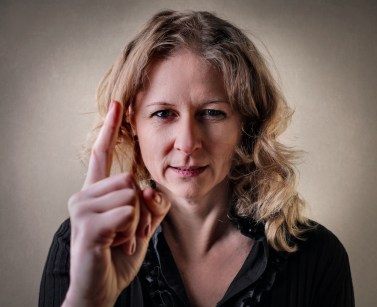
When I was a child and had done something wrong, my mother would shake her finger at me. I hated that pointing, wagging finger more than I hated getting yelled at. The gesture conveyed shame, even if my mother’s words didn’t.

Nowadays we seem to see a lot of pointing and shaking fingers, pronouncing blame or shame on the offending parties. Here are some that you are likely familiar with and others that you may not be.

Fat-shaming This is probably most common kind of shaming and comes in various forms. One of the most noticeable kinds is fat-shaming actresses for carrying a few extra pounds – or even ounces. Increasingly stringent and nearly impossible standards are held up. Who the hell notices whether the woman in the supermarket or on the soccer field has a thigh gap anyway? Are the rest of us supposed to try to achieve this dubious standard? Thigh jiggle was bad enough. And 99% of those “People of Walmart” photos? Fat people in outfits that don’t even have the “decency” to try to hide it.

Body-shaming There are other types of body-shaming. Skinny-shaming. Have you ever heard someone pass a thin woman and call, “Eat a sandwich”? Fashion models are held to unrealistic standards of thinness, then mocked when they do. Women at science fiction conventions are shamed for having the “wrong” body type to wear a She-Hulk or Slave Girl Leia costume. And forget black Supergirls and Wonderwomen. You’d think we’d be over this by now. But no.

Slut-shaming Even the term makes my skin crawl. It contains the assumption that there is such a thing as a slut who can be recognized on sight. Or if you’re not going strictly on clothing, hair, and makeup, it becomes sexual-behavior-shaming. It’s a thin line between that and blaming rape victims for the crime.

Mommy-shaming Suddenly, everyone’s an expert. Underprotective mothers, overprotective mothers, breastfeeding mothers, bottle-feeding mothers, mothers of “free-range children,” “helicopter moms” and “tiger moms.” Worst of all, people feel entitled to comment on their behavior, not just on social media, but face-to-face with the mothers themselves. Oh, there’s plenty on social media too. Recently a celebrity was caught giving her child the wrong sort of toy, which apparently viewers could see had eyes that were a choking hazard. There’s nothing like 100,000 people telling you you’re killing your child.

Age-shaming This started in Hollywood too, it seems. Feminists have long noted that female actors’ careers are over when they hit 40 – or long before, especially if they play romantic leads. Meanwhile, male actors star in such films long into their 60s or 70s – with ingenues young enough to be their granddaughters. Body-shaming is also involved. When it was announced that Meryl Streep was starring in the action-adventure film The River Wild, critics couldn’t help sniping that no one would want to see the 45-year-old Streep in shorts or a bathing suit. But this insidious trend isn’t limited to LaLa-Land. Think about all those articles you’ve seen that tell women over 40 what they shouldn’t wear – even women over 30, for God’s sakes! I’m not throwing away my leopard-print flats just for them!

Poverty-shaming Again, think about those “People of Walmart” photos. Who shops there? Not the rich. So the poor are targets for shaming. Now think of the “Welfare Queen” stereotype – a woman on public assistance who drives a Cadillac, has her hair and nails done weekly, smokes and drinks and drugs, never works, dines out on steak and lobster while feeding her kids junk food. You’ve seen it in memes and rants on social media and even heard it from elected officials. This is particularly hurtful, because it affects public policy. And it’s simply untrue. Most people on public assistance have jobs and close-to-the-bone lives. But even school lunches for their kids are politically controversial. Life is hard enough without the shaming.

Am I just ranting that shaming is shameful and wrong? Of course I am. It’s mean-spirited and insulting and unnecessary. But look at who gets shamed the most – women. And often, it’s other women who do the shaming. From the time when fashion magazines covered the eyes of women committing clothing “crimes” to nowadays when women can be shamed for how they look – no matter how they look – and for what they do and how they behave.

And people wonder why women have low self-esteem and doubt their every decision, and why poverty is seen as a moral failing. Shaming is a nastier form of gossiping, which is nasty already, but it is worse than that. All those pointing, wagging fingers are pointing the wrong direction. What we need is a little more shame-shaming.


Grammar Rules I’ve Given Up

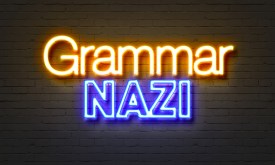
For my entire life, I’ve been known as a Grammar Nazi. The Punctuation Czar. Now, not so much. I’ve written about that before: http://wp.me/p4e9wS-6z

In that post I said:

I used to take delight in knowing all the rules and enforcing them ruthlessly. Gradually I have gotten away from that practice. I felt it was impolite to go around correcting people unless they had asked for my help. I still corrected my family because – hey – it was mentally painful to be around people who misused “hopefully” or split infinitives. Or who mispronounced “nuclear” or “foliage,” for that matter.

Gradually, I changed. Here are some of the rules I am no longer an enforcement officer for.

Split infinitives

I admit that my desire to throw this rule overboard was influenced by my hope that I might find a way to approve of the phrase “to boldly go.” (Okay. I was a grammar geek, but the other kind as well.) Then, one day, I found my “out.” The rule was not only wrong; it was stupid.

The old bugaboo about not splitting an infinitive, to which I was passionately devoted, has its source in the fact that in Latin it is impossible to split an infinitive. Latin infinitives are all one word. It makes no sense to transfer that rule to English.

I breathed much easier the next time I watched Star Trek.

Impact 

I hate the use of “impact” except as a way of referring to one thing crashing into another thing – an asteroid into a planet, for example. I still much prefer that to its metaphorical usage, in which it means “has an effect on.” There’s already a perfectly good word for that – “affect.”

My co-workers, however, ridiculed me mercilessly on this one. They showed me examples of “impact” used to mean “affect” in other pieces of writing. They counted the number of times I made the change. They never let up.

And eventually I caved. It still sounds awful to me, but I have given up defending the usage. I have not, however, given up the rule that “affect” is a verb and “effect” is a noun 99% of the time, with the one percent being so seldom used as to be negligible.

Not starting sentences with “and” or “but”

Or “so.” Or “or,” for that matter. I know that conjunctions don’t belong at the beginning of sentences in Standard (Formal) Written English. But what I write is usually informal, colloquial English. If I followed the aforementioned rule, that last sentence would have had to have been, “What I write, however, is usually informal.” I use “however” enough as it is. And phrases like “would have had to have been.” (I suppose since I am writing informally here, I should have written “would have had to be,” but there you are, it’s hard to break these habits after so many years.)

There are some grammar and punctuation rules that I have not given up, however.

The semicolon

Noted author David Gerrold recently declared the semicolon obsolete and ugly. I disagree, and not just because I have one tattooed on my left wrist (http://wp.me/p4e9Hv-9G). To me, the semicolon is both elegant and useful; it implies a connection between two independent clauses. In that sentence, the semicolon means that the semicolon, by implying a connection between the two halves of the sentence, is therefore both elegant and useful. If I had said, “The semicolon is both elegant and useful. It implies a connection between two independent clauses,” those would have been true, simple statements. But they would not have emphasized the connection between the function of the semicolon and its beauty and elegance.

Okay. I’ll shut up about the semicolon now. David Gerrold and I will just have to agree to disagree.

The Oxford comma

First, let me say that one of my main clients does not use the Oxford (or “serial”) comma in the pieces I must edit, and it chips away at my soul each time I have to remove one. The lack of an Oxford comma can make a sentence both confusing and laughable. You’d get book dedications like this: To my parents, my English teacher and Barack Obama. Without the Oxford comma (the one that should go after “teacher”), everything after “parents,” becomes an appositive – equivalent to what came before. In other words, sans Oxford comma, the author is saying that her English teacher and Barack Obama are her parents. All that hilarity and confusion can be avoided with a simple comma.

The subjunctive mood

Don’t get me started on the subjunctive mood. No, I mean really don’t. We’ll be here all day.

Whatever Happened To…?

Have you ever had the feeling of waking up one morning and not recognizing the world around you? I’m not talking about the results of a weekend in Tijuana. Just the sense that the world is passing you by. Phones are now cameras and recorders and TVs and computers and watches. To communicate, you must recognize obscure acronyms – not just LOL or BRB, but IIRC, AFAIK, SUATMM, and FTW (two meanings). Your car tells you where to go and parks itself.

Still, the things that bother me most are the things that I DO remember that don’t exist anymore.

Whatever happened to…

… packaging concerns? Remember that circle of little green arrows that appeared on everything? They used to mean “Recycle – Reuse – Rsomethingelse.” Resist, maybe? Anyway, it was a plea to think of the environment, particularly in packaging. Styrofoam and plastics were going to be replaced with paper, cardboard, and other substances that wouldn’t persist in landfills until the dinosaurs returned.

If plastic packaging couldn’t be eliminated, it was going to be reduced (that’s the other R!). No more individually wrapped slices of cheese inside another outer plastic wrap! No more toys encased in plastic inside an additional plastic shell wrapped in bubble wrap with styrofoam inserts! We were all going to carry string bags and put our vegetables straight into them. Toys were going to have a simple paper price sticker on the bottom.

Needless to say, none of that happened, except in a few enclaves of hippiedom, which have not been supported by the manufacturers and wrappers. We still see styrofoam trays of two tomatoes wrapped in plastic, and we bag them in plastic instead of nice, biodegradable paper. (The plastic bags are supposed to biodegrade too, or be repurposed as plastic water bottles, which are now taking over the earth.) Now we even have tiny plastic snack trays with wee little compartments for each separate snack and a foil topper.

…dark roots? It used to be that dark roots were a bad thing, especially for blondes. They gave a graphic way to measure exactly how long it had been since the last beauty parlor visit or home dye job. Just look at Penny on The Big Bang Theory – every season her do-of-the-year features blonde tips and brown roots. Look at any number of Hollywood icons (male and female – think Guy Fieri). Hell, look at the cashier at the local CVS or Waffle House waitress. Her roots could be six inches long before the blonde starts.

Of course, hair color companies still sell root touch-up kits, but their hearts don’t seem to be in it anymore. Maybe it’s the rainbow-colored tips that are doing it. Who looks at your roots when your coiffure features stripes of electric blue and pink? Not that I’m knocking it. I have once or twice considered getting those clip-on colored stripes, just to see how they looked. I feared I was too old to get away with it, though, until I saw a commercial featuring a woman with gorgeous silver hair with two inches of blue tips.

… pantyhose? One day I had a meeting to attend, after years of not being in the business community. So I dusted off one of my respectable business lady outfits and went to the store in search of pantyhose. There weren’t any. At least the only kind I saw were knee-high hose meant to go under slacks. And damn few of them. Plus, this was after tights, but before leggings, so I didn’t have many other choices. I bought the knee-highs and quickly switched my outfit to a nice Hilary pantsuit.

Later I asked a friend. “I know women still wear dresses. What do they wear on their legs now?”

“Nothing.”

“They go bare-legged? In offices?”

“Yep.”

“And what did they do with all the space in the pharmacies and grocery stores that used to have walls of pantyhose?”

“Razors. I think young women shave everything from the waist down. You know all those razor commercials with topiaries? They’re metaphors.”

“Ordinarily I like metaphors, but that is just too…”

“Suggestive? Subliminal? Funny?”

“Something, anyway.”

Yes, I’m old! Yes, I’m cranky! No, I don’t want pantyhose to come back! But at least stay off my lawn, all you hussies with nekkid legs!

The Basics of Editing On-Screen

Most of the writers I know do their writing on-screen. Naturally, that means they also do their editing on-screen.

Editing on-screen is, admittedly, not as much fun as editing on paper, when we got to use colored pencils and make arcane hieroglyphic marks that the uninitiated couldn’t translate.

But these days, it’s necessary. Whether you’re editing your own writing (see http://wp.me/p4e9wS-rS) or someone else’s, it needs work. It’s a mistake to take the first outpourings of your brain and slap them up on WordPress or LiveJournal. Even if you’re a fantastic writer with brilliant thoughts, there are many glitches possible between your mind and what you offer to the public.

I write mostly in WordPress and Microsoft Word and edit mostly in Word or PowerPoint. But whatever the platform, there are certain similarities. Here are some techniques that will make your on-screen editing easier and more accurate.

Editing Ergonomics. This may sound obvious, but with wide-screen monitors taking over America’s desktops, perhaps it needs to be said: Center the page you’re editing directly in your line of sight. And remember to blink so your eyes don’t dry out. You already do that, don’t you? Find a type size that’s comfortable for you (175–200% enlargement is about right for my feeble eyes).

Periods and Spaces. Forget all the arguments. The standard for anything that is to be read on-screen is one space after a period. Period. Many writers don’t know this, and even those who do may lapse into their old typewriter ways and automatically, robotically, put in two spaces.

Fortunately, there is a cure – Find and Replace. All you have to do is ask the computer to find two spaces and replace them with one. Ask it to replace all the double spaces it finds in one go. Then save (for heaven’s sake!). Voilà! Your manuscript is now up to date in the format accepted by online publications.

Use Your Tools. Word processors these days have built-in tools that check your spelling, your grammar, your word count, and sometimes even your lexile. (Why is lexile important? It’s a readability score that indicates whether you’re writing at, say, a fifth-grade reading level or a seventh-grade level or a twelfth-grade one. A ninth-grade level is usually acceptable for a general audience.) Add-on tools also exist, such as Grammarly, which checks your writing on the fly and suggests what you might have meant or how you should have punctuated it.

Don’t Trust Your Tools. For most problems, you can, but sometimes you know better than the computer what you mean to say. For example, my computer flagged “lexile” and wanted to know if I meant “exile” or “flexible.” (I didn’t.) There are thousands of autocorrect memes floating around out there that show just how funny or horrible the results can be. Nor will spelling/grammar checkers catch everything. I just typed “Thre” for “There” and the program didn’t flag it.

Remember Your Low-Tech Editing Habits. Read over your finished piece slowly, or, better still, aloud. Put it away for a few hours at least, or preferably a day, and reread it. Slowly. Concentrate on a paragraph at a time, then go back and read the whole piece straight through. Double-check the spelling of names and places, another thing spelling checkers may overlook. (Although I just wrote a piece using the name “Semelweis” and the checker suggested “Semmelweis,” which was indeed correct.)

Have Someone Else Read Your Piece. You may be writing all alone in your Fortress of Solitude, but there’s a world of people out there who may be glad to look over your work before you release it into the wild. (Also some who won’t, so you may want to set up an arrangement with a trusted friend or a writer’s group.) Shoot the piece off by email and get replies the same way, or using those handy electronic Post-It Notes or comment features.

As time passes, fewer and fewer people will have those old typewriter and pen-and-paper habits. Even those born writing on-screen can use a few reminders, though. But on-screen or off, remember that there is still no substitute for a pair of human eyes and a human brain. Blaming errors on the technology is a cop-out – you’re the writer; you are responsible for the finished product.

Why I Write About Myself

Lately I’ve been taken to task for writing about “me, me, me.” So I felt compelled to introspect, and I’ve decided to write more about me. Here’s why.

I’ve tried to live an interesting life. I’ve always admired and enjoyed people who have tried many different things and talk about them. Once I realized that, I set out to try new experiences – travel, hobbies, friends, music, education.

I’ve traveled to the Caribbean, England, Ireland, Croatia, Montenegro, Rio de Janeiro, and other destinations (“Travels With Mom” http://wp.me/p4e9wS-dM). I’ve studied French, Spanish, and Russian, and taken a college course on beekeeping (“How I Faced My Fear – And Failed” http://wp.me/p4e9wS-7H). I’ve taken up archery (“I Arched Before Arching Was Cool” http://wp.me/p4e9wS-6E), ninjitsu (“I Was a Teenage Ninja” http://wp.me/p4e9wS-49), spelunking, and geocaching, and tried horseback riding, cross country skiing (“Whoa!” http://wp.me/s4e9wS-whoa), writing a novel, guitar and banjo, and reloading bullets (“The Day I Brought Bullets to School” http://wp.me/p4e9wS-50). I’ve written for I Love Cats, Black Belt, Today’s Catholic Teacher, and Technology and Learning. I’ve drunk with Tom Paxton, met the Archbishop of Jamaica, taken Carl Sagan’s class, and interviewed Captain Kangaroo. I’ve eaten snails, octopus, goat, and sashimi. That’s plenty of material for blog posts.

I have a blog called Bipolar Me (bipolarjan.wordpress.com). Inevitably, that involves talking about myself. While I try to include posts about news and events regarding bipolar disorder, the person whose case I know best is my own. I can’t generalize my experience to encompass everyone, or even most, people with bipolar disorder, but I hope my readers can see some of themselves in my writing.

My personal writing is what most people seem to be interested in. When I write about politics (“Political Noise” http://wp.me/p4e9wS-ol) or books (“Zombie Novels That Aren’t About Zombies” http://wp.me/p4e9wS-ry) or social issues (“Whitewashing: Where’s the Line?” http://wp.me/p4e9wS-5a) or music (“Owed to Songwriters” http://wp.me/p4e9wS-mr), the response is underwhelming. (I write about them anyway, because sometimes I need to. I’m not doing this for the numbers.)

But when I write about things I’ve seen and done, especially humorous pieces (“Seven Reasons I Hate the Bloggess” http://wp.me/p4e9wS-56, “Butt Check” http://wp.me/p4e9wS-2U)), I get more reactions and comments.

I don’t know a lot about any particular subject. (Except bipolar disorder, I mean.) Some people know all there is to know about medieval Scottish armor or the works of Tolstoy or Hungarian cooking. I’m more of a generalist. My education has been broad, rather than deep. If that means I’m full of useless trivia, so be it. I can write about what I know about Shakespeare or astronomy or getting rid of possums (“How to Get Rid of a Possum” http://wp.me/p4e9wS-46), but if you want detailed, expert knowledge, you’ll have to go somewhere else.

I write a lot about cats, too. My cats, in particular, so in a way that’s still about me. (“Stupid Cat Tricks” http://wp.me/p4e9wS-8I, “Sir Boinks-a-Lot” http://wp.me/p4e9wS-8A, “I Blame the Cats. Always.” http://wp.me/p4e9wS-1B)

So, although I’ll try to keep the posts about other topics coming, I have a feeling I’ll continue to mine my own life for material. After all, it’s the subject I know best.


What I’ve Learned About Publishing From Lack of Success

I have been an editor. I have rejected lots of manuscripts.
I have been a writer. I have been rejected by lots of editors and agents and magazines and ezines.

Right now I have two books in the works: a memoir based on my other blog (bipolarjan.wordpress.com) and a mystery novel hovering around 40,000 pages (60-75,000 would be a reasonable length).

Here’s what I’ve learned.

BOOKS

I’ve learned one queries nonfiction with a proposal and fiction with a completed manuscript. However, I spent so long contacting agents and publishers about the memoir that I actually finished it while I was waiting to hear back.

At some point, you will reach the “This book is crap” stage. Do not give up. This is natural and to be expected at least once or twice. The thing to do is pause. Go read a book about how to plot or write description or whatever it is that made you say “This is crap.” Or work on another project for a while. You do have at least two going, don’t you? Or at least a great idea for another one? Or you could join a writers’ group and see if any of them can figure out the reason for the crapitude.

Note: The first draft is not a manuscript and should not be submitted. That’s why it’s called a first draft. You will need at least another draft or three before it’s ready to release into the wild.

Yes, you need an agent. Probably. Only a few publishing companies look at proposals and manuscripts that don’t come from an agent. There used to be editorial assistants who had to read those submissions, but budgets are tighter than tight in the publishing industry. You don’t need an agent to submit smaller pieces of work like short stories and articles.

Which brings us to:

EZINES and MAGAZINES.

I write blog posts of 600-1000 words and, if appropriate, submit them to online magazines. (Most of this applies to print magazines too, if you can still find one.) A large part of the time, it’s like dropping my writing down a proverbial well. But again, I’ve learned a few things.

First, a heresy: You will have to write for no money. At first, anyway. People who say not to write for free are coming from a position of privilege. They are at a stage in their careers when they can get actual money (at least a little). If you’re just starting out, you’re not. There are reasons for this.

Some editors will want to see work that you’ve had published, just so they can tell you can write, meet deadlines, and be professional. The other reason is exposure. Yes, I know starving artists die of exposure. Yes, I know that exposure doesn’t pay the rent. But it does help in other ways.

An agent or an editor will look at a query more seriously if it says, “I am a regular contributor to X website and have been published on Y and Z.” Or “I have had short stories printed in Publication A and B.” Even if you only got six copies of the magazine as pay, or a byline and a bio, these are credits. They indicate that you’re more than just a wannabe. After you’ve got a few credits to your name, you can start pitching to sites that pay.

Do you really need to pitch? Or can you just send a story or article? Publications differ. The website will have a page helpfully called “How to Submit” or “Submission Guidelines.” Follow these instructions exactly. If they say query first, do that. If they say send completed story, do that. If they say paste it in the body of an email, do that. If they say attach your file as a Word doc, do that. Whatever they want, give it to them. It takes longer than blasting out a flurry of identical query letters or submissions, but it increases your chances of getting favorable attention.

I have either made all of the above mistakes or seen them made by people who submitted work to my publications. I can’t guarantee that any of this advice will get you published. This business doesn’t come with guarantees. But you can piggyback on my failures and those of others on your way to becoming a success. Good luck. Even if you’re a terrific writer, you’ll still need it!


BOLO: The Word Crimes Just Keep Coming!

“Word Crimes” was a big hit for Weird Al Yankovic, ttto “Blurred Lines,” a song that needed the Weird Al treatment if one ever did. But there are lots more word crimes that never made it into the song, likely because to get radio play, a song has to be under four minutes long. In my life as an editor, I see word crimes that are 182 pages long.

Now back to that “ttto.” It may be fairly easy to decode that as “to the tune of,” just from context. IMHO, AFAIK, BTW, and IIRC are becoming common enough online acronyms, but what are we to do with TH:TBotFA? Or THGttG (sometimes written as THHGttG). I know we all could sit here for hours and make up things that they could stand for, but there are better things to do, like petting the cat or helping the needy.

If you are at all familiar with geek culture, you may know that these acronyms are movie and book titles – The Hobbit: The Battle of the Five Armies and The Hitchhikers’ Guide to the Galaxy, respectively. It’s bad enough that you sound like a noob (newbie) (neophyte) if you ask what ST:TOS means (Star Trek: The Original Series – you know, the one with Captain Kirk). But we fancy literary types don’t inflict acronyms on others. We don’t say FftMC when we mean Far from the Madding Crowd or TCoL49 for The Crying of Lot 49.

Perhaps the most annoying acronym of all is STFUATMM (or more politely, SUATMM. STFU is familiar to all but the most genteel, who abbreviate it as SU, but ATMM is more problematic, since this time no one bothers with lowercase letters to help you guess articles, conjunctions, and the like. No, this phrase is “Shut (the fuck) Up And Take My Money,” which means, “You don’t have to say another word; you had me at ‘buy.'”

Full disclosure: I must admit that in my other blog (bipolarjan.wordpress.com), I do use the acronym YMMV, or “Your Mileage May Vary,” to indicate that my experiences should not be generalized to everyone.

Another language trend which has gotten out of hand is “portmanteau words” –two words squashed together to make a new word with a meaning that combines them both.  (A portmanteau is a cross between a trunk and a suitcase.) Lewis Carroll, author of Alice in Wonderland, was, if not the inventor, surely a most prolific coiner of portmanteaus. The appear everywhere in his classic poem “Jabberwocky” – “slithy,” meaning “lithe” and “slimy,” for instance, or one that the English language has retained: “chortle,” from “chuckle” and “snort.” It’s just so damn useful.

“Brunch” and “motel” are useful portmanteaus too, but advertising has taken such words too far. I suppose it’s too late to kill off “sale-a-bration,” but can we call a moratorium on “transfarency” (airline usage) and “unjection” (prescription medicine)? Bon appe-cheese? Trucksicle?  And anything that ends in “-licious” or “-tastic”?

And while we’re on the subject of advertising, can we please stop having Washington and Lincoln dancing around for Presidents Day sales? It’s undignified, first of all, and there is no known connection between the leaders of our country and linens, unless you credit the rumors that Washington slept virtually everywhere.

You could, I suppose, make a connection between Washington and nurseries that sell cherry trees, but even that would be bogus and nurseries’ advertising budgets are not huge. (They spend it all on catalogues.)

Not to worry, though. Even if we manage to eliminate these heinous crimes, there are plenty of others in existence and soon to be created. Among the ones that make me shudder are weather-related portmanteaus like “Snowpocalypse” and “Snowmageddon”; “gifted” to mean “gave someone a present”; and most words that end in “ize.” And don’t even get me started on the way my husband pronounces “foliage” when he reads those nursery catalogues. Or how “catalogue,” “dialogue,” and “doughnut” are spelled these days. Or…or…or…